

Guides
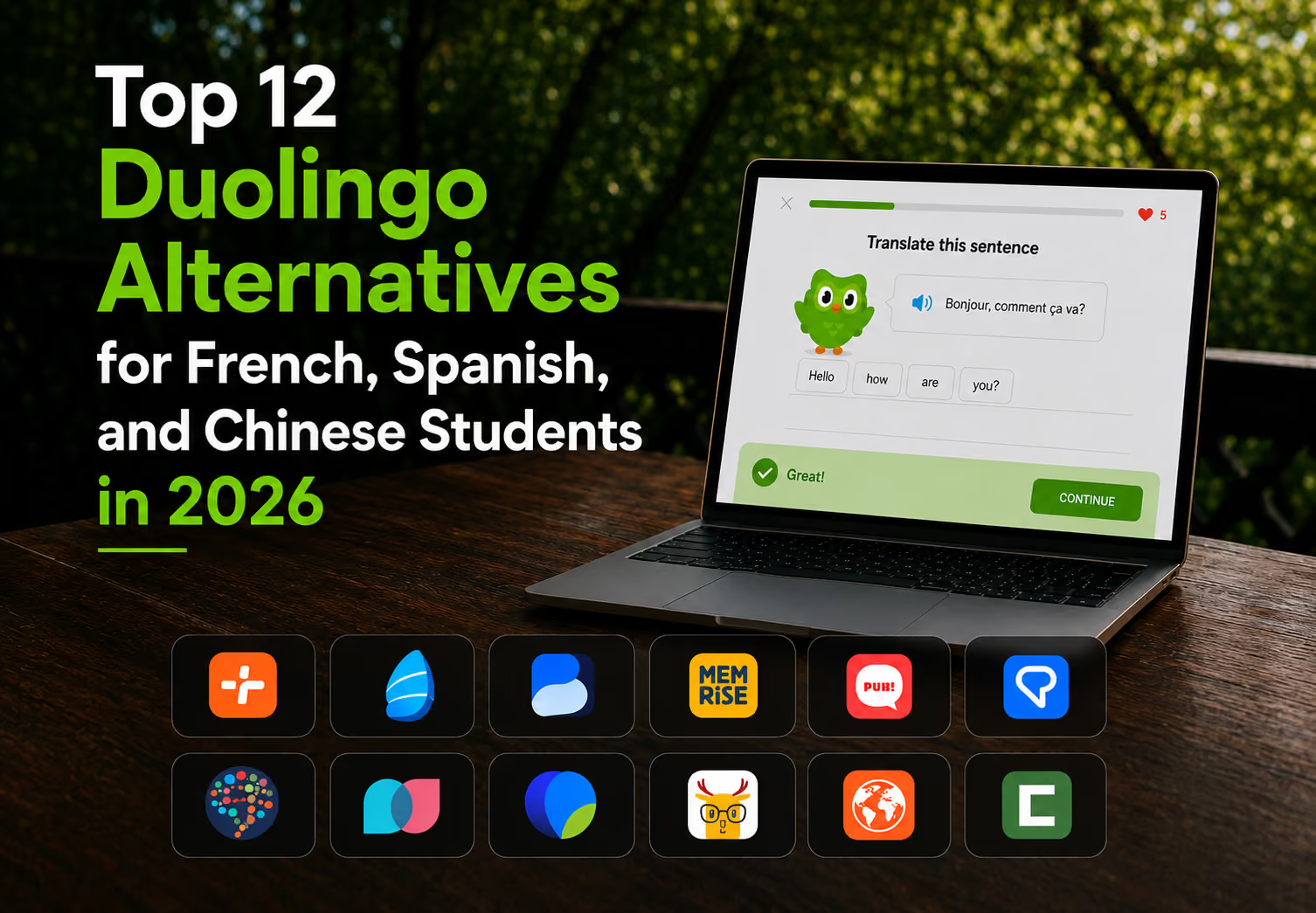
Top 12 Duolingo Alternatives for French, Spanish, and Chinese Students in 2026

Viraj Mahajan
August 5, 2026
Quick Answer: One of the best Duolingo alternatives is JotMe because it supports 200+ languages and 39,000+ language pairs, helping French, Spanish, and Chinese students understand real conversations instantly with contextual translation and bilingual transcripts.
A Duolingo alternative is any app or system that fills a gap Duolingo cannot fill, and after 30 days of testing 12 of tools in French, Spanish, and Chinese, I can tell you the gaps are not the ones most roundups talk about. The problem is rarely with grammar depth. The problem is that you can finish 200 Duolingo lessons and still fail to follow a lecture, a seminar, or a voice note from a classmate on the day it actually matters.
This guide covers the 12 best alternatives to Duolingo, ranked by the specific problem each one solves rather than by an abstract quality score. It also carries a full Duolingo review, a setup walkthrough, and separate recommendation stacks for Spanish, French, Chinese, Japanese, German, and kids.
Key Takeaways
- The Best Duolingo Alternative Overall: JotMe, for the gap every other app on this list leaves open. It lets you understand a lecture, a conversation, or a recording in your target language today, in 200+ languages, while you spend the next 18 months learning it properly.
- Best for Structured Grammar: Babbel, it offers 10 to 15 minute lessons written by language teachers, and the strongest French and Spanish courses of any app like Duolingo.
- Best Free Duolingo Alternative With a Real Course: Busuu, it is a CEFR-aligned path plus corrections from native speakers, and the free tier is generous rather than a teaser.
- Best for Chinese, Japanese, and Korean: LingoDeer, as it offers explicit grammar notes and character drills that Duolingo simply does not provide.
- Best for Speaking Out Loud: Pimsleur, on audio alone, and italki when you need a human to correct you.
- Best Zero-Dollar Stack: Language Transfer for grammar intuition, Anki for retention, Busuu free for structure. Total cost, nothing.
- The Fact That Changes Everything: Duolingo tops out around A2 on the CEFR scale for most languages. A2 means you can handle simple, routine exchanges. It does not mean you can follow a university lecture.
The 12 Best Duolingo Alternatives at a Glance
Before diving deep into each tool’s details here is the quick glance so you can match your preferences and see which Duolingo alternative can fit for your requirements:
Why Are So Many People Looking for a Duolingo Alternative in 2026
People are looking for Duolingo alternatives because many learners have outgrown gamified lessons and want faster ways to understand real conversations. Recent changes to Duolingo’s free experience, including the shift from hearts to an energy system, also pushed some users to explore other options.
The Energy System Changed the Free Experience
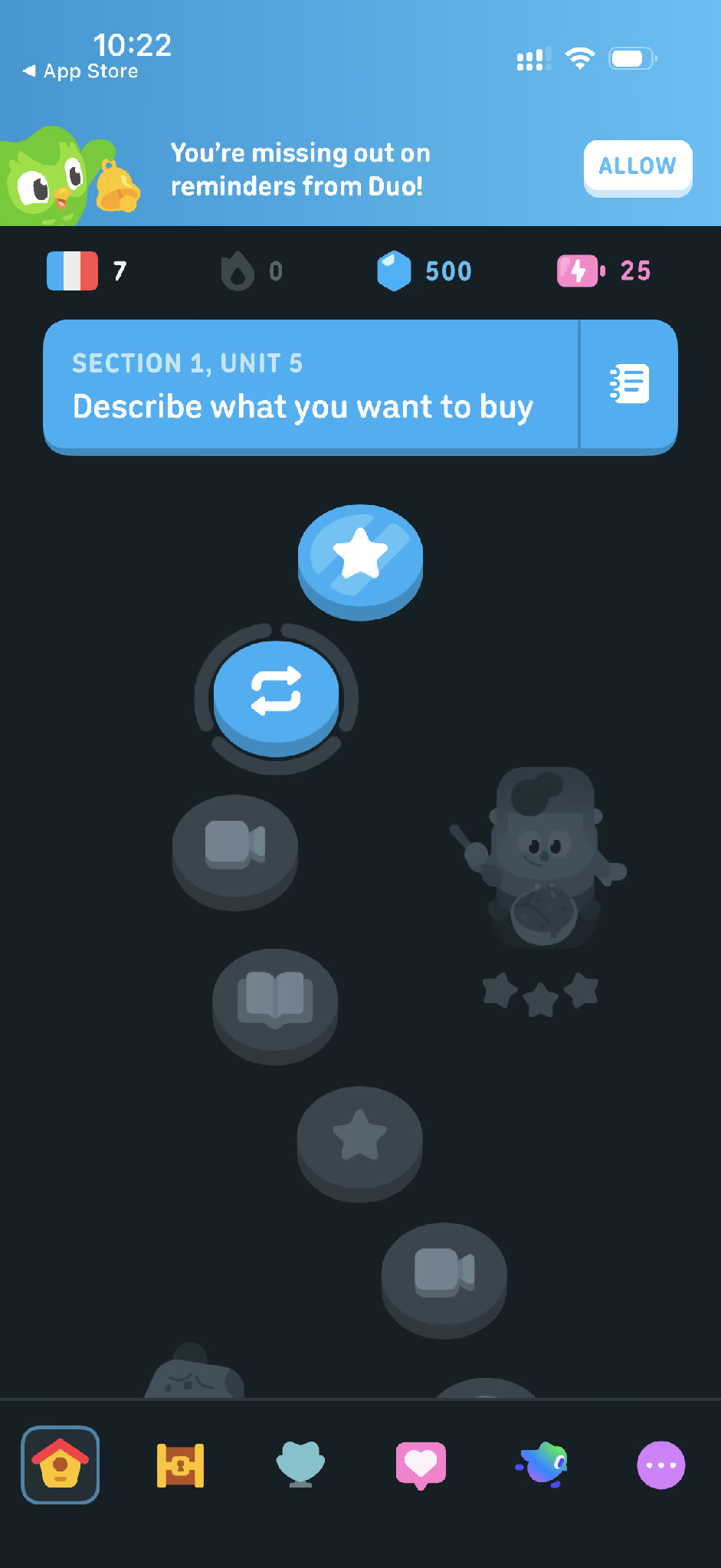
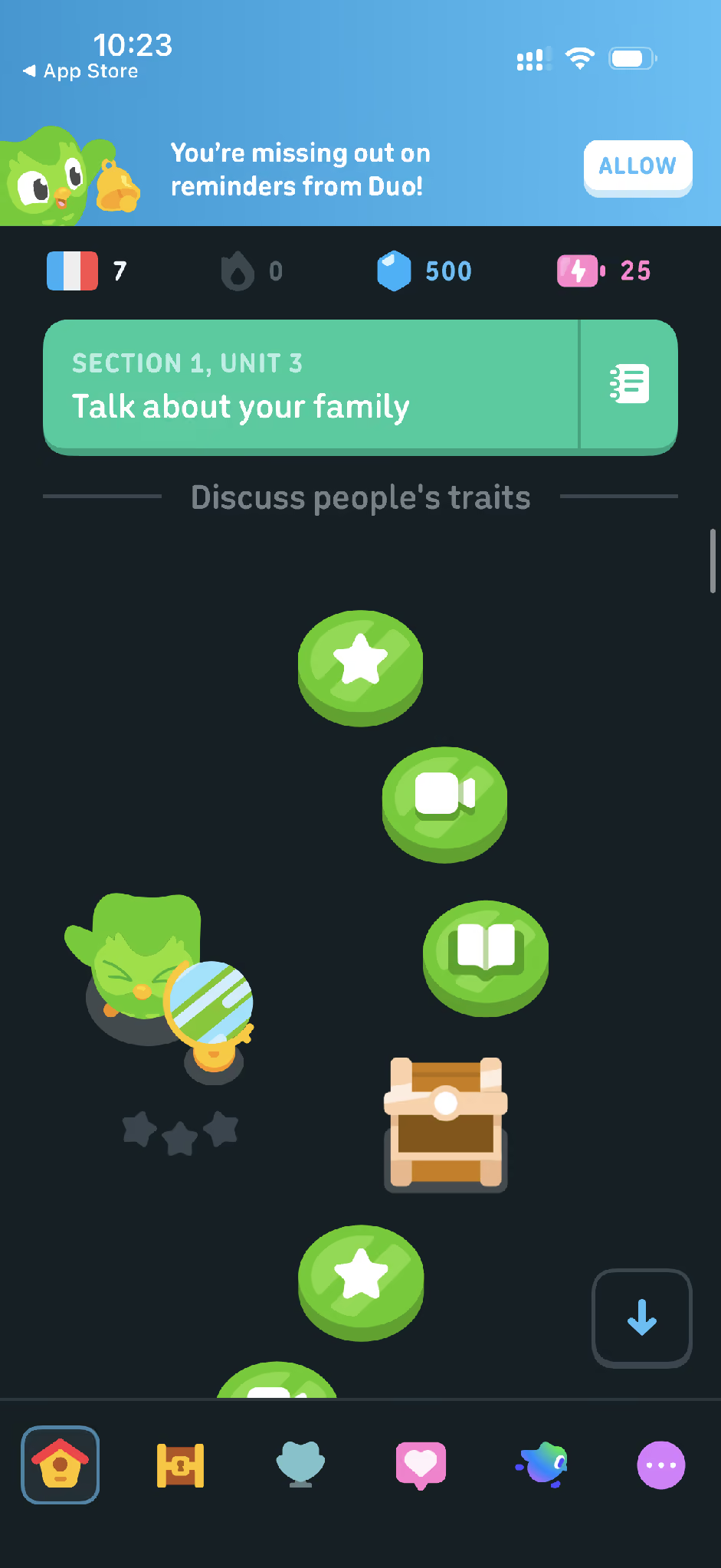
The screenshot below is my own French account. Look at the top bar: a French score of 7, a streak of 0, 500 gems, and 25 energy. Under the old hearts system you lost a heart for a wrong answer. Under energy, every exercise costs energy no matter how well you answer, so the meter drains while you are learning correctly.
Android Authority ran a reader poll after covering the change and collected 4,916 votes. Sixty-four percent said they still use Duolingo, with Busuu, Drops, Babbel, Memrise, and LingoDeer splitting most of the rest. That split matters more than it looks. The audience searching for a Duolingo alternative is mostly still inside Duolingo, frustrated and looking, rather than already gone.
The A2 Ceiling Nobody Advertises
The CEFR scale runs A1, A2, B1, B2, C1, C2. Duolingo courses top out around A2 for most languages, and only a handful of the largest courses push meaningfully into B1. A2 describes someone who can handle simple, routine exchanges on familiar topics. B2 describes someone who can follow a technical discussion in their field.
That gap is the entire reason this article exists. A student who needs to attend a French seminar, read a Spanish research paper, or follow a Mandarin lecture needs B2 comprehension and has an app that stops at A2. Two years of streaks does not close that distance.
Who the Duolingo Competitors Actually Are
Duolingo alternatives fall into four main groups. Some apps teach complete courses, some improve specific skills like speaking or vocabulary, some connect you with human tutors, and some help you understand real conversations instantly. Choosing the right one depends on what you want to achieve.
Most people search for a Duolingo alternative expecting another app just like Duolingo. In reality, they often need a different type of tool, such as one that builds speaking skills or helps them use a language in real conversations. If Duolingo keeps you motivated, don't replace it completely. Instead, add another app that strengthens the skills Duolingo does not cover.
Why Duolingo Still Does Better Than Other Apps
I want to be fair here, because most alternatives-to-Duolingo articles are dishonest about this. Duolingo is the best habit-formation engine in consumer education, PERIOD. It holds a 4.7 rating from around 200,000 App Store ratings and ranks second in the Education chart. Nothing else on this list gets an ordinary person to open a language app for 400 consecutive days.
- Habit Formation: Streaks, leagues, and notifications work. That is not a criticism, it is the product working as designed.
- Zero Friction to Start: You can begin a course in under 60 seconds with no account setup worth the name.
- High-Frequency Vocabulary: The first few hundred words in any Duolingo course are genuinely well chosen.
- Course Breadth: More than 40 language courses, including several nobody else bothers with.
The correct conclusion is rarely to delete Duolingo. It is to add the second tool that covers what Duolingo cannot, which is the whole point of every app like Duolingo listed below.
Duolingo Review 2026: Features, Pricing, and Who It Actually Suits
Before recommending a replacement, here is an honest look at what you are replacing. I installed the current build, ran the French course, and worked through the free experience for 30 days.
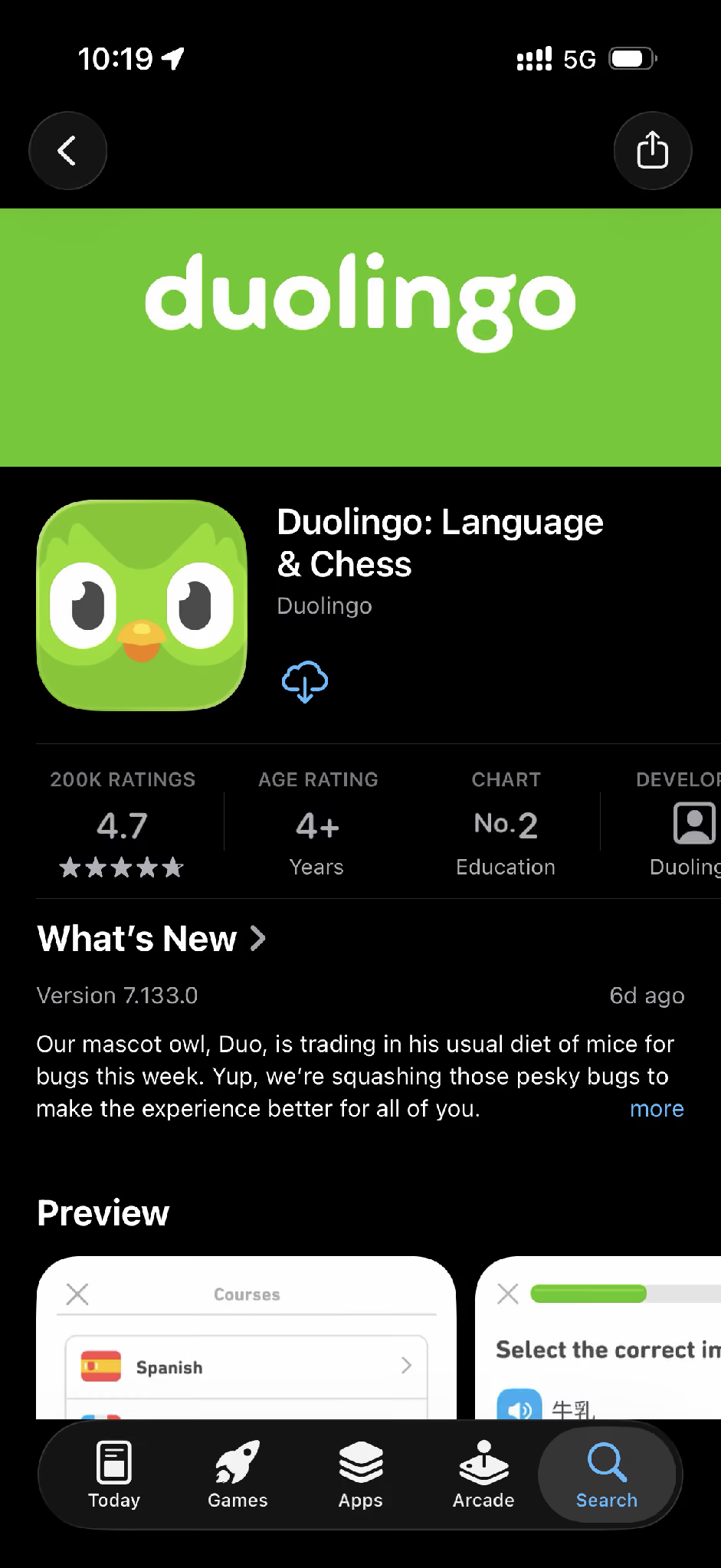
The first thing worth noticing is the name. The App Store listing now reads Duolingo: Language & Chess, on version 7.133.0. Duolingo has expanded well beyond languages, and the course switcher confirms it.
Duolingo Features in 2026
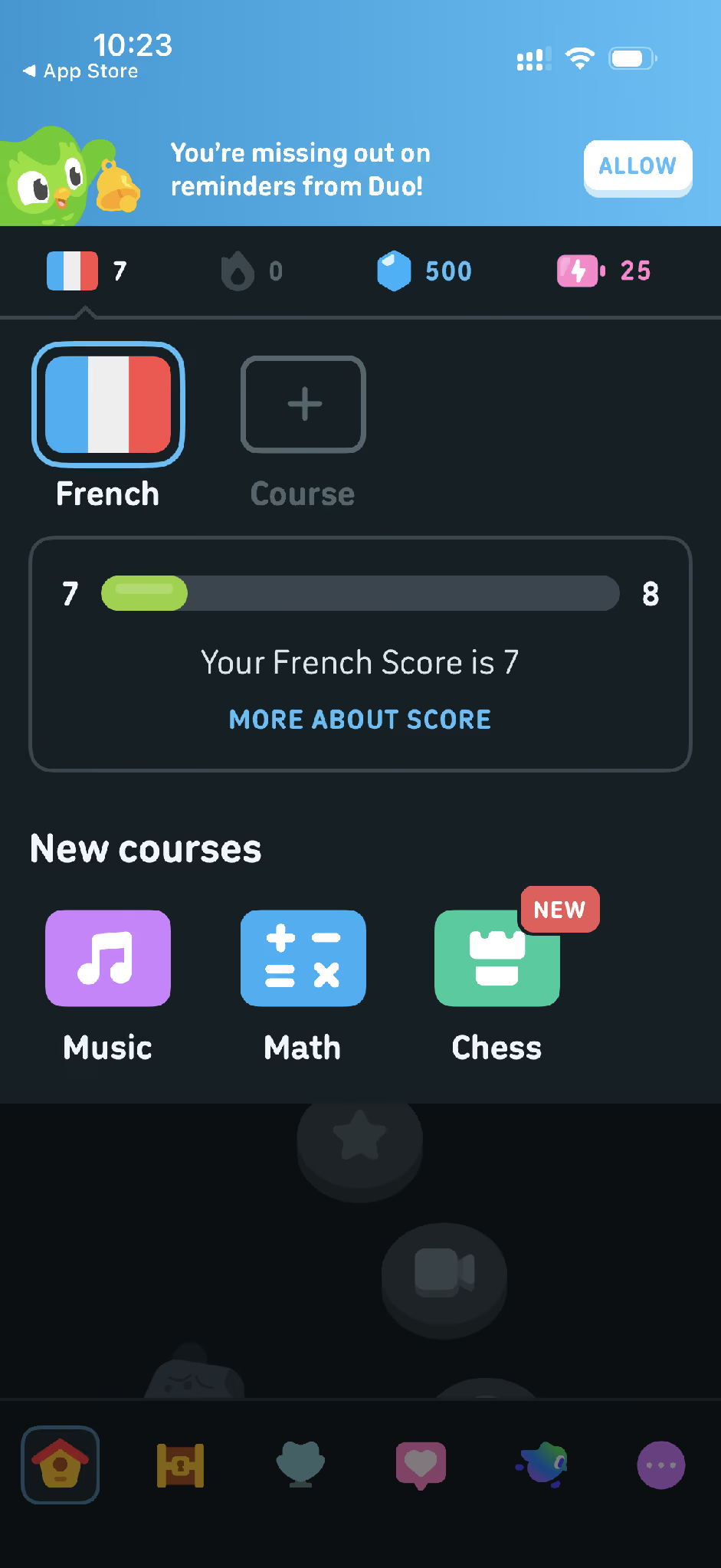
- The Learning Path: Sections divided into units, each unit built from short exercises. My screenshots show Section 1, Unit 3, Talk about your family, and Section 1, Unit 5, Describe what you want to buy.
- Language Score: A numeric proficiency estimate, mine reading 7 in French with 8 as the next milestone. Useful as a progress signal, and not mappable to CEFR in any published way.
- Energy: The free-tier meter that replaced hearts, shown at 25 in my account.
- Gems: In-app currency, 500 in my account, spendable on refills and streak freezes.
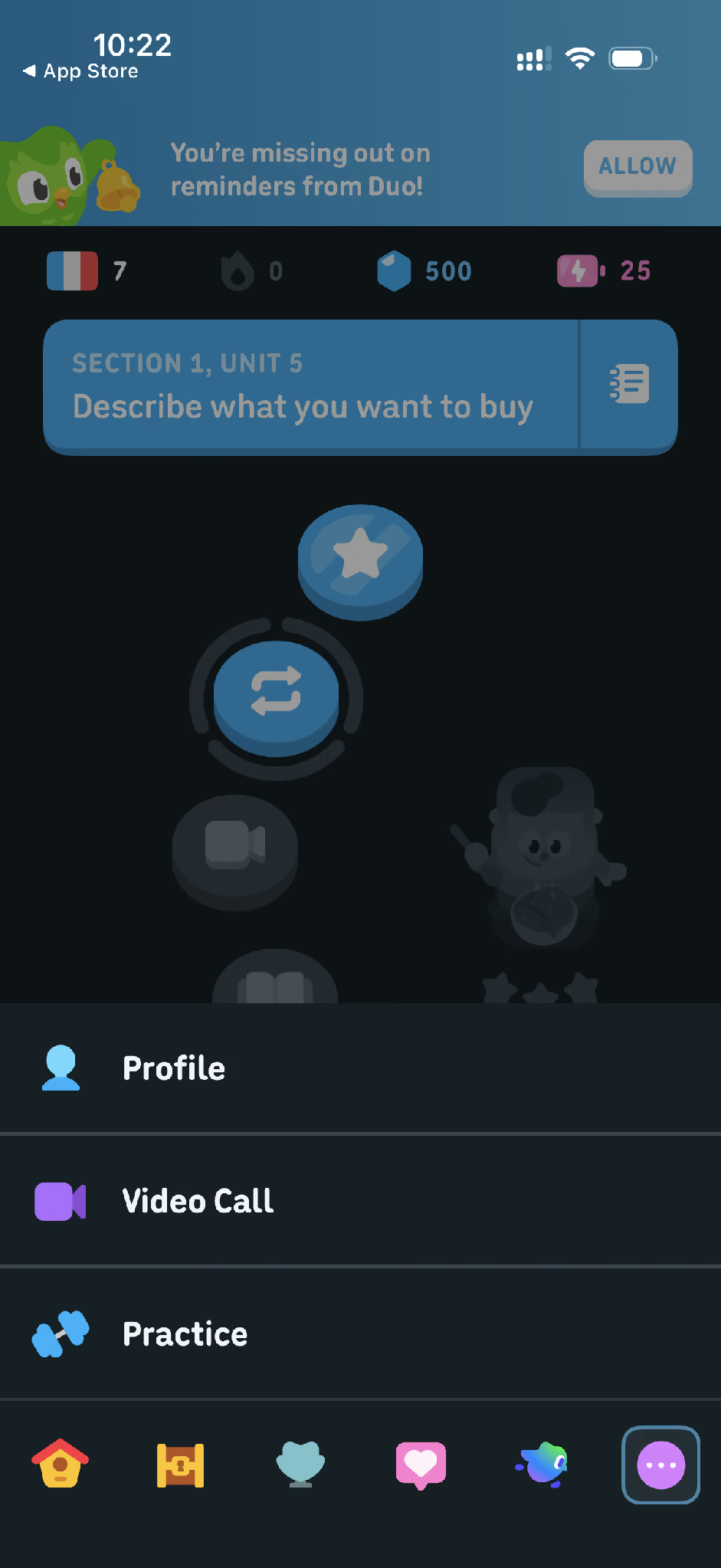
- Video Call With Lily: An AI conversation feature on paid tiers, reachable from the More menu.
- Practice Hub: Targeted review of mistakes, mostly behind the paywall.
- Music, Math, and Chess: Non-language courses now sharing the same subscription.
What the Lesson Path Actually Feels Like
Each unit presents a mix of translation, listening, word-bank sentence building, and occasional speaking exercises. The design is excellent at keeping you moving. It is weak at explaining why an answer is wrong. When my French answer failed, I got a correct version and no rule.
For a beginner, that trade is fine. For anyone past the first few hundred words, it becomes the reason progress stalls, and it is the single most common complaint I found across app-store reviews and forum threads.
Duolingo Pricing in 2026
Duolingo runs three tiers. Free carries ads and the energy limit. Super removes ads, removes the energy cap, and unlocks unlimited practice. Max adds the AI features including Video Call and explanation of answers. Family plans cover up to six accounts.
Duolingo Super
Duolingo Super is the premium version of Duolingo that removes ads, provides unlimited hearts, personalized practice, mistake reviews, and extra features for faster learning. It supports 100+ language courses and includes a free trial before subscription.
Duolingo Max
Duolingo Max is the AI-powered plan built on top of Super Duolingo. It adds features like Video Call with AI characters and Roleplay scenarios powered by GPT-4, helping learners practice real conversations and receive AI feedback.
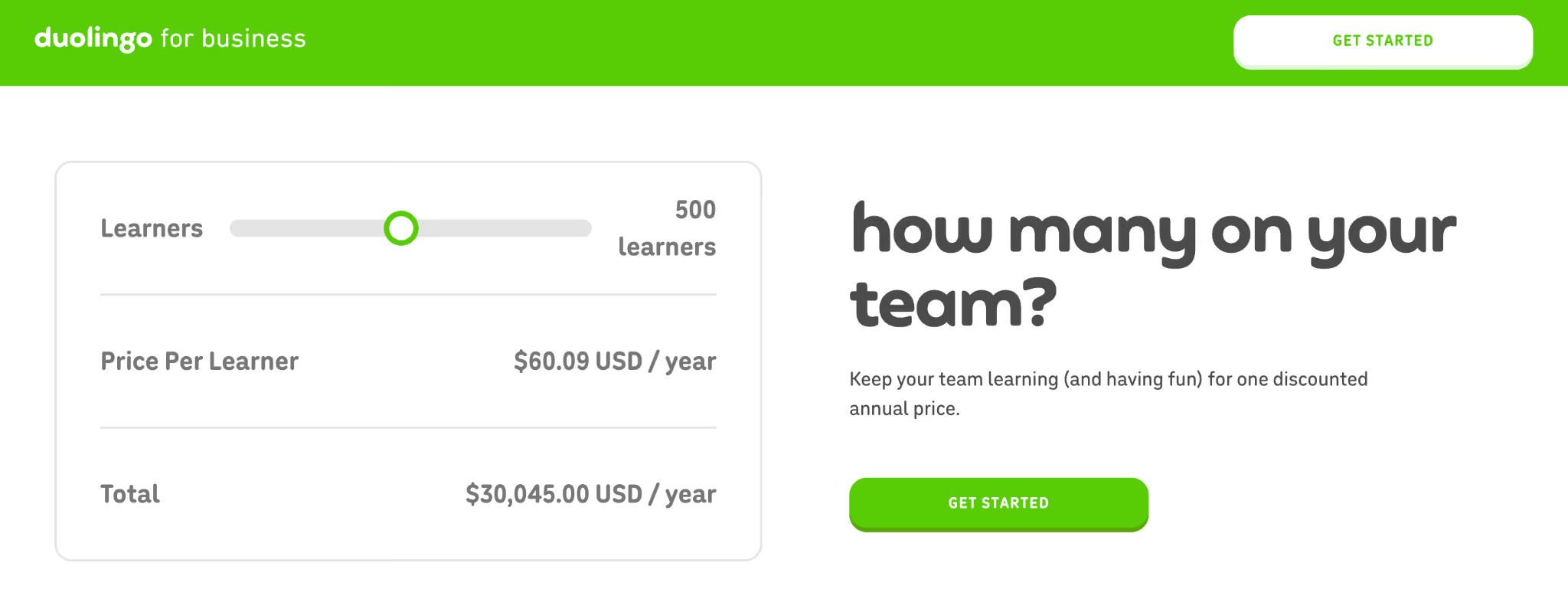
Duolingo for Business
Duolingo for Business helps companies train employees with language learning programs. Pricing starts at around $60.09 per user, with features designed for workplace learning and team management.
Duolingo Course Quality Varies Enormously by Language
This is the part no roundup states plainly. Duolingo Spanish and Duolingo French are mature courses with large content libraries, audio variety, and stories. Duolingo Mandarin is a different product with the same interface. It leans heavily on pinyin, teaches characters thinly, and offers almost nothing on tone correction.
Duolingo ABC and Kids
Duolingo ABC is a separate free app for early literacy in English, aimed at ages three to 8. It covers phonics and reading rather than second-language learning, so parents looking for a Duolingo alternative for kids learning Spanish or French need a different tool entirely. I cover those further down.
What Duolingo Does Not Teach
- Sustained listening to unscripted native speech at natural speed
- Reading anything longer than a lesson sentence
- Writing more than a few words at a time
- Why a grammatical rule works, rather than that it exists
- Anything at all about the specific vocabulary of your degree, your job, or your field
- Dialect variation, which matters enormously in Spanish and meaningfully in French
What Users Say About Duolingo
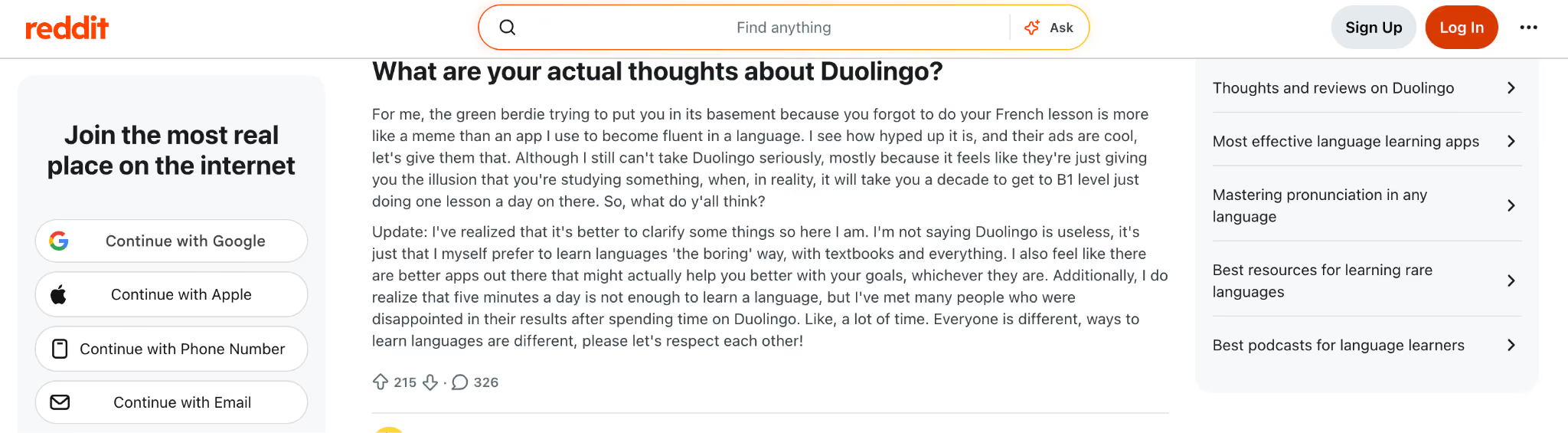
One Reddit user says: Duolingo is a fun way to build a daily learning habit, but many users feel it creates an illusion of fluency and is not enough for reaching conversational ability without additional practice like speaking, reading, and immersion.
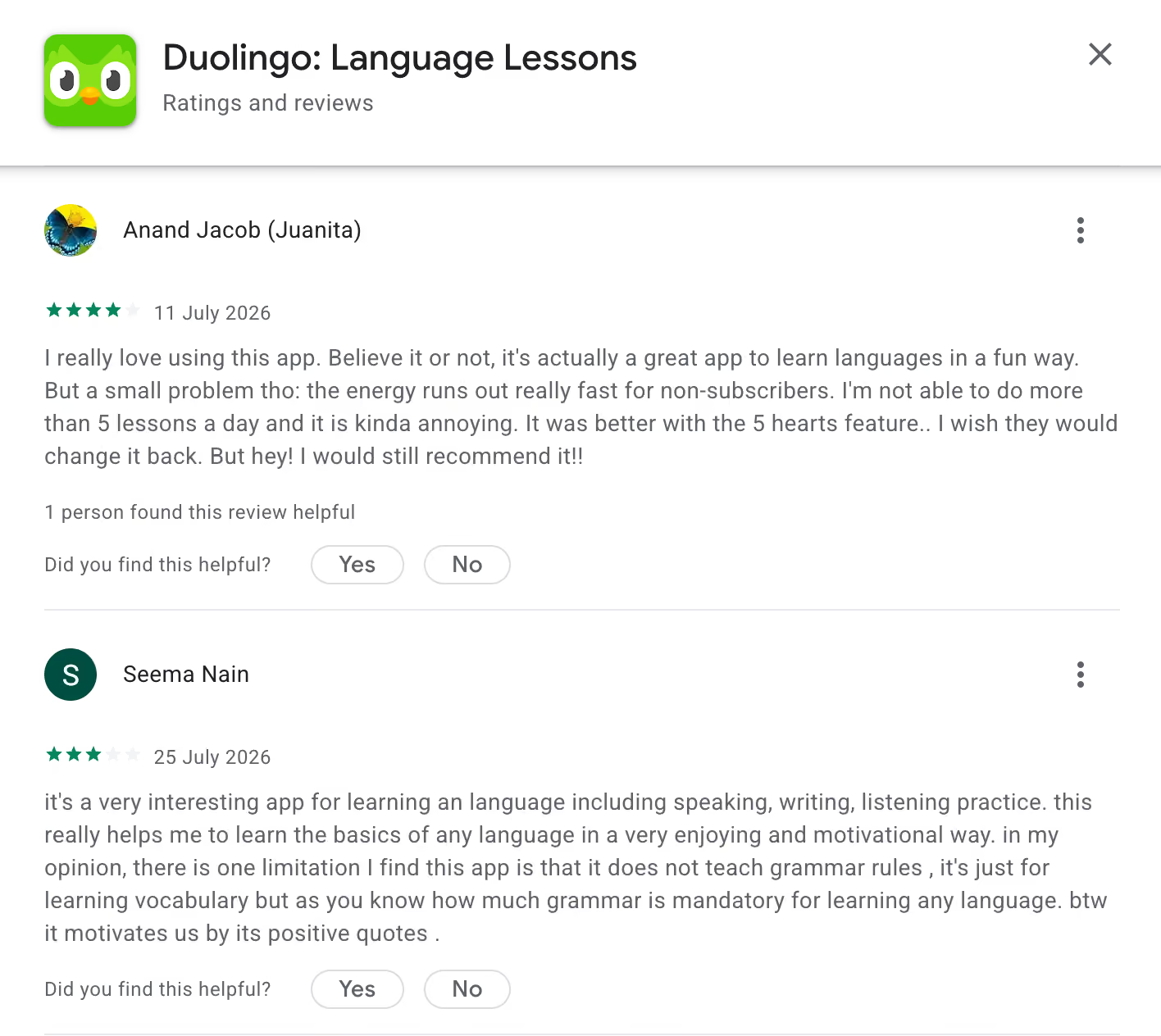
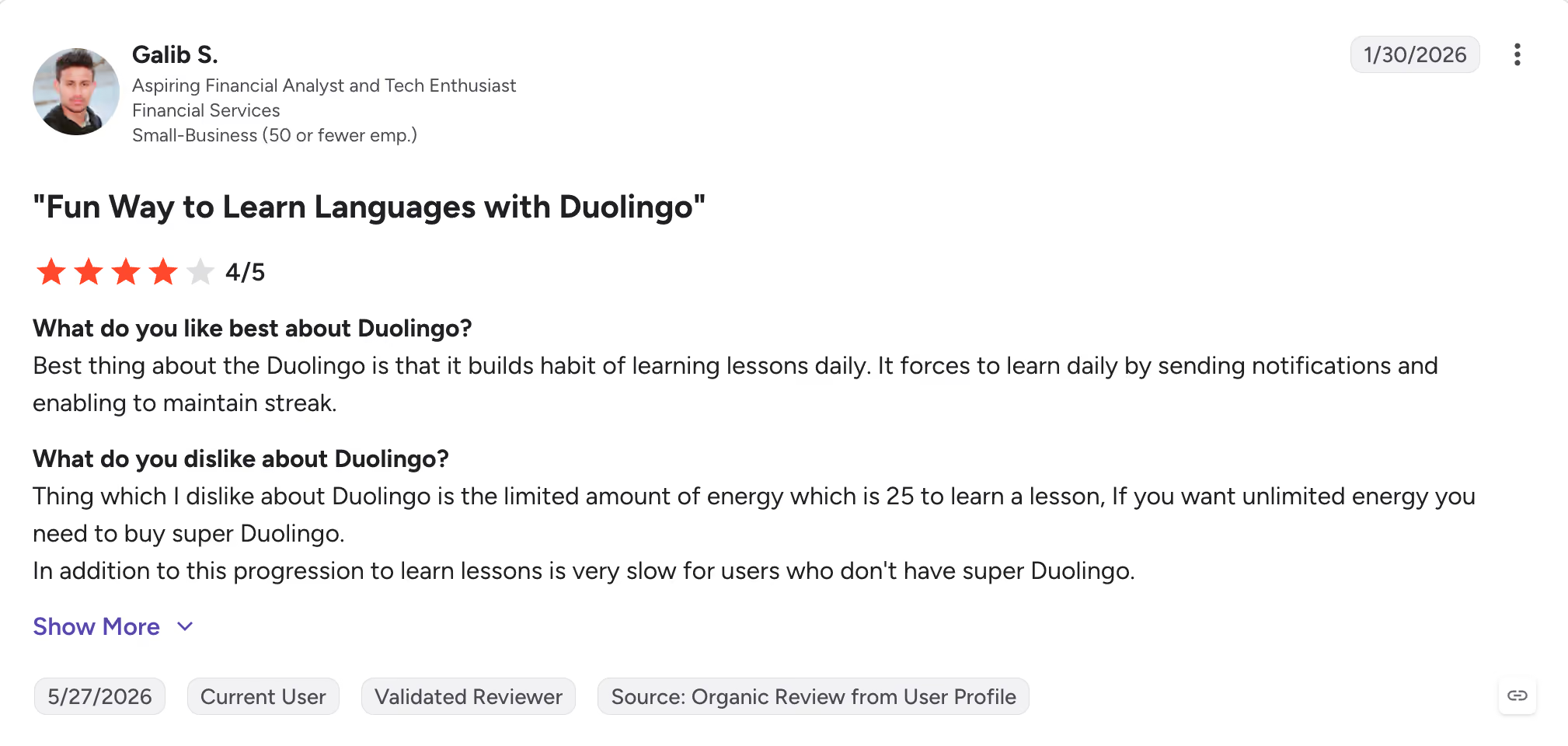
Google Play users say: Duolingo makes language learning fun and motivating with speaking, writing, and listening exercises, but some users feel the limited energy system for free users and lack of deeper grammar lessons are drawbacks.
One G2 user says: Duolingo’s biggest strength is its ability to build a daily learning habit through streaks and reminders, but the limited energy system and slower progress for free users can make learning feel restricted.
How Do You Set Up Duolingo and Get the Most Out of the Free Plan
You set up Duolingo in six steps, and five settings changes make the free tier considerably less frustrating. None of the six pages currently ranking for this query cover the setup at all, which is a gap worth filling before you decide to leave.
Step 1: Install and choose your course
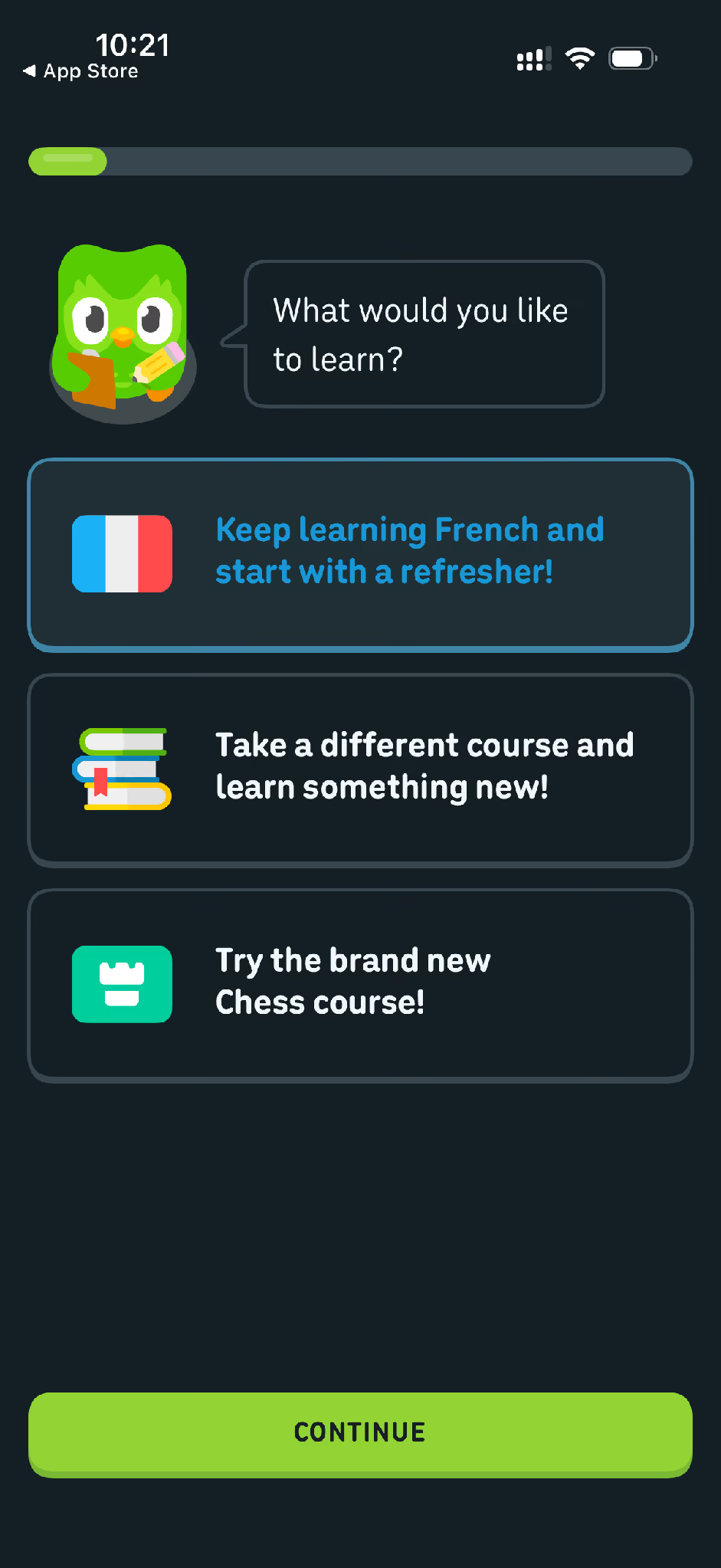
Onboarding asks what you would like to learn and offers to continue an existing course, start a new one, or try Chess. Pick your target language here. Changing later is easy through the flag icon at the top left.
Step 2: Skip the placement test if you are new
The placement test drops you into the right unit rather than making you replay content you already know. Returning learners save weeks with it.
Step 3: Set a daily goal
The app encourages realistic goals and consistency. A 5-minute daily habit maintained for 90 days is more effective than a 20-minute goal that you quit after a few weeks.
Step 4: Turn off the notification barrage
Duolingo asks for notification permission aggressively during onboarding. Allow it once, then trim to a single daily reminder in Settings. The nag banner disappears and the habit signal survives.
Step 5: Spend gems on streak freezes
Energy refills only give you extra practice for the moment, while streak freezes protect the daily habit that keeps you consistent. For free users with 500 gems, investing in streak freezes is usually the smarter choice.
Step 6: Add a second tool from day one
This is the step that decides how far past A2 you get. Duolingo covers habit and vocabulary. Pair it with one app from the list below that covers your specific weak point, and you have a system rather than a game.
Five Settings That Make the Free Tier Bearable
- Turn Listening Exercises Back On: If you disabled them during a commute, they stay off. Listening is where free Duolingo delivers most of its remaining value.
- Turn Speaking Exercises On: Off by default in some regions. Speaking aloud is free practice most learners skip.
- Use Practice Rather Than New Units When Energy Is Low: Review costs the same energy and consolidates more.
- Read the Unit Guidebook Before Starting: The list icon on each unit header opens grammar notes most learners never open. It is the closest Duolingo comes to explaining a rule.
- Turn Off Leaderboards If They Stress You: Competitive leagues push volume over comprehension, and volume is not your bottleneck past unit 20.
How I Tested These Duolingo Alternatives
I used 12 apps across 30 days in three target languages, French, Spanish, and Mandarin Chinese, and gave every app the same job. The job was not to teach me a language in a month, since no app can. The job was to close a specific gap Duolingo leaves.
The Five Criteria
- Does It Explain, or Only Correct? When I answered wrong, did the app tell me the rule or only show the right answer?
- Can I Practice the Weak Skill Directly? Speaking, listening, reading, or writing, on demand rather than when the algorithm decides.
- What Does the Free Tier Actually Give? Never what the pricing page implies. The question is what survives after the first week.
- Does It Handle My Target Language Seriously? A French course and a Mandarin course inside the same app are rarely equal.
- What Do I Have Afterward? A transcript, a deck, a recording, notes. Something to revise from, rather than a completion badge.
What I Did Not Test
I did not run controlled proficiency measurement, and neither did any competitor page claiming a ranking. Thirty days is enough to judge teaching approach, friction, pricing honesty, and course depth. It is not enough to prove fluency outcomes, and anyone telling you otherwise is selling something.
The Source Material
The 12 Best Duolingo Alternatives in 2026 [Honest Review]
Ranked by how urgently each one solves a student problem, rather than by an abstract quality score. Some are apps like Duolingo in the obvious sense, and some solve a problem no course app touches. Every tool description carries what it fixes, key features, pricing in USD, pros, cons, and a verdict.
JotMe: The Best Duolingo Alternative for Understanding the Language Today
What JotMe fixes: The biggest challenge for language learners is moving from studying a language to actually understanding it in real situations. While most apps take months to build skills, JotMe helps you understand conversations, lectures, and content within seconds.
JotMe is not a course, it has no lessons, no flashcards, no streaks, and no CEFR path, and I am not going to pretend otherwise. It is a real-time comprehension layer that translates audio to text and written language with context, in 200+ languages across 39,000+ language pairs, and hands you a bilingual record afterward.
The reason JotMe takes the top slot is simple. A student in a French seminar next Tuesday, a student attending a Mandarin lecture this semester, or a student reading a Spanish paper tonight has a problem no language course can solve in time. That student needs comprehension now and a course in parallel. JotMe is the only tool in this guide that covers this now.
The Test That Convinced Me
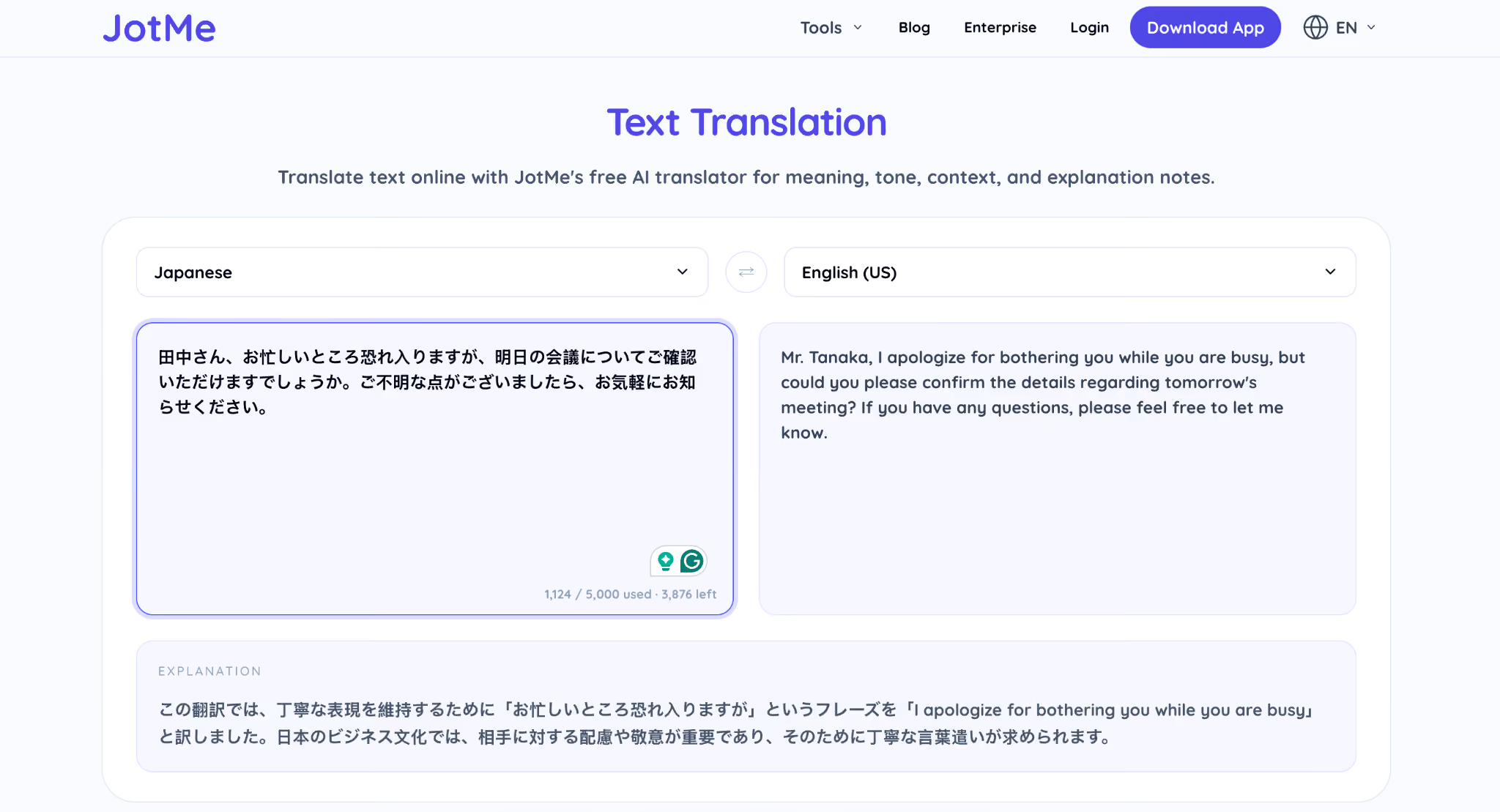
I ran the B2 French classroom dialogue through the JotMe text translator. The dialogue is deliberately hard, because it is a teacher coaching a student on hedging language, the exact register Duolingo never teaches. Here is how JotMe translated French to English:
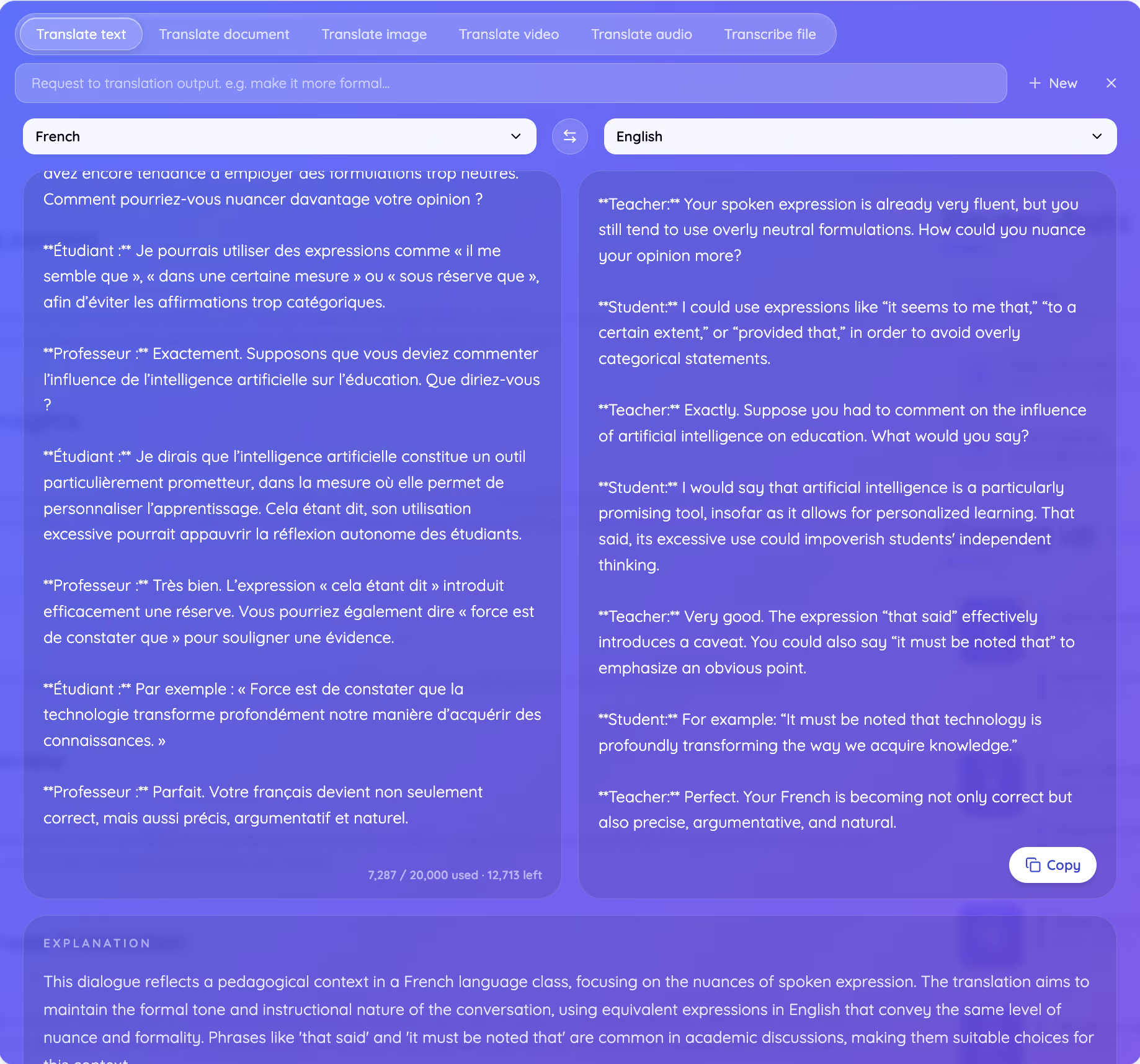
The closing line is the part worth reading twice. The teacher tells the student his French has become « non seulement correct, mais aussi précis, argumentatif et naturel », and JotMe carried that praise into English without flattening it into a generic compliment. Underneath the output, the explanation panel stated that the dialogue reflects a pedagogical context in a French language class focused on nuances of spoken expression, and that phrases like "that said" and "it must be noted that" are common in academic discussions.
That explanation panel is the feature that matters most to a student. When you cannot yet read the source language well, an output you cannot verify is worthless. JotMe shows its reasoning, which turns the output into something you can check.
Key Features
- Live Translation on Desktop and Mobile: Set a spoken language and a translation language, press play, and the transcript builds in both languages as somebody speaks.
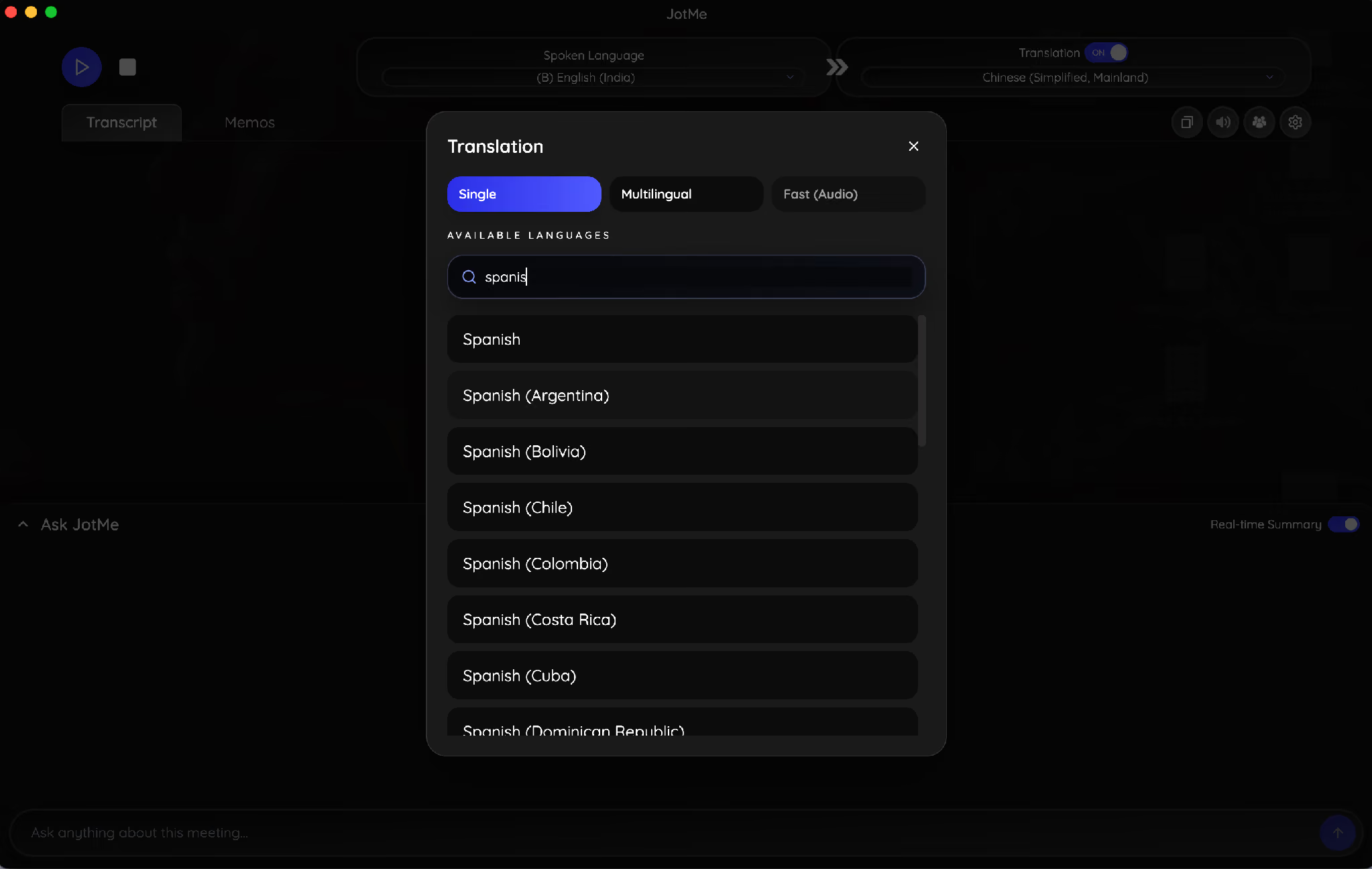
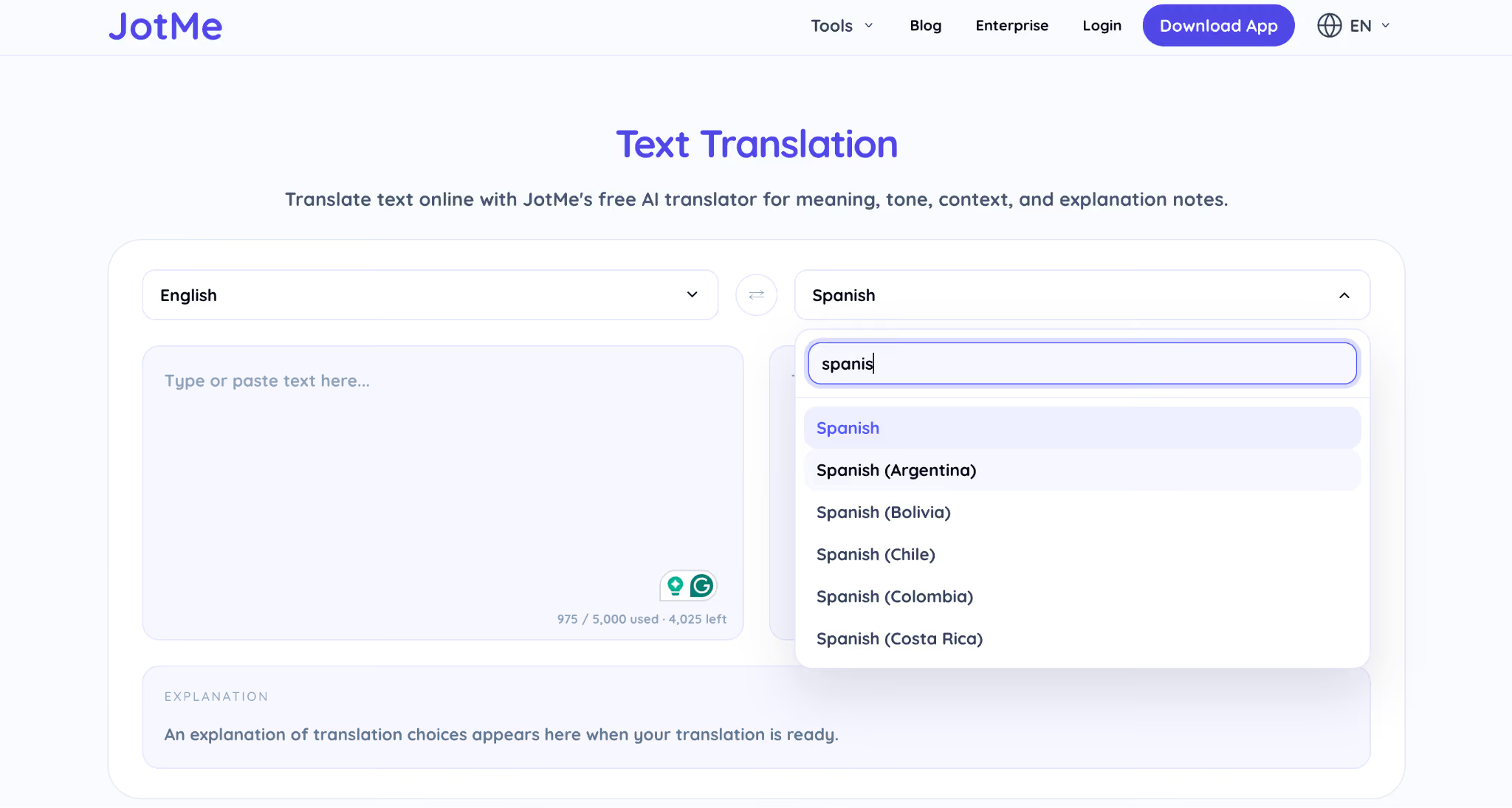
- Dialect Selection: The translation picker separates Spanish, Spanish (Argentina), Spanish (Bolivia), Spanish (Chile), Spanish (Colombia), Spanish (Costa Rica), Spanish (Cuba), Spanish (Dominican Republic), and more.
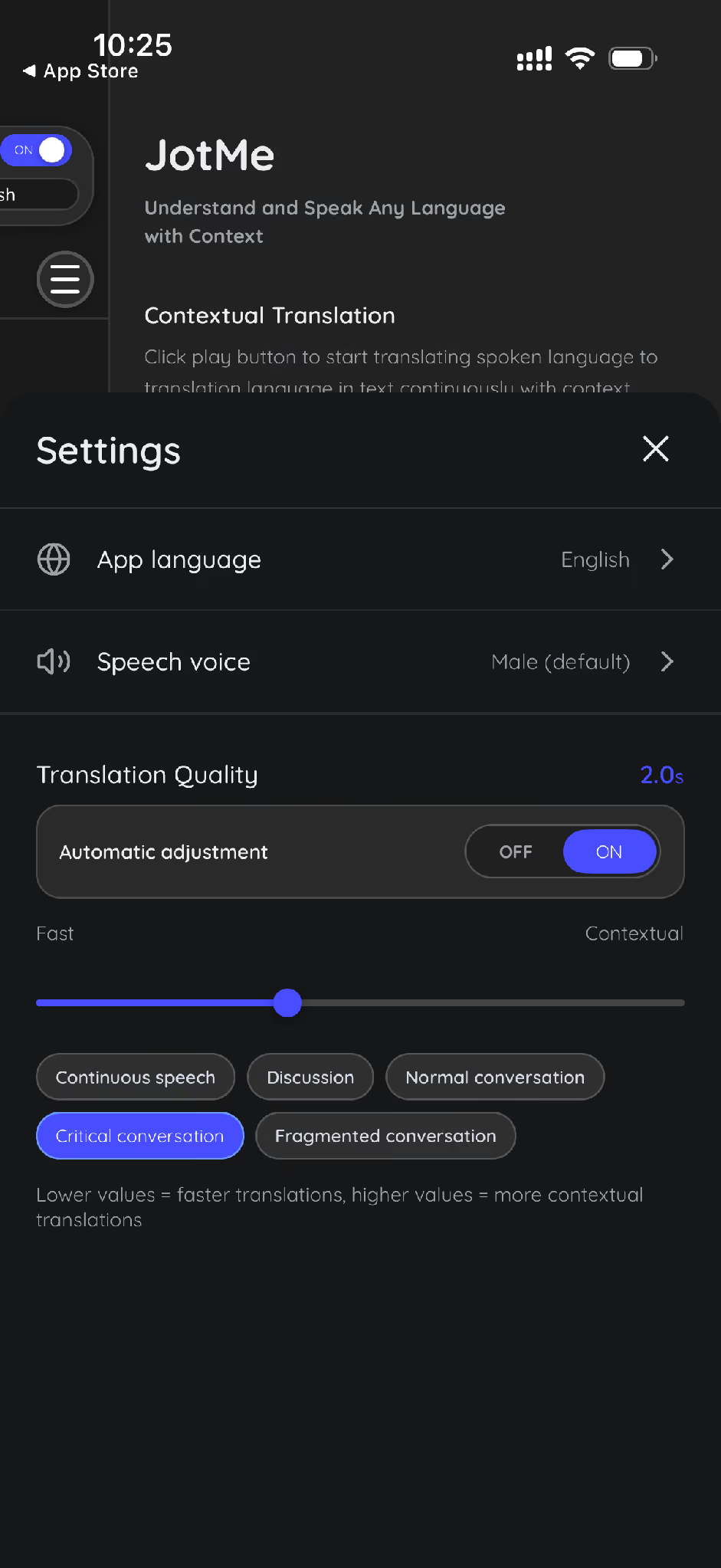
- Translation Quality Slider: A Fast-to-Contextual control with five presets, Continuous speech, Discussion, Normal conversation, Critical conversation, and Fragmented conversation. Lower values translate faster, higher values translate with more context.
- Voice-to-Voice Translation: Speak in your language and hear the target language back, which gives you a pronunciation model built from your own sentences rather than a textbook script.
- Bilingual Transcript: Every session saves with timestamps, source on one side and transcript on the other, exportable and shareable.
- AI Meeting Notes: Gist, summary, action items, and key points generated after a session, available in 21 languages.
- Ask JotMe: A chat panel that answers questions about what was said, in your language or the target language.
- File Translation: Text translation, documents, images, video, and audio through separate tabs, which covers a scanned handout, a lecture recording, and a research PDF.
How It Looks on Desktop
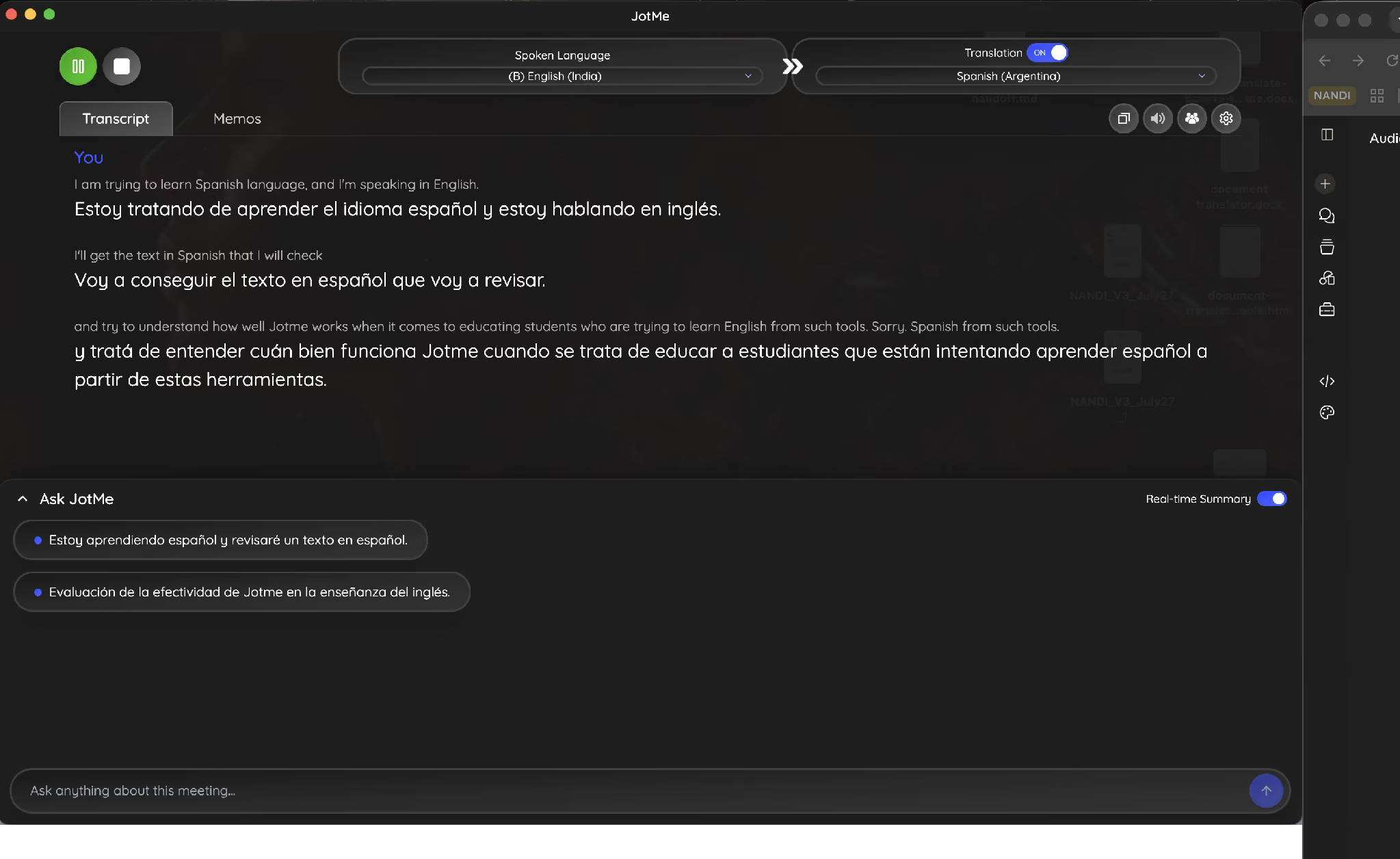
The desktop app runs beside whatever you are doing rather than inside it. In the run below I set the spoken language to English (India) and the translation language to Spanish (Argentina), and every line landed twice with the Ask JotMe panel summarizing underneath as the session progressed.
How It Looks on Mobile
The mobile app carries the same engine in a phone-shaped interface. The quality slider is in Settings, and the preset labels are the useful part. Critical conversation raises context weight for a viva, a supervisor meeting, or an exam briefing. Continuous speech suits a lecture where the speaker rarely pauses.
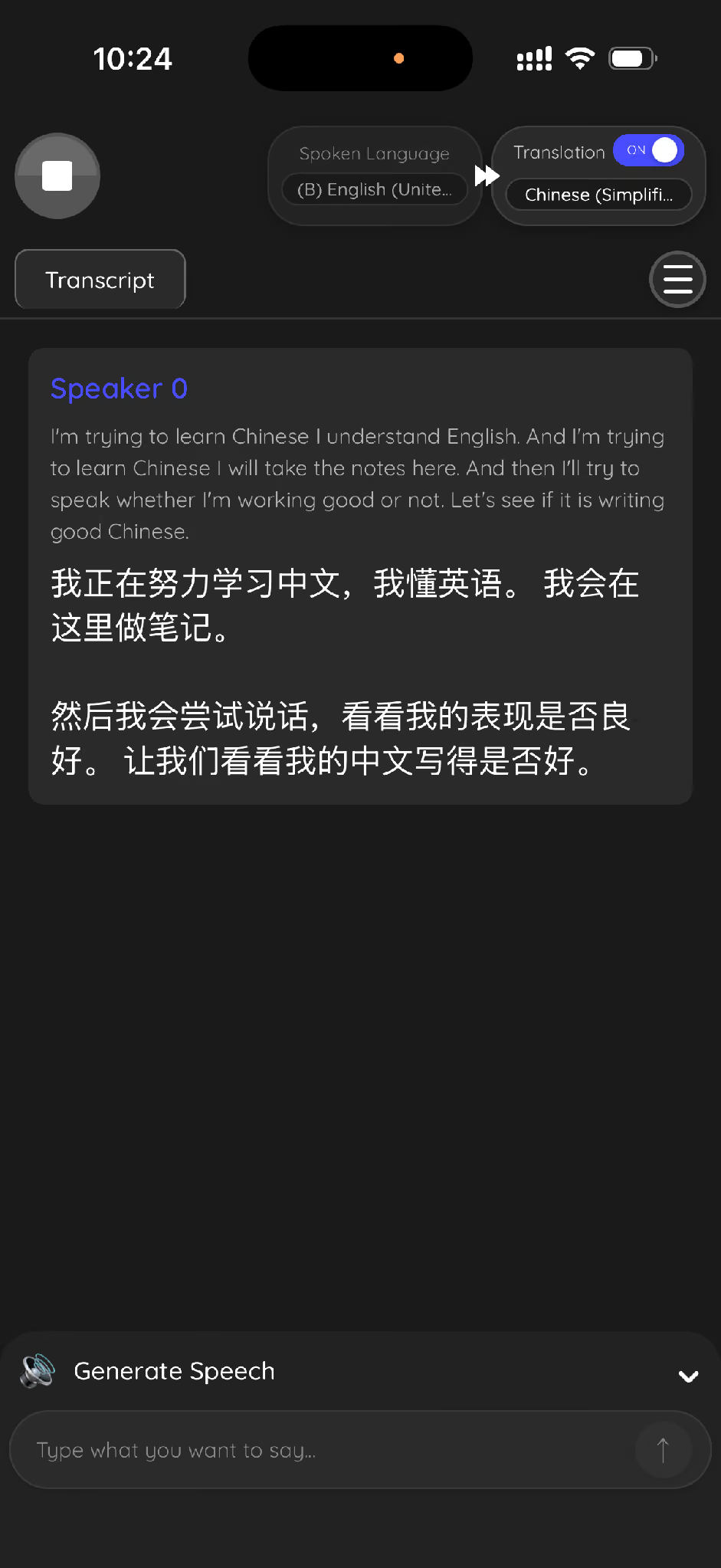
Running it live in a Chinese session, the app labels speakers and prints the source above the translation, with a Generate Speech field at the bottom for producing spoken output in the target language.
What You Have Afterward
This is where JotMe separates itself from every app like Duolingo on this list. After a session you get a full bilingual transcript with timestamps, and a notes view carrying a gist, action items, and key points.
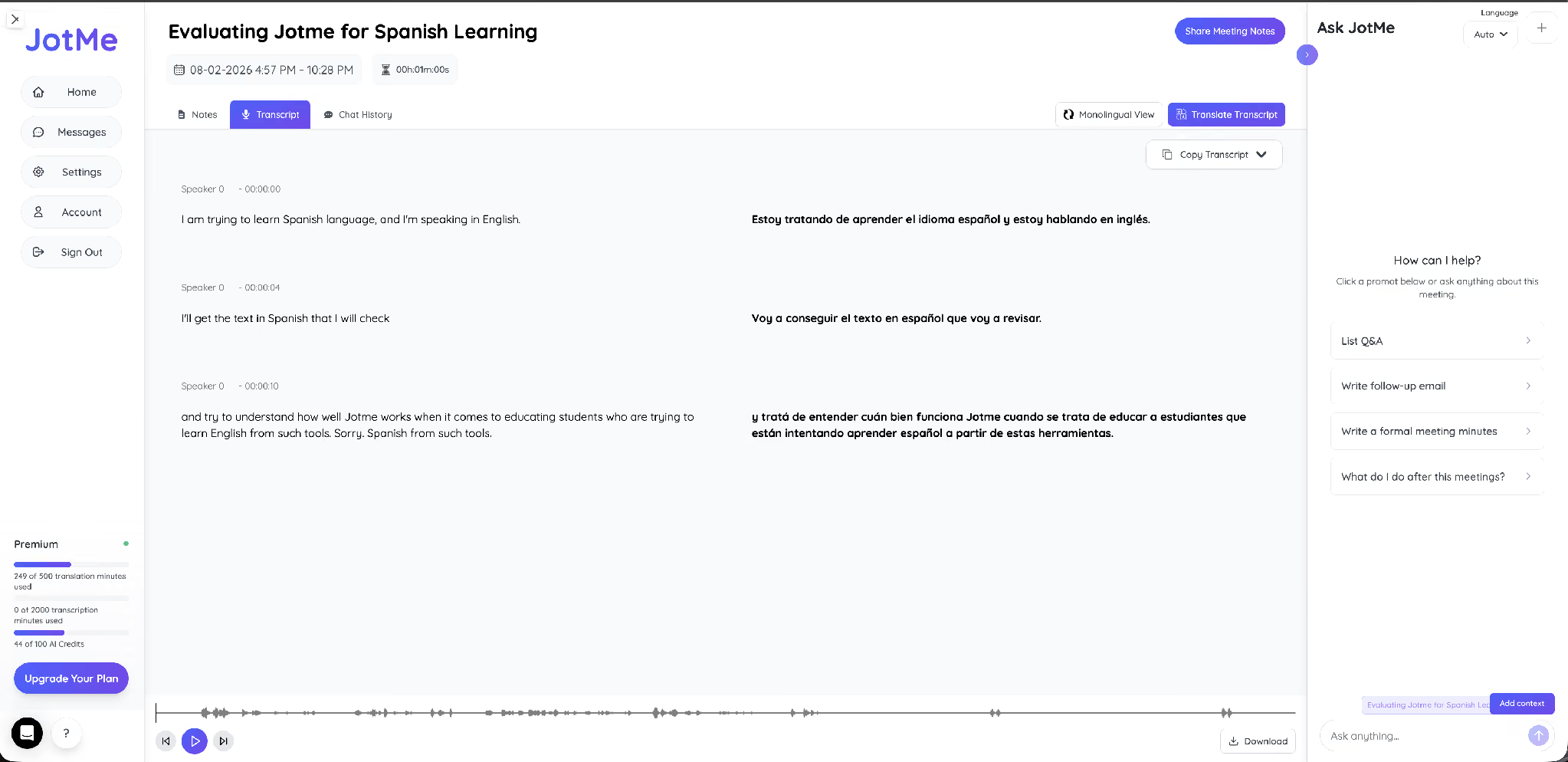
For a student, that transcript is revision material. Read the Spanish column against the English column and you are doing parallel-text study on your own lecture, which is the same technique Beelinguapp charges for. The guide to translation apps built for students covers how to build that habit into a study routine.
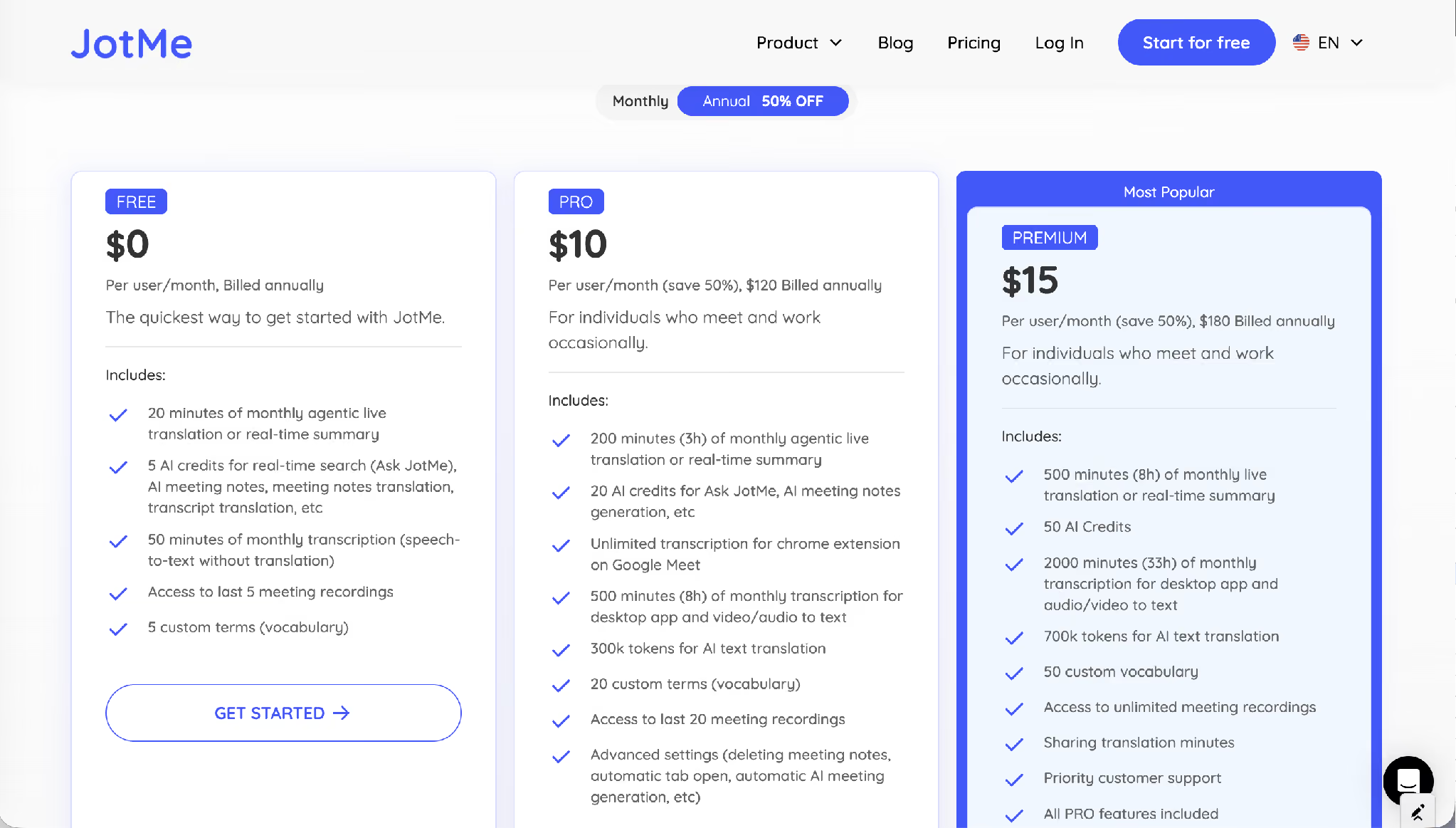
Pricing
Free Plan
- 20 minutes of monthly live translation or real-time summaries
- 5 AI credits
- 50 minutes of transcription
- Access to the last 5 recordings
- 5 custom vocabulary terms
Pro Plan: $10/user/month (billed annually at $120)
- 200 minutes of live translation
- 20 AI credits
- Unlimited transcription through the Chrome extension for Google Meet
- 500 minutes of transcription through the desktop app
- 300K tokens for AI text translation
- 20 custom vocabulary terms
Premium Plan: $15/user/month (billed annually at $180)
- 500 minutes of live translation
- 50 AI credits
- 2,000 minutes of transcription
- 700K tokens for AI text translation
- 50 custom vocabulary terms
- Unlimited recordings
- Shared translation minutes
For universities and colleges: JotMe does not offer an individual student discount. Institutions can contact the team for 50% off the team plan, which lets a department share translation minutes across a cohort. That is the route worth taking if you are organizing this for a class rather than for yourself. For more information contact JotMe.
Pros
- Covers 200+ languages, including the Asian languages where course apps are weakest
- Explains its own translation choices, which lets you verify output in a language you cannot yet read
- Dialect selection down to the country level for Spanish
- Leaves you with a bilingual transcript and notes rather than a completion badge
- Free tier is usable for a short lecture or a batch of voice notes
- Works on desktop, mobile, and inside meeting apps
Cons
- It will not build a habit, there is no streak, no reminder, and nothing gamified
- Live translation minutes are metered, so a full semester of lectures needs a paid plan
- Used carelessly it becomes a crutch, since reading the translation is easier than working out the original
Verdict: The best Duolingo alternative for any student who has a real deadline in a real language. Pair it with a course from further down this list. Used alone it makes you comprehending rather than fluent, and used alongside Babbel, Busuu, or LingoDeer it removes the reason most students quit, which is the feeling that months of study still leave you lost in the room.
Babbel: The Best Duolingo Alternative for Structured Grammar
What it fixes: Duolingo shows you the correct answer and Babbel tells you the rule.
Babbel is the closest thing on this list to a proper beginner course delivered by an app. Lessons run 10 to 15 minutes, follow a sequence written by language teachers, and build toward practical conversation rather than isolated sentence translation.
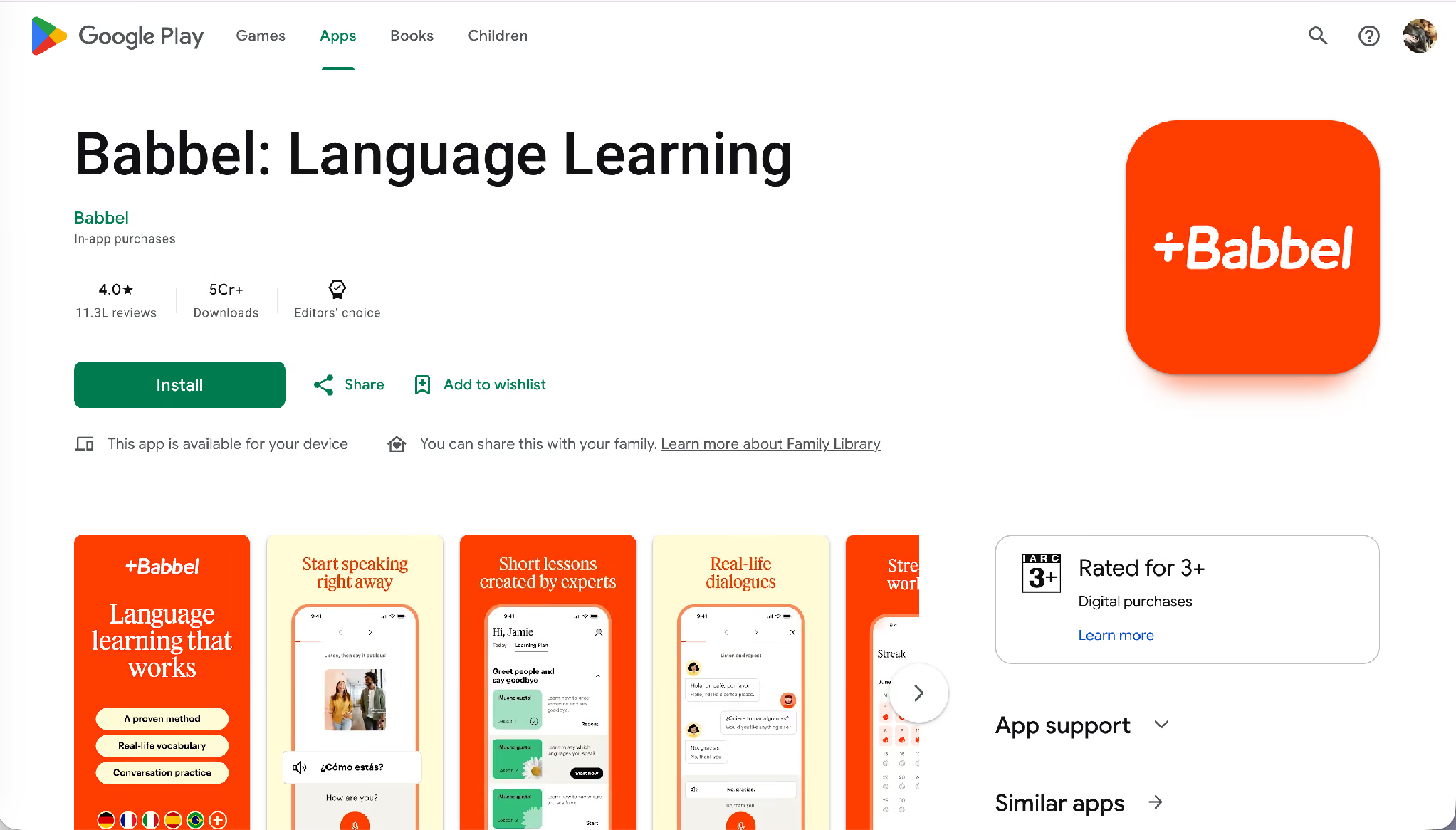
The Google Play listing shows 4.0 stars across roughly 1.13 million reviews, more than 50 million downloads, and an Editors Choice badge. The store copy leads with "Language learning that works" and highlights a proven method, real-life vocabulary, and conversation practice, which is an accurate description of what the app delivers.
Key Features
- Conversation-Based Lessons: Every unit builds toward a dialogue you would plausibly have.
- Explicit Grammar Notes: Rules explained in plain language at the point where you need them.
- Spaced Repetition Review: A review manager that pulls vocabulary and grammar from earlier lessons.
- Babbel Speak: Speech recognition with pronunciation feedback.
- Podcasts: Extra listening content in the larger courses, useful once you pass A2.
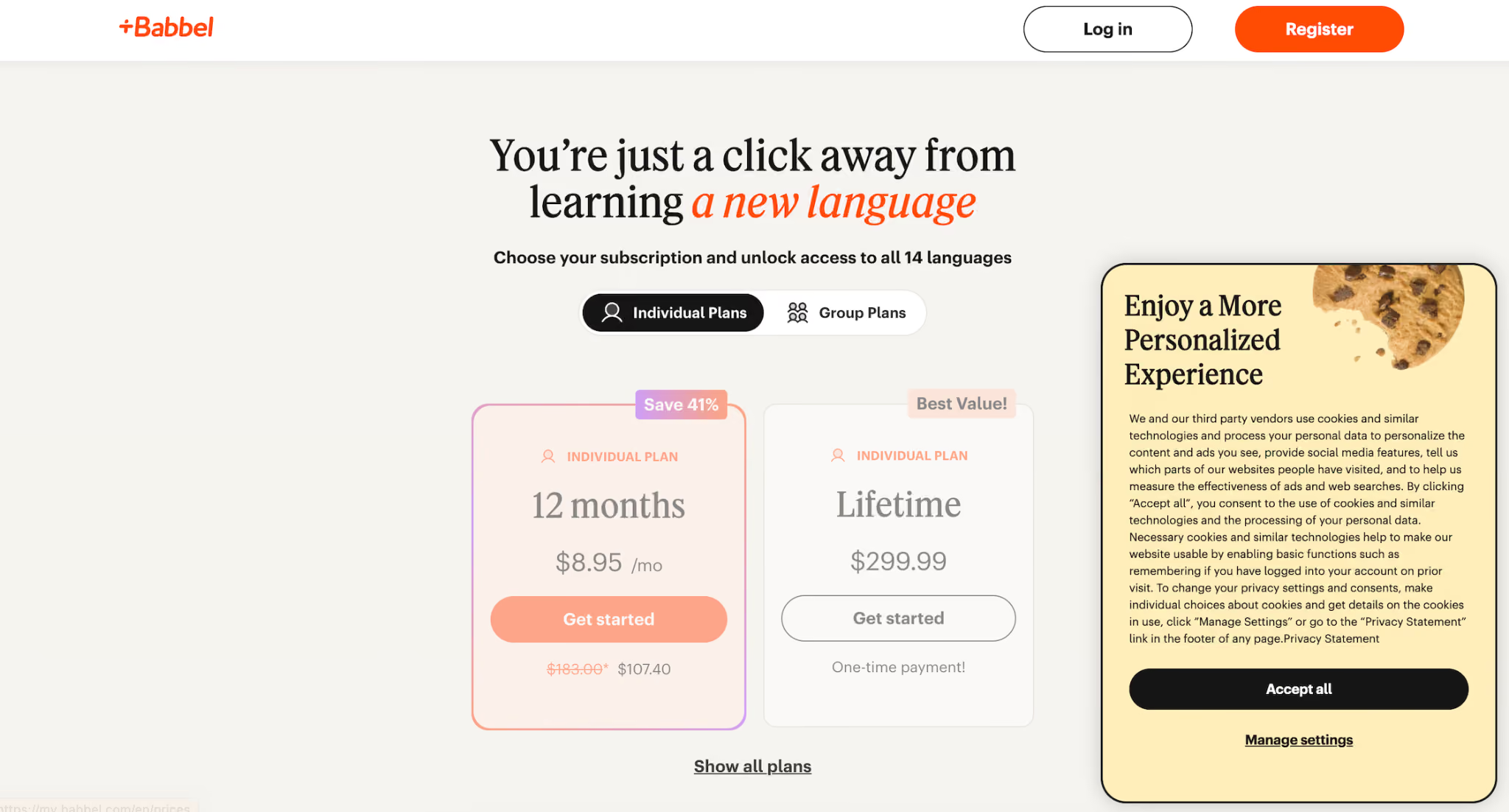
Pricing
Babbel’s individual plan starts with $8.95/month and another is Lifetime plan of $299.99.
Pros
- The clearest grammar explanations of any mainstream app like Duolingo
- Logical sequencing from A1 to B1, so progress feels real
- Short sessions fit a student schedule
- Lifetime deals make it cheap over a degree
Cons
- Fourteen languages only, and most of them European
- No usable free tier, so you commit before you know it suits you
- Asian language support is thin to nonexistent
- Babbel Live group classes were discontinued in July 2025, so the human element is gone
Verdict: The strongest single replacement for Duolingo if you learn French, Spanish, or German and your complaint is that you never understand why an answer is wrong.
Busuu: The Best Free Duolingo Alternative With a Real Course
What it fixes: No structured path, and no human ever tells you your sentence sounds strange.
Busuu aligns its courses to the CEFR framework, which means you can see the distance between where you are and B2 rather than guessing from a streak count. It also runs a correction community where native speakers mark your written and spoken exercises.
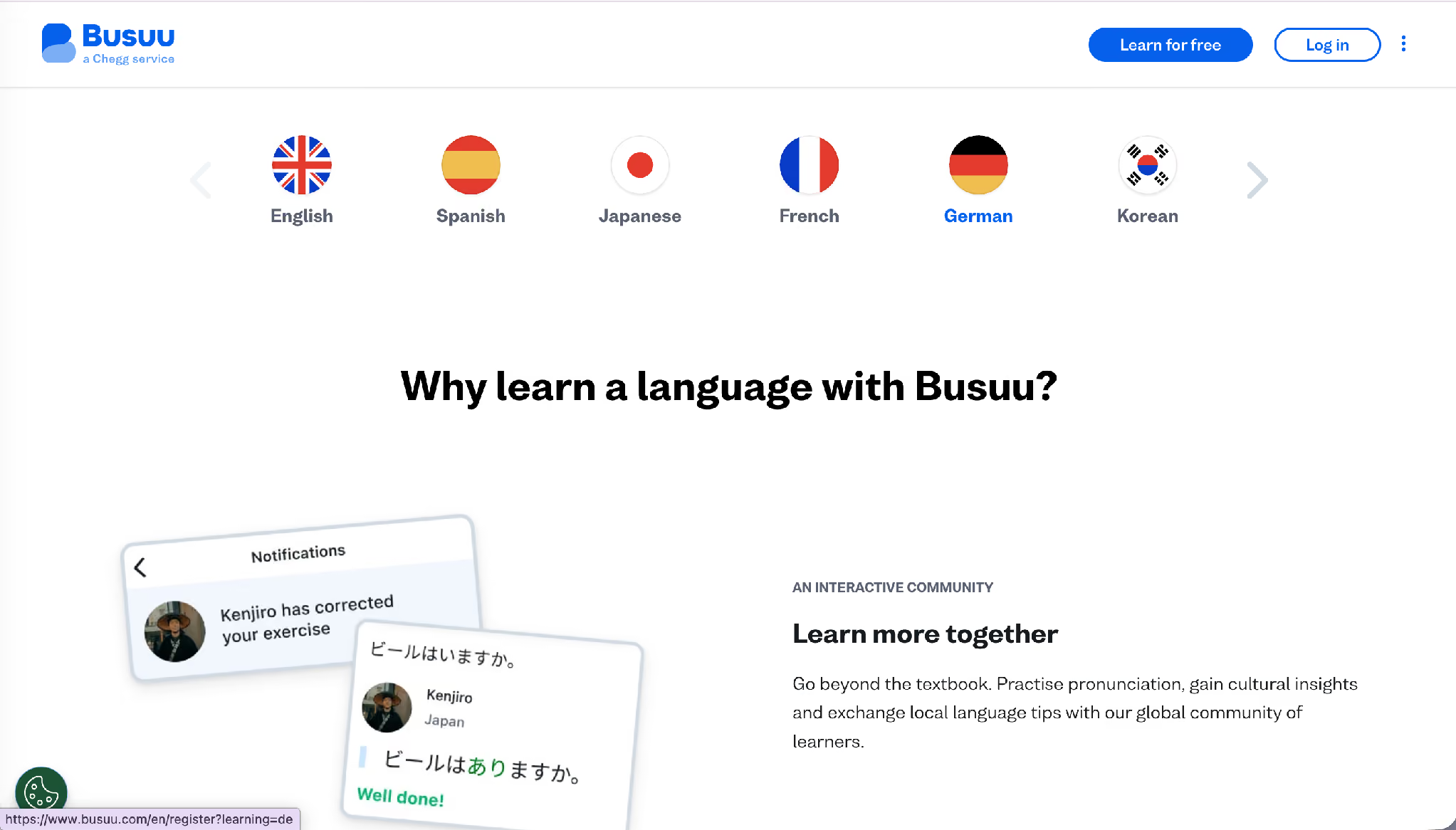
The homepage leads with the community angle, showing a correction from a native speaker named Kenjiro on a Japanese exercise. That loop is the single feature Duolingo removed when it closed its forums, and getting it back changes how quickly errors stop repeating.
Key Features
- CEFR-Aligned Courses: A1 through B2, and C1 in some languages including English.
- Community Corrections: Submit writing or speech, receive corrections from native speakers, and correct other learners in return.
- Placement Test: Free, and it drops you at the right level rather than the start.
- AI Conversations: Low-pressure speaking rehearsal before you talk to a person.
- In-App Certificates: Level tests at the end of each CEFR stage. Useful as a personal marker, and not a formal qualification for a university or an employer.
Pricing
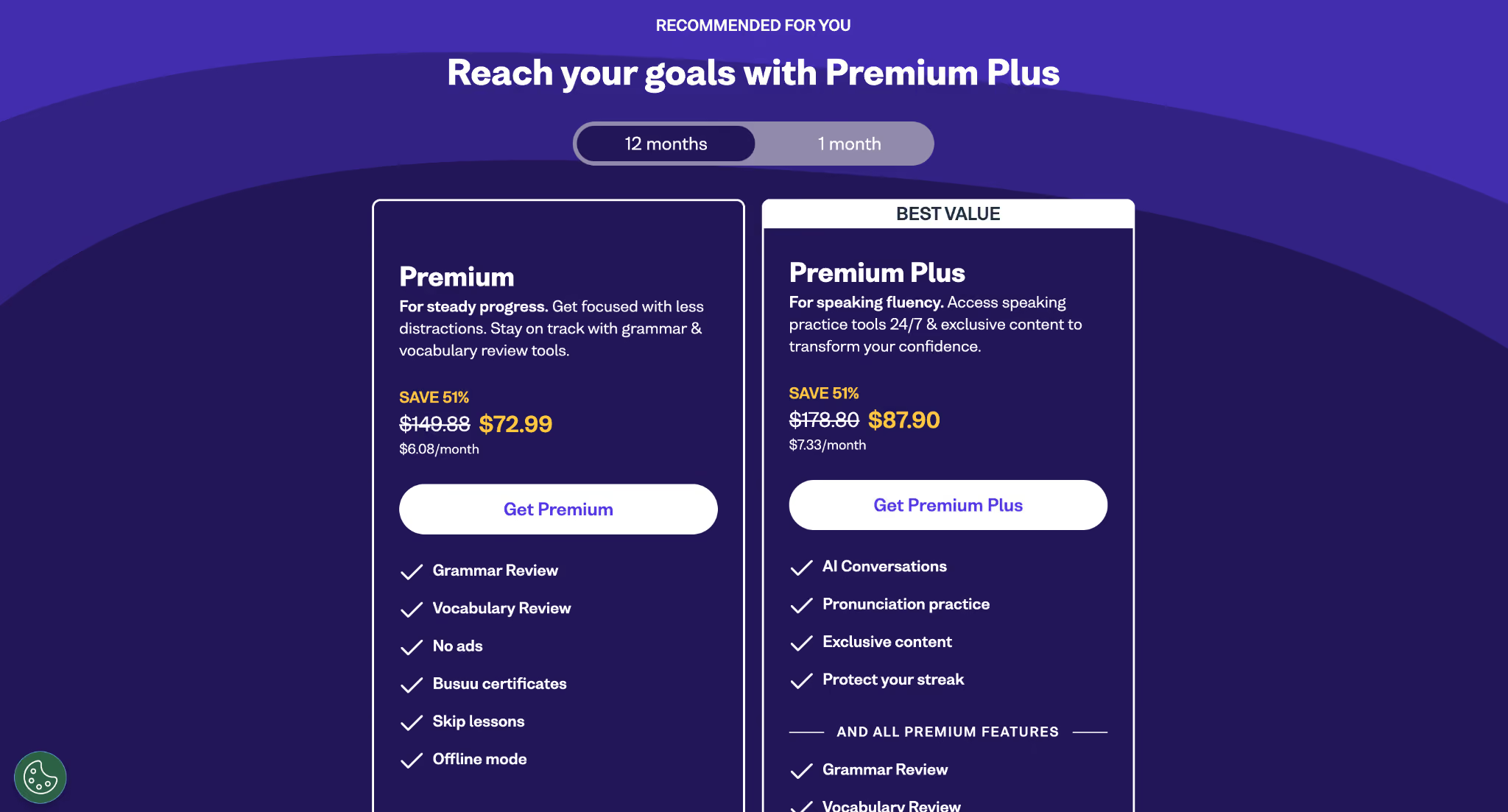
Free access covers the placement test, core vocabulary lessons, and participation in community corrections. Premium starts at $72.99 and Premium Plus at $87.90.
Pros
- Genuinely useful free tier, one of only two on this list
- Human corrections at no cost
- CEFR alignment gives you an honest position on the scale
- No penalty system, so mistakes cost nothing
Cons
- Fourteen languages, similar coverage to Babbel
- Free plan forces lessons in order, so you cannot jump ahead to check what is coming
- Correction quality varies with who happens to be online
- Certificates carry no external recognition
Verdict: The best free alternative to Duolingo for anyone who wants a real course without paying, and the best paid pick for learners who need feedback from an actual human.
LingoDeer: The Best Duolingo Alternative for Chinese, Japanese, and Korean
What it fixes: Duolingo teaches Asian languages the same way it teaches Spanish, and those languages do not work the same way.
LingoDeer was built for Asian languages first and expanded outward, which is the opposite of how every other app on this list grew. The difference shows in the first hour. Units explain particles, sentence order, and writing systems explicitly instead of hoping you infer them.
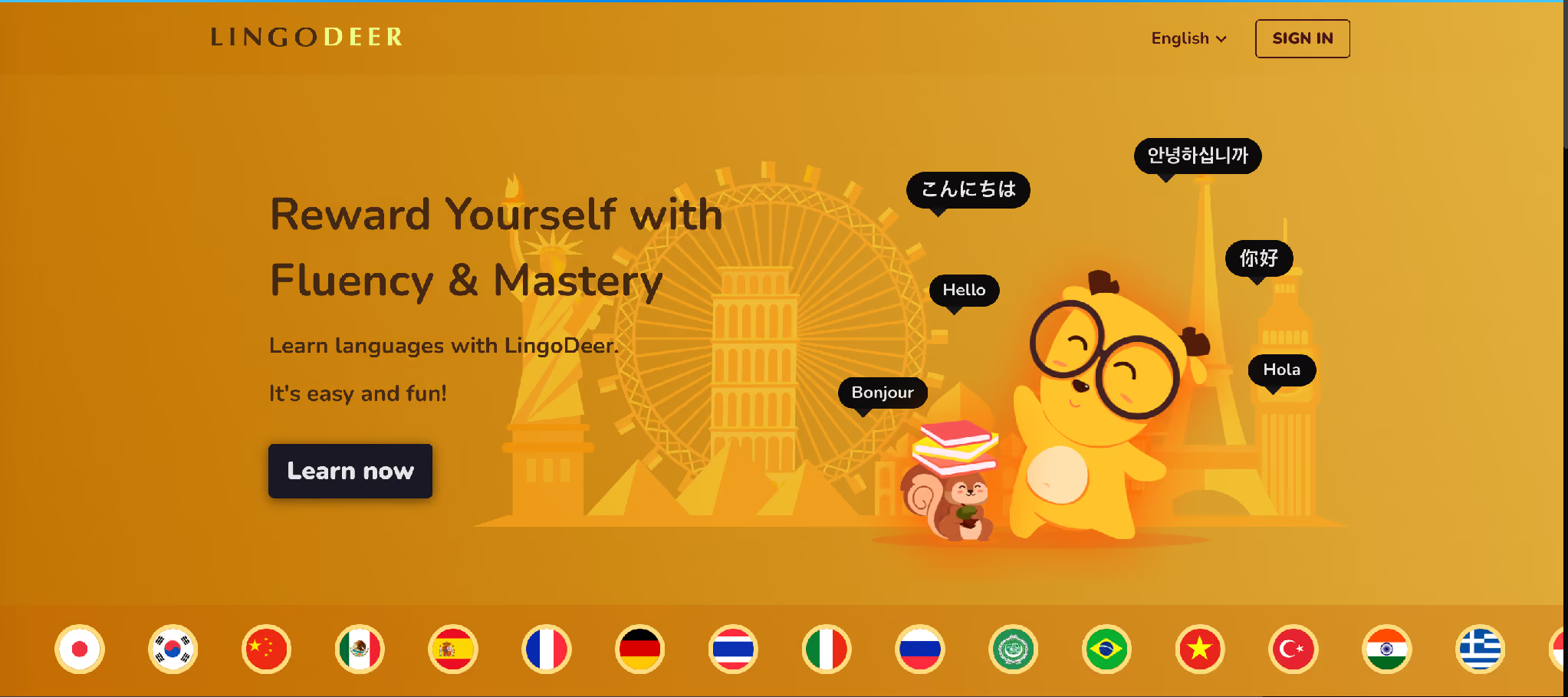
The homepage language row opens with Japanese, Korean, and Chinese before reaching Spanish and French, which reflects where the product invests. For a Mandarin student that ordering is not marketing, it is a signal about curriculum depth.
Key Features
- Explicit Grammar Notes: Every unit opens with a written explanation you can reread.
- Character and Script Drills: Stroke-order practice for Chinese characters and Japanese kana and kanji.
- Structured Paths: Careful sequencing that assumes no prior exposure to the writing system.
- Travel Phrasebook: Free, and useful before a semester abroad.
- Review Games: Reinforcement built around the rule you just learned.
Pricing
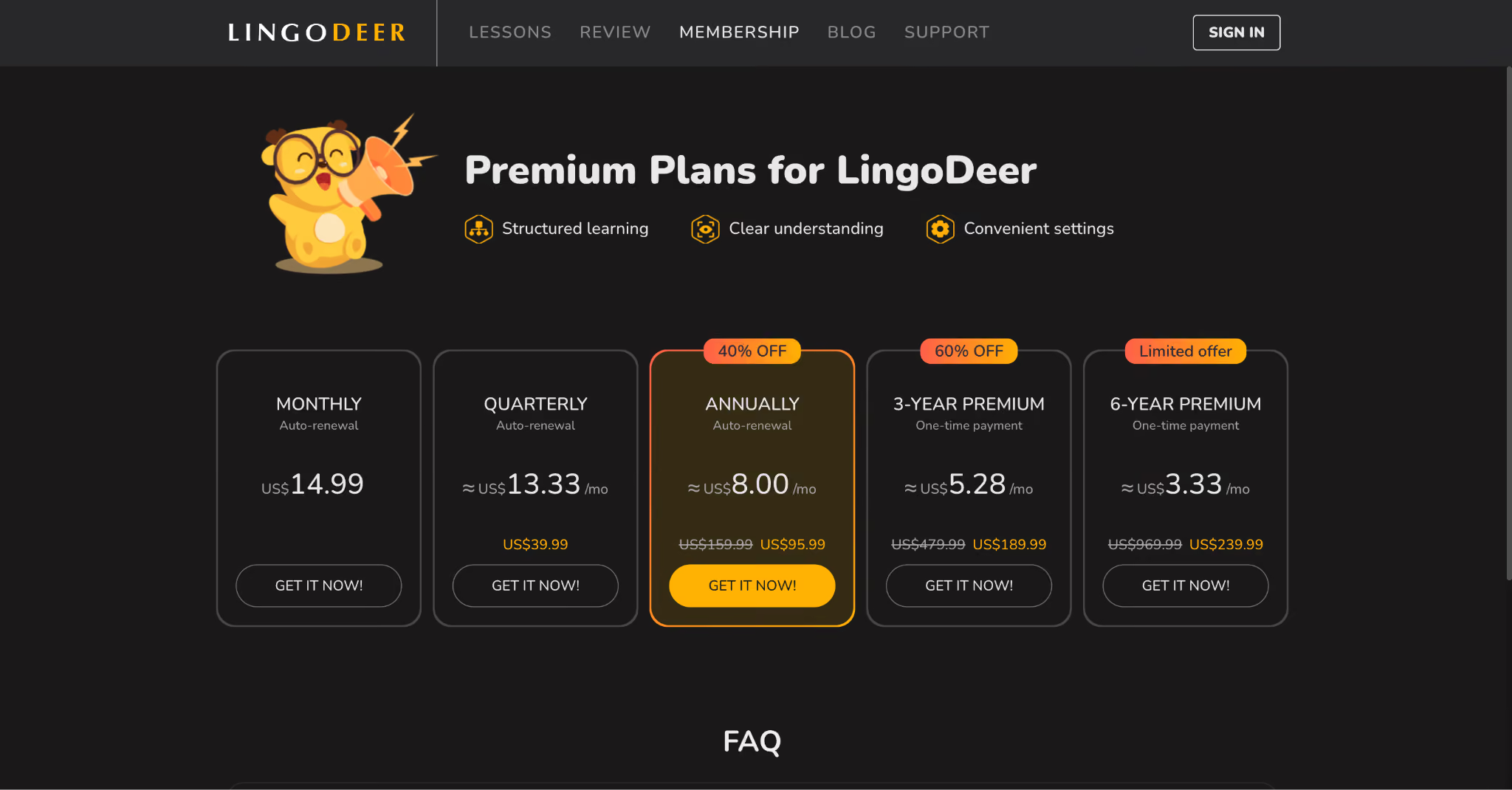
Plans start at $14.99/month for the monthly subscription. You can save with longer plans, including $95.99/year (≈$8/month), $189.99 for 3 years (≈$5.28/month), or $239.99 for 6 years (≈$3.33/month).
Pros
- The best Chinese, Japanese, and Korean curriculum of any app in this guide
- Character drilling that Duolingo does not seriously attempt
- Grammar explained before it is tested
- Lifetime option removes subscription fatigue
Cons
- More academic than conversational, so speaking lags
- Smaller content library than Duolingo for European languages
- Free tier is a sample rather than a course
Verdict: If you study Mandarin, Japanese, or Korean, this is the app like Duolingo you should have started with. Duolingo Mandarin is its weakest major course, and LingoDeer is a direct upgrade.
Pimsleur: The Best Duolingo Alternative for Speaking Out Loud
What it fixes: You can read the language and freeze when you have to produce it.

Pimsleur runs 30-minute audio lessons built on graduated interval recall. The method asks you to construct a phrase from memory and say it aloud before you hear the correct version, which trains production rather than recognition.
Key Features
- Audio-First Core Lessons: Thirty minutes daily, designed for commuting or walking.
- Graduated Interval Recall: Spaced repetition applied to spoken production.
- Voice Coach: Pronunciation feedback on your recorded attempts.
- Driving Mode and Offline Downloads: Hands-free operation and no data required.
Pricing
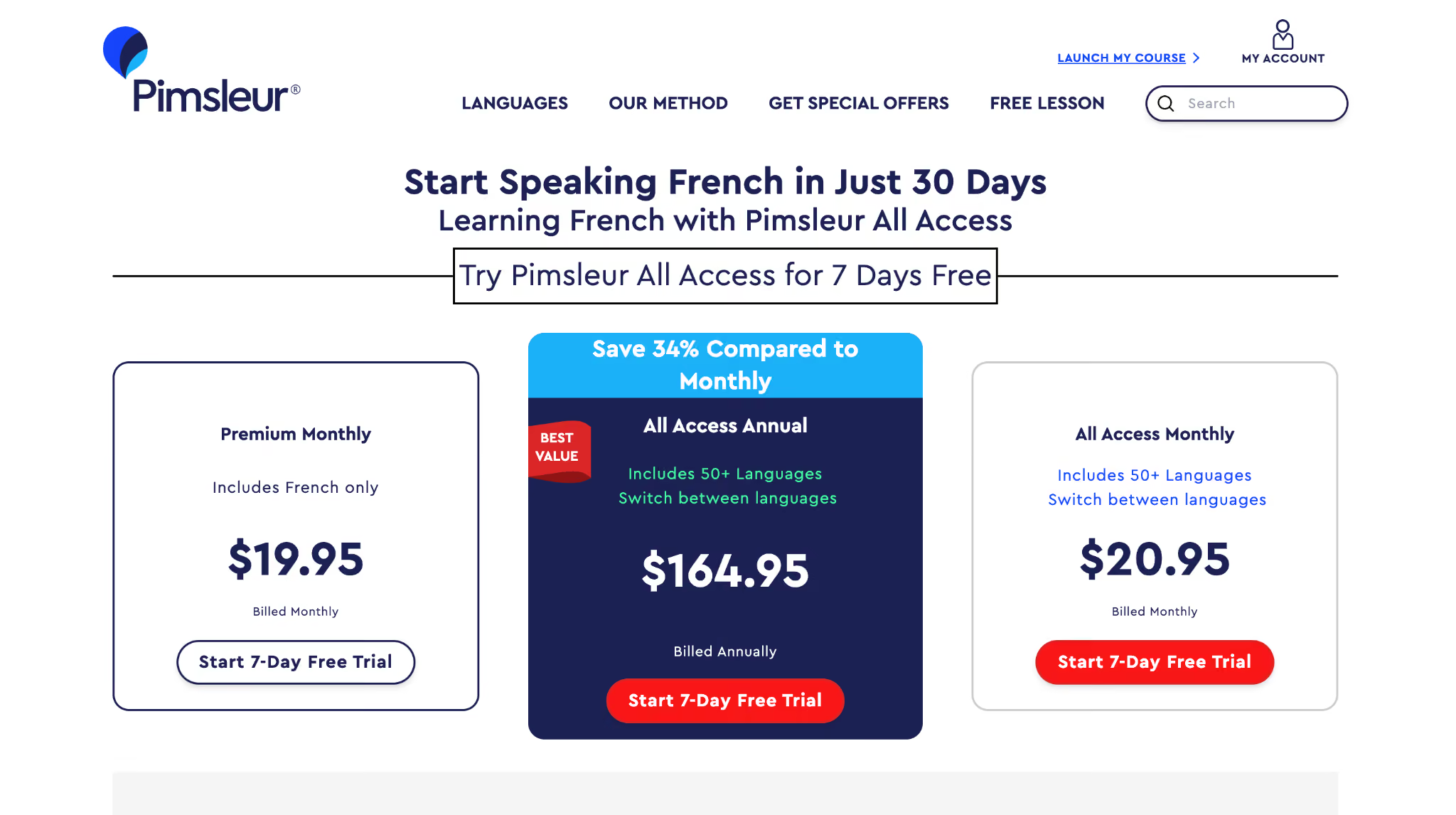
Premium starts around $19.95 per month for a single language, and All Access covering 50 plus languages runs around $20.95 per month. A 7-day free trial is available.
Pros
- The most effective speaking trainer on this list without a human tutor
- Works in dead time, which is the scarcest resource a student has
- Builds a natural accent early
- Small daily commitment that is genuinely small
Cons
- Almost no reading or writing practice
- Expensive next to everything else here
- Fixed lesson order with no way to jump to a topic you need
- Vocabulary breadth is narrow by design
Verdict: Plans start at $19.95/month for a single language (Premium). If you want access to 50+ languages, the All Access plan costs $20.95/month or $164.95/year, with a 7-day free trial available for both plans.
Memrise: The Best Duolingo Alternative for Real Accents
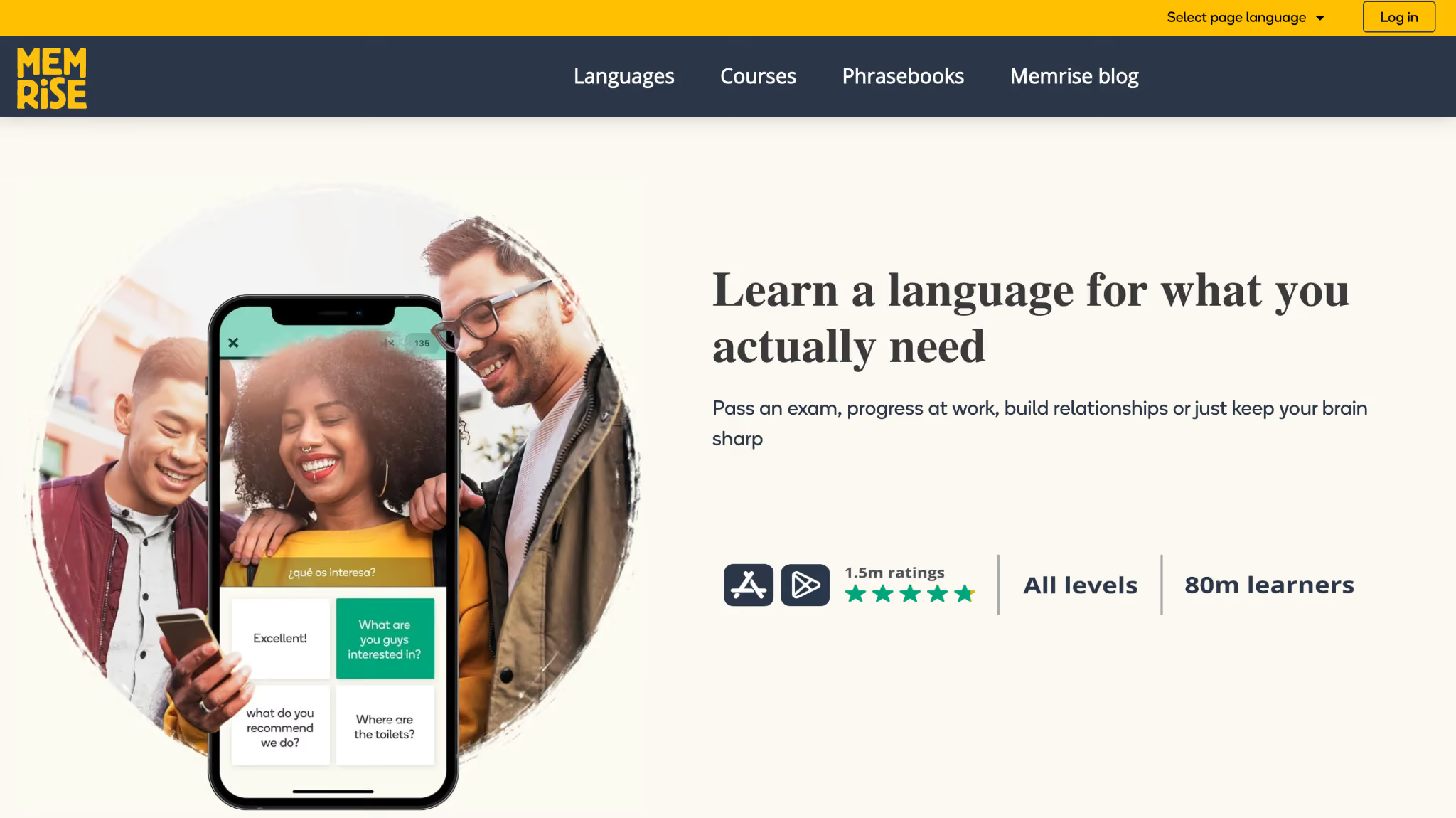
What it fixes: Duolingo speaks to you in one synthetic voice, and real people do not sound like that.
Memrise builds lessons around short video clips of native speakers saying the phrase you are learning. Hearing 10 different people say the same sentence at different speeds does more for listening comprehension than 10 repetitions of one text-to-speech voice.
Key Features
- Learn With Locals: Native-speaker video clips attached to vocabulary.
- MemBot: An AI conversation partner for rehearsing what you learned.
- Spaced Repetition: Review scheduling built into the core loop.
- Modern Phrasing: More slang and colloquial usage than Duolingo carries.
Pricing
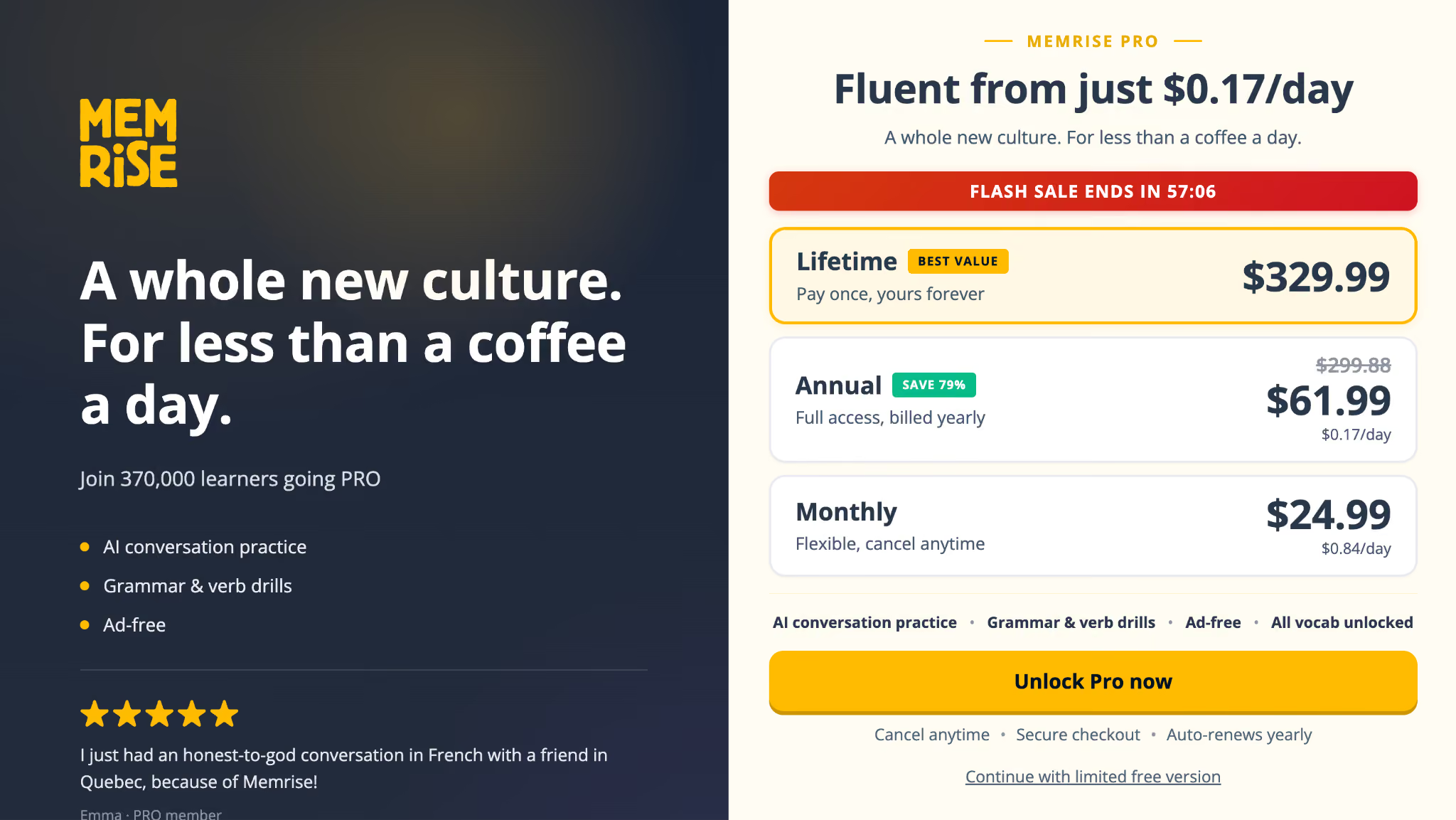
Plans start at $24.99/month for the monthly subscription. You can also choose the Annual plan for $61.99/year (discounted from $299.88) or a Lifetime plan for a one-time payment of $329.99, which includes AI conversation practice, grammar drills, an ad-free experience, and unlimited vocabulary access.
Pros
- Best listening input of any app in this price range
- No penalty system for wrong answers
- Free tier includes complete official courses
- Lifetime option for long-term learners
Cons
- Grammar teaching is minimal
- Community-created decks have largely left the main app
- Vocabulary-led rather than course-led, so structure comes from elsewhere
Verdict: The strongest listening supplement on this list, and a fair free alternative to Duolingo on its own for a term.
italki: The Best Duolingo Alternative When You Need a Human
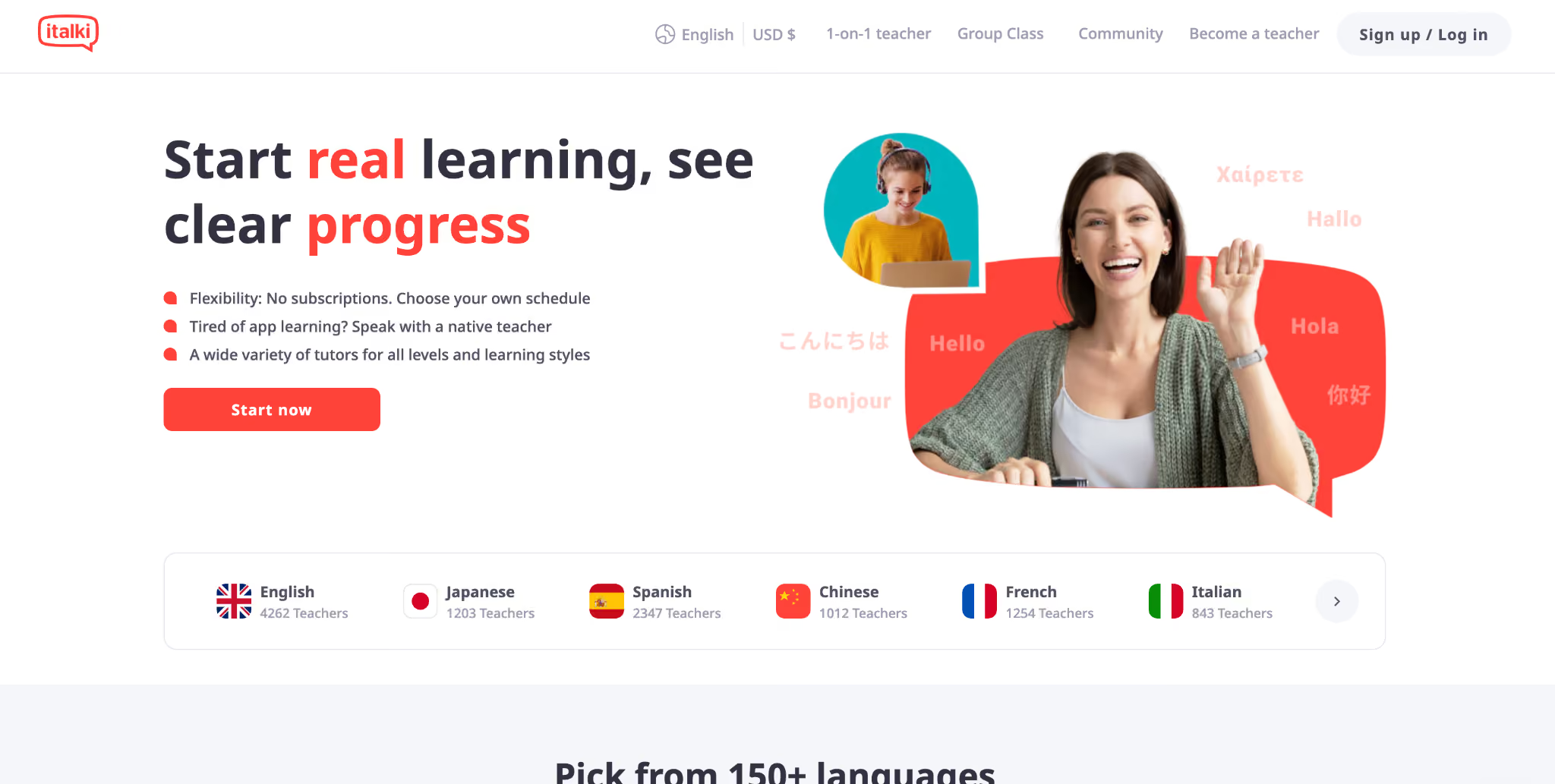
What it fixes: No algorithm notices that you have been making the same gender-agreement mistake for four months.
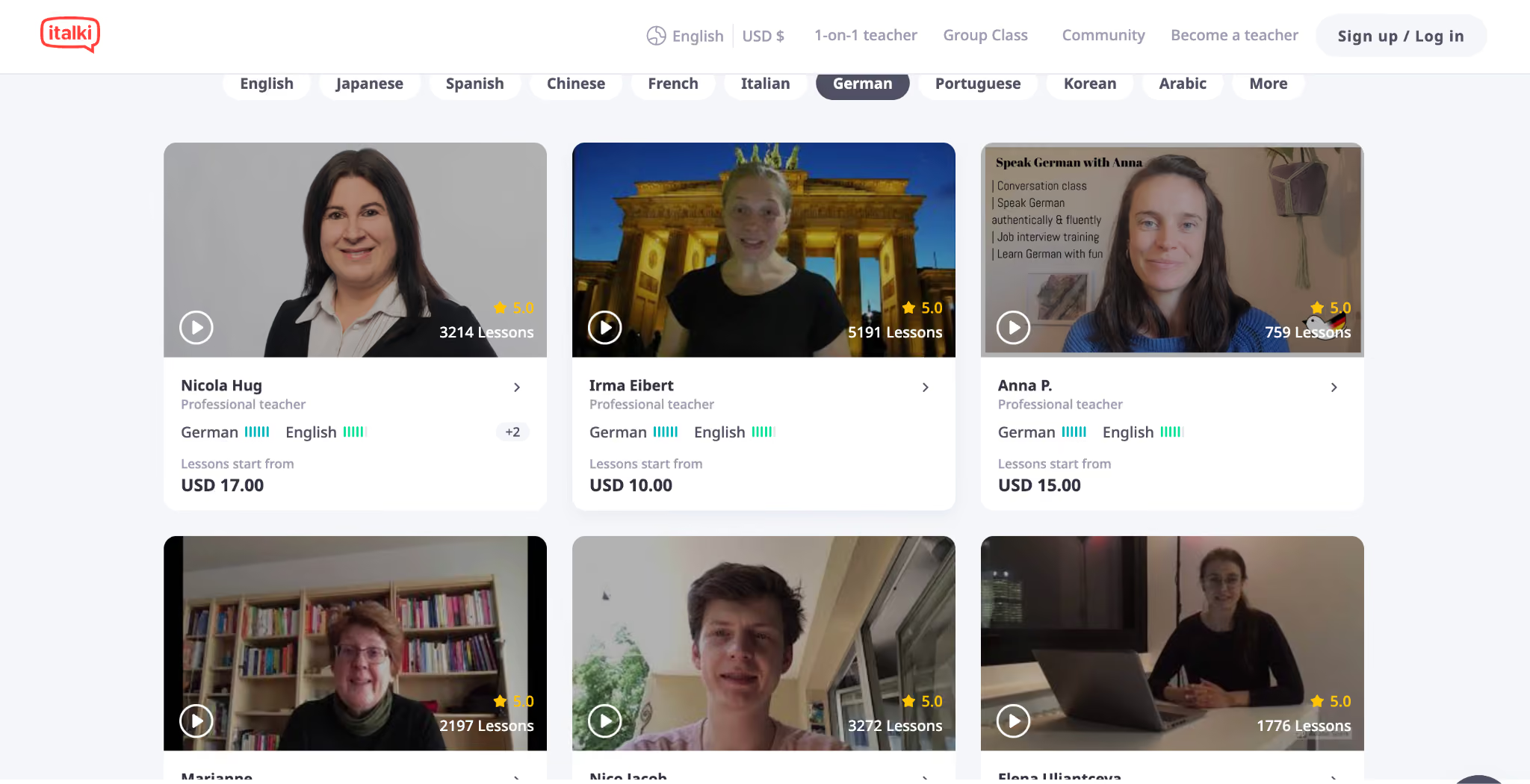
italki is a marketplace connecting learners with tutors for one-to-one video lessons across more than 150 languages. Community tutors run conversational practice cheaply, professional teachers deliver structured instruction and exam preparation. There are no subscriptions, so you pay only for the lessons you book, with classes ranging from 30 to 90 minutes and flexible scheduling.
Key Features
- Thousands of Tutors: Filter by price, availability, accent, and specialty.
- Pay Per Lesson: No subscription, so you can stop without cancelling anything.
- Exam Preparation: Tutors specializing in DELF, DELE, HSK, JLPT, and TestDaF.
- Discounted Trial Lessons: Test a tutor before committing.
Pricing
Community tutors start around $5 per hour and professional teachers run $30 or more per hour. Trial lessons are discounted.
Pros
- The fastest way to break a plateau, by a wide margin
- Real-time correction of the errors you cannot see
- Exam-specific coaching that no app provides
- Cheap at the community-tutor end
Cons
- Quality varies enormously between tutors
- Requires scheduling, which defeats some students entirely
- Costs add up faster than any subscription here
- Intimidating for genuine beginners
Verdict: The correct second purchase after a course app, and worth more per dollar at B1 than at A1.
Anki: The Best Free Duolingo Alternative for Making Things Stick
What it fixes: The gap between learning vocabulary once and remembering it months later.
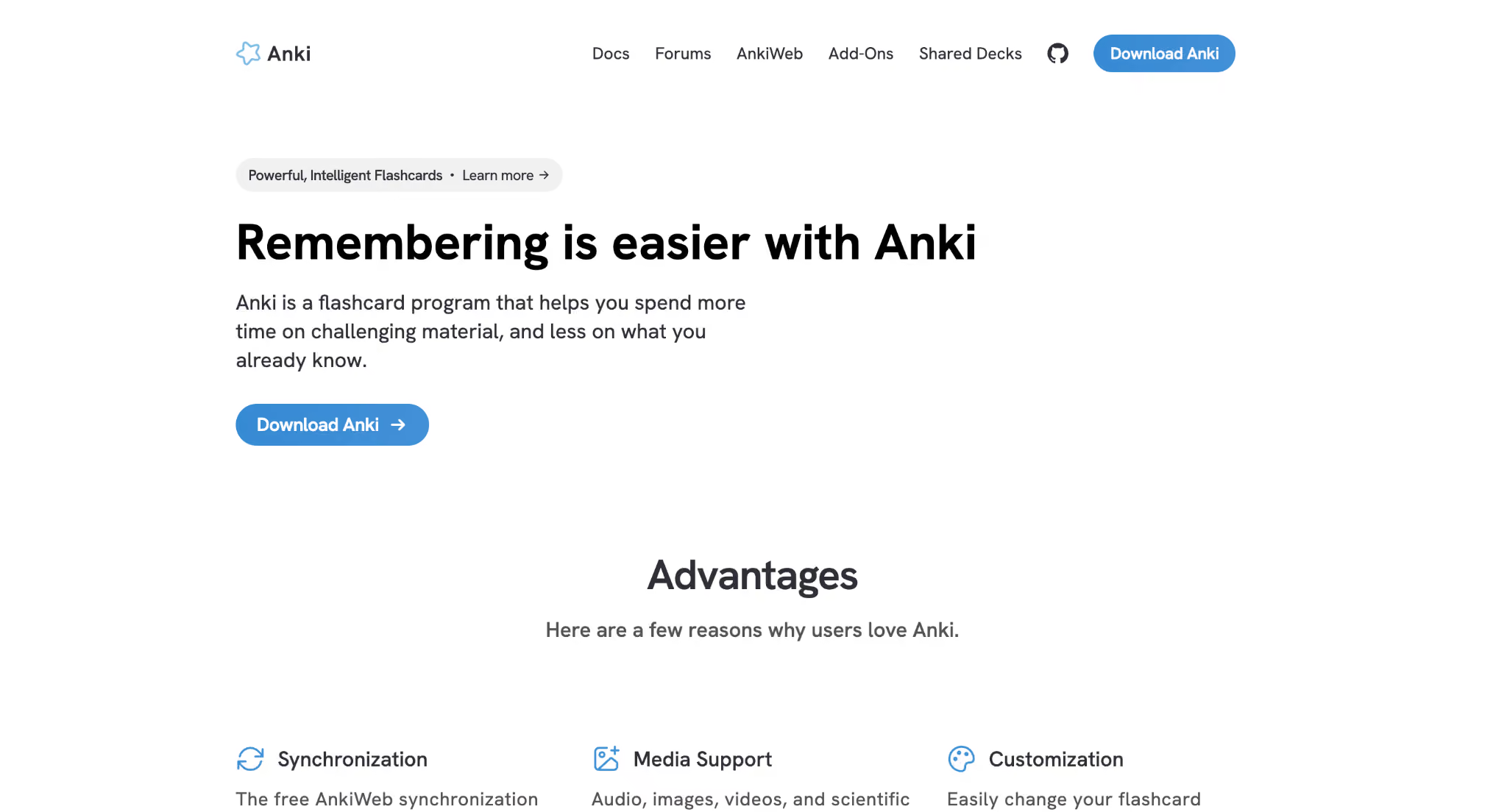
Anki is a spaced repetition flashcard app that helps you remember vocabulary, grammar, and other concepts for the long term instead of relearning them repeatedly. It is free on Windows, macOS, Linux, and Android, with a one-time paid iOS app that supports development. While it has a steeper learning curve than Duolingo, it's one of the most effective tools for building lasting memory.
Key Features
- Configurable Algorithm: Control exactly how often material returns.
- Shared Decks: Community decks for HSK levels, JLPT levels, French frequency lists, and almost any exam.
- Rich Media Cards: Audio, images, and stroke-order diagrams on a single card.
- Offline Study: Everything works with no connection.
Pricing
Free on desktop and Android.
Pros
- Free, and more powerful than anything paid for pure retention
- Shared decks cover exam syllabuses precisely
- Works forever with no subscription
- Ideal for Chinese characters, where repetition is the whole game
Cons
- The interface is genuinely unpleasant for beginners
- Setup takes an evening
- Teaches nothing, it only reinforces what you learned elsewhere
- Easy to build a bad deck and waste months
Verdict: Not an app like Duolingo in any sense, and the single highest-return free tool on this list once you commit to the setup.
LingQ: The Best Duolingo Alternative for Reading Real Content
What it fixes: Lesson sentences read nothing like the language people write.
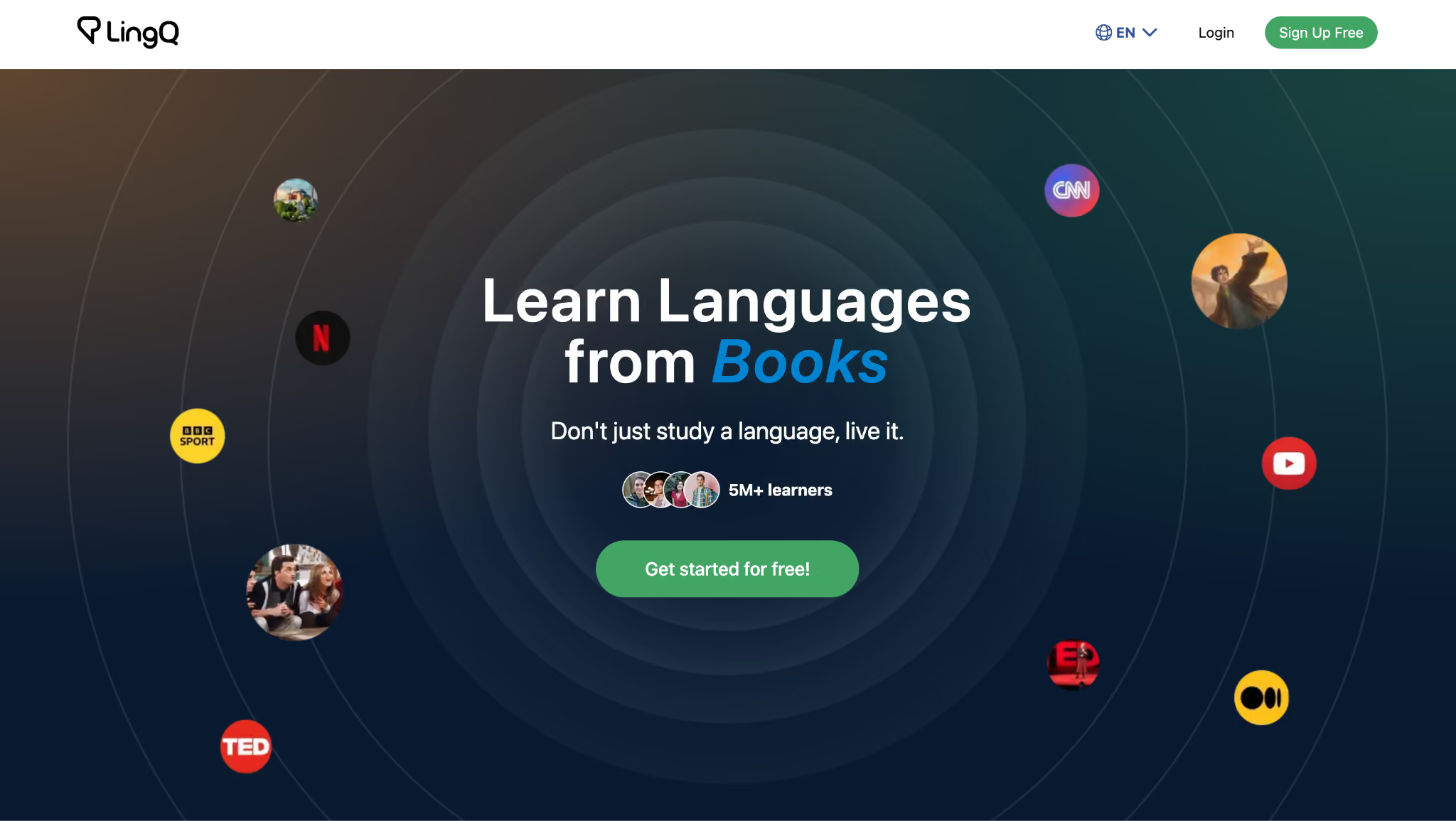
LingQ is a language learning platform that helps users learn through real content instead of traditional grammar drills and vocabulary exercises. The platform turns articles, podcasts, books, videos, songs, and other online content into interactive language lessons where learners can read, listen, and build vocabulary naturally.
Unlike many language apps that rely heavily on gamified exercises and repetition, LingQ focuses on language immersion and comprehensible input, allowing learners to encounter new words and phrases in meaningful contexts.
Key Features
- Interactive Reader: Tap to translate, tap to save, all inside the text.
- Content Import: Bring your own articles, YouTube videos, or course readings.
- Library: Graded content from beginner through native level.
- Known-Word Counter: A concrete progress number that beats a streak.
Pricing
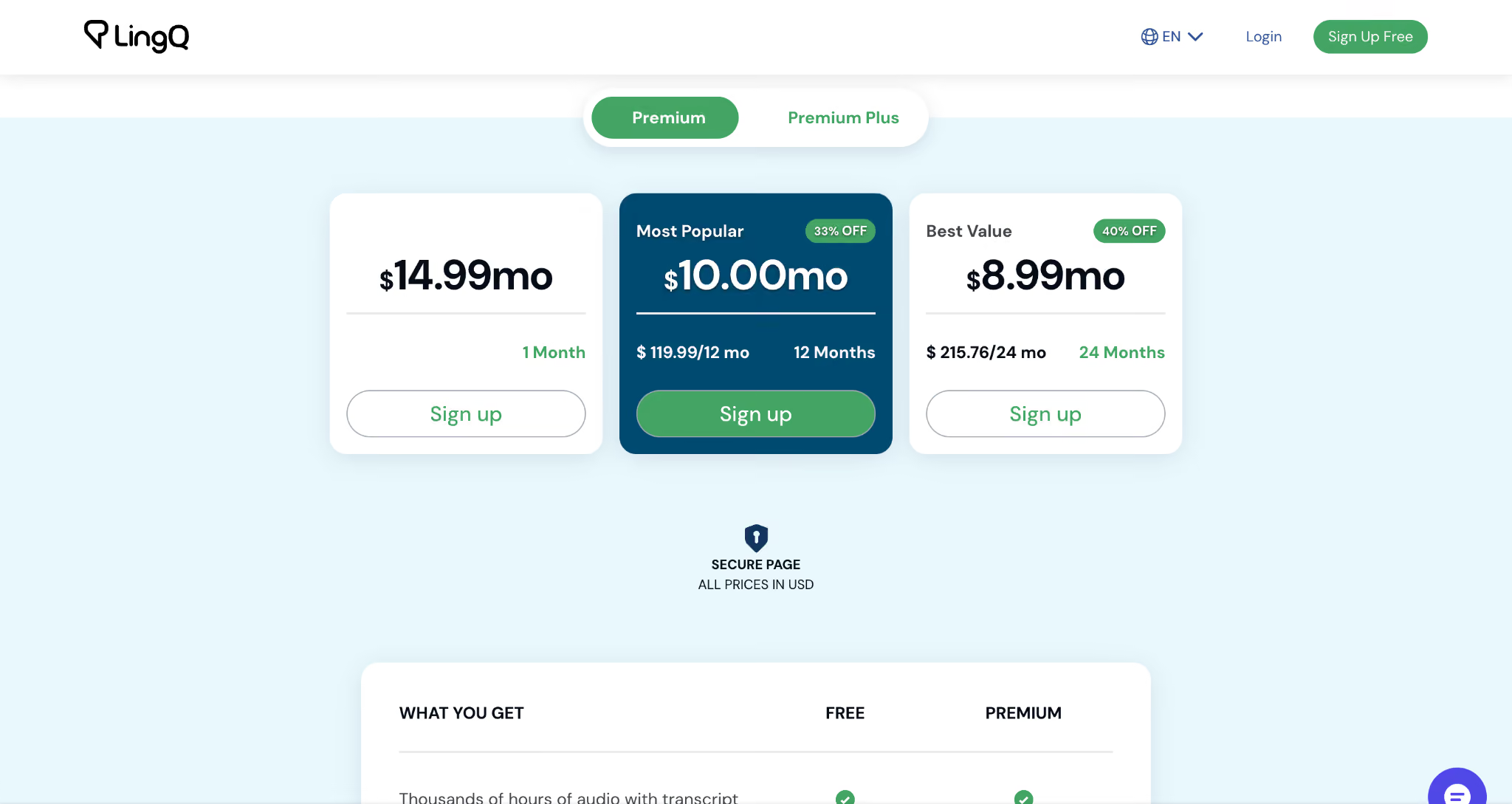
LingQ Premium starts at $8.99/month when billed for 24 months ($215.76 total). The annual Premium plan costs $10/month ($119.99/year), while the monthly plan costs $14.99/month.
Pros
- Turns your actual coursework into language practice
- The best bridge from textbook language to real language
- Scales from late beginner to native material
- Reading volume is the fastest vocabulary route there is
Cons
- Genuine beginners will drown without a parallel course
- Light on explicit grammar
- Twenty active LingQs is a very tight free ceiling
- Interface takes a week to feel natural
Verdict: LingQ is a strong Duolingo alternative for B1 learners and above, but beginners at A1 may find it challenging without a structured foundation.
Mondly: The Best Duolingo Alternative If English Is Not Your First Language
What it fixes: Almost every course on this list teaches from English, which adds a translation step for everyone else.
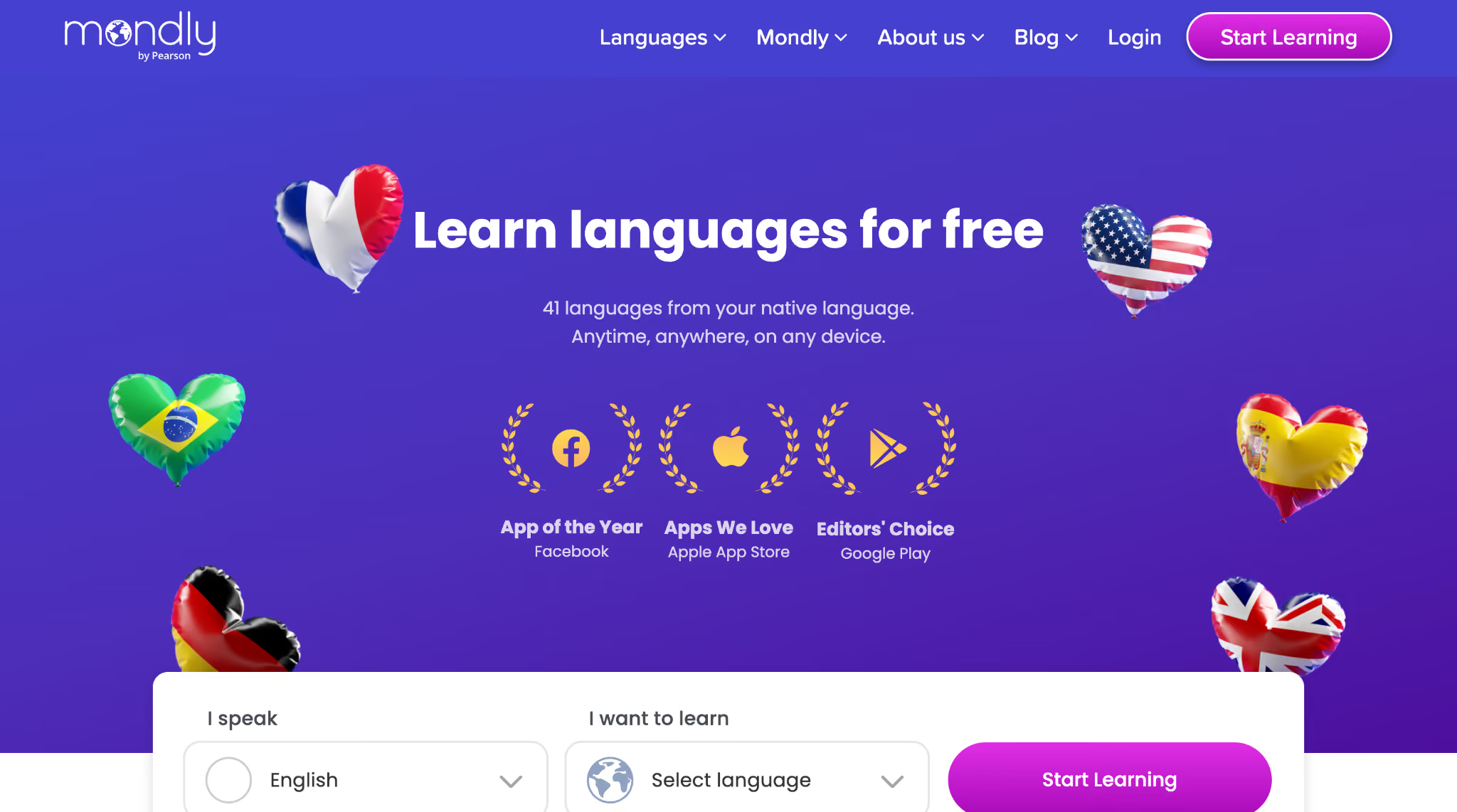
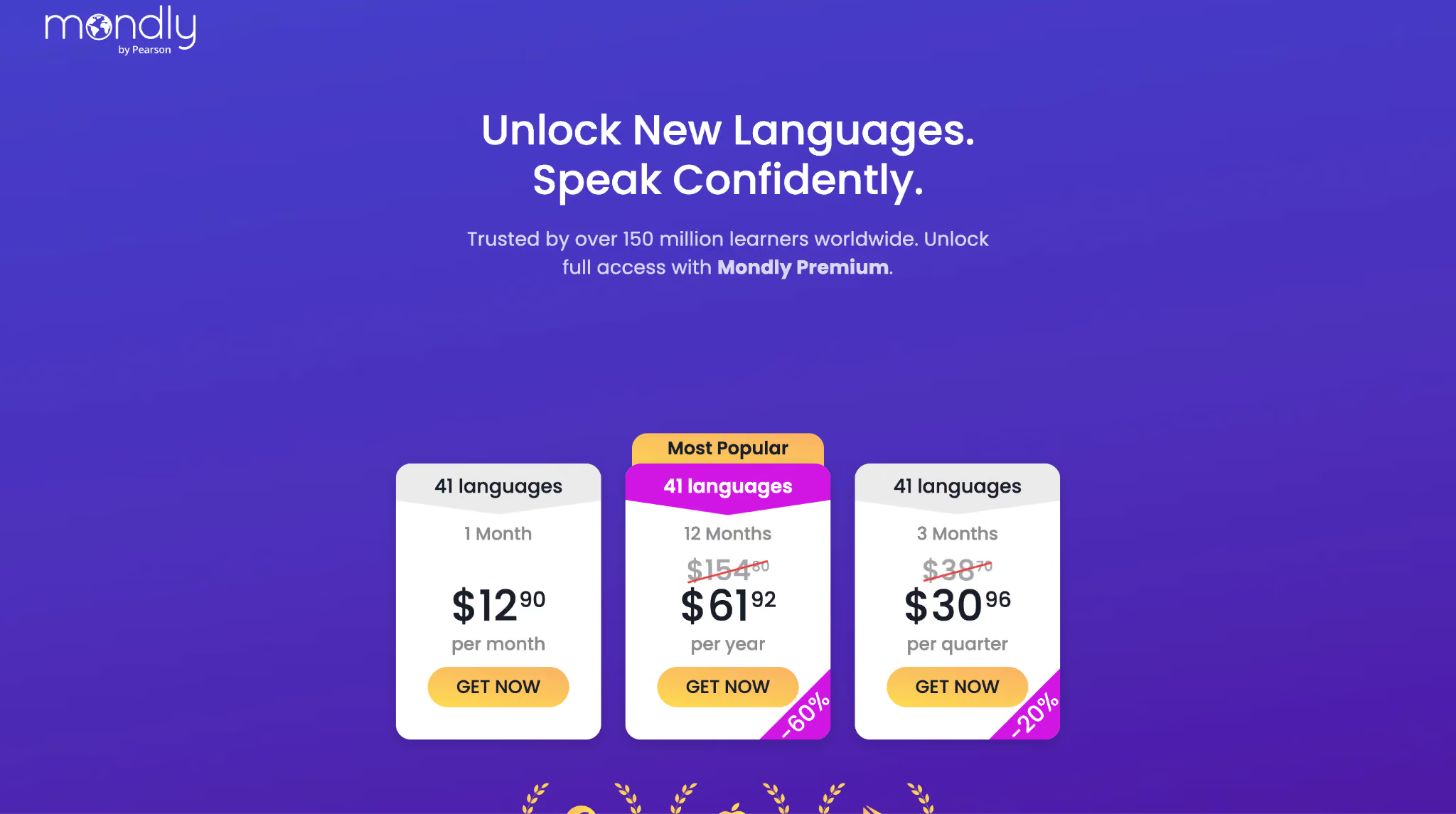
Mondly lets you learn from 41 base languages. A Hindi speaker learning Spanish can work from Hindi rather than routing through English, which removes an entire layer of cognitive load that most roundups never mention.
This native-language approach makes lessons easier to understand, especially for beginners who are still building confidence. Instead of focusing only on vocabulary memorization, Mondly combines practical phrases, conversations, pronunciation practice, and spaced repetition to help learners start speaking from the first lessons.
Key Features
- Forty-One Base Languages: Learn from your own language, not from English.
- Conversation Chatbot: Speech-recognition dialogue practice.
- Daily Lessons: Short, topic-based, and consistent.
- Mondly Kids: Included with some plans, which matters for the kids section below.
Pricing
Mondly Premium starts at $5.16/month when billed annually ($61.92/year). The monthly plan costs $12.90/month, while the 3-month plan costs $10.32/month ($30.96 per quarter).
Pros
- Base-language flexibility that nothing else here matches
- Frequent lifetime pricing
- Kids app bundled on some plans
- Wide language coverage for the price
Cons
- Grammar depth trails Babbel and LingoDeer
- Content can feel repetitive after a few months
- Speech recognition is inconsistent on accented input
Verdict: The obvious pick for students in India, Brazil, Indonesia, and anywhere else that English-first courses add friction.
Language Transfer: The Best Duolingo Alternative That Costs Nothing at All
What it fixes: You memorized conjugation tables and never understood why the language works the way it does.
Language Transfer is a free, donation-supported audio language course built around The Thinking Method, a unique approach that focuses on understanding how a language works instead of memorizing endless vocabulary lists and grammar rules.
Each lesson is structured as a conversation between a teacher and a real student. You are encouraged to think along, answer questions, and discover language patterns yourself. This active learning approach helps you understand the logic behind a language and build confidence naturally.
Unlike most language apps, Language Transfer has no ads, no subscriptions, no account requirements, and no data tracking. All courses are freely available, with the project supported entirely through community donations.
Key Features
- Complete Audio Courses: Full beginner courses available for Spanish, French, Italian, German, Greek, Turkish, Arabic, Swahili, and more.
- The Thinking Method: Learn by understanding language patterns and logic instead of memorizing grammar rules and vocabulary lists.
- Concept-Based Grammar: Build sentences naturally by discovering how the language works, guided by a teacher-led approach.
- Real Classroom-Style Lessons: Follow conversations between a teacher and student, answering questions and actively thinking through each lesson.
- Offline Downloads: Download every lesson and learn anywhere without needing an internet connection.
Pricing
Free and donation supported.
Pros
- Zero cost with no catch anywhere
- The clearest grammar reasoning of anything in this guide
- Produces the moment where a language suddenly makes sense
- No gamification, no notifications, no manipulation
Cons
- No drills, no review scheduling, no vocabulary system
- Limited language list
- Audio only, so no reading or writing
- No progress tracking of any kind
Verdict: Start here before you pay for anything. Forty lessons of Language Transfer will teach you more about how Spanish works than a year of Duolingo.
Clozemaster: The Best Duolingo Alternative for Breaking the Plateau
What it fixes: You know the basics of a language, but progress slows down because you struggle to expand your vocabulary and understand real sentences. Clozemaster helps bridge the gap between beginner lessons and real-world fluency by training you with thousands of practical sentences in context.
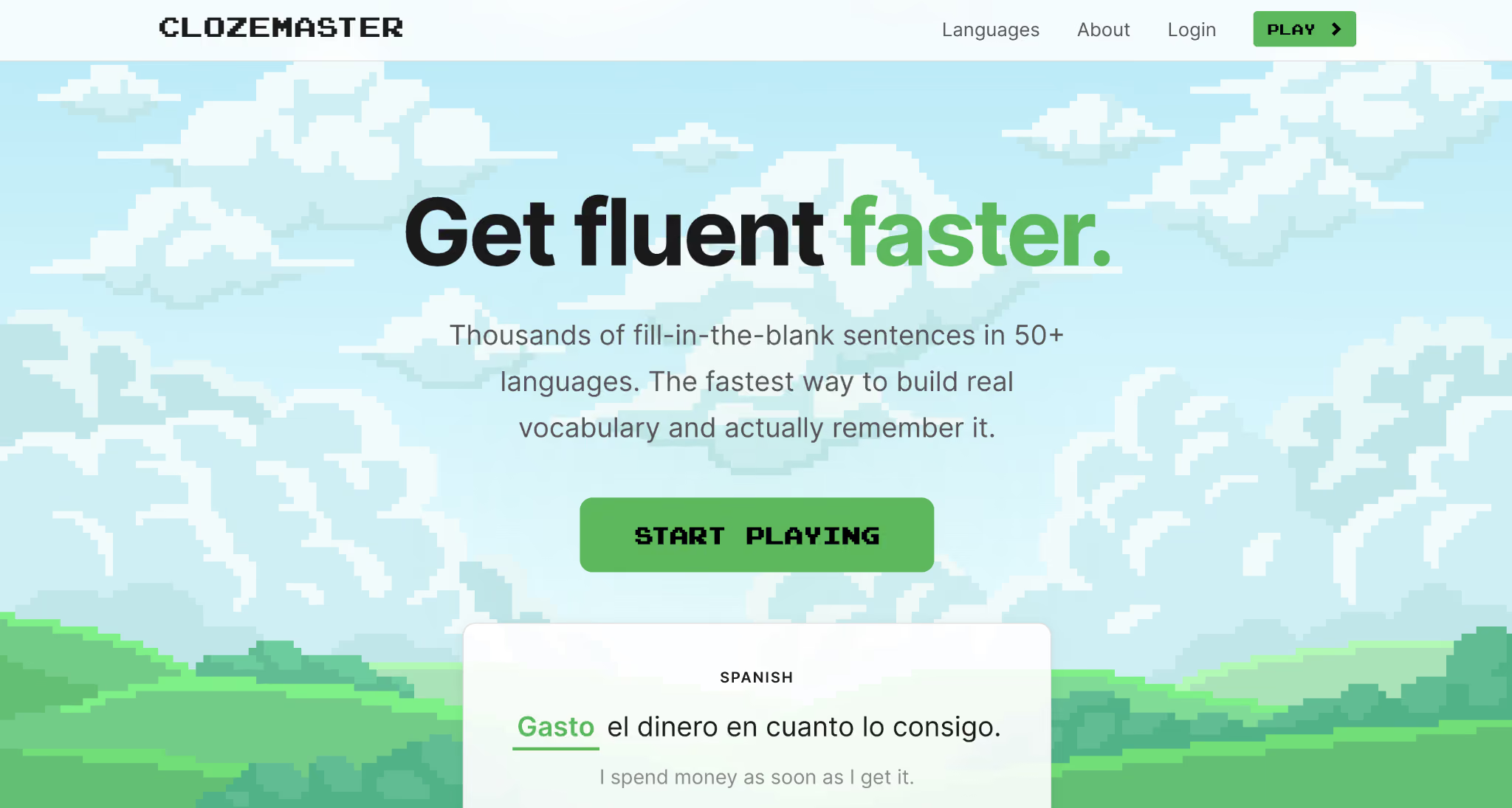
Clozemaster helps intermediate learners expand their vocabulary by practicing thousands of fill-in-the-blank sentences ranked by word frequency. Instead of teaching isolated words, it shows vocabulary in real context, helping learners move beyond beginner phrases and build the comprehension skills needed for everyday fluency.
Key Features
- Frequency-Based Vocabulary Learning: Learn the most useful words first through sentences ranked by real-world usage frequency, helping you focus on vocabulary you are most likely to encounter.
- Learn Words in Context: Instead of memorizing isolated flashcards, Clozemaster teaches vocabulary inside complete sentences so you understand how words are actually used.
- Cloze Listening Practice: Improve your listening skills by filling in missing words from audio clips, training your brain to recognize spoken language faster.
- Spaced Repetition System: Review sentences at the right intervals to strengthen memory and make new vocabulary easier to recall naturally.
Pricing
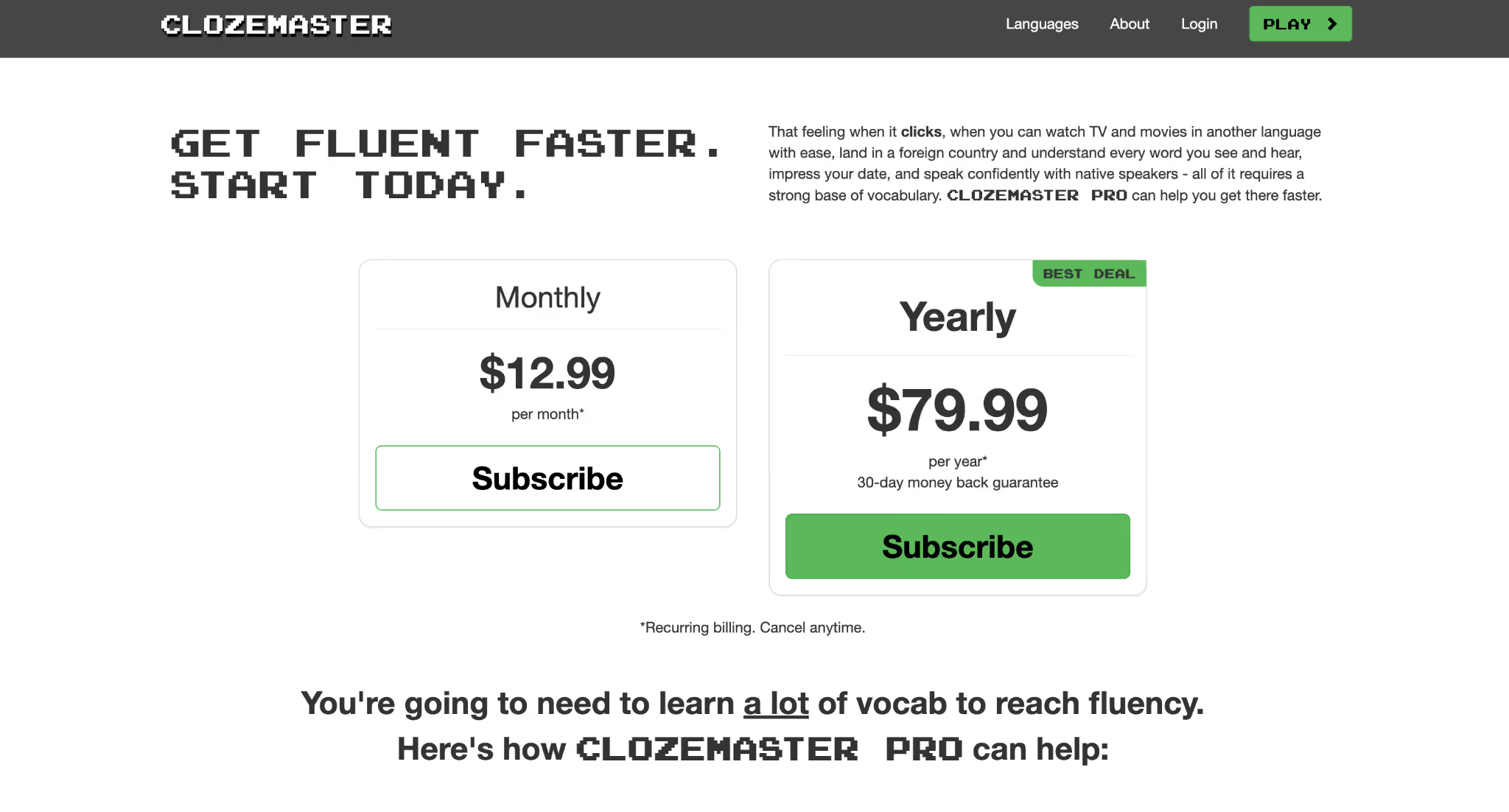
Clozemaster Pro starts at $6.67/month when billed annually ($79.99/year). The monthly plan costs $12.99/month.
Pros
- Designed exactly for the A2-to-B1 wall
- Generous free tier
- Cheap Pro pricing
- Context-based learning rather than isolated words
Cons
- Useless for absolute beginners
- No grammar instruction at all
- Interface is functional rather than pleasant
Verdict: Clozemaster is one of the best tools for intermediate learners who have outgrown beginner apps and need to build vocabulary in real context. It is an excellent companion to Duolingo, but it is not designed to teach a language from scratch.
Best Duolingo Alternatives for Spanish Students
Spanish is Duolingo’s strongest course, so the Duolingo alternatives for Spanish you need are patches rather than replacements. They are patches for three specific gaps: dialect, speed, and the moment when a real Spanish speaker talks at natural pace.
The Dialect Problem Nobody Warns You About
JotMe does, and the translation picker separates Spanish, Spanish (Argentina), Spanish (Bolivia), Spanish (Chile), Spanish (Colombia), Spanish (Costa Rica), Spanish (Cuba), Spanish (Dominican Republic), and more. When I ran a session with Spanish (Argentina) selected, the output came back with Argentine forms rather than generic textbook Spanish. For a student heading to a specific country, that distinction is worth more than another 200 vocabulary items.
The Ranked Stack for Spanish
First, JotMe, for comprehension in your specific dialect. Set the translation language to the country you are actually going to. Run it during a lecture, a video call with your host family, or a Spanish news broadcast, and read the bilingual transcript afterward as parallel-text study.
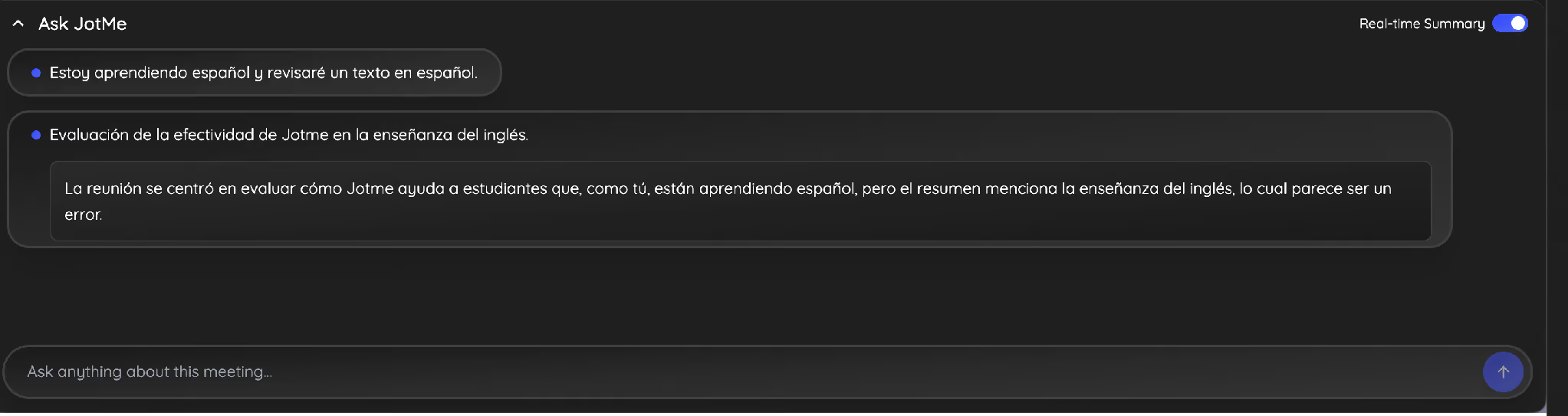
The screenshot above shows something I did not expect. The Ask JotMe panel, operating in Spanish, reviewed its own generated summary and pointed out that the summary referred to teaching English when the session was about learning Spanish. It flagged its own mistake, in Spanish, unprompted. For a student who cannot yet verify the output, a tool that admits its errors is worth more than one that never mentions them.
Second, Language Transfer Spanish, for why the language works. Free, 90 lessons, and the best explanation of Spanish verb logic available at any price.
Third, Pimsleur or italki, for production. Pimsleur if you want to practice alone in dead time. italki if you want a Spanish speaker to correct you in real time for around $5 an hour.
For structure, add Busuu free. A CEFR path costs nothing and tells you honestly where you stand.
Best Duolingo Alternatives for French Students
The Duolingo alternatives for French exist to solve one specific and brutal problem. Written French and spoken French are almost different languages. Liaison, elision, and dropped syllables mean a sentence you can read perfectly is a sentence you cannot hear. Duolingo, which teaches largely through text, is poorly built for exactly this.
The Register Problem at B2
For a French student, that panel is a study tool disguised as a translation feature. You are seeing the construction, its English equivalent, and an explanation of the register it belongs to, all from a real sentence rather than a lesson-generated one.
The Ranked Stack for French
First, JotMe, for the listening gap and the register gap. Run it on a French lecture, a France Inter podcast, or a seminar recording. The bilingual transcript lets you match what you heard against what was actually said, which is the fastest cure for the liaison problem.
Second, Babbel French, for grammar. The strongest structured course for French of any app in this guide, and the one that will finally explain the subjunctive.
Third, Pimsleur French, for the accent. French pronunciation punishes guesswork, and an audio-first method fixes it earlier than text drilling does.
Add LingQ once you reach B1. Import Le Monde articles or your own course readings and turn them into vocabulary practice.
For voice practice, the JotMe voice translation tool produces spoken French from your own sentences, which gives you a pronunciation target built from things you actually want to say.
Best Duolingo Alternatives for Chinese Students
Mandarin is where Duolingo is weakest, which makes the Duolingo alternatives for Chinese the highest-stakes choice in this guide. The course leans on pinyin, teaches characters thinly, and offers effectively nothing on tone correction. A student who completes the entire Duolingo Mandarin tree will still struggle with a first-year university reading.
Three Problems Duolingo Does Not Solve
- Tones: Mandarin has four tones plus a neutral. Getting one wrong changes the word. Duolingo marks your answer correctly when your tone is wrong, because it is checking the character or the pinyin, not the pitch.
- Characters: Reading Chinese requires recognizing thousands of characters. Duolingo drills a few hundred, and does almost nothing on stroke order or radicals.
- Speed: Spoken Mandarin at natural speed sounds nothing like Duolingo’s deliberate audio, and the gap becomes obvious the first time a lecturer speaks.
The Ranked Stack for Chinese
First, JotMe, for lecture and conversation comprehension. This is the strongest case for JotMe anywhere in this guide, because the gap between Duolingo Mandarin and a real Mandarin lecture is the widest gap in the whole article. Set the spoken language to Chinese and the translation to English, and the transcript builds in both as the lecturer talks.
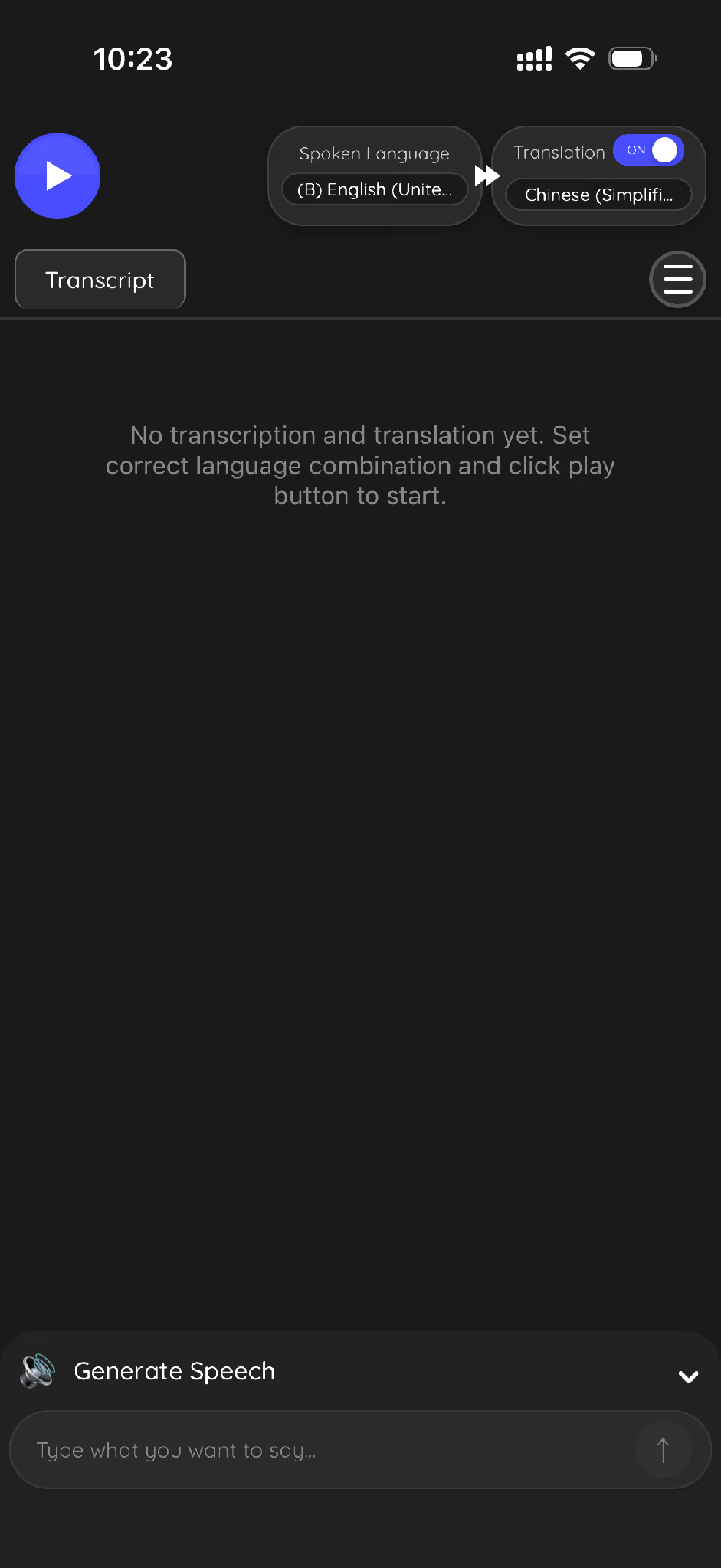
The mobile app handles the same job for a study group, a shop, or a supervisor meeting. The guide to live Chinese to English translation walks through the setup step by step, including which quality preset to use for a lecture rather than a conversation.
Second, LingoDeer, for characters and grammar. Built for Asian languages first. Stroke-order drills, explicit particle explanations, and sequencing that assumes you have never seen a character before.
Third, Anki with an HSK deck, for retention. Free, and unbeatable for character recall. Download a shared HSK 1 through 6 deck and run 20 minutes a day.
Add italki for tones. No app corrects tone reliably. A community tutor at around $5 an hour will fix in three sessions what six months of app practice will not.
Best Duolingo Alternatives for Japanese and German Learners
For Japanese Students
Japanese carries three writing systems and a particle structure with no English equivalent, and Duolingo Japanese addresses roughly the first of those, which is why the Duolingo alternatives for Japanese below matter more than they would for a European language. Kana coverage is reasonable, kanji coverage is thin, and particle explanation is close to absent.
The stack: JotMe first, because a Japanese lecture, a supervisor meeting, or an anime episode at natural speed is beyond any app-taught A2. LingoDeer second, for the grammar notes and kanji drilling. Anki third, with a JLPT deck matched to your target level. italki fourth, since Japanese politeness levels need a human to correct.
One JotMe detail matters specifically here. The quality slider preset labelled Critical conversation raises context weight, which is the setting to use for anything where politeness register carries meaning. Japanese is the clearest case of that on earth.
Duolingo Alternatives for German Students
German fails Duolingo learners on cases. Nominative, accusative, dative, and genitive change articles and adjective endings, and Duolingo will mark your answer wrong without ever telling you which case you missed.
The stack: Babbel first, because its German course explains cases directly and repeatedly. Language Transfer German second, free, for the underlying logic. JotMe third, for lectures and seminars, which matters more in German-speaking universities than most students expect since many courses run in German even on English-language programs. Clozemaster fourth, once you pass A2, for case practice inside real sentences. See how JotMe smoothly provided live German to English translation:
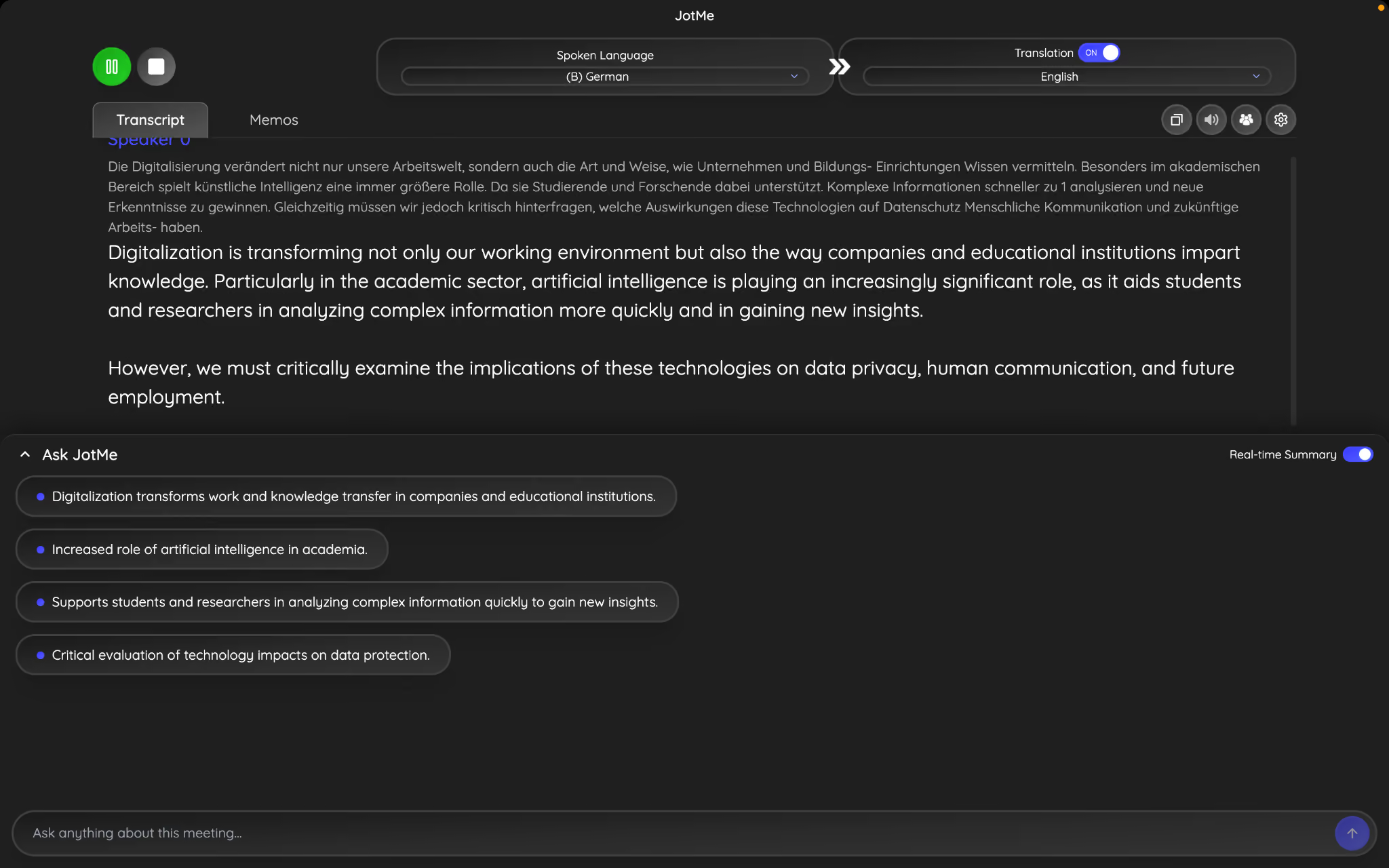
There is a second German-specific problem worth naming. Compound nouns. German builds words by joining other words, which means a term you have never seen is often three words you already know pressed together. Duolingo teaches compounds as single vocabulary items to memorize, which is exactly backwards. Language Transfer teaches you to decompose them, and once you can, your reading vocabulary expands without any additional study.
The Duolingo alternatives for German that matter most therefore split by stage. At A1 to A2 you want Babbel for case explanation. At B1 you want Clozemaster and LingQ, because German word order only makes sense across full sentences rather than fragments. At any stage where you attend a lecture or a Fachgespräch in German, you want JotMe running alongside, because German academic speech moves fast and buries the verb at the end of the clause where a struggling listener loses it.
Best Duolingo Alternatives for Kids
Parents searching for Duolingo alternatives for kids usually want three things: no manipulative streak pressure, no in-app purchases the child can trigger, and content appropriate for their age. Duolingo ABC covers early English literacy for ages three to 8 and does not teach a second language, so it rarely answers the actual question.
One honest note for parents. JotMe is not built for children and I am not going to recommend it as one. It has a legitimate family use, which is a parent using it to follow a teacher meeting or school communication in a language they do not speak, and that is a different job from teaching a child.
The Best Free Duolingo Alternatives (No Subscription Needed)
You can build a complete learning system for zero dollars. The free Duolingo alternatives below cost nothing at all, and the free alternatives in this section outrank Duolingo free on teaching quality even though they lose on habit. The free alternatives to Duolingo below cover grammar, retention, structure, and comprehension between them, and the total cost is nothing.
What Each Free Tier Actually Gives You
Free Language Apps Better Than Duolingo, Ranked
If you rank free tiers purely on how much teaching you get for nothing, the order is clear. These free Duolingo alternatives beat Duolingo free on instruction and lose to it on habit, and every one of them is a genuine app like Duolingo in everything except the price.
- Language Transfer: Complete audio courses with no cap, no account, and no ads. Nothing else comes close to grammar teaching.
- Busuu: A full beginner course, a placement test, and corrections from native speakers, all at no cost.
- Anki: Free forever on desktop and Android, and unmatched for retention once configured.
- Memrise: Official starter courses across dozens of languages, with native-speaker video, at no cost.
- Clozemaster: Enormous free sentence banks with spaced repetition, useful the moment beginner content stops helping.
Search demand for free language apps better than Duolingo runs high for a reason. Duolingo free was more generous before the energy meter, and the free alternatives to Duolingo above have not tightened their limits in the same way. If cost is the only reason you were considering Duolingo Super, one of these five removes the reason.
The Zero-Dollar Stack I Would Build Today
- Weeks 1 to 6: Language Transfer for your language, 15 minutes daily. You will understand the grammar logic before you memorize a single table.
- Weeks two onward: Busuu free, for a structured CEFR path and corrections from native speakers.
- Weeks 4 onward: Anki with a frequency deck, 20 minutes daily, for retention.
- When you need it: JotMe free, 20 minutes a month, for the lecture or the voice note you actually have to understand.
- Month 4 onward: Clozemaster free, once beginner content stops challenging you.
That stack beats Duolingo Super on teaching quality and costs nothing. If you want to compare free translation options alongside it, the JotMe translate hub covers text, document, image, video, and audio translation in one place.
Duolingo vs. the Alternatives: Head to Head Comparison
Duolingo and JotMe solve different problems. Duolingo helps you learn the basics, while JotMe helps you understand real-world language in lectures, meetings, and conversations. The better choice depends on where you are in your learning journey.
Duolingo vs. JotMe
These two are not competitors. Duolingo is a course, JotMe is a comprehension layer, and the students who do best run both.
Duolingo vs. Babbel
Duolingo vs. Busuu
Duolingo vs. LingoDeer
How Do You Switch From Duolingo Without Losing Your Progress
Nobody covers this, and it is the step where most people give up and stay put. You switch in five steps, and none of them require abandoning what you already know.
Step 1: Write down your actual level
Open your Duolingo profile and note which section and unit you reached. Then take the free Busuu placement test, which returns a CEFR level. Most learners who finished two Duolingo sections land at A2. That number, not the streak, is your real starting point.
Step 2: Export your vocabulary before you stop
Duolingo has no clean export, so do it manually. Scroll your completed units, list the words you still hesitate on, and drop them into an Anki deck. An hour of work saves months of relearning.
Step 3: Name your specific weakness in one sentence
"I cannot follow spoken French." "I never understood German cases." "I know 600 Chinese words and cannot read a menu." The sentence decides which app from this guide you install, and it is a better filter than any ranking.
Step 4: Keep the habit, drop the app
The streak worked. Set a daily alarm at the same time you used to open Duolingo and point it at your new app. The habit is the asset, and the owl was only the delivery mechanism.
Step 5: Do not delete Duolingo in week one
Run both for a fortnight. If the new app holds, let the streak go. If it does not, you have lost nothing. Most learners who quit cold Turkey end up back on Duolingo within a month with a broken streak and no replacement, which is the worst of both outcomes.
If your reason for leaving is that you need to function in the language right now rather than learn it faster, the best AI interpreter apps cover that side of the problem in more depth than a course roundup can.
Which Duolingo Alternative Should You Pick
The best Duolingo alternative depends on what is stopping your progress. Whether you need better grammar explanations, real-world listening practice, more vocabulary, or help understanding native speech, there is a tool designed for that specific problem. Find your situation below and pick the alternative that fits.
- If you have a lecture, seminar, or exchange semester coming and you are nowhere near ready: JotMe.
- If you never understand why an answer was wrong: Babbel.
- If you want a real course and cannot pay: Busuu free.
- If you study Chinese, Japanese, or Korean: LingoDeer, plus JotMe for anything spoken.
- If you can read it and freeze when you speak: Pimsleur.
- If native speakers sound like a different language to you: Memrise and JotMe.
- If you have plateaued and cannot see why: italki.
- If you learn words and forget them: Anki.
- If lesson sentences feel fake: LingQ and JotMe [it offers contextual translation in real-time]
- If English is not your first language: Mondly and JotMe.
- If you want to understand the grammar and spend nothing: Language Transfer.
- If beginner content bores you and real content defeats you: Clozemaster.
Most students need two of these rather than one. A course for the long game and a comprehension tool for the deadline. That pairing is the honest answer this whole category is built around.
Which One Would I Actually Install Tomorrow
If you have a real deadline in a real language, install JotMe first. It teaches you nothing, and it is the only tool here that lets you walk into a French seminar, a Spanish lecture, or a Mandarin tutorial next week and follow what is happening, in the dialect you actually need, with a bilingual transcript waiting for you afterward. That is the gap every other app on this list leaves wide open, and it is why it takes the top slot despite not being a course.
Then install a course beside it. Babbel if you learn French, Spanish, or German and want the grammar explained. Busuu if you want a CEFR path and cannot pay. LingoDeer if you study Chinese, Japanese, or Korean. Language Transfer regardless, because 40 free lessons will teach you more about how your language works than a year of streaks.
Keep the Duolingo habit if it works for you. Add the tool that fixes what it cannot. You can start with JotMe free and test it on one lecture before deciding anything, and if you want to compare the speech side against other options first, the guide to speech translation tools covers the alternatives honestly.
Frequently Asked Questions
What Is a Duolingo Alternative?
A Duolingo alternative is any app or system that fills a gap Duolingo leaves open, including deeper grammar explanation, real conversation practice, script and character teaching, structured CEFR progression, or comprehension of real speech. Apps like Babbel, Busuu, LingoDeer, and Pimsleur each solve a different piece. JotMe solves a different problem entirely, which is understanding the language before you have learned it.
Is There a Good Free Alternative to Duolingo?
Yes, there are several free alternatives to Duolingo, and the best free duolingo alternatives beat the paid version of Duolingo on teaching. Language Transfer is entirely free with no paywall anywhere. Anki is free on desktop and Android. Busuu offers a real free course including native-speaker corrections. Memrise gives you complete official starter courses at no cost. JotMe includes 20 minutes of live translation monthly on its free plan. Stacked together, those free alternatives to Duolingo cover more ground than Duolingo Super does.
What App Is Better Than Duolingo for Chinese?
LingoDeer is better than Duolingo for characters and grammar, and JotMe for anything spoken. Duolingo Mandarin is its weakest major course, leaning heavily on pinyin with thin character teaching and no tone correction. LingoDeer was built for Asian languages first, and JotMe closes the comprehension gap between what a course teaches and what a Mandarin lecturer actually says.
Can Duolingo Make You Fluent?
No, Duolingo does not make you fluent. Courses top out around A2 for most languages, which describes simple routine exchanges rather than fluency. Reaching B2, the level where you can follow a technical discussion in your field, requires reading, listening to unscripted speech, writing, and speaking with correction. Duolingo covers the habit and the first few hundred words, and the rest comes from somewhere else.
What Replaced Duolingo Hearts?
An energy system, rolled out to free users in late 2025, replaced Duolingo Hearts. Under hearts you lost a life for a wrong answer. Under energy, exercises consume the meter no matter how accurate you are, so the free session ends while you are still answering correctly. That change is the single biggest driver of search demand for alternatives to Duolingo in 2026.
Is Duolingo Max Worth It?
It depends entirely on how much you use the AI features. Max adds Video Call with Lily and explanations of your mistakes, and the explanations are the genuinely valuable part since they patch Duolingo’s weakest area. If you would use them daily, Max is defensible. If you would not, Babbel at a lower price teaches grammar better, and a Duolingo Max alternative like Busuu Premium costs less for more structure.
Which Duolingo Alternative Is Best for Kids?
Mondly Kids if you already pay for Mondly, Gus on the Go for ages three to 8 learning vocabulary, and Studycat for game-led curriculum content. Duolingo ABC is free and well made, and it teaches English literacy rather than a second language, so check that it matches what you actually want before installing it.
Are There Free Language Apps Better Than Duolingo?
Language Transfer explains grammar better than Duolingo at any tier and costs nothing. Busuu Free gives you a CEFR path and human corrections. For habit formation, nothing free beats Duolingo, which is why the strongest zero-dollar setup keeps Duolingo for consistency and adds a free app like Duolingo for actual instruction.
What Sites Like Duolingo Work in a Browser?
Every app like Duolingo listed here has a browser route except Pimsleur and Duolingo itself. Busuu, LingQ, Clozemaster, Memrise, Mondly, and Anki all run in a browser, which matters on a university machine where you cannot install software. JotMe works both as a desktop app and through the browser for text, document, image, video, and audio translation.
Do I Have to Stop Using Duolingo?
No, you do not have to stop using Duolingo. For most learners, keeping Duolingo for daily practice and adding another app for specific skills like speaking, grammar, or vocabulary works better than replacing it completely. Duolingo is excellent at building consistency, while other tools can fill the gaps it leaves behind.
How Long Does It Take to Reach B2?
For a Romance language from English, roughly 600 to 750 hours of serious study according to widely cited institutional estimates. For Mandarin, Japanese, Korean, or Arabic, closer to 2,200 hours. No app changes those numbers meaningfully. What an app changes is how many of those hours you actually complete, which is why habit and comprehension both matter more than feature lists.
Which Duolingo Alternative Has the Most Languages?
JotMe has 200+ languages and 39,000+ language pairs, though it translates rather than teaches. Among teaching apps, italki reaches more than 150 languages through human tutors, Mondly covers 41, and Duolingo itself runs more than 40 courses. Babbel and Busuu both stop at 14.
Can I Use a Duolingo Alternative for University Coursework?
Yes, you can use a Duolingo alternative for university coursework, especially if you need help understanding lectures, taking notes, or learning in another language. Tools like JotMe can create bilingual transcripts, AI summaries, and organized notes from lectures, making it easier to review course material.
Are There Apps Like Duolingo That Do Not Use Streaks?
Yes, there are many language apps like Duolingo that do not rely on streaks. Apps such as Busuu, Babbel, LingoDeer, Pimsleur, Language Transfer, Anki, and LingQ focus more on structured learning, vocabulary, or real-world language skills without daily streak pressure.
Which Duolingo Alternative Works Best for a Semester Abroad?
JotMe for the first month, then a course app once you have stopped drowning. Students arriving on exchange consistently report the same shock, which is that a year of app study does not prepare you for a lecture, a landlord, or a pharmacy queue. Run JotMe on your lectures and set the dialect to the country you are actually in, then add Babbel, Busuu, or LingoDeer for structured study once the panic subsides. The Duolingo alternatives for Spanish, Duolingo alternatives for French, and Duolingo alternatives for Chinese sections above give the specific stack for each.
What Is the Single Best Duolingo Alternative?
There is no single best Duolingo alternative for everyone. The right choice depends on what you want to improve, such as comprehension, grammar, speaking, or a specific language. JotMe is best for comprehension, Babbel for grammar, Busuu for a free structured course, and LingoDeer for languages like Chinese. For speaking, Pimsleur or italki. A fuller comparison of the translation side lives in our roundup of top translation services.
Last updated on
August 19, 2026
Follow us on social media: