
Guides
Top 12 Translation Services in 2026 & How to Choose Them

Viraj Mahajan
April 3, 2026
The best translation services in 2026 are Google Translate, DeepL, Gengo, Lionbridge, Smartling, LanguageLine Solutions, RushTranslate, Blend, TransPerfect, JR Language, Globe Language Services, and Orbit Translation. For businesses seeking real-time multilingual interpretation during live meetings, JotMe provides AI-powered speech-to-text translation with contextual accuracy across 200+ languages, which eliminates the need for post-meeting email cleanup.
You have a 250-page logistics documentation package from your South Korean supply chain team sitting in your inbox. The contract terms, shipping schedules, quality specifications, and compliance requirements all need translation before your legal team can review them. You search for translation services online and find agencies charging $0.10 to $0.15 per word, which puts the project cost somewhere between $7,000 and $10,000.
That feels steep for a single document set, so you check freelance platforms like Fiverr and Upwork, hoping to find a more reasonable rate.
The highly-rated translators with strong portfolios either don't cover Korean-to-English technical documentation or have month-long waitlists. The available freelancers offer rates around $0.01 to $0.03 per word, but their profiles show inconsistent reviews, unclear credentials, and no experience with logistics terminology.
You realize that hiring the wrong translator creates a bigger problem than the cost you were trying to avoid.
The same week, you join a Zoom call with your remote manufacturing team in Guangzhou to discuss production delays and material shortages. Three people on the call speak limited English.
You record the meeting and run the transcript through Google Translate or Google Translate alternatives for better accuracy, and hope to extract clear action items and commitments.
The translated output gives you sentence fragments, mistranslated product codes, and completely wrong interpretations of what your production manager actually promised. You spend two hours drafting follow-up emails trying to confirm what was discussed, then another hour on a second call just to clarify what should have been resolved in the first meeting. The three-minute fix during the call turned into five hours of cleanup work across three days.
You see the pattern here:
- Translation services solve one problem: Turning completed documents from one language into another.
- Real-time interpretation solves a different problem: Making sure live conversations between people who speak different languages actually result in shared understanding, clear decisions, and accurate follow-up.
Most businesses searching for language translation services need both, though they don't realize the distinction until the wrong tool costs them time, money, or damaged relationships with international partners.
This guide covers the 12 top translation services for documents, contracts, websites, and written content that need professional human review, certification, or localization. It also explains how a real-time AI-powered translation tool like JotMe removes the middleman, streamlines communication, and offers a more efficient alternative to traditional translation workflows, especially through live translation for teams in multilingual meetings.
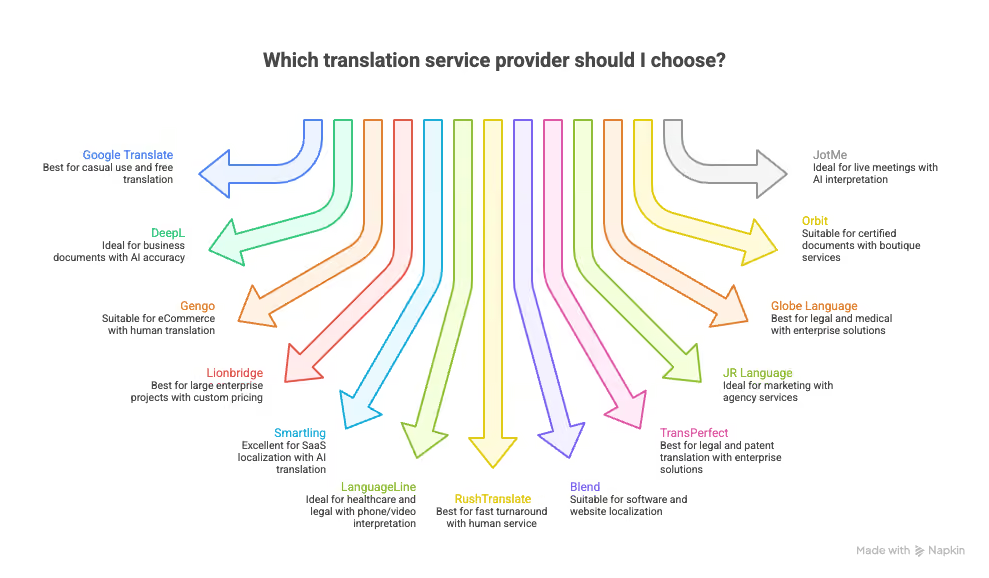
Quick Comparison: Best Translation Services in 2026 at a Glance
Before we dig deep into all of the traditional translation services and real-time AI interpreters for your multilingual meeting, here's a quick comparison between the best live translation services that you can use for personal and professional endeavors.
Understanding the Types of Translation Services
Before choosing a professional interpreting service, it is important to understand the four main categories of AI-powered language services. Each solves a different problem at a different price point.
1. Human Translation
Professional translators handle your content manually. This remains the gold standard for high-stakes content like legal contracts, medical documents, and patent filings.
- Typical pricing: $0.06–$0.30 per word, depending on language pair and specialization
- Turnaround: 1–7 days
- Best for: Certified documents, regulatory submissions, anything requiring accountability
2. Machine Translation (MT)
AI-powered language services like Google Translate and DeepL translate content instantly. Quality has improved dramatically with neural machine translation, but it still falls short for specialized or high-stakes content.
- Typical pricing: Free to $0.02/word for API access
- Turnaround: Instant
- Best for: Internal communications, gisting, first drafts, high-volume low-stakes content
3. Hybrid AI + Human Post-Editing (MTPE)
Machine translation handles the first pass, then human translators review and correct. This is the fastest-growing segment of the translation industry.
- Typical pricing: $0.04–$0.08 per word
- Turnaround: 4–24 hours
- Best for: Product descriptions, support documentation, technical manuals
4. Real-Time AI Interpretation
AI-powered interpretation tools provide live, real-time translation during meetings, calls, and conferences. This is the newest category and the one most businesses overlook.
- Typical pricing: Subscription-based
- Turnaround: Real-time (seconds)
- Best for: International business meetings, client calls, multilingual team standups
The key distinction is timing. Document translation happens after content creation. Real-time interpretation happens while people are still talking, making decisions, and committing to action items that determine whether projects succeed or fail.
How Did We Finalize the Best Translation Service Providers?
The translation services market includes thousands of providers ranging from individual freelancers to global enterprises, each claiming to offer the best quality, fastest turnaround, or most competitive pricing. With so many options available across different geographies, industries, and use cases, we needed a systematic approach to identify which providers genuinely deserve consideration.
Our selection process evaluated translation services across four key criteria:
Online Reviews and Customer Feedback
We analyzed customer reviews across Trustpilot, G2, Capterra, Google Business, and industry-specific forums where businesses discuss translation service experiences. We looked for consistent patterns in feedback rather than isolated complaints or suspiciously perfect ratings.
We excluded providers with review patterns indicating inconsistent quality, unresponsive support, missed deadlines, or certification issues that required customers to pay for translation twice when government agencies or legal reviewers rejected initial submissions.
Online Traffic and Market Presence
We used Semrush and Ahrefs to verify which translation services actually receive significant search traffic from businesses and individuals actively looking for language service providers. Consistent monthly search traffic in the thousands or tens of thousands indicated real market demand rather than just paid advertising visibility.
Traffic analysis helped us distinguish between established providers with proven track records and newer services making ambitious claims without corresponding market validation. For example, LanguageLine Solutions receives significant traffic from healthcare and government sectors, confirming their claimed expertise in regulated industries.
Pricing Transparency and Cost Competitiveness
We prioritized providers offering transparent pricing information without requiring sales calls, demos, or lengthy discovery processes for straightforward translation needs, because after reviewing hundreds of tools and services, we have realized that hidden pricing indicates expensive enterprise sales processes that smaller teams should avoid.
We included both transparent providers and custom-quote providers because different business sizes and project complexities require different purchasing models.
Turnaround Time and Deadline Reliability
We evaluated providers based on realistic turnaround promises matched to actual delivery performance documented in customer reviews and case studies. In most cases, the clear turnaround time estimates are based on word count, document complexity, and language pair rather than blanket promises for instant delivery on any content.
We excluded providers making unrealistic turnaround promises, such as "professional translation of any document in 24 hours," since professional translation workflows require multiple review stages, terminology research, and quality assurance processes that cannot be compressed without introducing errors.
Top 12 Professional Translation Service Providers in 2026
Professional interpreting services handle written content after creation: contracts, marketing materials, technical documentation, website localization, product packaging, training materials, and any content where the final output will be read, filed, published, or legally reviewed. These services employ professional human translators with industry expertise in legal, medical, financial, technical, and marketing fields.
Here are the top 12 language translation services that we identified as well-suited for your needs:
1. Google Translate: Free Instant Translation for Casual Use
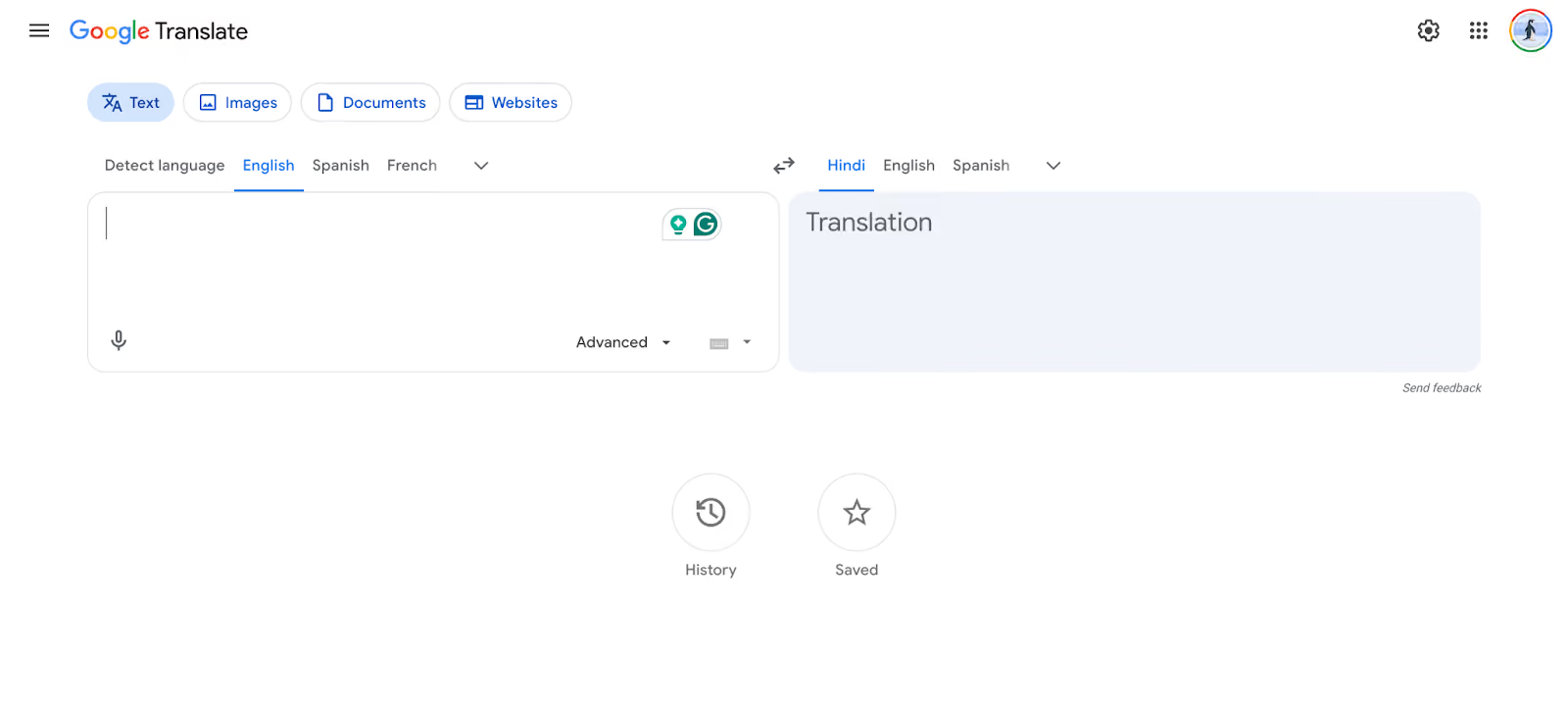
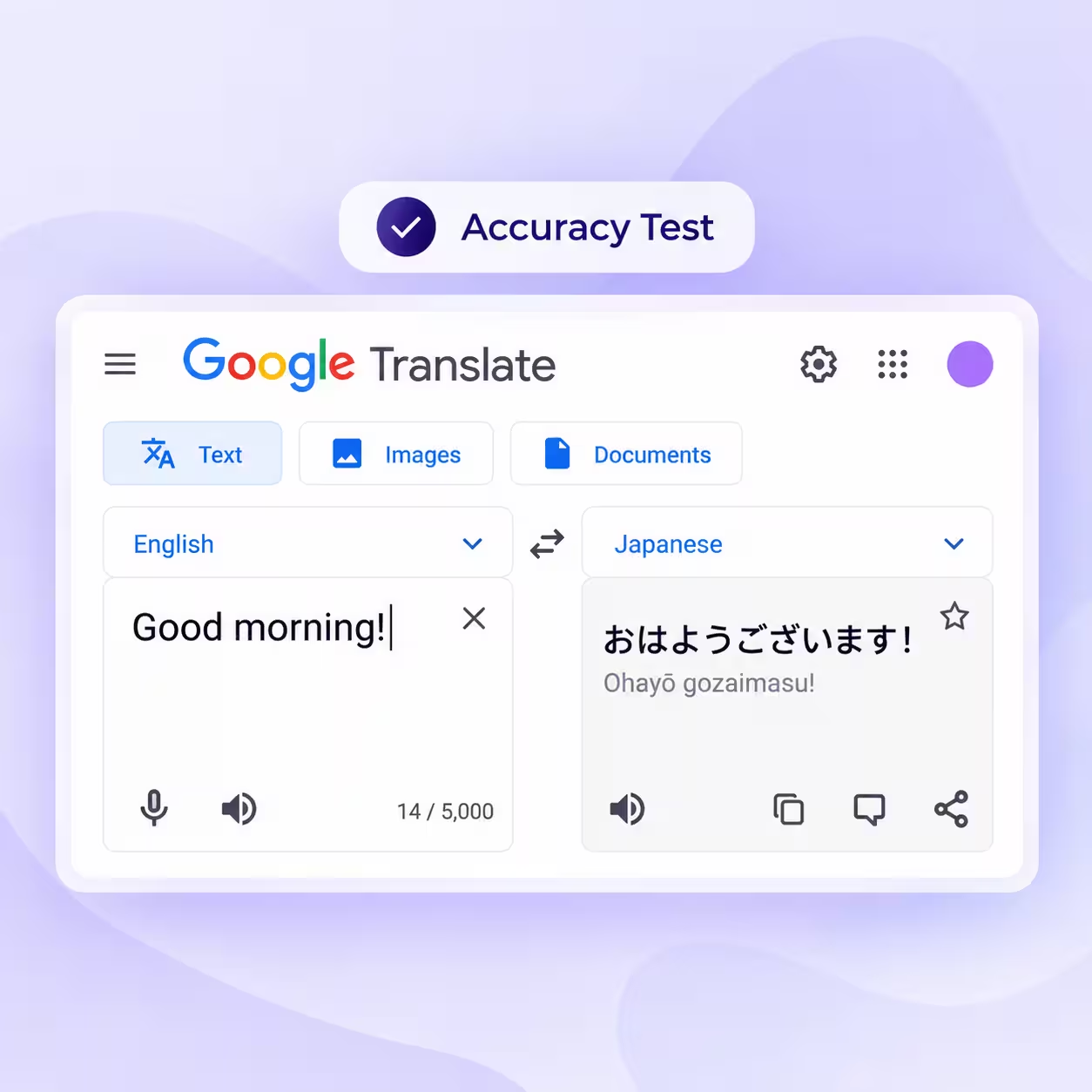
Google Translate is free and supports 100+ languages with instant text, voice, and image translation. Google Translate works well for casual emails between coworkers, text messages with international friends, travel phrases when visiting foreign countries, quick checks to understand whether an incoming message requires immediate response, and screenshot translation for signs, menus, or printed materials.
However, based on online reviews, Google Translate shows limitations when it comes to business meetings, professional documents, legal contracts, medical records, marketing content, or any situation where precision, cultural awareness, and accountability matter.
Key Features of Google Translate
- Text, voice, and image translation across 100+ languages
- Offline mode for 90+ languages without an internet connection
- Real-time conversation mode for face-to-face translation (though accuracy drops significantly with natural speech, accents, and technical terminology)
- Browser extension and mobile app for instant access
- Camera translation for signs, menus, and printed text using image recognition
2. DeepL: AI-Powered Translation for Formal Business Documents
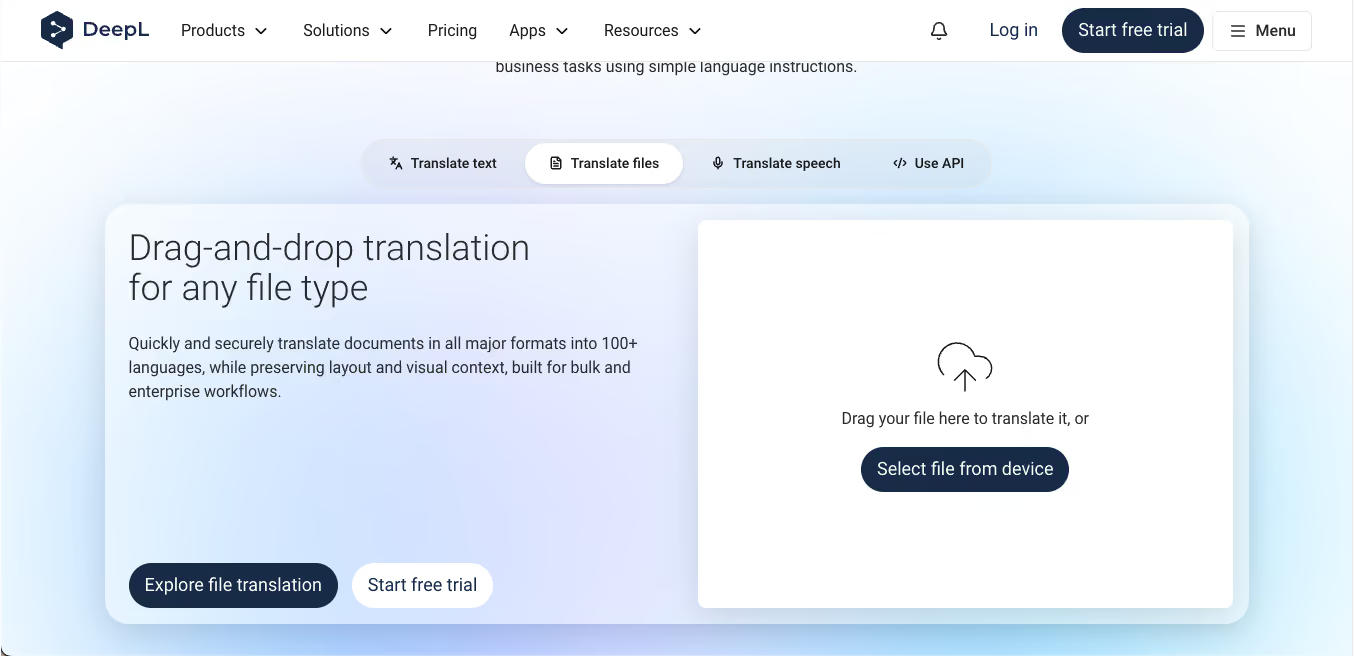
DeepL uses advanced neural networks to deliver more accurate translations than Google Translate for formal business writing, especially in European languages. DeepL produces cleaner sentence structure, better handles complex grammar, and preserves formal tone better than free translation tools, which makes DeepL a popular choice for business documents, contracts, technical manuals, and professional correspondence where readability matters.
Key Features of DeepL
- Neural machine translation with higher accuracy than Google Translate for European languages
- Document translation for PDF, Word, and PowerPoint files with preserved formatting
- DeepL API for developers who want to integrate translation into applications
- Glossary feature for consistent terminology across documents
- Translation memory for maintaining consistency across related projects
DeepL Pricing
- Individual Plan: $8.74/month, billed annually.
- Team Plan: $28.74/month, billed annually.
- Business Plan: $57.49/month, billed annually.
- DeepL Pro: $7.49/month, billed annually.
3. Gengo: Human Translation Platform for eCommerce and Marketing
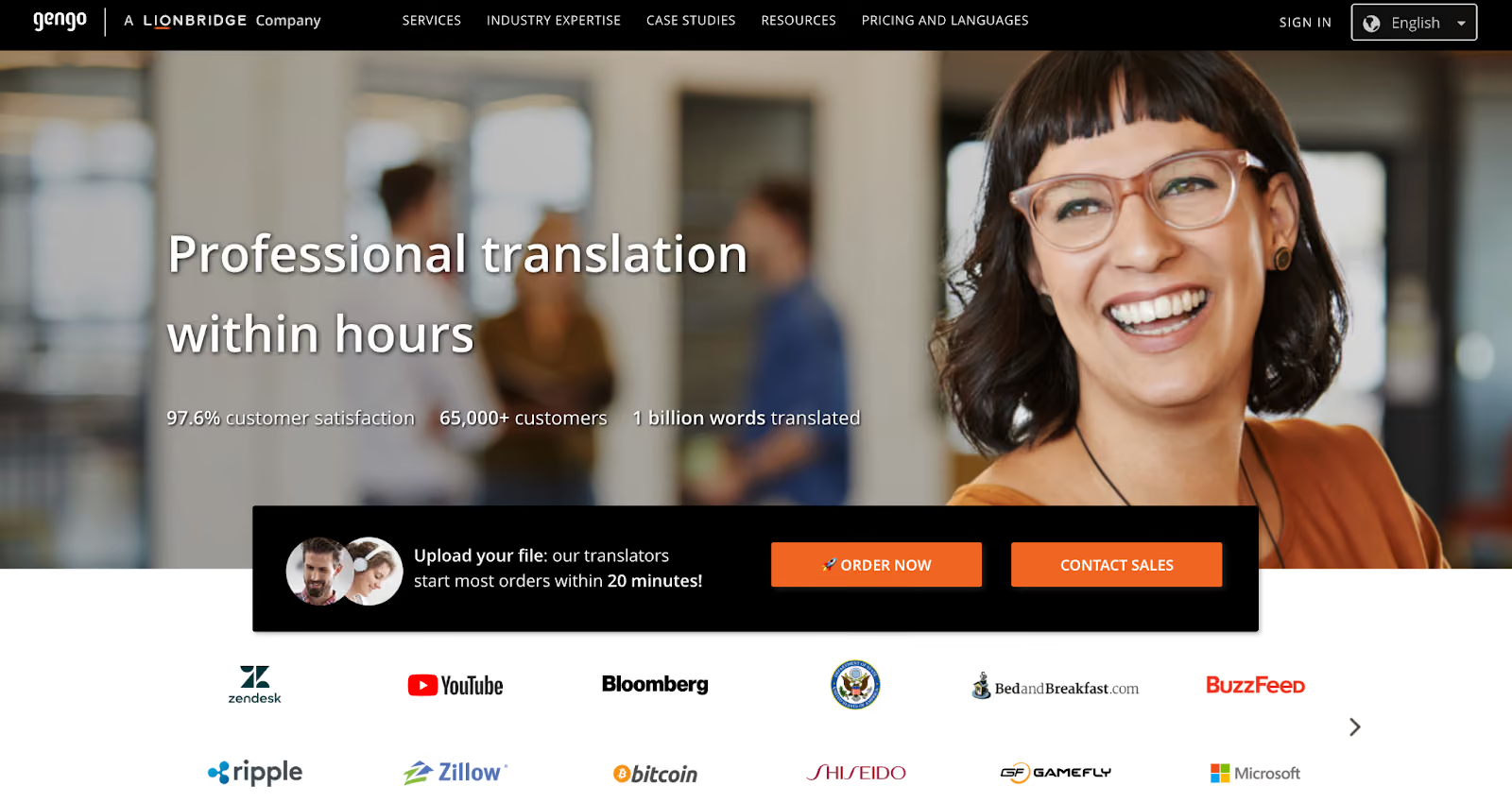
Gengo is a translation platform that specializes in eCommerce, marketing content, customer support translation, and high-volume online content that needs human quality without enterprise agency overhead.
What sets Gengo different from other online translation service providers is the fact that it provides professional translation within hours. Gengo maintains a network of 21,000+ vetted translators delivering fast turnaround for product descriptions, blog posts, app localization, and marketing copy at competitive per-word rates with transparent pricing.
Service Highlights of Gengo
- Simply upload the file, and Gengo's translators will start the work within 20 minutes.
- eCommerce platform integrations with Shopify, WooCommerce, and Magento for automated product catalog translation.
- API for automated translation workflows connecting content management systems, support platforms, and marketing tools
- Customer support translation for tickets, live chat, and knowledge base articles.
Gengo Pricing Model
- Standard Quality: It starts at $0.06 per word and may cost more for languages like Italian, Danish, German, and others.
- Advanced Quality: The pro quality starts at $0.12 per word and rises to $0.14 for complex languages such as Ukrainian, Swedish, Norwegian, and others.
4. Lionbridge: Enterprise Translation Agency for Large-Scale Projects
With over 370,000 LinkedIn followers, Lionbridge has proved itself a global enterprise language service provider serving Fortune 500 companies with large-scale localization, interpretation, multilingual content management, and language technology solutions. Back in 2014, Lionbridge started using Azure OpenAI Foundry models, which helped reduce turnaround time by up to 30%. Since then, the company has embraced AI to improve overall efficiency.
As of April 2026, Lionbridge has employed 100,000+ linguists and operates in 350+ languages, providing comprehensive language access solutions for enterprises with ongoing multilingual needs across multiple departments, geographies, and content types.
Service Highlights of Lionbridge
- Enterprise-scale translation and localization for 350+ languages
- Certified interpreters for legal depositions, medical consultations, and financial disclosures.
- AI-assisted translation workflows combining machine translation with human review for faster turnaround on high-volume content.
- Dedicated account management and project coordination for complex programs spanning multiple languages, content types, and stakeholder groups
- Translation memory, terminology management, and quality assurance processes for consistency across large content libraries
Lionbridge Pricing Model
Lionbridge requires custom pricing quotes based on project scope, language pairs, turnaround time, industry requirements, and ongoing support needs. You will need to contact the Lionbridge sales team for detailed pricing.
5. Smartling: Translation Management Platform for SaaS and Finance
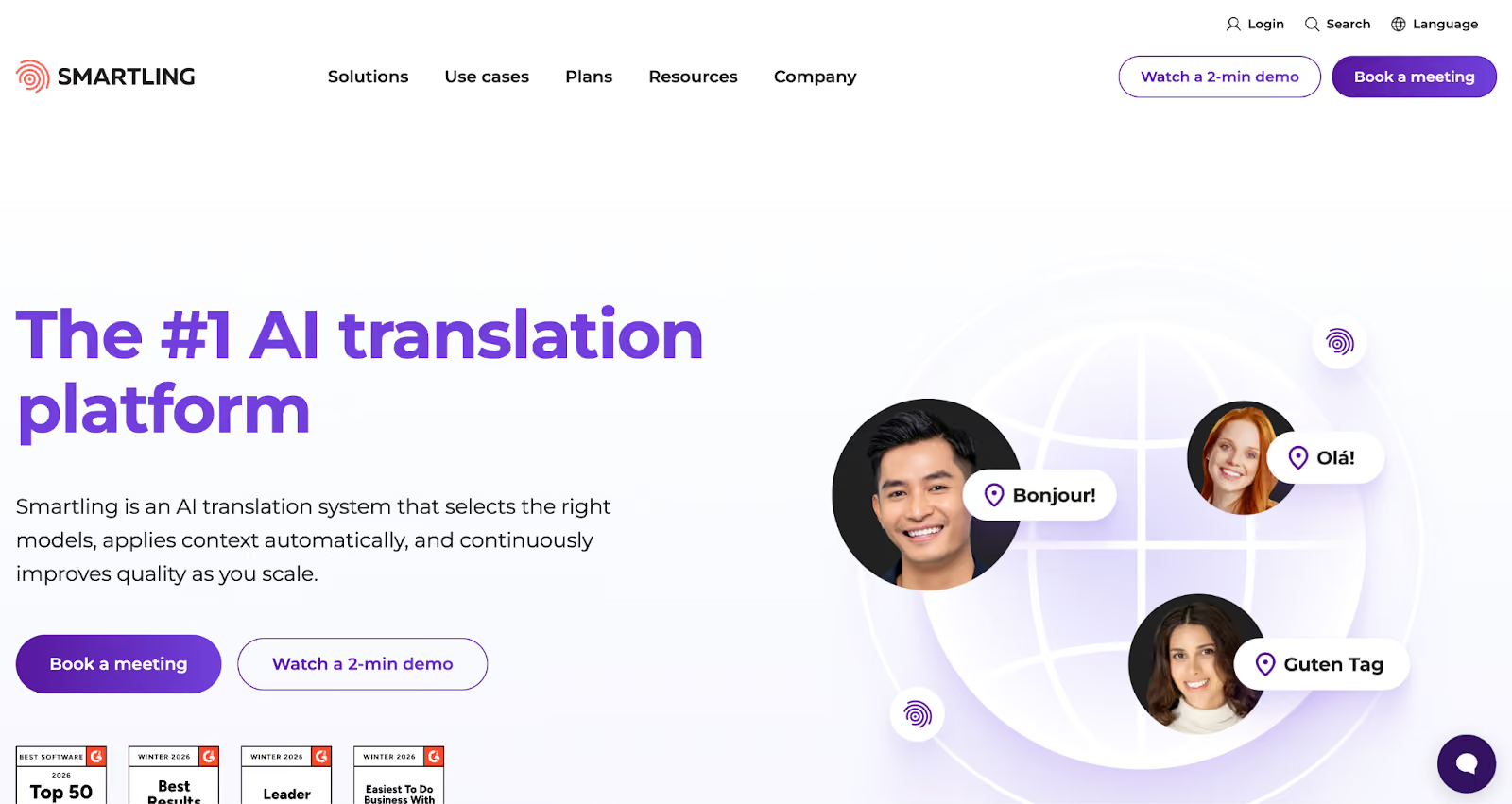
Smartling is less a translation service and more a translation platform. If you are continuously localizing a SaaS product into 150+ languages, Smartling's TMS automates workflows, provides translators with visual context (they see the UI they are translating), and maintains translation memory so you never pay to translate the same string twice.
Smartling is particularly strong for financial services, where inconsistent terminology across regions can change the meaning of financial statements, and compliance requirements vary by jurisdiction.
Service Highlights of Smartling
- Full translation management system (TMS) with automated workflows for continuous localization
- Visual context tools so translators see the actual UI, not just raw strings
- Translation memory and glossary management to maintain terminology consistency across releases
- 98 MQM quality score across all translations
- Integrations with GitHub, Figma, Contentful, Zendesk, and other development and content tools
Smartling Pricing Model
Smartling uses a platform fee + per-word translation cost model. Pricing varies based on language pairs, volume, and whether you use Smartling's translator network or bring your own. Contact Smartling for a custom quote.
6. LanguageLine Solutions: Certified Translation for Healthcare and Legal
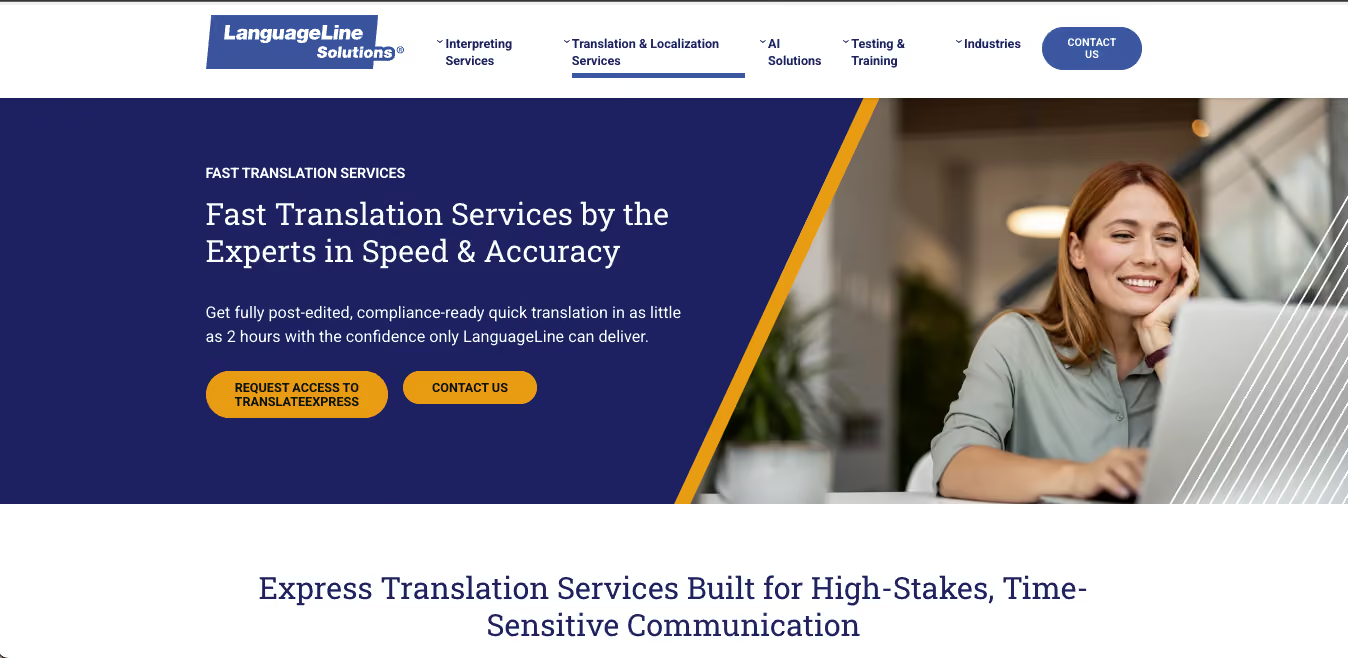
LanguageLine Solutions provides on-demand interpretation and secure AI translation services for healthcare, legal, government, and public service sectors requiring 24/7 language access, certified interpreters, and compliance with HIPAA, GDPR, and accessibility regulations.
LanguageLine Solutions operates 24/7 with 240+ languages, specializing in over-the-phone interpretation (OPI) and video remote interpretation (VRI) for patient consultations, legal depositions, emergency services, and critical communications where immediate language access prevents harm. In most of the cases, LanguageLine Solutions will connect clients with professional interpretation in under 30 seconds for urgent interpretation needs.
Service Highlights of LanguageLine Solutions
- On-demand phone interpretation (OPI) with under 30-second connect time for immediate language access.
- Video remote interpretation (VRI) for healthcare consultations, legal proceedings, and situations requiring visual communication.
- Document translation for medical records, patient instructions, legal contracts, court documents, and government forms.
- 24/7 availability across 240+ languages for emergency and critical communication needs.
- HIPAA and GDPR compliance for healthcare and legal industries with security controls, confidentiality agreements, and certified interpreter training.
LanguageLine Solutions Pricing Model
LanguageLine offers pay-as-you-go interpretation pricing, which varies by language and service type. That said, it also offers pay-per-minute pricing:
- Audio Interpreting in 240+ languages: $3.95/minute
- Video Interpreting in 40+ top languages: $4.95/minute
7. RushTranslate: Fast-Turnaround Human Translation for Urgent Documents
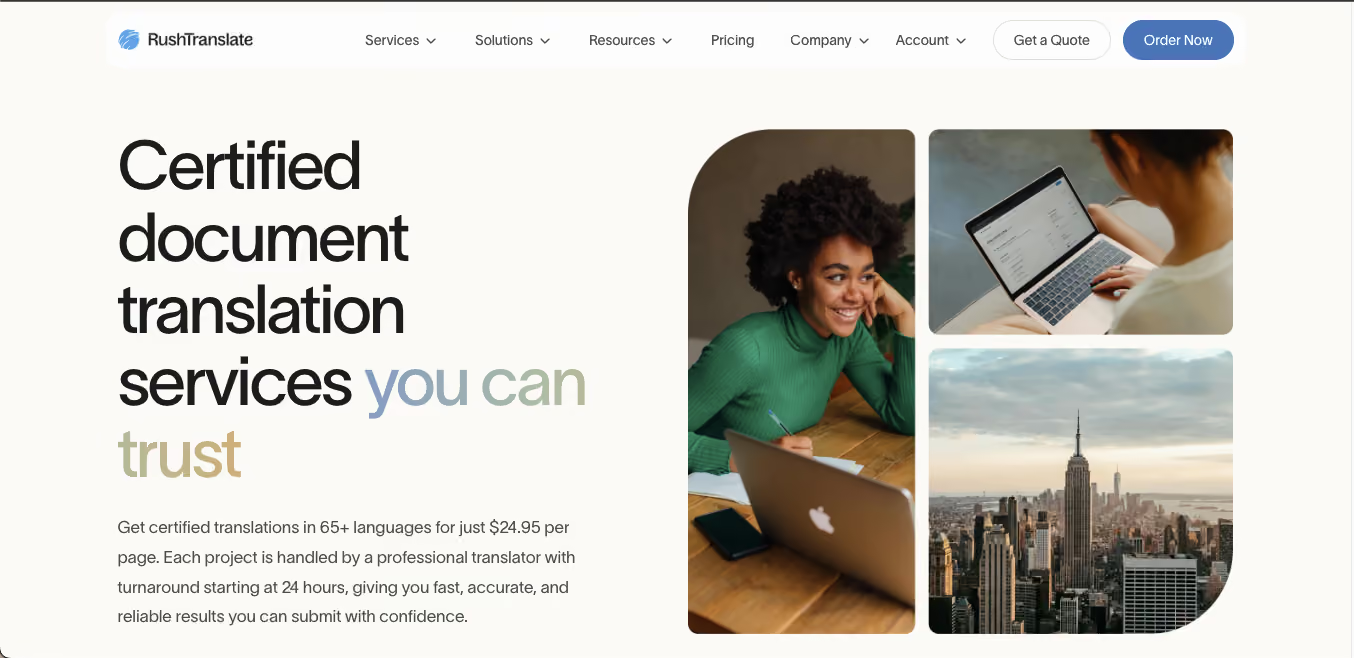
RushTranslate specializes in fast-turnaround human translation for business documents, legal contracts, immigration paperwork, academic transcripts, and technical manuals requiring certified translation with official stamps and translator signatures. RushTranslate delivers standard projects within 24 hours and rush projects within 12 hours, which makes it ideal for urgent translation needs where deadlines are measured in hours rather than days or weeks.
Service Highlights of RushTranslate
- Human translation across 100+ languages with professional translators and subject-matter expertise
- Certified translation for legal documents, immigration papers, academic transcripts, and official filings requiring USCIS acceptance or court certification
- Provides confidentiality agreements (NDA) for sensitive business content and personal records
- Comes with notarization services for documents requiring additional authentication
RushTranslate Pricing Model
Standard Translation: $0.10/word [translation style: interpretive] Certified Translation: $24.95/page [translation style: literal]
8. Blend: Translation and Localization for Software and Websites
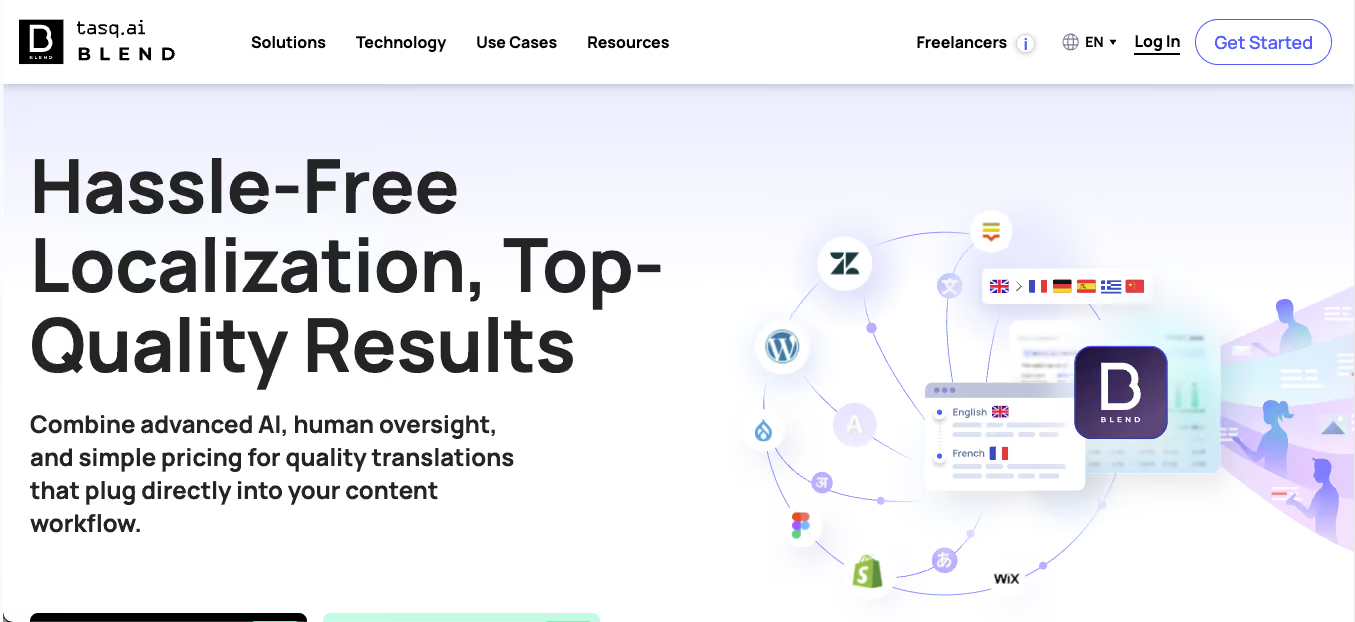
Blend (formerly One Hour Translation) is a translation and localization platform built for software companies, eCommerce brands, SaaS businesses, and global brands managing recurring multilingual content releases.
Blend provides online translation services through automated workflows connecting translation requests directly to vetted translators, eliminating manual project coordination for recurring content updates, product releases, and marketing campaigns.
Service Highlights of Blend
- Translation and localization for software interfaces, mobile apps, websites, and product documentation
- eCommerce platform integrations with Shopify, Magento, WooCommerce, and WordPress for automated product catalog and marketing content translation
- Marketing translation for advertisements, landing pages, email campaigns, and promotional content requiring cultural adaptation
- API for automated translation workflows connecting content management systems, marketing automation platforms, and product development tools
- Translation memory and glossary management for terminology consistency across product releases and marketing campaigns
- Quality assurance processes with human review for customer-facing content
Blend Pricing Model
The following pricing model is calculated for someone who needs to translate 2,500-10,000 words per month. The actual cost may vary depending on the requirements.
- Starter Pack: $0.12/word, roughly $42/month, billed annually
- Teams Pack: $175/month, billed annually.
Blend also offers enterprise-level subscription plans, for which you will need to contact the relevant account manager to book a demo for your requirements.
9. TransPerfect: Enterprise Translation for Legal and Life Sciences
TransPerfect is one of the largest privately held language services companies in the world, with a strong reputation in legal, financial, and life sciences translation. Their GlobalLink TMS handles complex, multi-language localization programs, and their legal translation services include translators with law degrees and patent expertise.
Service Highlights of TransPerfect
- Legal translation for patents, contracts, court filings, and regulatory submissions with jurisdiction-specific expertise
- Life sciences translation for clinical trials, FDA/EMA submissions, and pharmaceutical labeling
- GlobalLink translation management system for enterprise-scale continuous localization
- Dedicated project management for complex multi-language, multi-department translation programs
- ISO 17100 certified translation quality management
TransPerfect Pricing Model
TransPerfect uses custom enterprise pricing based on project scope, language pairs, volume, and specialization requirements. Contact their sales team for quotes.
10. JR Language: Marketing Translation with Creative Adaptation
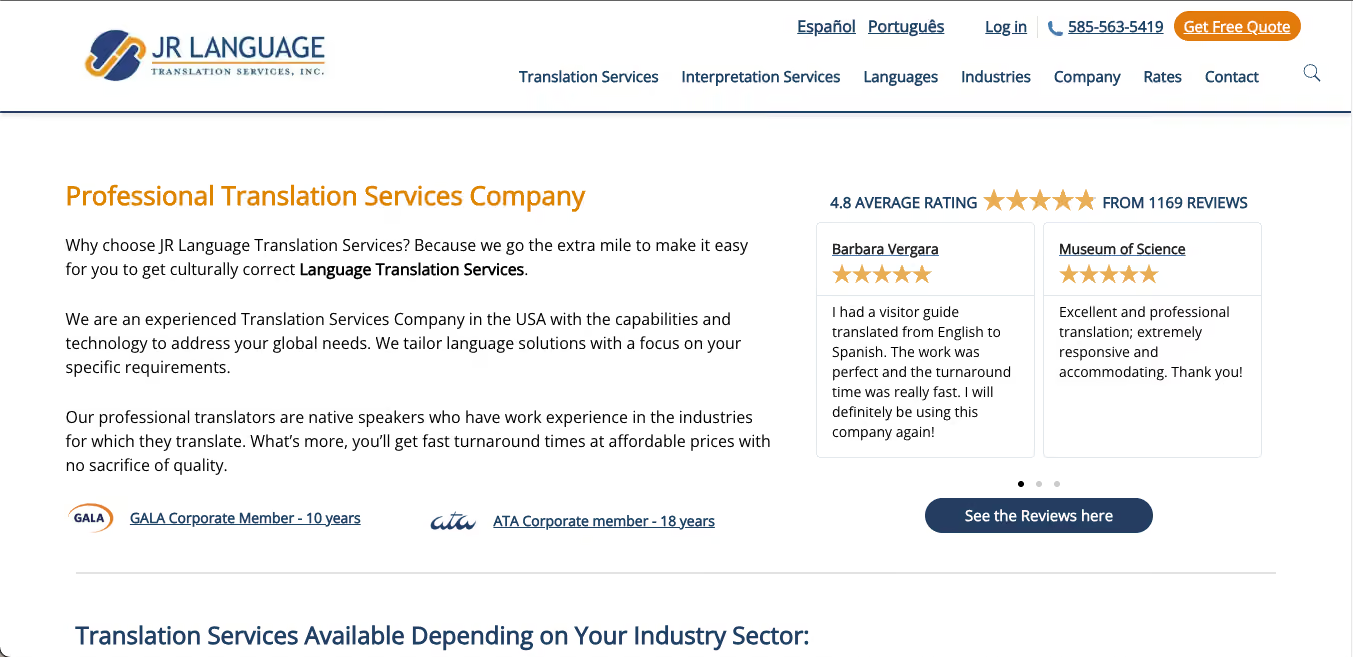
JR Language is a boutique translation agency specializing in marketing content, technical documentation, and multimedia localization requiring creative adaptation beyond literal translation. JR Language focuses on transcreation, adapting marketing messages for cultural nuance, brand voice, and emotional impact rather than word-for-word translation that loses persuasive power in the target market.
Service Highlights of JR Language
- Marketing translation with creative adaptation (transcreation) for brand messaging, advertising campaigns, and promotional content
- Technical documentation translation for user manuals, product specifications, training materials, and engineering documents
- Multimedia localization for video subtitles, voiceovers, e-learning modules, and audio content
- Desktop publishing services for InDesign, FrameMaker, Adobe Creative Suite, and technical documentation formats
JR Language Pricing Model
Certified translation starts at $49 for standard documents. Add-on Services:
- Notarization: $25
- Certified Hard Copies: $10/1st page, $5/additional pages
- FedEx Ground: $50 (2-3 day delivery)
You will need to get in touch with JR Language for detailed quotes on marketing and multimedia projects.
11. Globe Language Services: Certified Translation for Legal and Financial
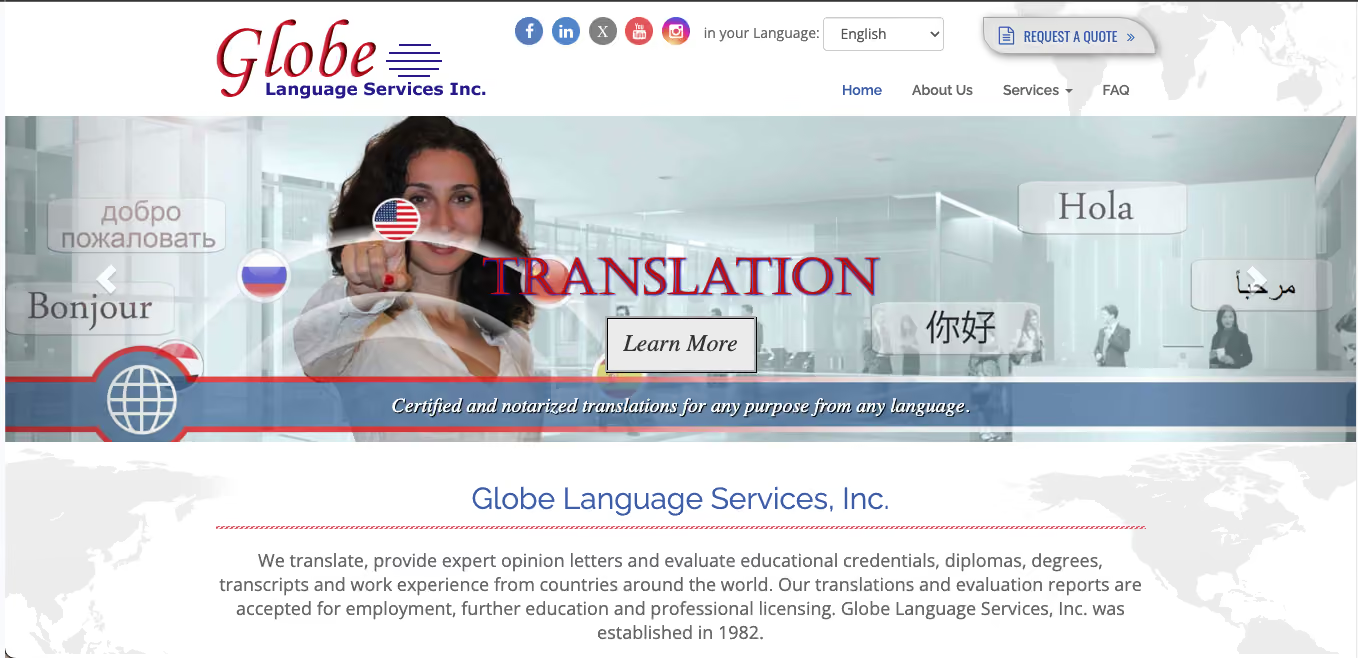
Globe Language Services is an enterprise translation agency serving legal firms, financial institutions, hospitals, and academic credential evaluation services requiring certified translation, notarization support, and compliance guarantees for regulated document types.
Globe Language Services handles on-site interpretation, remote interpretation, and document translation with HIPAA and GDPR compliance guarantees for healthcare providers, legal proceedings, and financial disclosures requiring confidentiality and regulatory adherence.
Service Highlights of Globe Language Services
- On-site and remote professional interpretation for legal depositions, medical consultations, financial meetings, and business negotiations
- Industry-specific terminology management and quality assurance processes, ensuring consistent translation across large document sets
- Dedicated project management for complex translation projects spanning multiple document types, review cycles, and stakeholder groups
- All of the translation that customers receive comes with a "Certificate of Accuracy" mark that verifies that the translation is accurate and complete as per the source.
Globe Language Services Pricing Model
Globe Language Services requires scheduling a sales demo to access pricing information and service details. It should be noted here that the pricing varies by document type, language pair, certification requirements, and turnaround time.
12. Orbit Translation: Certified Translation for Immigration and Legal Documents
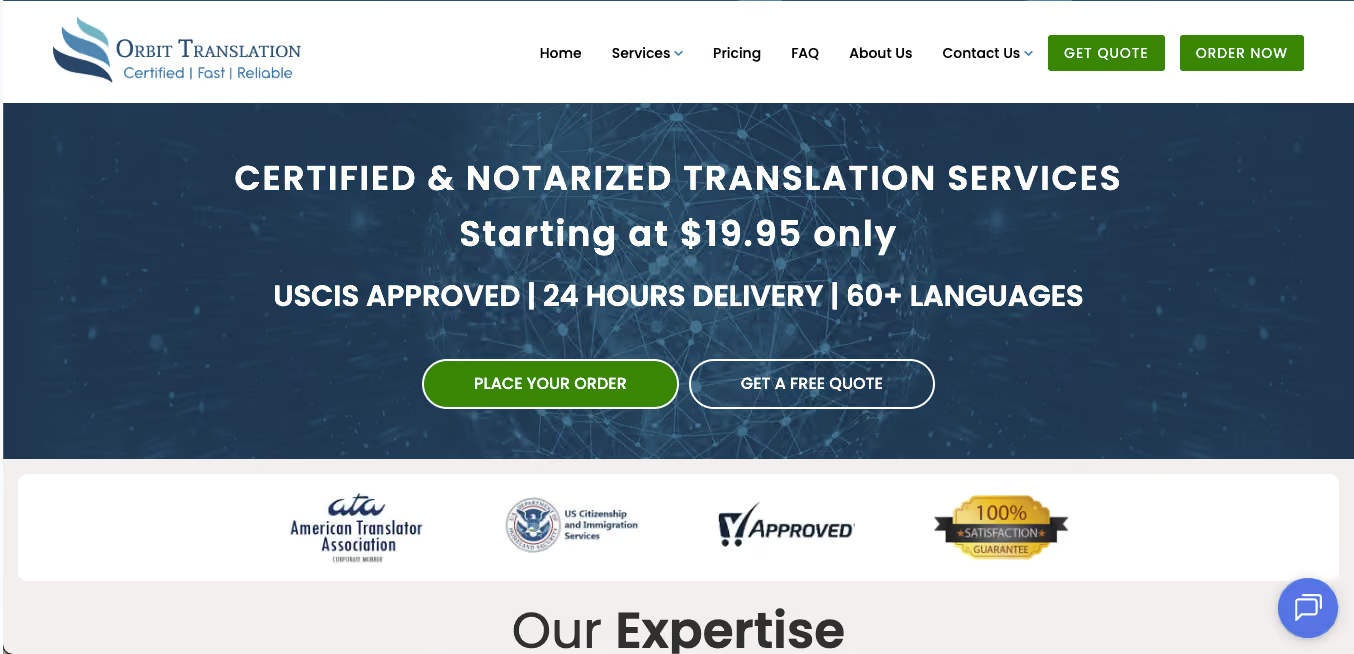
Similar to JR Language, Orbit Translation is also a boutique agency specializing in certified translation for legal documents, immigration paperwork, academic transcripts, and personal records requiring USCIS acceptance, court certification, and official translator stamps.
Orbit Translation provides legal translation services with certified translators meeting USCIS requirements for immigration documents, court filings, and academic transcripts. Orbit Translation delivers certified translations with official stamps, translator credentials, and signed certification statements for legal acceptance by government agencies and courts.
Service Highlights of Orbit Translation
- Legal document translation for contracts, affidavits, powers of attorney, court filings, and personal legal records
- Academic transcript translation for university applications, credential evaluation, and international education requirements
- Rush turnaround available for urgent immigration filings, court deadlines, and time-sensitive legal proceedings
- Flat-rate per-page pricing eliminates quote requests and procurement friction for straightforward document translation
Orbit Translation Pricing Model
Per Page: $19.95 for 300 words
You can get in touch with Orbit Translation's support team to get a free quote for your project or document's translation requirements.
Translation Services by Industry: Legal, Medical, Financial & More
Different industries have wildly different translation requirements. What works for eCommerce product descriptions will fail catastrophically for a patent filing. Here's what to look for based on your industry.
Legal Translation Services
What you need translated: Contracts, NDAs, court documents, patent filings, regulatory submissions, corporate governance documents
Why it's specialized: Legal language is jurisdiction-specific. A contract term that is binding in the US may have no legal equivalent in Japanese law. One mistranslated clause can invalidate a patent or create unintended liability. As a patent attorney explained on Reddit, “your patent does not protect your invention, it protects what the claims say.” Even a small wording change in claims can make a patent unenforceable, which is exactly where machine translation tends to fail.
What to look for in Legal Translation Services:
- Certified or notarized translations (required by courts and government agencies)
- Translators with legal domain expertise, not just language fluency
- NDA and confidentiality agreements with the translation provider
- Clear liability terms: who is responsible if an error causes harm?
Recommended providers: TransPerfect, Globe Language Services, Orbit Translation, RushTranslate (for urgent certified docs)
Pricing: $0.12–$0.30/word, plus $20–$50 per document for notarization
Medical Translation Services
What you need translated: Clinical trial documents, patient consent forms, pharmaceutical labels, regulatory submissions (FDA, EMA), medical device manuals, patient-facing instructions
Why it's specialized: A mistranslated dosage instruction or consent form creates both medical risk and regulatory liability. HIPAA compliance is non-negotiable for US healthcare content. Medical terminology is highly technical and often lacks direct equivalents across languages, which means translators must understand both the language and the clinical context. Even small errors in wording, units, or instructions can lead to misdiagnosis, incorrect treatment, or failed regulatory approvals, making expert human oversight essential.
What to look for in Medical Translation Services:
- HIPAA compliance (for US healthcare content)
- ISO 17100 certification for translation quality management
- Translators with medical or pharmacological backgrounds
- Experience with regulatory submission formatting requirements
Recommended providers: LanguageLine Solutions, Lionbridge, Globe Language Services
Pricing: $0.15–$0.30/word
Financial Translation Services
What you need translated: Annual reports, balance sheets, investment prospectuses, insurance policies, tax documents, real-estate contracts, compliance filings
Why it's specialized: Number formatting alone is a minefield; some countries use commas for decimals, others use periods, and Switzerland uses apostrophes. Inconsistent terminology across regions can change the meaning of financial statements. Compliance requirements vary by jurisdiction, and errors in translated financial disclosures can trigger regulatory action.
What to look for in Financial Translation Services:
- PCI, SOC 2, or GDPR compliance, depending on your region
- Familiarity with local financial regulations and reporting standards
- Custom glossaries to maintain terminology consistency
- Experience with the specific document types you need translated
Recommended providers: Smartling, TransPerfect, Globe Language Services
Pricing: $0.10–$0.25/word
Chinese Translation Services
As global business operations expand, especially in IT and tech-enabled industries, companies are increasingly engaging with Chinese partners, suppliers, and markets. This has created a growing need for accurate and context-aware Chinese translation, whether for product localization, cross-border collaboration, or managing supply chain communications effectively.
What you need translated: Manufacturing specifications, supply chain documentation, trade agreements, product packaging, marketing materials for the Chinese market, or Chinese-sourced content for English-speaking teams
Why it's specialized: Chinese (Simplified vs. Traditional) serves different markets (Mainland China vs. Taiwan/Hong Kong). Business Chinese uses formal registers that differ dramatically from conversational language. Technical terminology in manufacturing, electronics, and logistics often lacks direct English equivalents, requiring translators with both language fluency and industry knowledge.
What to look for in the best Chinese to English live translation service:
- Translators who specialize in your specific industry vertical (manufacturing, finance, tech, legal)
- Understanding of Simplified vs. Traditional Chinese for your target market
- Experience with Chinese government document formatting for regulatory submissions
- Cultural adaptation for marketing content entering the Chinese market
Recommended providers for Chinese: Lionbridge, TransPerfect, Gengo (for eCommerce), or specialized Chinese translation freelancers via ProZ.com
Pricing: $0.10–$0.20/word for standard content, $0.15–$0.30/word for legal or technical
For live meetings with Chinese-speaking teams: While translation services work well for documents and written communication, they do not solve real-time misunderstandings during supplier calls or production discussions. In manufacturing and supply chain environments, where timelines, specifications, and commitments are discussed live, even small misinterpretations can cause costly delays. In these situations, real-time interpretation tools like JotMe help ensure that conversations are clearly understood as they happen, so decisions are aligned immediately instead of being clarified later through long email threads.
Technical Translation Services
What you need translated: Software UI strings, API documentation, user manuals, eLearning courses, engineering specifications
Why it's specialized: Technical content requires precise, context-aware terminology. Translating “field” as a physical field instead of a form field in software documentation creates immediate confusion for users. Consistency across releases is critical because users expect the same term for the same feature every time.
Technical translation also depends heavily on structured content, code references, and product logic, which means translators must understand how the system actually works, not just the language. Even small inconsistencies can break user workflows, cause support issues, or lead to misconfigured systems, especially in developer-facing or enterprise environments.
What to look for in Technical Translation Services:
- API or CI/CD integration for continuous localization
- Translation memory (TM) to maintain consistency across releases
- Familiarity with your tech stack and terminology
- Visual context tools so translators see the UI, not just raw strings
Recommended providers: JotMe, Smartling, Blend, Gengo (for API-driven workflows)
Pricing: $10/month
eCommerce and Marketing Translation
What you need translated: Product descriptions, ad copy, email campaigns, landing pages, SEO content in target languages
Why it's specialized: This is where transcreation matters most. A literal translation of your English tagline will almost certainly fall flat in another market. You need translators who can recreate the emotional impact and persuasive intent. SEO optimization in target languages requires separate keyword research — translating your English keywords won't match what people actually search for in Korean or Japanese.
What to look for in eCommerce and Marketing Translation
- Transcreation capabilities (not just translation)
- SEO expertise in target languages
- Brand voice guidelines and style guides
- Platform integrations (Shopify, WooCommerce, Magento)
Recommended providers: JR Language (transcreation), Gengo (volume eCommerce), Blend (platform integrations)
Pricing: $0.08–$0.20/word (higher for transcreation)
AI-Powered Real-Time Translation Services for Live Meetings
AI-powered real-time translation services handle everyday conversations, live spoken language during meetings, providing instant interpretation while conversations are still happening. As you have seen above, traditional translation services handle written documents after creation, requiring hours or days for turnaround and creating expensive post-meeting cleanup cycles when participants did not fully understand each other during live calls.
The difference between document translation and real-time meeting translation determines which service solves your actual business problem.
Document translation handles contracts, websites, and marketing materials after content creation and finalization. Whereas live translation handles real-time conversations to global teams, training sessions, supplier negotiations, and customer onboarding calls during live conversations, generating multilingual AI meeting notes automatically and eliminating the follow-up email chaos that happens when language barriers prevent shared understanding during meetings.
JotMe: AI Translation for Business Meetings with Multilingual Notes
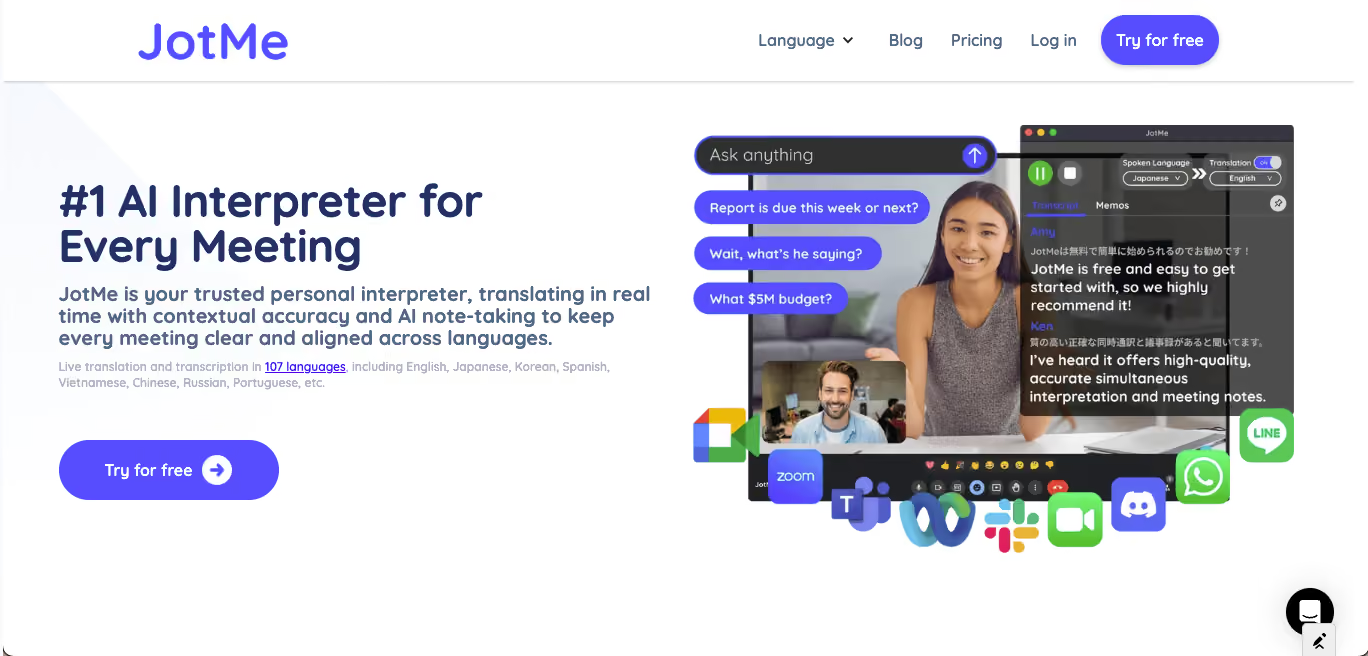
JotMe provides real-time AI-powered automatic conference call translations, live translation for business meetings across 200+ languages, capturing full meeting context during live conversations, and generating multilingual notes automatically.
JotMe also allows teams to query past meetings via Ask JotMe without replaying hour-long recordings or searching through fragmented email threads trying to reconstruct what was actually decided during multilingual calls. This is especially crucial because most cross-border meetings fail in real time when participants don’t understand each other, leading to misaligned expectations, unclear commitments, and costly follow-up work.
Traditional translation workflows require recording meetings, sending transcripts or audio files to translation services like Gengo or Lionbridge, waiting hours or days for translated documents, then responding via email to clarify what was actually discussed. If you're exploring how to use JotMe, this is exactly the workflow it replaces by enabling real-time understanding during the conversation itself.
That entire process assumes the meeting itself was successful, and only the documentation needs translation.
In reality, most cross-border calls fail during the live conversation because participants don't understand each other in real time, leading to misaligned expectations, unclear commitments, and expensive follow-up work.
Even institutions like the Vatican have begun experimenting with AI translation across dozens of languages for live communication, which shows how real-time AI interpretation is becoming viable for high-stakes environments.
Now, if you will go ahead with freelancers from Fiverr or Upwork, then:
- Freelance translators: $0.01 to $0.05 per word (significantly cheaper than agencies).
- Lower cost comes with higher risk, which includes quality and accuracy. Furthermore, credentials are harder to verify, and freelancers may lack industry-specific terminology knowledge.
- Many skilled freelance translators do not speak fluent English, which creates coordination challenges when discussing project requirements or clarifying technical details.
This is where JotMe fits in.
JotMe removes that middleman entirely by enabling direct, real-time communication between global teams that deal in critical communication. With JotMe, you don't need to add any third-party bot that creates privacy concerns for participants or complicates meeting setup. The no-bot architecture captures audio directly from your device and provides real-time translation without visible recording bots joining the call and alerting participants that they are being monitored or translated.
Key Features of JotMe
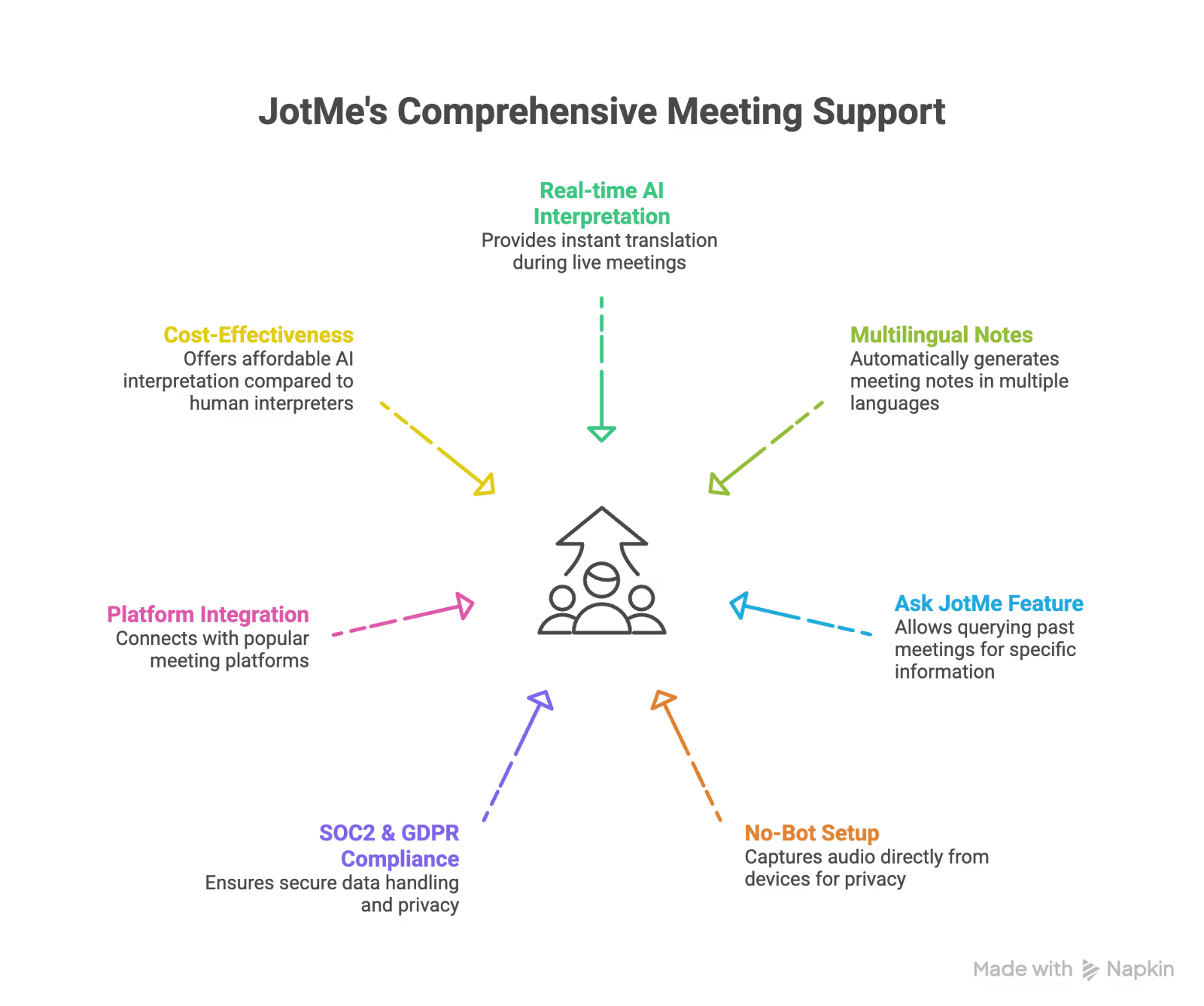
- Real-time AI interpretation during live meetings across 200+ languages with contextual accuracy for business terminology and conversational flow.
- Multilingual meeting notes generated automatically.
- Ask JotMe feature for querying past meetings and retrieving specific decisions, commitments, or technical details without replaying full recordings.
- No-bot setup that captures audio directly from your device without third-party recording bots joining meetings and creating privacy concerns.
- SOC2 compliance in progress and GDPR compliant data handling for secure AI translation of business meetings.
- Integration with Zoom, Google Meet, Microsoft Teams, and other platforms where teams already hold international team discussions.
- You can easily share your translation credits with your team or clients, and in the Human Interpreter vs. AI Interpreter debate, JotMe offers a cost-effective AI solution that’s far cheaper than relying on human interpreters.
How to Choose the Right Translation Service for Your Work?
Choosing the right translation service starts with matching the risk level of your content to the appropriate service tier. High-risk content like legal, medical, or patent documents demands expert human translators with thorough review, whereas medium-risk materials such as technical or financial reports can use hybrid AI-human workflows for a balance of speed and accuracy. Low-risk internal communications or product descriptions may rely on machine translation, and live multilingual meetings require real-time AI interpretation like JotMe to prevent miscommunication as it happens.
Match the Risk Level to the Service Tier
Quickly match your content with the right translation service based on risk level:
When to Use Traditional Translation Services?
Use traditional translation for certified, legal, or publicly reviewed content where accuracy and compliance are critical.
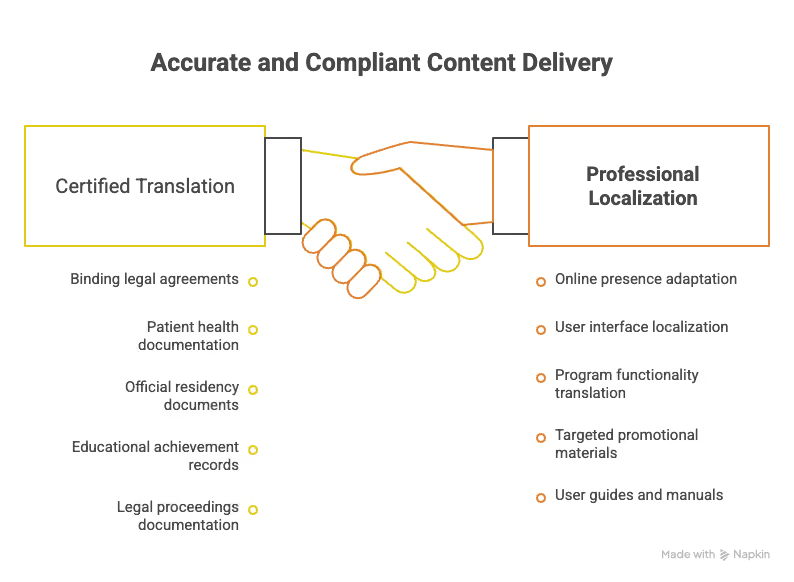
- You need certified documents like legal contracts, medical records, immigration paperwork, academic transcripts, or court filings that require official stamps, notarization, or USCIS acceptance.
- You need professional localization for websites, mobile apps, software interfaces, marketing campaigns, or product documentation where brand voice, cultural adaptation, and regional terminology matter.
- The translated content will be filed with government agencies, published on public websites, reviewed by legal teams, or shared with customers who expect professional quality.
- Turnaround time is measured in hours, days, or weeks, and you can wait for human review cycles, terminology approval, and quality assurance processes.
When to Use Real-Time AI-Powered Translation Services (like JotMe)?
Use AI-powered translation for live multilingual meetings where immediate understanding prevents miscommunication and business risk.
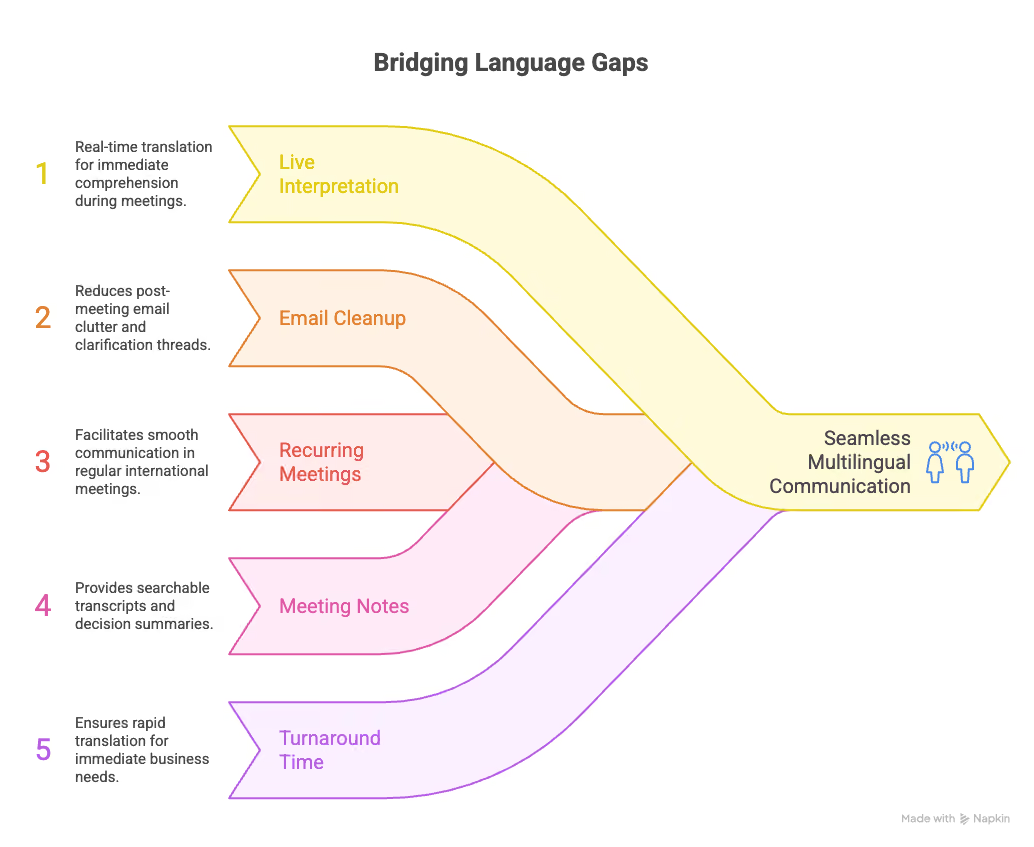
- You need live multilingual interpretation during Zoom, Google Meet, Microsoft Teams, or in-person meetings where language barriers prevent immediate understanding and decision-making.
- Post-meeting email cleanup wastes hours because participants did not fully understand each other during the call, leading to clarification threads, follow-up meetings, and misaligned expectations.
- Your team holds recurring multilingual meetings with international suppliers, offshore development teams, global sales prospects, or distributed customer success teams.
- You need automatic multilingual meeting notes, searchable transcripts in multiple languages, and the ability to query past meeting decisions without replaying hour-long recordings.
- Turnaround time is measured in seconds because the business risk is happening during the conversation itself, not after documents are finalized.
Evaluate Security and Compliance Before Sending Anything
Before sending confidential documents to any translation service, verify:
- Secure Data Handling: Ensure your translation provider stores documents safely, restricts access, and does not use your content to train AI models.
- Compliance and Certifications: Look for ISO 27001, SOC 2, HIPAA, and GDPR compliance to meet industry and regional regulations.
- Confidentiality Agreements: Confirm that the provider and all translators sign NDAs to protect sensitive information.
- Data Residency Requirements: Verify server locations to ensure your content stays within required jurisdictions for legal or regulatory reasons.
Free machine translation tools like Google Translate may store and process your content on shared servers, and they offer no contractual quality guarantees like professional services do. In Reddit discussions about translation work, users note that agencies typically hold liability and quality responsibility under contract, whereas DIY or generic machine approaches leave full responsibility for errors on the user.
What are the 5 Common Mistakes When Choosing Translation Services
Common mistakes when choosing translation services are underestimating content risk, prioritizing cost over quality, ignoring live interpretation needs, skipping glossaries, and overlooking data security. Below are the details for each:
- Using Machine Translation for High-Stakes Content: Google Translate is not a translation service; it is a gisting tool. Using raw MT for contracts, medical documents, or client-facing materials can lead to legal disputes or regulatory trouble. One Reddit user specializing in patent translation noted that MT gets patents "90% right" but consistently botches the claims section, which determines whether your patent is valid.
- Choosing the Cheapest Provider Without Checking Quality: The cheapest translation agency often subcontracts to the cheapest freelancers. High turnover and low pay often mean inconsistent quality. As translators in r/TranslationStudies advise, if an agency won't pay fairly for a small test job, they won't deliver quality on your large project either.
- Ignoring the Interpretation Gap: Most businesses think translation happens after a meeting, but miscommunication occurs in real time. Post-meeting translation cannot fix unclear commitments or misunderstood negotiation points. Real-time interpretation tools like JotMe prevent these errors during the conversation.
- Not Investing in Glossaries and Style Guides: For ongoing content like product updates, support docs, or marketing, glossaries ensure consistent terminology. Without them, your product feature might be called "Smart Sync" by one translator and "Intelligent Synchronization" by another. Most TMS platforms support glossaries, so use them.
- Overlooking Data Security: Sending confidential contracts through free translation tools is risky. Always verify how content is stored, processed, and protected, especially for legal, medical, and financial documents where regulatory compliance is mandatory.
Translation Services Pricing: What You Should Actually Expect to Pay
Here is a realistic pricing breakdown based on current market rates:
Note: Pricing varies significantly by language pair. Common pairs (English–Spanish, English–French) are the cheapest. Rare pairs (English–Khmer, English–Yoruba) command premiums of 2–5x.
Translation Services vs AI-Powered Meeting Translation
Translation services are essential for businesses operating across languages, but choosing the right solution depends on whether you need document translation after content creation or real-time interpretation during live conversations.
Document translation requires traditional services like Gengo, Lionbridge, Smartling, RushTranslate, Globe Language Services, and Orbit Translation for contracts, marketing materials, technical manuals, certified legal documents, and localized websites created after content finalization and ready for human review, certification, or publication.
Whereas live meeting translation requires AI-powered interpretation tools like JotMe that prevent miscommunication before it happens, generating multilingual notes during conversations and eliminating the expensive post-meeting cleanup cycles where teams spend hours using Google Translate or email clarifications to reconstruct what should have been clear during live calls.
JotMe solves language barriers by removing the middleman entirely for live business communication. Instead of recording meetings, sending files to translation services, waiting for documents, and responding via email, JotMe enables direct real-time communication between global teams.
According to Statista, the language services market is expected to grow from $65.5 billion in 2026 to $98.11 billion by 2028. In this growing market, JotMe makes real-time multilingual meetings effortless.
Try JotMe for your next multilingual meeting and experience how real-time interpretation eliminates post-meeting translation cleanup, generates automatic multilingual notes, and provides searchable meeting archives for retrieving past decisions. Sign up today and start using secure AI translation to communicate across languages with 24/7 interpreting for real-time conversations between global teams.
Last updated on
July 29, 2026
Follow us on social media: