


Resources
Language Barriers in the Workplace: Causes and Fixes

Narmada Kajla
June 27, 2026
10
min read

A language barrier in the workplace rarely announces itself. It hides inside the meeting where everyone nods along, nobody asks the awkward question, and the plan quietly falls apart a week later. Language barriers in the workplace cost teams real money and real time, the 2 to 3 hours of clarifying emails that chase a 30-minute call that should have settled the matter on the spot.
This guide breaks down the causes of language barriers at work, how they affect your team, and the fixes that actually work. Then it shows the part most advice skips: how to remove the barrier live in the meeting and keep an accurate record of every decision after it ends.
Key takeaways
- A language barrier is any linguistic gap that blocks people from understanding each other clearly at work.
- The main causes of language barriers in the workplace are different languages and dialects, technical jargon, company-specific shorthand, and cultural differences.
- Unmanaged language barriers cause errors, slow decisions, excluded teammates, and even safety incidents.
- The standard fixes for overcoming language barriers are plain language, visuals, glossaries, and language training.
- The fix most teams miss is a real-time translation app that removes the barrier during the meeting, then captures the decisions in notes everyone can read after.
What Is a Language Barrier in the Workplace?
A language barrier in the workplace is any linguistic gap that stops coworkers, clients, or partners from understanding each other accurately. Language barriers in the workplace include spoken languages, dialects, technical jargon, and written communication, and they are among the most common communication barriers. The result is the same in every case: the message that leaves one person arrives as something different in another person's head.
The difference between translation and AI interpretation matters here. Word-for-word translation swaps vocabulary between languages. Interpretation carries the meaning and intent behind the words, which is what a real conversation needs. The best live translation tool that reads full sentences for meaning gives you the second kind, and that is the gap most workplace tools leave wide open.
What Causes Language Barriers at Work?
Most language barriers in the workplace stem from 5 causes. Naming the cause is the first move, because the right fix changes with it. The types of language barriers listed below appear in almost every multilingual team.
Research on workplace communication shows that organizational success depends on clear communication because it drives collaboration, productivity, and the smooth exchange of ideas. When communication breaks down, misunderstandings spread across teams, affecting both individual performance and overall organizational effectiveness.
Different spoken languages and dialects
The most direct cause is coworkers who speak different native languages, or the same language in different regional dialects. A word that means one thing in one region carries a different weight in another, so 2 people can use identical words and still walk away with opposite plans.
Technical jargon and industry terms
Every field runs on shorthand. A developer says the API is not idempotent, and the marketing lead hears nothing usable. The jargon that speeds up one team becomes a language barrier the moment it crosses into another.
Company-specific acronyms and shorthand
Internal nicknames, project codenames, and acronyms read as a second language to new hires and outside partners. Someone asked to check the tickets for a project they have never heard of cannot act until they decode the term first.
Written and non-verbal gaps
Writing strips out tone, gesture, and the cues that clear up confusion in person. A short message that reads as curt, a date format read backward, or a hand gesture that means something rude in another culture all create friction nobody intended.
Cultural and high-context differences
Some cultures state the point directly, and others leave it implied for the listener to read. When a high-context communicator works with a low-context one, the meaning slips through the gap between them. This is the heart of cross-cultural communication, and it shapes every conversation a multilingual team has.
How Do Language Barriers Affect the Workplace?
Language barriers in the workplace rarely cause one big visible failure. They cause a steady drain of small ones that add up fast, which is why so many teams underestimate the real cost of language barriers at work.
The most common effect is miscommunication that turns into rework. A misread instruction sends someone down the wrong path, and the team loses the hours it takes to find and fix the mistake. The 30-minute meeting becomes a 3-hour email chain as everyone tries to confirm what was actually agreed on the call.
Decisions slow down when people cannot keep up with the conversation in real time. Teammates who feel unsure in the meeting language often stay quiet, so the company loses their input, and they feel shut out of the room. That quiet exclusion chips at morale and trust over time, and it shows up as one of the most damaging examples of language barriers at work.
Language skills also influence career growth. For professionals researching how to get international job opportunities, the ability to communicate confidently across languages is often just as important as technical expertise. Companies hiring across borders look for candidates who can collaborate effectively with global teams, clients, and stakeholders.
In hands-on industries, the stakes climb higher.
OSHA estimates that language barriers are a contributing factor in roughly 25% of job-related accidents, underscoring the importance of clear communication as a safety issue, not just a productivity one. Customer-facing teams feel it too: a single misunderstanding with a client can turn into a complaint or a lost account.
How to Overcome Language Barriers in the Workplace
You overcome language barriers in the workplace by combining better habits with the right live translation tool. The habits below shrink the gap, and the tool that follows removes it in real time. Most advice on overcoming language barriers stops at the habits, which is exactly why the barrier keeps coming back.
Use plain language and drop idioms
Short sentences, common words, and active voice carry across a language gap far better than jargon. Cut idioms, since "let's circle back" or "ballpark figure" rarely translate cleanly for someone working in a second language.
Support words with visuals
A diagram, a flowchart, or a screenshot often lands where a paragraph fails. It is suggested that visual aids can improve comprehension by up to 400%, so pair every important point with something to look at.
Build a shared glossary for jargon and acronyms
Keep a living list of your company's terms, project names, and acronyms so new hires and partners can decode them on their own. This directly addresses the jargon and company-specific factors that cause language barriers outlined in the section above.
Offer language training and cultural awareness
Language classes and cultural sensitivity sessions pay off over the long run. They take months to show results, so treat them as the slow layer underneath the faster fixes rather than your only plan.
Use a real-time translation tool
The habits above reduce the gap. A real-time translation tool keeps it open during the meeting, so people can understand each other as they speak instead of reconstructing the conversation afterward. This is where JotMe changes the workflow for multilingual teams.
How JotMe Removes Language Barriers During and After a Meeting?
JotMe is an AI tool for live translation, transcription, and AI meeting notes that handles language barriers in the moment and keeps a record afterward. It is the most direct way to fix language barriers in the workplace, because it works while people are still talking. To show how, here is a real shipment-coordination meeting run through JotMe, where the team needed to confirm how much stock was arriving and who owed which report.
How does real-time translation work in a live meeting?
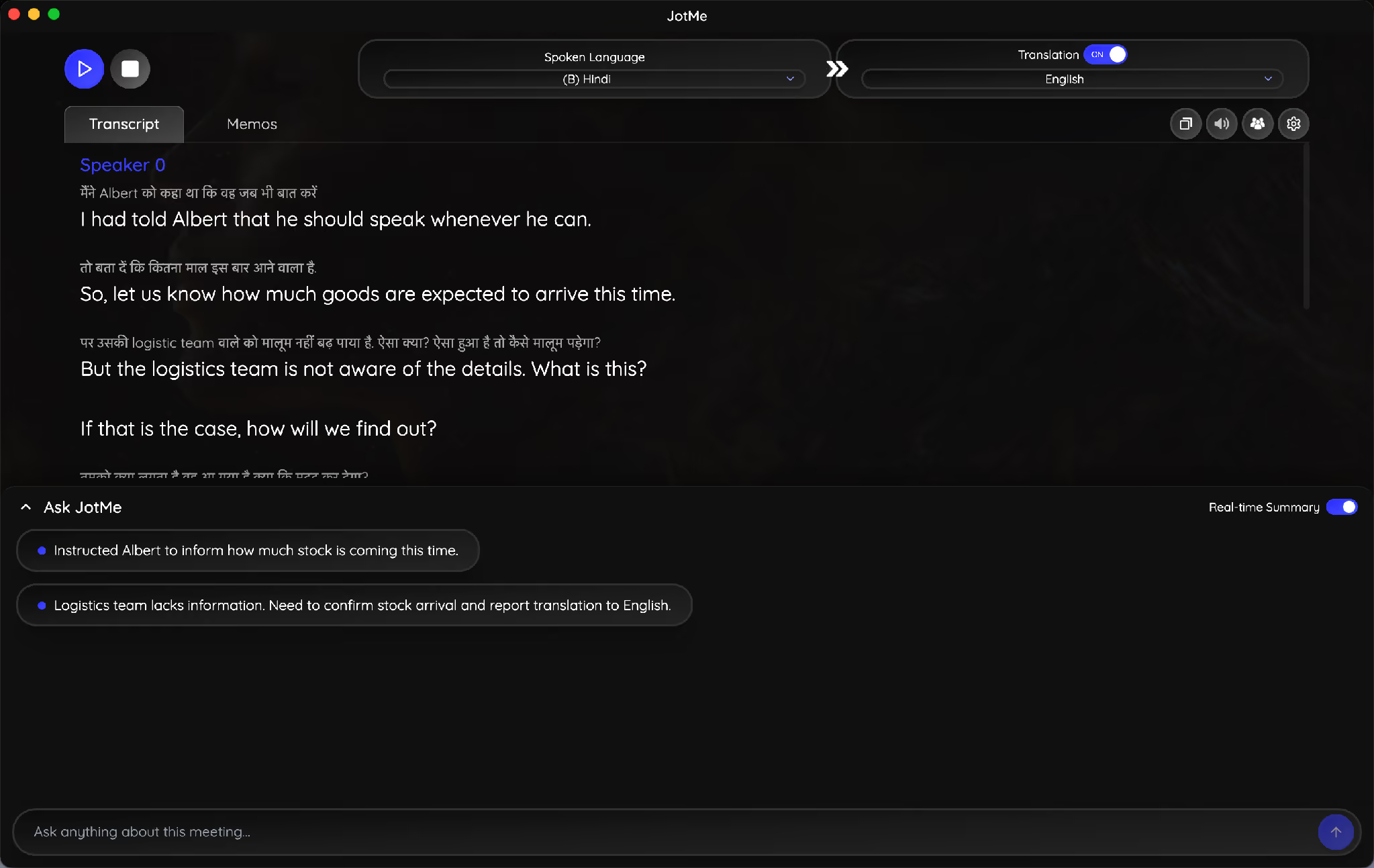
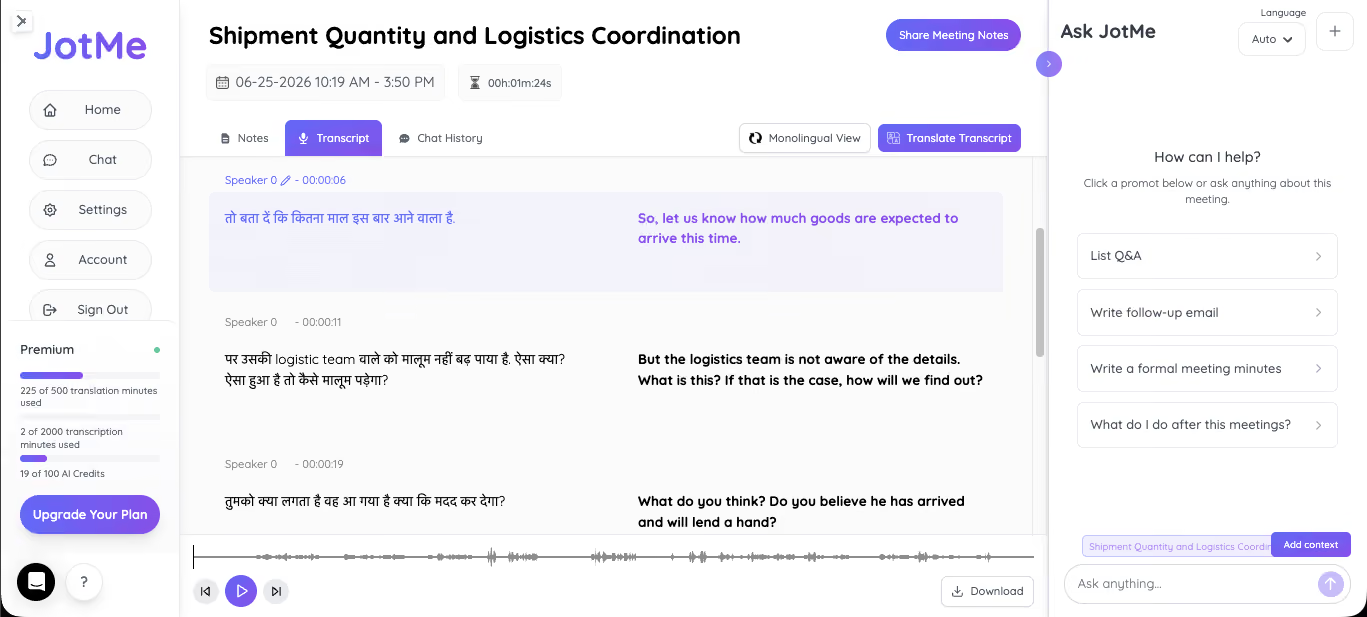
You set the spoken language and the target language, then talk as normal. In this meeting, the operations lead spoke Hindi, and JotMe rendered clean English beside every line as it was said, so the English-speaking side followed the shipment discussion in real time without waiting for a recap.
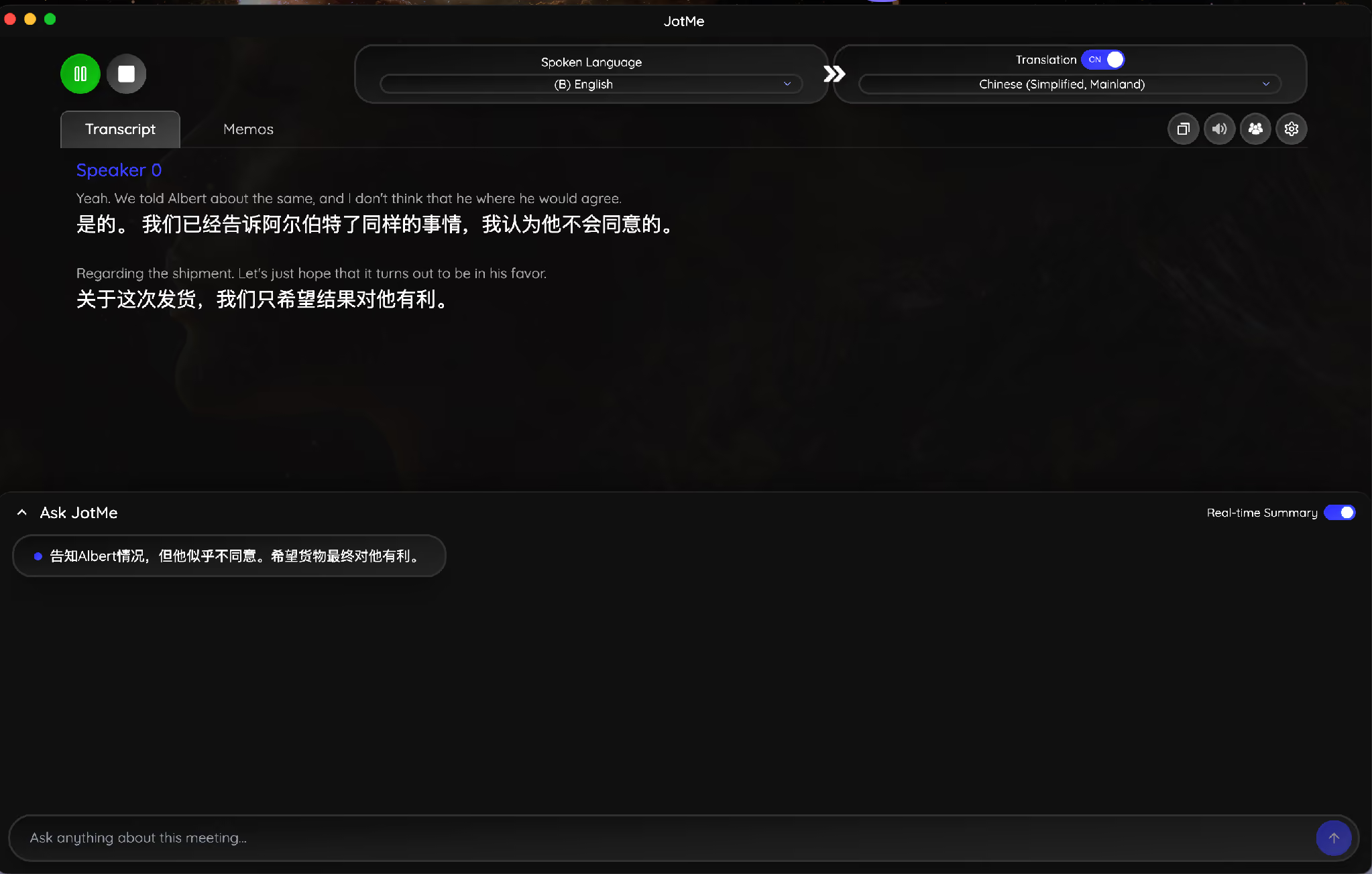
The target language switches on the fly for different stakeholders. When the same coordination ran on the Chinese side, JotMe translated spoken English into Chinese in real time. For the partners in the Gulf, the target switched to Arabic, and the conversation kept moving.
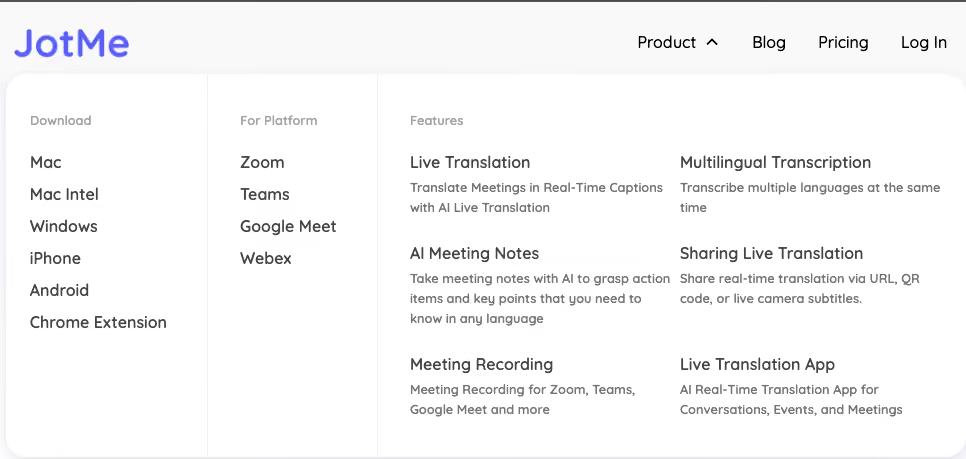
JotMe supports 200+ languages and 39,000+ language pairs, and it works across Zoom, Microsoft Teams, Google Meet, and Webex, so the language barrier drops on whichever call your team already runs.
Can everyone read the meeting in their own language?
Yes. The transcript shows both languages side by side, so each person follows the original and the translation together. Monolingual View shows a single language for a cleaner read, and Translate Transcript converts the whole record into another language from a long list.
How do you stop names and jargon from breaking the translation?
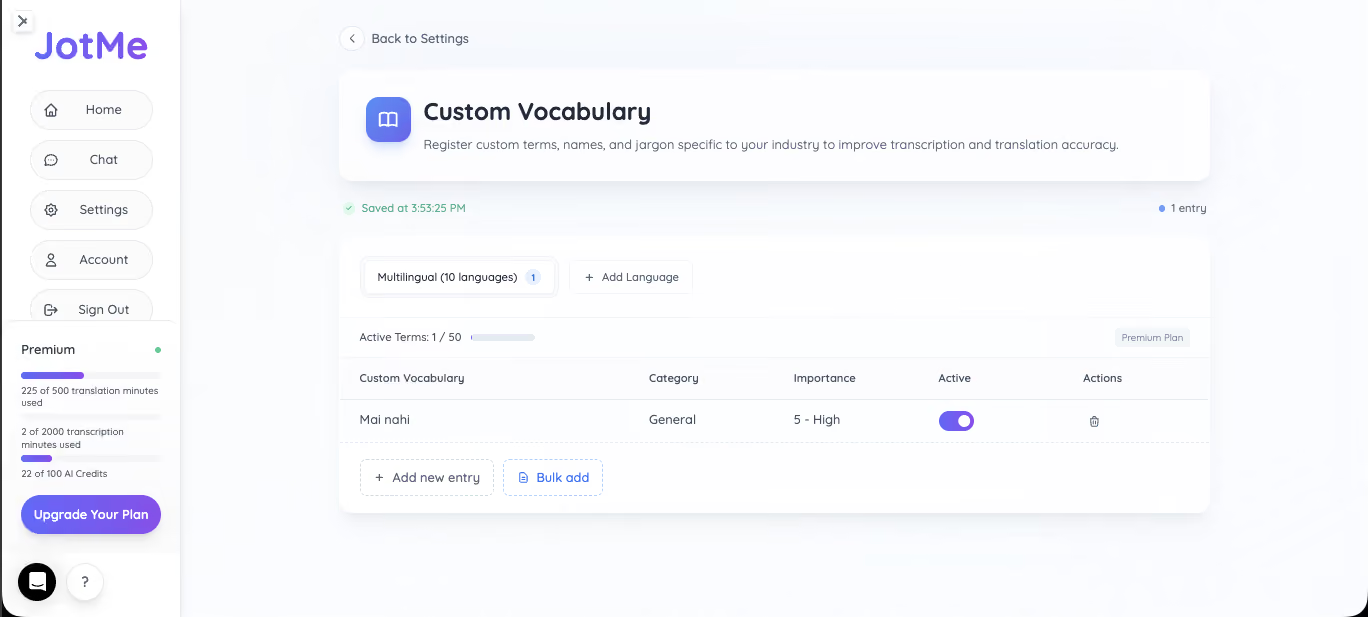
Custom Vocabulary fixes jargon and company-specific language barriers head-on. You register names, industry terms, and internal shorthand, and JotMe uses them to keep transcription and translation accurate, so a person's name, a product codename, or a technical term comes through right every time.
What happens to the decisions after the meeting ends?
This is where most tools stop, and JotMe keeps going. After the call, the AI meeting summary includes a Gist, Action Items, and Key Points, so the shipment decisions are written down in plain language for everyone, including those who joined across a language barrier.
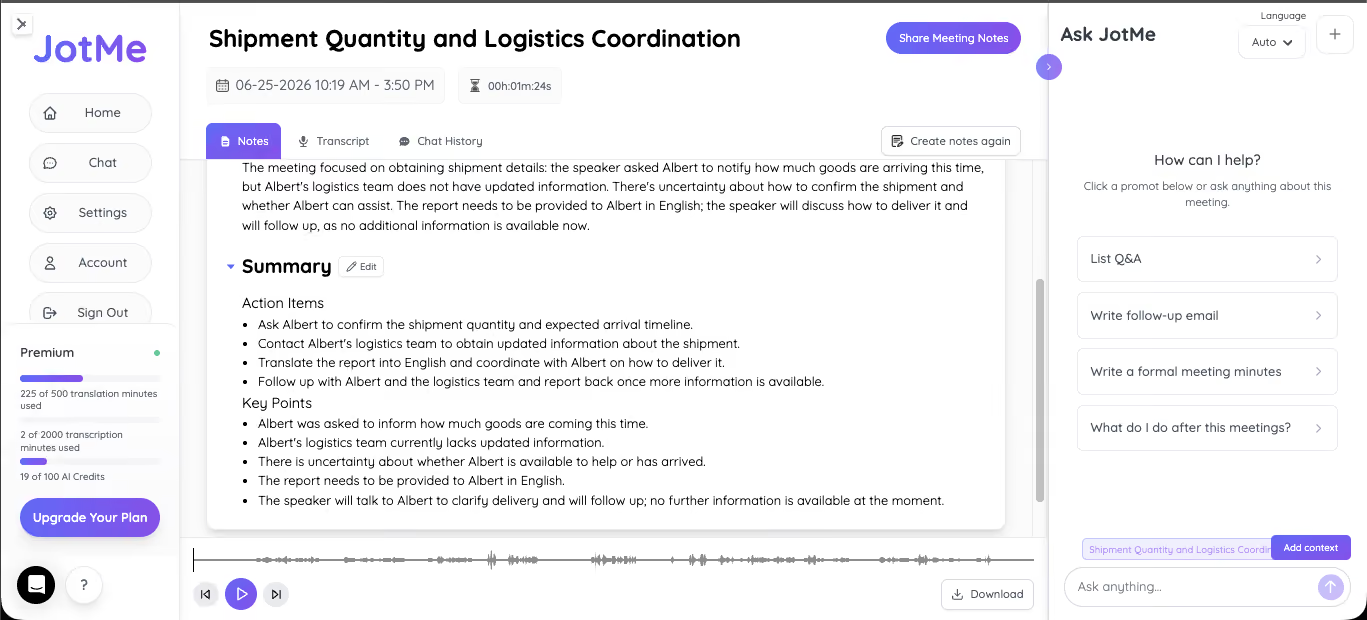
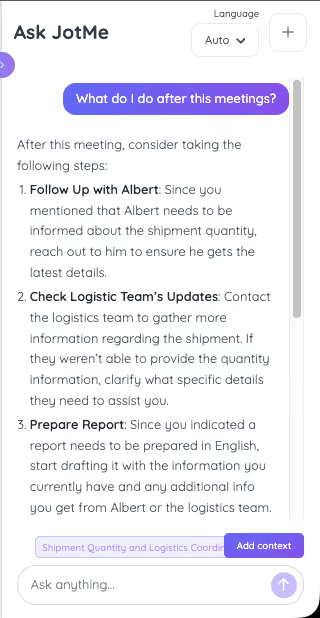
Ask JotMe to answer questions about the meeting in any supported language. Ask "What do I do after this meeting?" and it lays out the next moves, so nobody is left guessing what was agreed or who owns the follow-up.
How Does Real-Time Translation Support Diversity and Inclusion at Work?
Removing language barriers in the workplace is also an inclusion win, since language barriers to communication quietly push some people to the edge of the room. Real-time audio to text translation makes inclusion practical instead of aspirational. When everyone speaks their own language and is still understood, the quiet teammate who used to hold back starts contributing. Everyone reads the same notes in the language they think in, which gives equal access to what was decided and why.
That equal access is the foundation of psychological safety, since people who can follow both the conversation and the record feel they belong on the team. Alongside diversity and inclusion software for enterprises, real-time translation helps organizations remove communication barriers that prevent employees from fully participating in discussions and decision-making. JotMe also lets you share live translation via link or QR code, so a colleague who couldn't join can still follow along in their own language. Inclusion stops being a line in the handbook and becomes something the team feels in every meeting.
How Can Leaders Reduce Language Barriers on Their Teams?
Leaders set the conditions that either shrink or expand language barriers in the workplace. Model plain language, give everyone the meeting notes, practice active listening, and put the right tool in your team's hands rather than asking them to fill the gap on their own.
For a multilingual team, that tool is JotMe's Team plan. It adds an admin dashboard to manage users, allocate translation minutes, and monitor usage across the whole team, with centralized billing and per-user live translation. Pricing starts at $10 per user, with a 50% discount on annual billing. The Enterprise tier adds workforce visualization, more monthly usage, and integrations with Google Docs, email, and Slack for larger organizations.
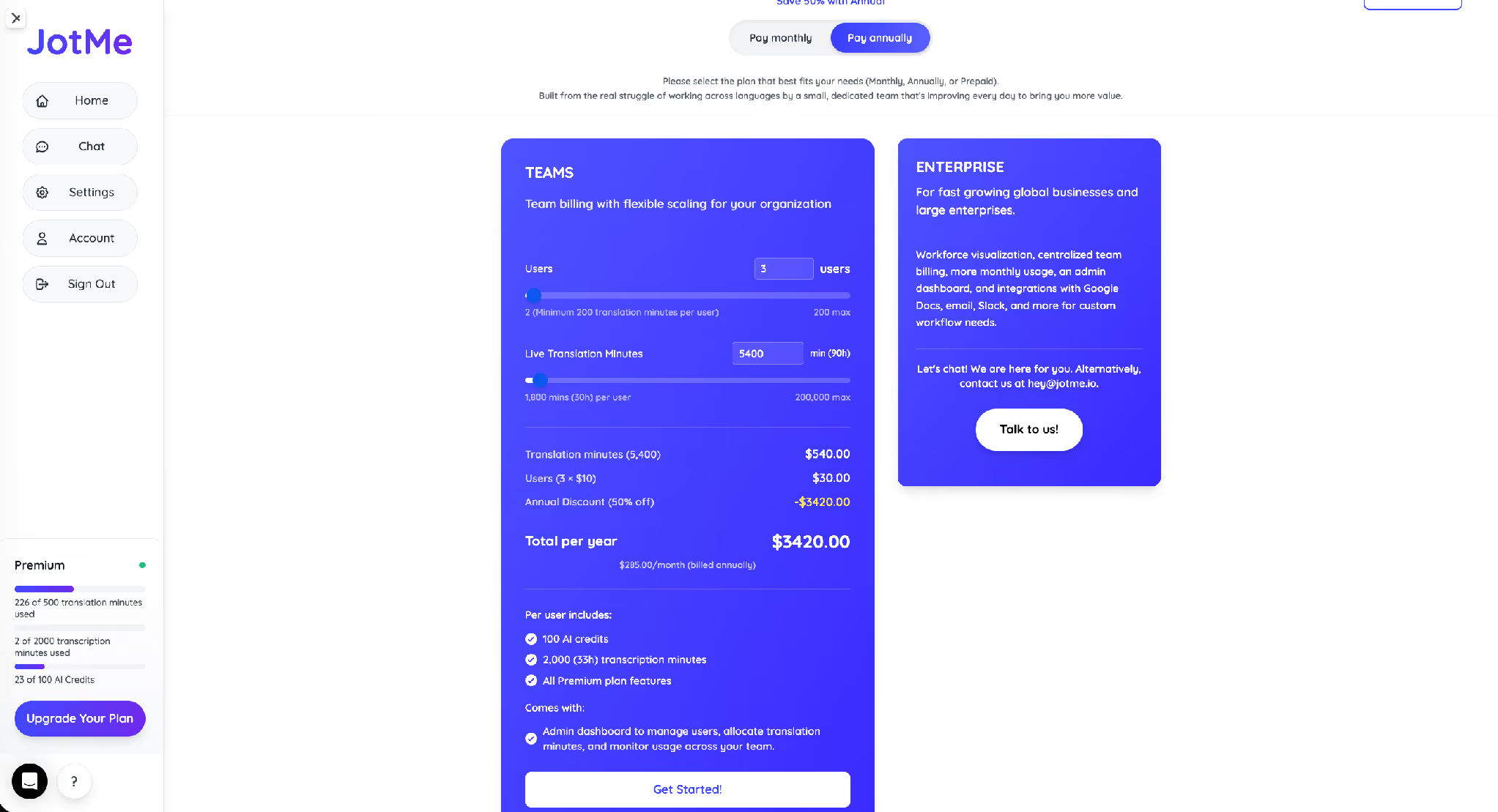
Give your team a shared language. Start with JotMe's Team plan and run your next multilingual meeting without the barrier.
Putting It Into Practice
Fixing language barriers in the workplace starts with one meeting. Pick the next meeting where a language gap usually slows your team down, and run it through a real-time translation tool instead of pushing through and cleaning up after. Start with the cause that hurts most, then layer on the habit and the tool that fixes it.
Frequently Asked Questions
What is the most common language barrier in the workplace?
The most common workplace language barrier is coworkers speaking different native languages or dialects, followed closely by technical jargon and company-specific shorthand. Each one blocks clear understanding differently, so the fix depends on which cause you are dealing with.
What are examples of language barriers at work?
Common examples of language barriers include a multilingual team meeting where instructions get misread, a developer's jargon losing a marketing colleague, a new hire who cannot decode internal acronyms, and a client email that reads as rude because of a cultural difference in tone.
How do you overcome language barriers in communication?
You overcome language barriers in the workplace by using plain language, adding visuals, building a glossary for jargon, offering language training, and using a real-time translation tool that removes the barrier during the meeting and captures the decisions in notes everyone can read after.
Can technology fix language barriers in meetings?
Yes. A real-time translation tool like JotMe interprets conversations live across 200+ languages, so people can understand each other as they speak. It then produces shared notes with action items, which closes the gap that used to turn one meeting into hours of follow-up.
How do language barriers affect team performance?
Language barriers in the workplace slow decision-making, lead to rework from misread instructions, and push less-confident speakers to stay quiet, depriving the team of their input. In hands-on roles, they also raise safety risk, since a misunderstood instruction on a job site can lead to an accident.
How can managers support employees who speak different languages?
Managers can support multilingual employees by modeling plain language, sharing meeting notes that everyone can read, registering names and jargon in a shared vocabulary, and providing the team with a real-time translation app. Hence, everyone follows the conversation and contributes in their own language.
Last updated on
July 29, 2026
Follow us on social media: