






Resources
Cross-Cultural Communication in Business: A Practical Guide

Lovely Mangla
June 25, 2026

Cross-cultural communication in business is the ability to communicate effectively across different languages, cultural values, and communication styles. As organizations expand globally, teams regularly collaborate with international clients, suppliers, and colleagues whose expectations and ways of expressing ideas may differ significantly. These differences can lead to misunderstandings, delayed decisions, and missed opportunities if not managed carefully.
Successful cross-cultural communication goes beyond translating words. It requires understanding context, tone, hierarchy, and cultural norms that influence how messages are interpreted.
This guide explores the meaning of cross-cultural communication, its importance in business, common barriers, practical examples, and the skills and tools that help multilingual teams communicate clearly and work together more effectively.
What Is Cross-Cultural Communication?
Cross-cultural communication is the exchange of information between people who carry different cultural assumptions about language, behavior, hierarchy, and meaning. In business, it covers every email, call, and negotiation between colleagues, suppliers, or clients from different countries. The aim is shared understanding, and the words are only the surface of it.
The simplest cross-cultural communication definition stops at language: 2 people speak different tongues, so they need a translator. A working cross-cultural communication definition for business goes further because 2 people can share fluent English and still misread each other's tone, directness, and intent. The words match while the meaning drifts apart.
So when teams ask what cross-cultural communication is in a practical sense, the honest answer is that it means reading meaning in context. Decoding the sentences is the easy half. The harder half is catching what a counterpart implies through silence, formality, or a softened phrase, and that is where live business meetings come apart. Tools handle the words. The skill and the technology that handle meaning are the subject of this guide.
Note: Cross-cultural communication and intercultural communication are used interchangeably. The distinction is small. Cross-cultural communication compares how cultures differ; intercultural communication describes the live interaction between them. In daily business, both terms point to the same problem.
Why Does Cross-Cultural Communication Matter in Business?
Cross-cultural communication matters in business because the cost of getting it wrong arrives on the same day. A 90-minute multilingual call that ends in confusion turns into 2 or 3 hours of follow-up email, when 3 minutes of clarity on the call would have settled the point. Across a quarter of weekly partner calls, those lost hours become a line item.
Most multilingual business meetings are internal team syncs, project check-ins, client calls, training sessions, and sales conversations, and every one of them runs the same risk. A misread tone in a vendor check-in costs an afternoon. A misread signal in a partnership negotiation costs the partnership. The size of the relationship sets the size of the bill.
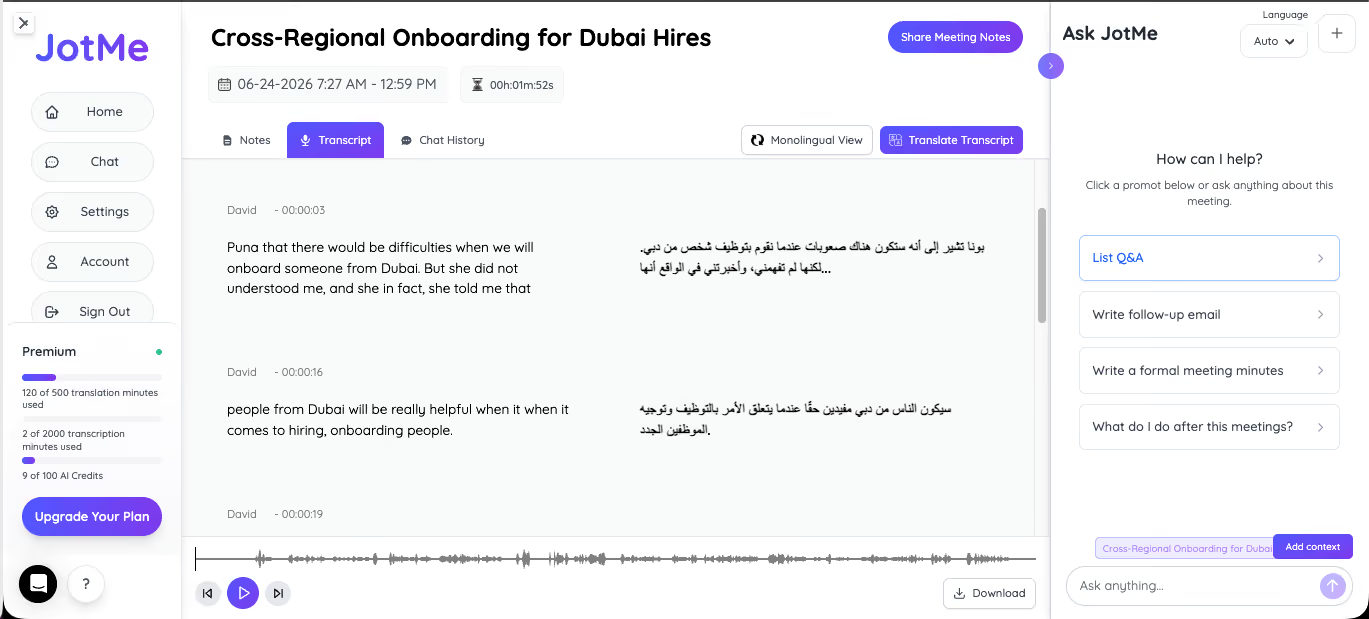
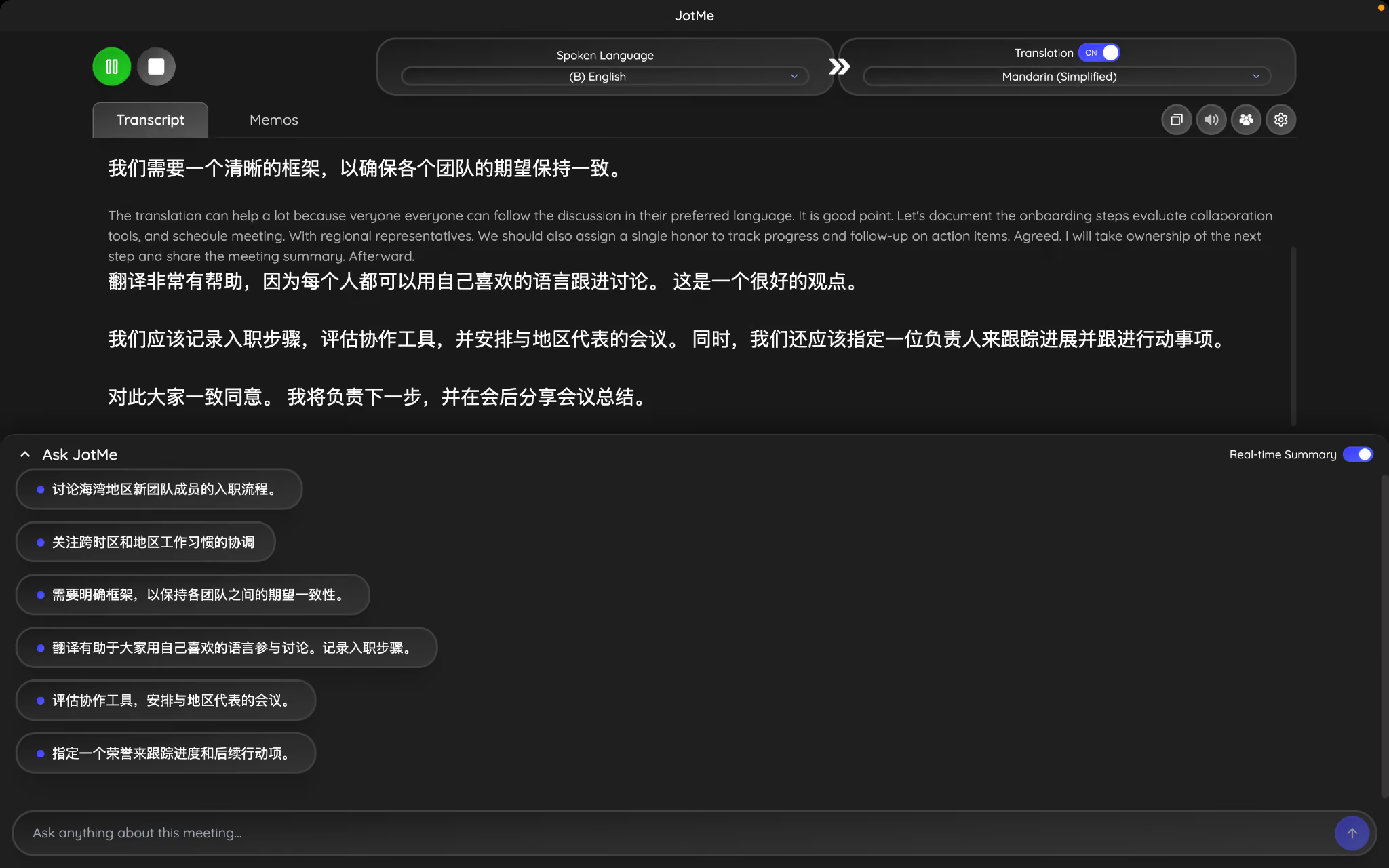
Return to that onboarding call. The team agreed that a new hire from the Gulf could be hard to bring on board, given how spread out the company already was, and they agreed they needed a documented process. With the language gap closed on the call, that agreement turned into clear next steps the same hour. With the gap left open, the same conversation produces 4 people who each remember a slightly different plan. Strong cross-cultural communication in business shortens the distance between a meeting and a decision, and it keeps that decision from leaking into a week of email.
What Does Cross-Cultural Communication Look Like in a Live Meeting?
In a live meeting, cross-cultural communication looks like 2 languages running at once while a team works toward a decision, with the meaning carried across as people speak rather than reconstructed afterward. The onboarding call above is a useful walk-through because it shows what the work actually involves.
The conversation ran in English, with an Arabic translation streaming beside it in real time, so every participant followed in their own language. Real speech in a meeting like that is messy. People talk over an idea, repeat themselves, and leave sentences half-finished. A raw word-for-word transcript of that is hard to act on later, because the structure of the decision is buried in the back-and-forth.
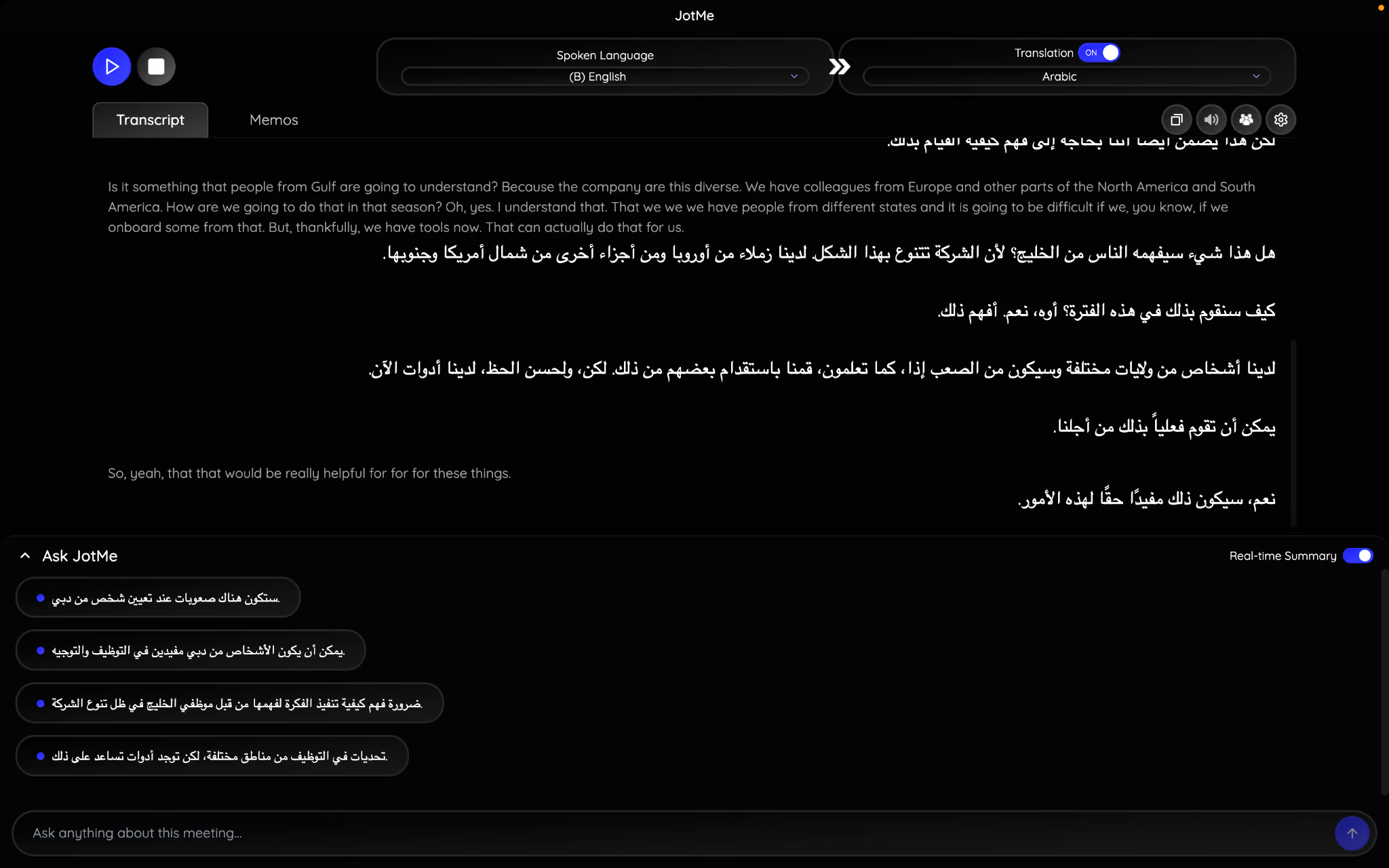
What the team left with was different. During the call, a running summary tracked the discussion as it moved. After it, the AI meeting notes arrived as a clear Gist, a set of Action Items, and Key Points, available in each participant's language.
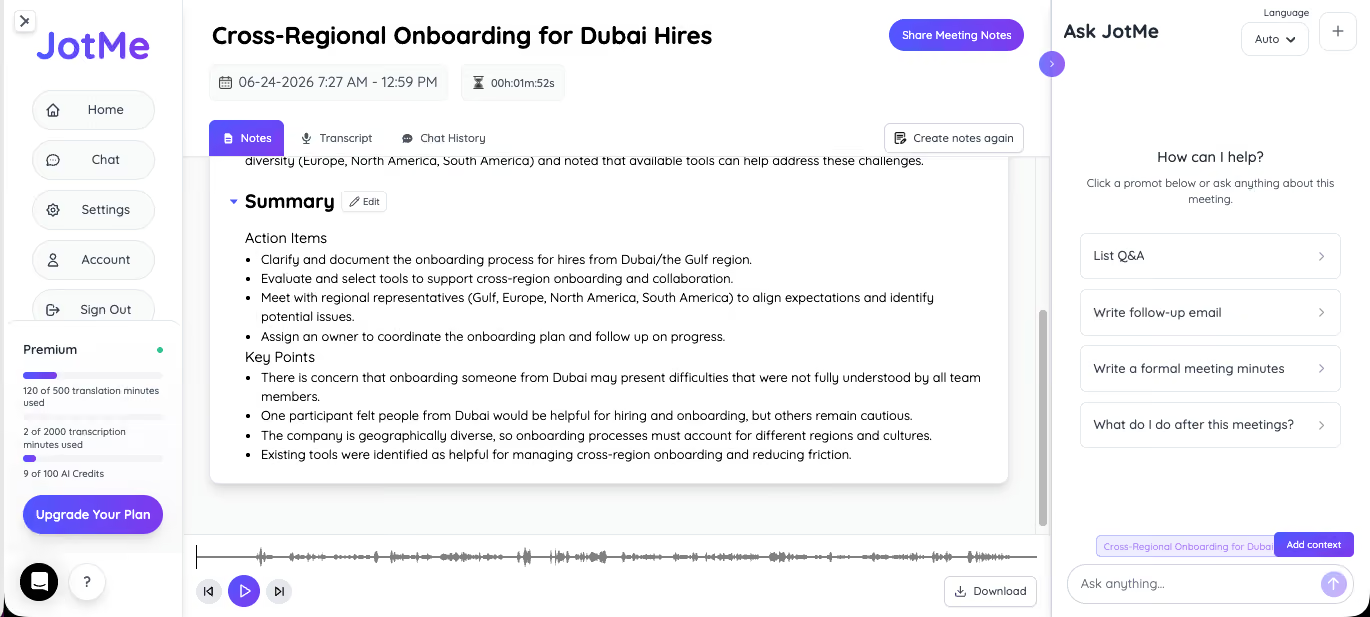
The Gist captured the real substance: concern that onboarding someone from the Gulf could present difficulties given the company's spread across Europe, North America, and South America, and agreement that the team needed a clear plan and that the available tools could help. The Action Items were concrete: document the onboarding process, evaluate the tools that support cross-region collaboration, meet regional representatives to align expectations, and assign an owner to follow up.
Both sides of that call ended with the same record of what was decided, in their own language, instead of 2 versions of the meeting drifting apart in memory. Ask JotMe to let anyone query the meeting afterward, in their language, so a detail from the discussion surfaces in seconds. That is the difference between hearing a meeting and understanding it.
What Are the Types of Cross-Cultural Communication?
Cross-cultural communication moves through 4 channels, and a live meeting uses all of them at once. Each channel carries its own risk of being misread across cultures.
Verbal cues do the obvious work, and nonverbal signals carry most of the meaning in a high-context meeting, which is why a transcript alone never tells the full story. Written follow-up locks in what the call agreed, so AI meeting notes that capture decisions in each participant's language remove a common source of after-the-fact dispute. The next section explains the cultural pattern that sits underneath most of these breaks.
What Is High-Context vs. Low-Context Communication?
High-context and low-context communication describe where a culture stores meaning. Anthropologist Edward T. Hall introduced the idea: in low-context cultures, meaning lives in the explicit words, and in high-context cultures, meaning lives in the surrounding context, the tone, the relationship, and what stays unsaid. This single distinction explains most of the friction in cross-border meetings.
Another widely used framework for understanding global communication differences is Hofstede's cultural dimensions theory, which examines how values such as power distance, individualism, uncertainty avoidance, and long-term orientation influence workplace behavior across cultures.
The United States, Germany, and Scandinavia sit toward the low-context end. People state positions plainly, treat "yes" as agreement, and read a direct "no" as honest. Japan, Korea, China, and much of the Gulf and wider Middle East sit toward the high-context end. A counterpart there may signal disagreement through a pause, a deflection, or a phrase like "that could be difficult," and expect the listener to read the meaning behind it.
This is where the technology choice decides the outcome. A word-for-word translator hands a low-context manager the literal sentence and drops the meaning; a high-context speaker loads into tone and indirection. The manager hears "that could be difficult" translated cleanly and reads it as a small hurdle, while the speaker meant a firm refusal.
JotMe reads full sentences to capture context, tone, and terminology, so a hedged refusal reaches the listener with the softening that signals how to respond. Its accuracy improves as the meeting goes on, because it uses everything already said, the participants, the domain, and the prior statements to interpret meaning instead of converting words. For teams whose partners work in Arabic, Japanese, Korean, or Chinese, contextual reading is a part of cross-cultural communication in business that a generic audio to text translator cannot cover.
Tip: Before a first meeting with a high-context counterpart, decide in advance what a "yes" will mean and how a "no" is likely to be signaled. Plan to confirm twice, gently, rather than once.
What Are the Barriers to Cross-Cultural Communication?
The barriers to cross-cultural communication are the points where a signal sent in one culture gets decoded incorrectly in another. On a live call, they stack up fast.
- Assumed similarity: People treat their own norms as universal, so a manager reads a counterpart's behavior through the wrong frame and misjudges intent.
- Idioms and slang: Phrases like "ballpark figure" or "circle back" carry no meaning for a non-native listener, and they breed quiet confusion that surfaces only later.
- Nonverbal misreads: A gesture, a silence, or a lack of eye contact gets read as the listener's culture would read it, not as the speaker intended.
- Stereotyping: Assuming an individual behaves a certain way because of their nationality blocks the genuine listening that prevents the misread in the first place.
- Speed and accent: A manager who talks at native pace, with a regional accent and rapid turns, loses a listener who is translating in real time.
- High anxiety: 2 people unsure how to read each other get tense, and tension narrows the patience that careful cross-cultural communication needs.
Several of these barriers share a root: The language gap itself, which forces both sides to focus attention on decoding instead of deciding. Close the gap, and the meeting recovers its pace. With live interpretation running each turn, the manager stops straining to parse an accent, and the counterpart stops self-editing into vague English, so both speak naturally, and the remaining barriers shrink to the cultural ones that habits can handle.
What Are Cross-Cultural Communication Examples in Business?
The clearest cross-cultural communication examples come from working meetings across very different industries, where the same skill shows up under different pressure. Spanish, Japanese, Korean, and Chinese rank among the most common languages in cross-border business meetings, and the 5 cross-cultural communication examples below cut across them.
How Does a Language Coach Keep a Lesson Moving?
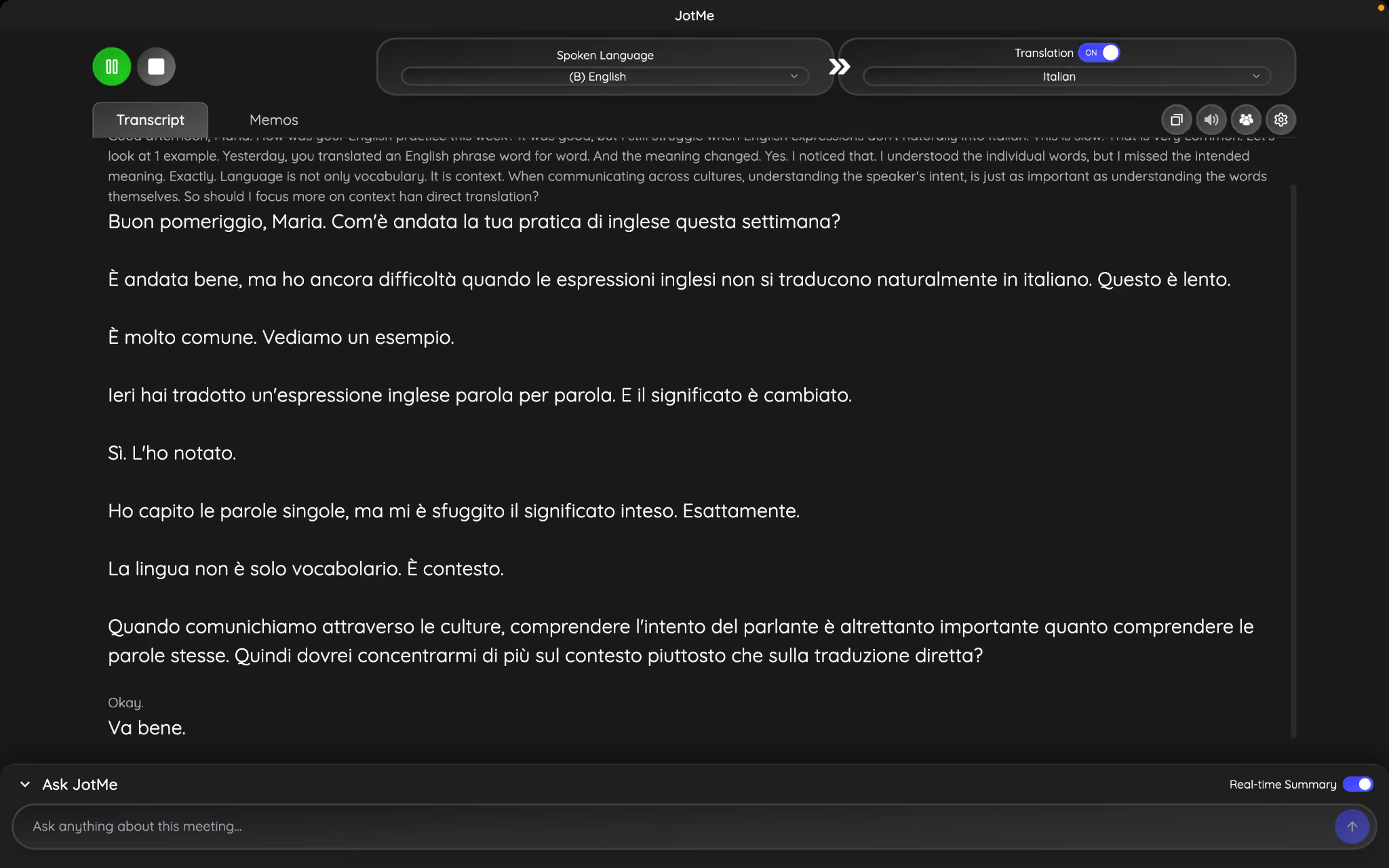
A language coach runs a session that crosses Portuguese and Italian, working through grammar exercises with a student. Live translation keeps both sides moving when a phrase fails to land, and the saved transcript becomes a study record that the student reviews later. Among cross-cultural communication examples, coaching is the lowest-stakes version of the same skill, and it shows the core requirement plainly: meaning has to survive the jump between 2 languages or the session stalls.
How Does a Construction Team Talk Money on a Sales Call?
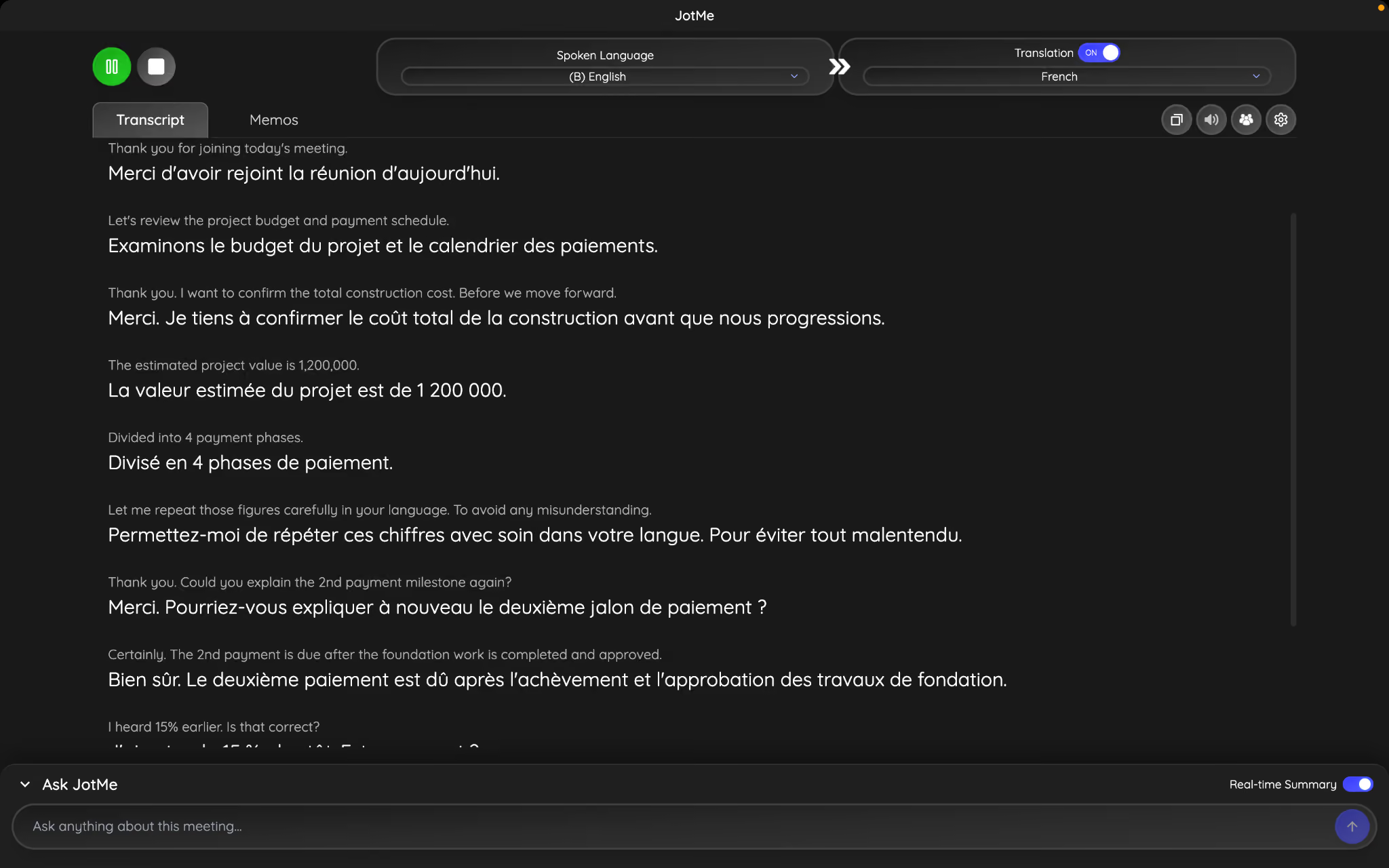
A construction sales conversation turns to cash flow, payment schedules, and project costs across a language gap. Numbers and contract terms are where misreads get expensive, so the team confirms figures in writing in both languages as they go. This is one of the cross-cultural communication examples where a single misheard number changes a margin, which is why a shared written record matters as much as the live conversation.
How Does an Export Deal Survive Two Legal Languages?
An export-licensing discussion moves between Ukrainian and English while the parties work through contract templates and direct-sales terms. Legal language carries weight word by word, so custom vocabulary holds the specific terms steady, keeping "licensing" and "distribution" consistent on both sides of the call. Cross-cultural communication examples from legal and trade settings show why precision beats speed when a contract is on the line.
How Does an LA Team Plan an Event in Spanish?
A Los Angeles team plans an event in Spanish, coordinating vendors, timelines, and logistics. Client meetings like this are among the most common settings for cross-cultural communication in business, and a shared real-time meeting record keeps every vendor working from the same brief instead of 5 different ones.
How Does a Medical Team Brief Across Chinese and English?
A medical team discusses a minimally invasive surgery program across Chinese and English, where terminology accuracy is not negotiable. Among the cross-cultural communication examples here, this one carries the highest cost of a misread, and it is also where contextual interpretation matters most, because a clinical term converted literally can change meaning entirely. These cross-cultural communication examples share a thread: the language gap is constant, and the stakes scale with the conversation.
What Is the Difference Between Interpretation and Translation?
Interpretation captures meaning and intent in context; translation converts text word-for-word. That difference decides whether a live cross-border meeting works. Translation is correct at the level of the sentence and blind to everything a high-context speaker packs around it. Interpretation reads the whole signal, the hedge, the formality, the implied "no," and delivers it in a form the listener can act on.
Most teams reach for the wrong fix. Google Translate and similar tools translate literally, which serves a menu or a document and fails a negotiation, because it strips the context that carries the real message. The traditional alternative is a human interpreter, which works well and books slowly, and adds a third party to every call.
JotMe reads full sentences for context, tone, and industry terminology, and it handles about 90% of day-to-day multilingual meetings without missing intent. For the most sensitive legal or medical work, where every word carries legal or clinical weight, a certified human interpreter still has the edge, and JotMe keeps a clean bilingual record either way. For cross-cultural communication in business, the human interpretation versus translation choice is the difference between hearing words and understanding intent.
What Are Cross-Cultural Communication Skills for Live Meetings?
Strong cross-cultural communication skills are habits a manager can practice before and during any cross-border call. The skills below handle the cultural gap, and the right tool handles the language gap.
- Research etiquette first: Spend 10 minutes on the counterpart's norms around formality, names, and greetings before the call, so a small misstep does not set the tone.
- Slow your pace: Drop below native speed, break sentences into clean segments, and pause for the other side to process, while staying clear of a pace that reads as patronizing.
- Ask open questions: Replace yes-or-no questions, which a high-context speaker may answer "yes" to out of politeness, with questions that need real information back.
- Confirm in writing: Restate decisions and send a short written summary in each side's language, so a misheard "yes" surfaces before it becomes a missed deadline.
- Read the nonverbal cues: Watch for pauses, deflection, and softened phrases, and treat "that could be difficult" as a likely "no" worth a gentle second question.
- Name your assumptions: Say what you understood and invite correction, which turns a silent misread into an open clarification.
- Use a real-time interpretation tool: When the meeting crosses a language line, an interpreter who works in context lets both sides speak their own language and keeps the call moving.
These cross-cultural communication skills compound. A manager who slows down, asks open questions, and confirms in writing catches most misreads, and pairing those skills with contextual interpretation closes the rest of the gap.
How Does JotMe Improve Cross-Cultural Communication?
JotMe improves cross-cultural communication by closing the language gap inside the meeting itself, in real time, so the people on the call understand each other's intent as the conversation happens. JotMe is an AI agentic tool for translation, transcription, and meeting notes, meeting summary, and it interprets in context rather than translating word-for-word.
JotMe supports 200+ languages and 39,000+ language pairs, with live captions that appear within 1 to 3 seconds. No bot joins the call; JotMe captures the audio from your computer, which means there is nothing for participants to install. It runs across Zoom, Google Meet, Microsoft Teams, Webex, Discord, and WhatsApp, and a mobile app handles in-person conversations on iOS and Android. Custom vocabulary holds company names, product terms, and industry jargon steady, the kind of precision that the export and medical examples above depend on.
After the call, AI meeting notes arrive as a Gist, Action Items, and Key Points in each participant's language, and Ask JotMe answers questions about the meeting during or after it. A real-time summary runs through the session for anyone who needs the thread mid-call. 300,000+ users across 1,700+ teams rely on JotMe to get multilingual transcription. For a manager working across languages, JotMe turns a call that used to need an interpreter into a direct conversation, and it turns the post-meeting scramble into a clean set of recorded and transcribed meeting notes. That is cross-cultural communication in business handled at the point where it matters, on the live call.
How Do You Put Cross-Cultural Communication Into Practice?
Pick the next cross-border meeting on your calendar and prepare it differently. Teams that ask what cross-cultural communication is, then build the answer into how they run calls, close more of them. Use the cross-cultural communication examples above as patterns to watch for, research the counterpart's norms, and plan to confirm decisions twice. Set up real-time interpretation so the language gap stops eating into the agenda. Cross-cultural communication in business rewards preparation over instinct: the cultural skills carry the meeting, and the technology carries the words and the meaning beneath them.
For a closer look at how a multilingual meeting runs end to end, try JotMe for translation, transcription, meeting notes, and summary, and see how it fits into your workflow.
Frequently Asked Questions
What is cross-cultural communication in business?
Cross-cultural communication in business is the exchange of information between colleagues, suppliers, or clients from different cultures, with the aim of shared understanding rather than translated words. It covers calls, emails, and negotiations, and it succeeds when both sides read each other's intent, not only their sentences.
What are the 4 types of cross-cultural communication?
The 4 types are verbal, nonverbal, written, and visual. Verbal covers words, tone, and pace. Nonverbal communication covers gestures, silence, and eye contact. Written covers email, chat, and contracts. Visual covers symbols, color, and slides. A live meeting uses all 4 at once.
What is the difference between cross-cultural and intercultural communication?
Cross-cultural communication compares how different cultures communicate, and intercultural communication describes the live interaction between people from those cultures. The cross-cultural communication definition leans analytical; the intercultural one leans practical. In daily business, both describe the same goal of clear understanding across cultures.
What are the main barriers to cross-cultural communication?
The main barriers are assumed similarity, idioms and slang, nonverbal misreads, stereotyping, speed and accent, and high anxiety. Many trace back to the language gap, which forces both sides to spend attention decoding instead of deciding. Real-time interpretation removes that root barrier and leaves the cultural ones.
What are good cross-cultural communication examples in business?
Common cross-cultural communication examples include a coach teaching across Portuguese and Italian, a construction team negotiating cash flow on a sales call, an export deal moving between Ukrainian and English, an LA team planning an event in Spanish, and a medical team briefing across Chinese and English. Each shows the same skill under different stakes.
Can AI handle cross-cultural communication in real time?
Yes. An AI live audio translation tool like JotMe interprets a live conversation in context across 200+ languages, so people who speak different languages understand each other's intent on the call. It reads full sentences to capture meaning, not only literal text, which is what cross-cultural communication needs.
Last updated on
July 29, 2026
Follow us on social media: