






Tips
How to Get International Jobs in 2026: Complete Guide

Viraj Mahajan
June 26, 2026

You find a role in another country, read the description twice, and then a quiet doubt creeps in: can you actually compete for it when the interview runs in a language you are still learning? Knowing how to get international jobs in 2026 means more than finding the listing and fixing your resume. It means walking into a cross-language interview ready, and most guides stop long before that.
This guide covers the full path, where to look, how to localize your application, and how to handle the visa, and then it shows the part nobody else does: a way to rehearse your answers, hear how you actually sound in the other language, and fix your weak spots before you ever face the panel.
Key Takeaways
- Learning how to get international jobs comes down to 5 moves: choose your role and country, find the openings, localize your resume, prepare for the interview, and sort your visa.
- Most international roles now interview remotely, so the video call in another language is where the offer is won or lost.
- You can rehearse that interview in advance, speak your answers, and watch JotMe render them in the target language in real time.
- Ask JotMe gives you feedback on the spot, and the dashboard shows exactly what to fix.
- Pairing your JotMe transcript with ChatGPT turns "understood" English into interview-ready English.
What Counts as an International Job?
An international job is any role where you work for an employer based in another country, either by relocating, transferring within a global company, or working remotely from home. The category covers international business jobs at multinationals, international remote jobs you do from anywhere, international internships for students and graduates, and contract or seasonal work abroad.
Each route changes how you apply. Relocation roles lead to a work visa and a move, and they reward candidates who plan the paperwork early. International remote jobs skip the visa but compete in a global talent pool, so your application has to stand out on its own. Internal transfers move you inside a company you already know, which is often the smoothest path of the three. Knowing how to get international jobs starts with naming which of these routes you are chasing, because the applications, the interview, and the paperwork all shift with it.
How to Get International Jobs in 2026 Online
The fastest way to get international jobs in 2026 is to run the search online in a clear order: decide what you want, find the openings, localize your application, prepare for the interview, and handle the visa. Treat the 5 moves below as a sequence, because skipping ahead to applications before you have picked a target country wastes the most time. That order is the backbone of how to get international jobs without losing months to dead ends.
Choose Your Role and Target Country
Pick the role, industry, and skills you're targeting
Name the role, the industry, and the 3 to 5 skills you want to lead with before you open a single job board. A focused search beats a broad one, because employers hiring across borders look for candidates who clearly fit a need. Decide up front if you are after international business jobs at a large company, international remote jobs in tech or support, or an international internship to build experience first.
Choose a country by visa friendliness, demand, and language
Pick the country by 3 practical filters: how open its work visas are, how much demand exists for your role, and which language the work is conducted in. A country with strong demand and a hard visa path is a slower bet than one with moderate demand and a clear route in. Check the demand for your specific role rather than the market as a whole.
Find International Jobs
Knowing how to apply for international jobs means running your international job search across job boards and people at the same time, because the best roles often fill through contacts rather than postings. A real part of how to get international jobs is treating outreach as seriously as the applications themselves.
International job boards
Start with international job boards and filter for listings that mention visa sponsorship or relocation support, since many state it directly. Country-specific boards surface roles that never reach the global sites, and they are an underused shortcut for getting international jobs that locals already know about. Company career pages carry the freshest openings and let you apply directly.
Networking
Networking is often the quickest route into an overseas role. Share that you are open to relocation on LinkedIn, join expat and industry groups for your target country, and reach out to your university alumni in those cities. A warm introduction to a hiring manager moves faster than a cold application.
Companies with global offices and internal transfers
Target companies that already run offices in your destination, because an internal transfer skips much of the cold-start friction. Large hospitality, tech, and corporate groups move staff across borders regularly and often prefer people who already know the company.
Recruiters and relocation agencies
International recruiters and relocation agencies connect you with employers ready to hire from abroad. If you're targeting a specific market such as India, an Employer of Record India service can also help international companies hire employees locally without setting up their own legal entity. Read any agreement closely before you sign, since some agencies take a placement fee, and confirm the employer sponsors international workers before you invest time in the process.
Localize Your Resume and Application
A resume that wins at home can quietly fail abroad, because countries differ on length, format, photo norms, and the language itself. Your international resume should match the destination's standards, so tailor your application before you submit. This is the step in how to get international jobs that candidates most often rush, and it is the easiest one to get visibly wrong.
Match the country's resume standards
Research the resume standards for your target country, since a 1-page US resume and a detailed European CV are not interchangeable. Some countries expect a photo and personal details, and others forbid them. A resume builder online helps you quickly produce a clean, country-appropriate format, and then you adjust the details by hand.
Translate and tailor your materials
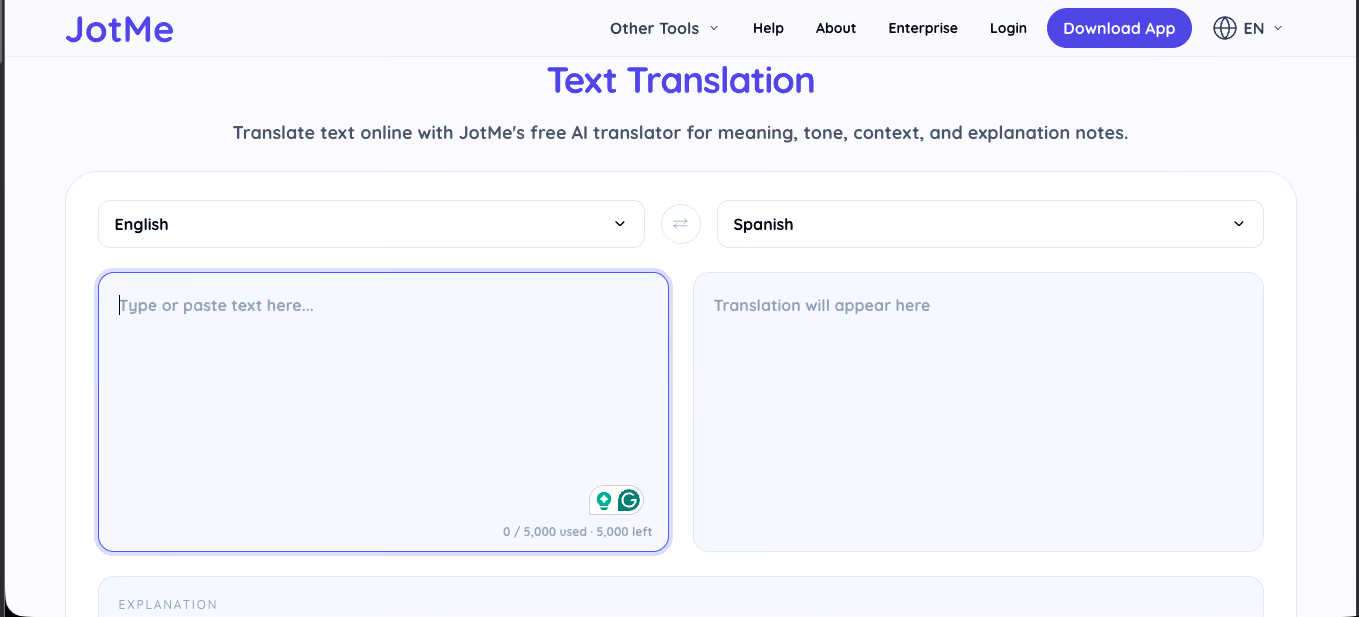
Translate your resume and cover letter into the local language where you are fluent, and check that the keywords match the posting. JotMe's free text translator handles resume and cover-letter text across 200+ languages, which gives you a fast first draft to refine with a native speaker.
Tailor your cover letter to the company
Write a short, specific cover letter for each role. Read the company's mission and about page, then connect your experience to what the team actually needs. A letter that shows you understand the company reads far stronger than a generic template.
Prepare for the Interview
Most international roles are now interviewed over video, so prepare for a call on Zoom, Google Meet, or Microsoft Teams rather than an in-person meeting. The interview is a part of how to get international jobs that decides the offer, so give it the most preparation of any step here. Research the company, list the questions you are most likely to face, and rehearse your answers out loud. The section below shows how to practice those answers in the interview language and catch your mistakes before the real call.
Sort Your Work Visa or Permit
Sponsorship and the documents you'll need
Once you have an offer, sort out the legal right to work, which usually means employer sponsorship. Expect to provide a valid passport, proof of employment, and, often, a medical exam and a police background check. Confirm the employer sponsors international workers before you reach this stage.
Timelines, and why to start early
Start visa research early, as processing can take a few weeks to several months, depending on the country and visa type. Check the official consulate or embassy site for exact requirements rather than a third-party summary. Gather your documents during the interview so an offer does not stall on paperwork, and keep digital copies of everything in one folder. A missed document is one of the few parts of how to get international jobs that can cost you an offer you already won.
How to Practice for an International Job Interview with JotMe?
Reading a list of interview tips does little to help when you freeze on a video call in another language. Practicing out loud does, and JotMe turns practice into a feedback loop. This is the piece on how to get international jobs that the ranking guides leave out entirely. Here is a real run-through I recorded while preparing for a role in Tokyo, speaking English while learning Japanese.
JotMe's Contextual Translation: Speak and See Your Meaning in Real Time
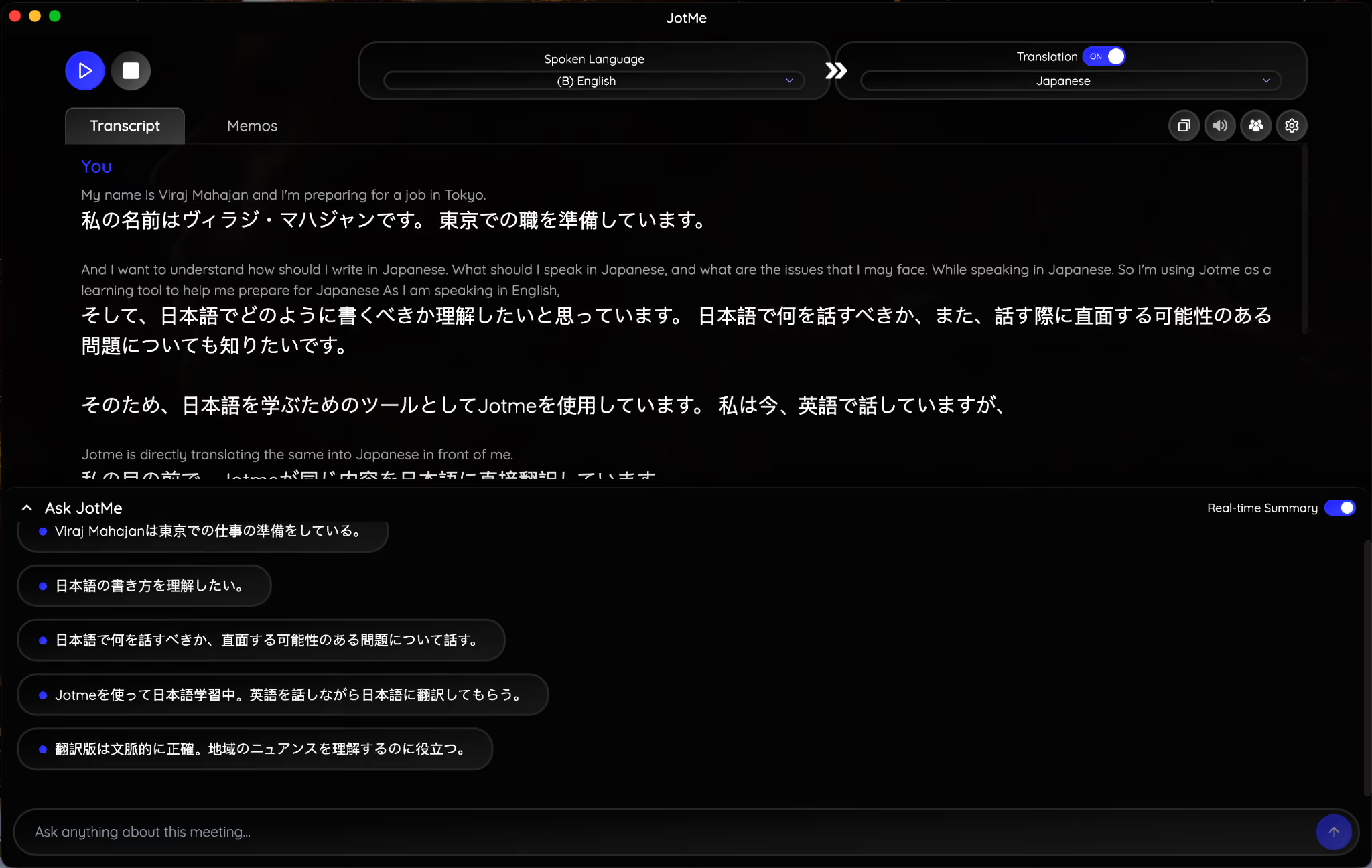
Set your spoken language and your target language, then speak as you would in the interview. I set English as the spoken language and Japanese as the target, then said, "My name is Viraj Mahajan, and I'm preparing for a job in Tokyo." JotMe rendered it in Japanese beside my words as I spoke. JotMe reads full sentences to capture meaning and intent, not word-for-word, so the live translation came back contextually accurate and showed me how the point actually lands for a Japanese listener. Seeing your meaning in the target language in real time tells you at once if you are making sense or drifting.
Ask JotMe If You're Getting It Right
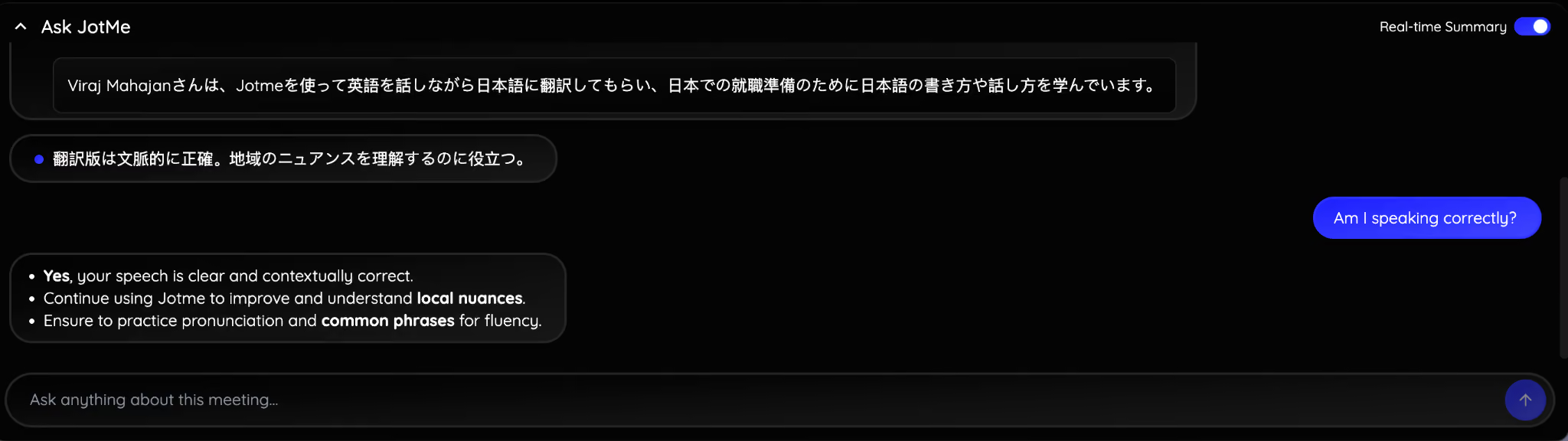
Stop mid-practice and ask for feedback. I typed "Am I speaking correctly?" into Ask JotMe, and it answered on the spot: my speech was clear and contextually correct, and it pointed me to drill pronunciation and common phrases next. A plain audio to text translator hands you words and stops there. Ask JotMe reads the conversation and tells you how you are doing while you can still adjust, which is the difference between practicing and guessing.
Review Your Dashboard to See Where You Went Wrong
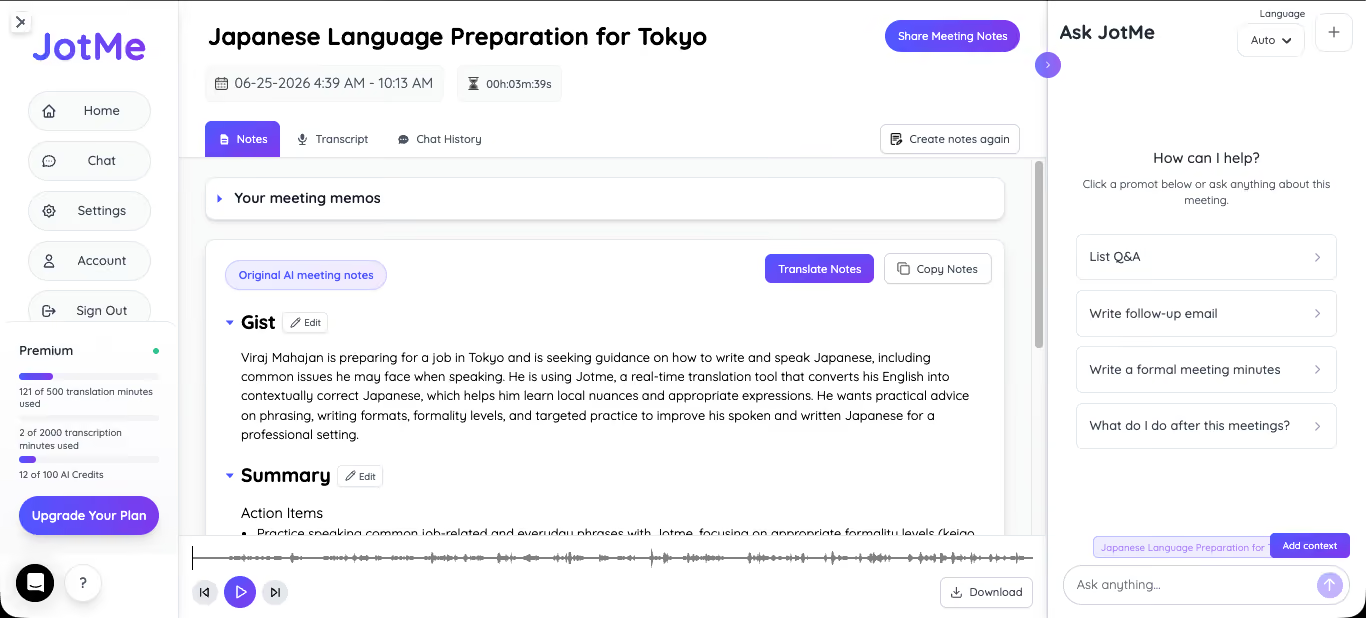
After the session, the dashboard turns your practice into a study plan. The AI meeting notes arrive as a Gist, Action Items, and Key Points, meeting summary, and they name exactly what to fix in my Japanese: formality and register (keigo versus casual), particle use, written formats for a resume and cover letter, and job-specific vocabulary. That is a targeted list to work from, not the generic "learn the language" advice every other guide gives. Run the practice again a week later, and the notes show if the weak spots are closing.
How to Use ChatGPT to Prepare for International Job Interviews
JotMe captures and interprets your practice; ChatGPT can polish the language a step further. Pairing the two gives you both a real-time rehearsal and a detailed written critique of your phrasing, and it is an advanced move in how to get international jobs that most candidates never try.
Export Your Bilingual Transcript From JotMe
Open the transcript, choose Copy Transcript, and select "Copy both" to pull the source English and the translated text together. That single copy gives any AI tool the full context of what you said and how it translated, which is what makes the next step useful.
Ask ChatGPT to Refine Your Phrasing
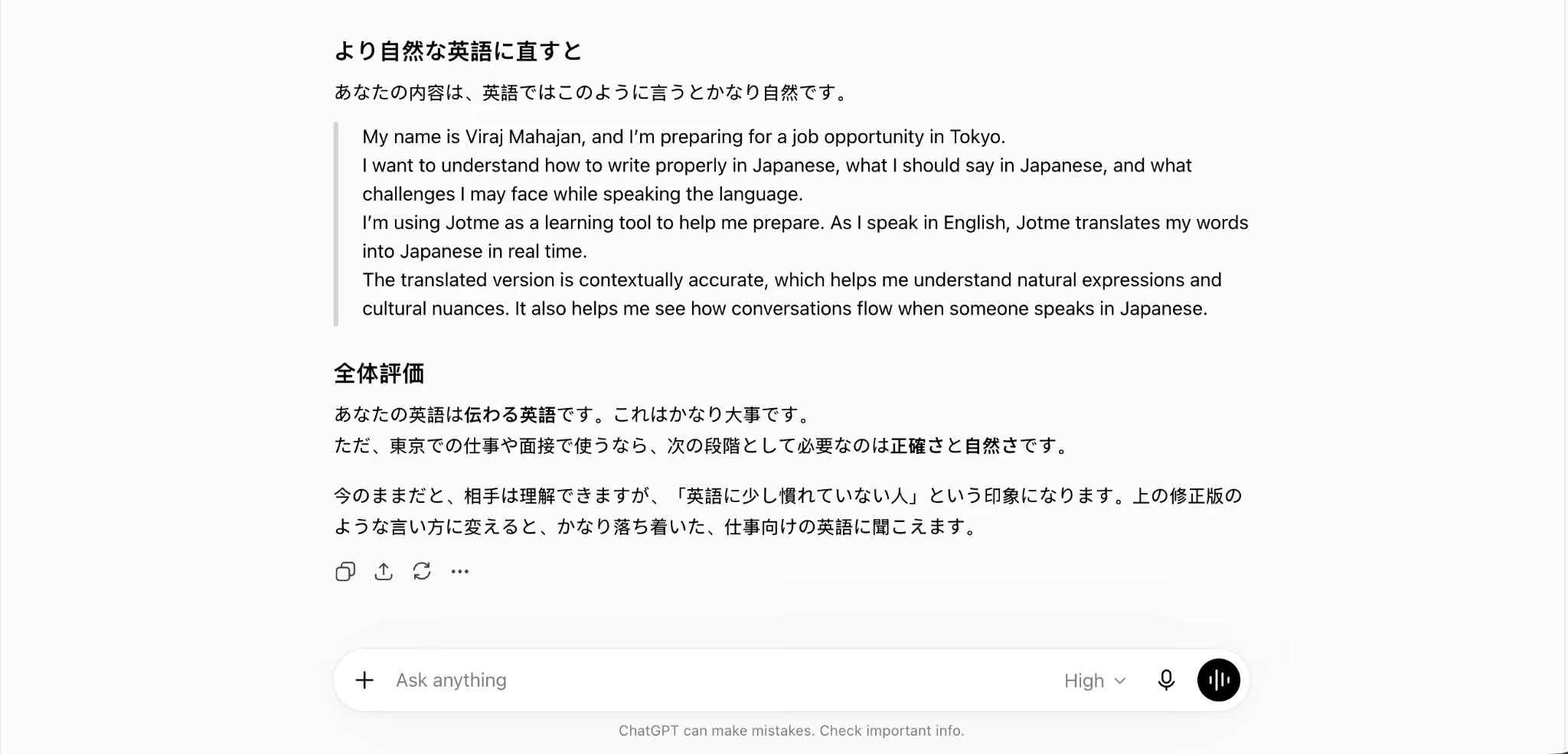
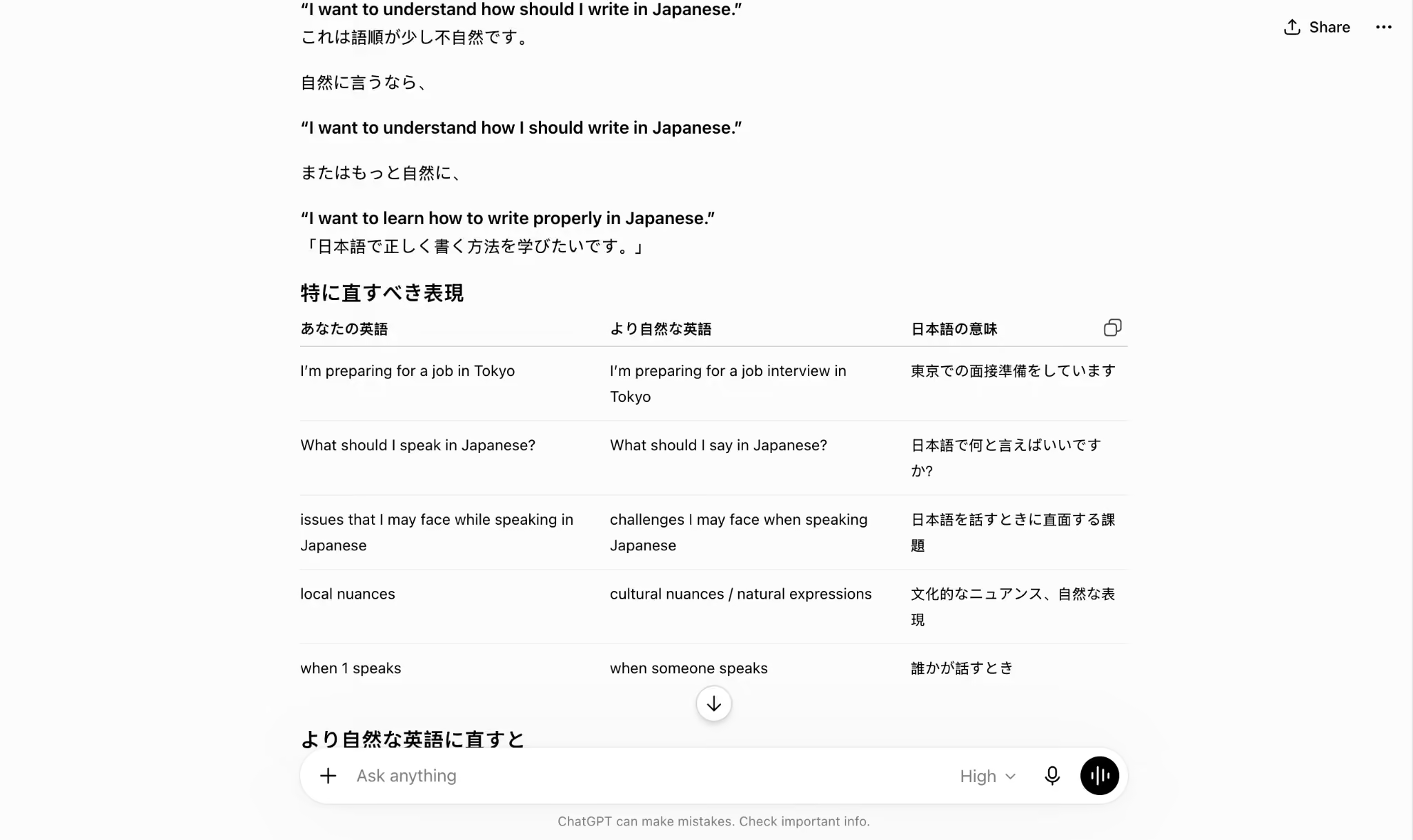
Paste the bilingual transcript into ChatGPT and ask it to flag unnatural phrasing and rewrite your answers for a job interview. In my run, it returned a corrections table that lined up my original English against more natural phrasing and the meaning in Japanese, for example, "I'm preparing for a job in Tokyo" sharpened to "I'm preparing for a job interview in Tokyo," and "issues that I may face" to "challenges I may face." It then gave a polished version of my whole answer and an honest read: my English was understood, and for a Tokyo interview, it needed more accuracy and a more natural tone. That gap between "understood" and "interview-ready" is exactly what you want to close before the call.
What Skills Do You Need for International Jobs?
The skill that lands an international role and keeps it is the same one that runs the interview: clear communication across cultures. Speaking the language is half of it. The other half is reading intent, formality, and context the way your interviewer does, then carrying your own meaning across without losing it. That is the heart of cross-cultural communication, and it decides how you come across in the interview and how you work once you are hired.
Your first weeks on a multilingual team run on the same skill, following meetings, asking questions, and keeping notes in a shared language with a tool like JotMe. Many global employers also use diversity and inclusion software to help teams collaborate more effectively, encourage participation, and create a stronger sense of belonging across regions. Together, these practices help reduce communication barriers, strengthen cross-cultural understanding, and make it easier to succeed in an international workplace from day one.
Putting It Into Practice
Knowing how to get international jobs comes down to preparation. You can start today. Pick the next international role you actually want and work backward from the interview. Run one practice session this week, speak your answers, read the feedback, and fix the top 2 weak spots before you apply. The applications, the resume, and the visa all matter, and the interview is where the offer turns, so rehearse it first. For the communication skill underneath it all, start with the guide to cross-cultural communication in business.
Frequently Asked Questions
What is the best way to get international jobs in 2026?
The best way to get international jobs is to work the process in order: pick your role and country, find openings through boards and networking, localize your resume, rehearse the interview in the target language, and start the visa process early. Treating the interview as the deciding step is what separates strong candidates from the rest.
How do I get international jobs with no experience?
Knowing how to get international jobs with no experience means targeting entry routes built for newcomers: international internships, working-holiday programs, teaching English abroad, and roles at companies with global offices. Build proof through short-term or remote work, then localize your resume to the country and apply directly. A clear target role and country matter more than years of experience.
How do I apply for international jobs online?
A big part of how to get international jobs online is the channel you apply through. Search international job boards and company career pages, filter for visa sponsorship or relocation support, and localize your resume to the destination's standards. Apply directly where you can, follow up through networking on LinkedIn, and prepare for a remote interview on Zoom, Google Meet, or Microsoft Teams.
Do I need to speak the local language to work abroad?
Not always. Many international roles in tech, hospitality, and international business run in English. Even basic proficiency helps you stand out and settle in faster, and practicing your answers in the local language before the interview gives you a real edge.
How can I practice for a job interview in another language?
Rehearse out loud with a real-time translation tool. Speak your answers in your own language, watch JotMe render them in the target language, ask Ask JotMe for feedback, and review the dashboard notes for what to fix. Then refine the phrasing with ChatGPT using your exported transcript.
Can I get international remote jobs from my home country?
Yes. International remote jobs are a popular route for getting international jobs without relocating, and they let you work for an employer abroad without a work visa. Search remote-focused boards, filter by regions where roles specify one, and treat the video interview as the deciding step, since it often bridges language gaps.
How long does a work visa take?
Processing runs from a few weeks to several months, depending on the country and visa type. Start gathering documents during the interview, and check the official consulate or embassy website for current requirements so an offer does not stall on paperwork.
Last updated on
August 26, 2026
Follow us on social media: