






Resources
Is it Legal to Record a Meeting in the United States

Lovely Mangla
August 22, 2026
Whether you can legally record a meeting in the United States depends on applicable federal and state laws, the participants' locations, and the type of conversation being recorded. Federal law generally follows a one-party consent standard. Still, some states impose stricter all-party consent requirements, while others have rules that vary depending on whether the recording is a phone call, electronic communication, or in-person conversation. If participants are located in different states or countries, the legal analysis can become more complicated.
This guide provides general information and is not legal advice. Recording laws can change, and courts may interpret statutes differently depending on the jurisdiction and circumstances. Before relying on this information for a real recording or compliance decision, confirm the applicable law with a qualified attorney in the relevant jurisdiction.
Key Takeaways
- Federal law generally follows a one-party consent standard, but states can impose stricter recording requirements.
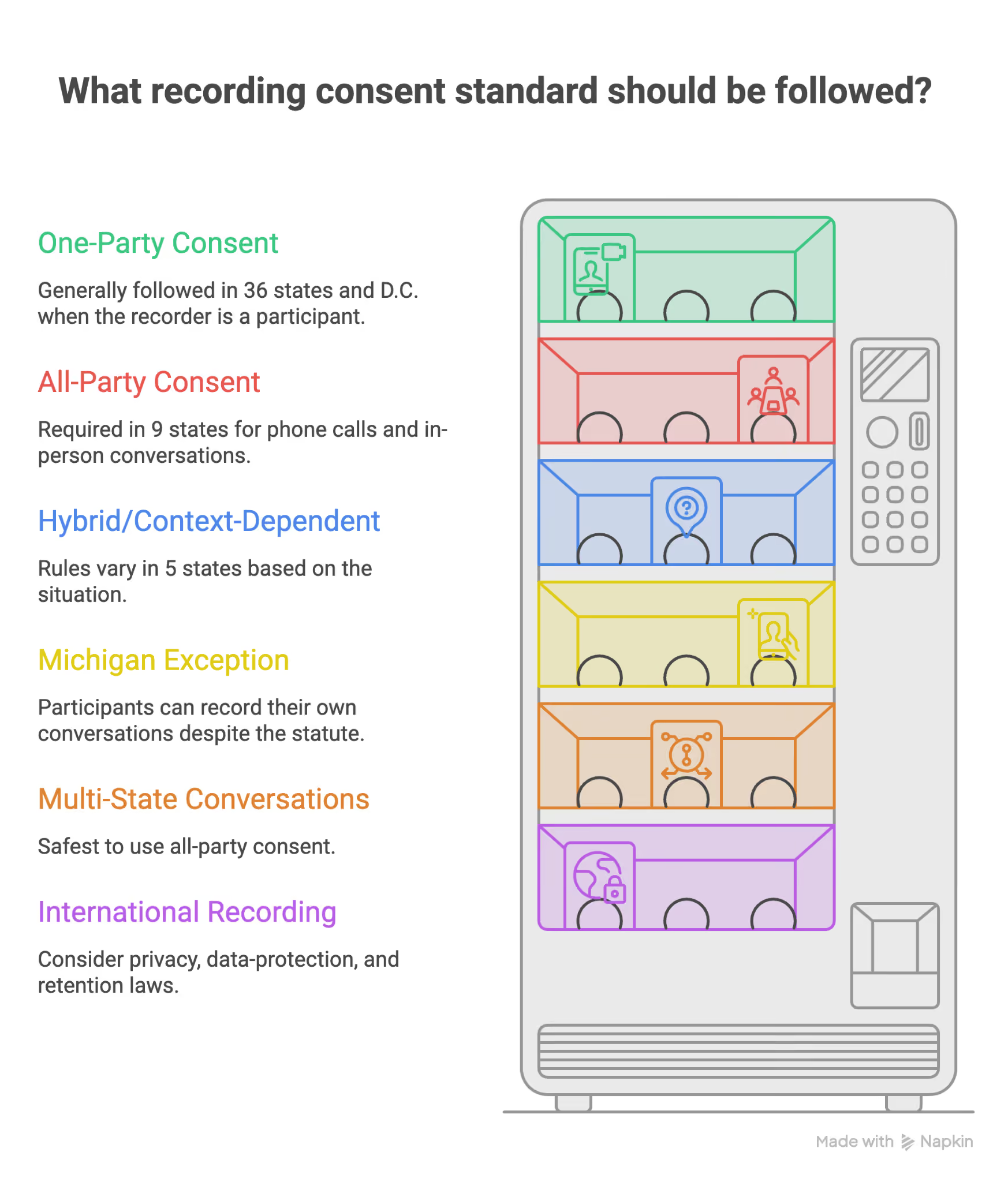
- Thirty-six states plus Washington, D.C., generally follow a one-party consent standard when the person making the recording is a participant in the conversation.
- Nine states generally require all-party consent for recording phone calls and in-person conversations: California, Florida, Illinois, Maryland, Massachusetts, Montana, New Hampshire, Pennsylvania, and Washington.
- Five states have hybrid or context-dependent rules: Connecticut, Delaware, Hawaii, Maine, and Oregon.
- Michigan requires special attention: its statute reads like an all-party law, but Michigan courts have recognized an exception for participants recording their own conversations.
- When participants are in different states, using an all-party consent approach is the safest operational policy, although which state's law legally applies can depend on the circumstances.
- Outside the US, recording may also trigger privacy, data-protection, transparency, and retention requirements, so consent is not always the only legal consideration.
What is One Party vs. Two Party Consent
One-party consent generally means that at least one participant in the conversation must consent to the recording. If you are participating in the conversation, your own consent can satisfy the federal one-party standard. Under that federal baseline, you generally do not need to notify the other participants before recording, although state law may impose stricter requirements.
All-party consent, sometimes called two-party consent, generally requires all participants whose communications are protected by the applicable law to be notified and, depending on the jurisdiction, to consent before recording begins. "Two-party consent" is commonly used as shorthand, but the rule can apply to every participant when more than two people are on a call.
This is why the answer to questions like “Is it illegal to record a phone call without consent?” depends on the state whose law applies. Some states follow one-party consent rules, while others require consent from everyone involved.
Here are a few examples:
Generally one-party, but context matters
Florida is a straightforward example of an all-party consent state. Nevada is more nuanced. Current classifications generally place Nevada among the one-party jurisdictions, but its recording statutes and case law distinguish between different types of communications and recordings. Because the rules can depend on the circumstances, people recording private conversations in Nevada should verify the applicable law rather than assuming a blanket one-party or all-party rule.
What Are the Consent Rules in Different States of the US
Consent laws vary significantly by state, and the distinction is not always as simple as labeling a state “one-party” or “two-party” consent. Some states apply different rules to phone calls and in-person conversations, while others have court decisions that affect how their recording statutes are interpreted.
States With All-Party Consent Rules
Nine states generally require the consent of all parties for recording both phone calls and in-person conversations:
- California
- Florida
- Illinois
- Maryland
- Massachusetts
- Montana
- New Hampshire
- Pennsylvania
- Washington
States With More Nuanced Recording Laws
Five additional states have hybrid or context-dependent recording rules that do not fit neatly into a simple one-party or all-party category. The applicable requirement may depend on the type of conversation, where the recording takes place, or how courts have interpreted the state's statute.
- Connecticut: Generally requires consent from all parties for phone and electronic recordings, while in-person conversations are generally subject to a one-party standard.
- Delaware: Although the statutory language has been debated, courts have interpreted Delaware's wiretap law as requiring consent from all parties in certain recording situations.
- Hawaii: Generally follows a one-party consent rule, but all-party consent may be required when a recording device is installed in a private place.
- Maine: Generally follows a one-party consent rule, with narrower circumstances in which all-party consent may be required.
- Michigan: Michigan's statute is often classified as an all-party consent law, but court decisions have recognized circumstances in which a participant may record their own conversation. Because the case law is complex, Michigan should be treated with caution rather than classified as a straightforward one-party state.
- Oregon: Generally requires one-party consent for phone and electronic communications but applies an all-party consent standard to in-person conversations.
The remaining 36 states, along with Washington, D.C., generally follow the federal one-party consent baseline for participant recordings. The federal Wiretap Act establishes a one-party consent standard, while states remain free to impose stricter requirements.
Because recording laws can depend on where participants are located, the type of communication, and how the recording is made, do not rely solely on a state-by-state label when a call involves people in different states. When in doubt, obtaining legal advice or notifying all participants and using an all-party consent approach is the safer operational choice.
What Happens When Participants Are in Different States
Remote teams often have participants in different states, which can make recording laws more complicated. A caller in a one-party consent state may be speaking with someone in a state that requires consent from everyone on the call. Which law applies can depend on the circumstances, including where the participants are located and how the recording was made.
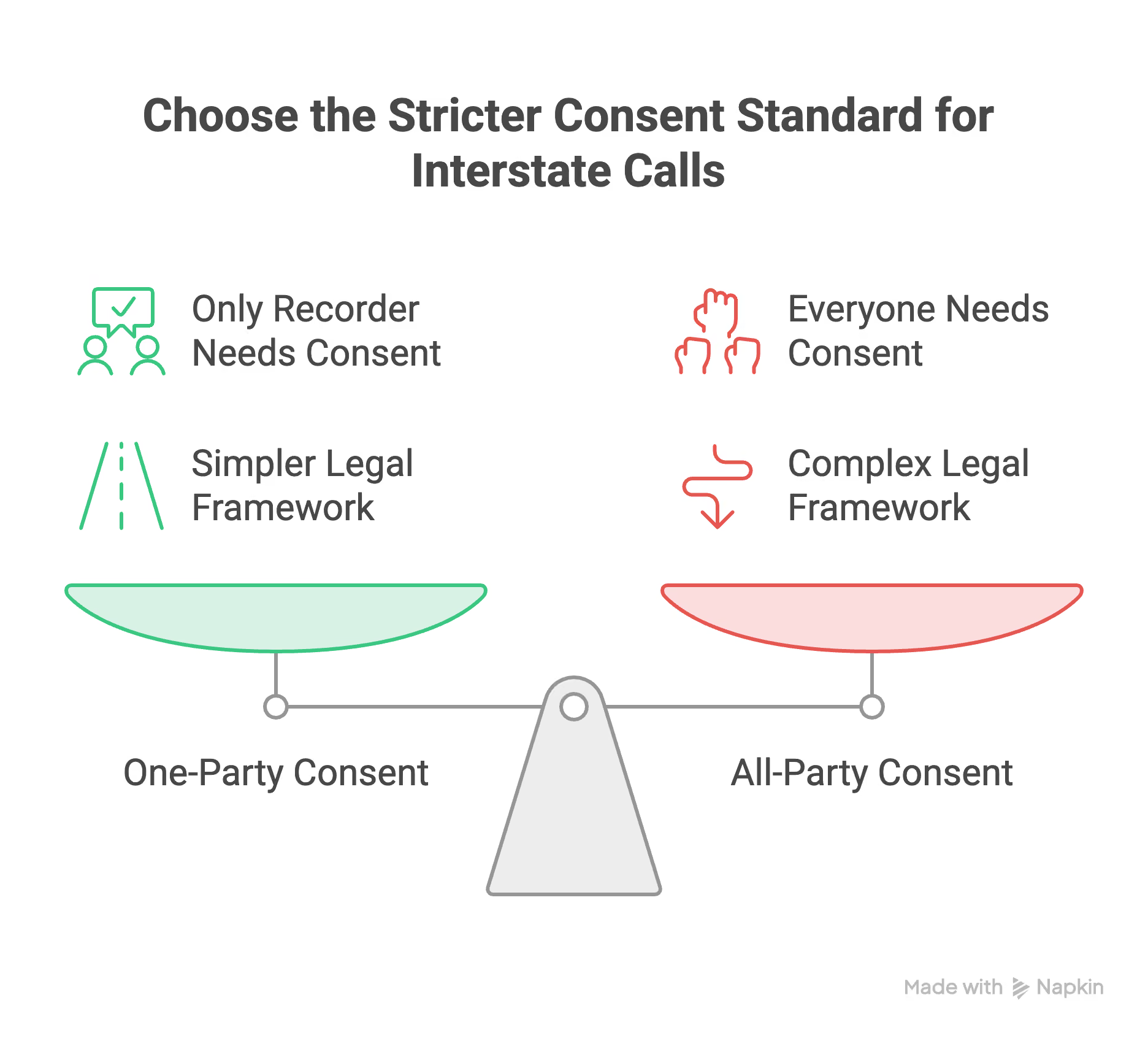
There is no single rule that resolves every interstate recording dispute. Courts have taken different approaches to conflicts between state recording laws. For businesses, the safest approach is therefore to use the stricter standard when a call includes participants from different states.
In practice:
- If a call includes someone in an all-party consent state, the safest operational policy is to notify everyone and obtain the required consent before recording. Interstate recording disputes can involve different approaches to which state's law applies, so this recommendation should not be treated as a universal choice-of-law rule.
- If everyone is in one-party consent states, the person making the recording will generally only need to be a consenting participant.
- For larger multi-state meetings, applying one consistent consent policy is safer than trying to determine which state's law applies to each participant.
This matters particularly for sales, customer success, recruiting, and support teams. For example, a sales representative in Texas may call a prospect in Washington. Texas generally follows a one-party consent standard, while Washington generally requires all-party consent. Asking everyone for consent before recording is therefore the safer approach for the business and avoids creating an interstate recording dispute after the call.
What Are the Recording Laws Outside the US
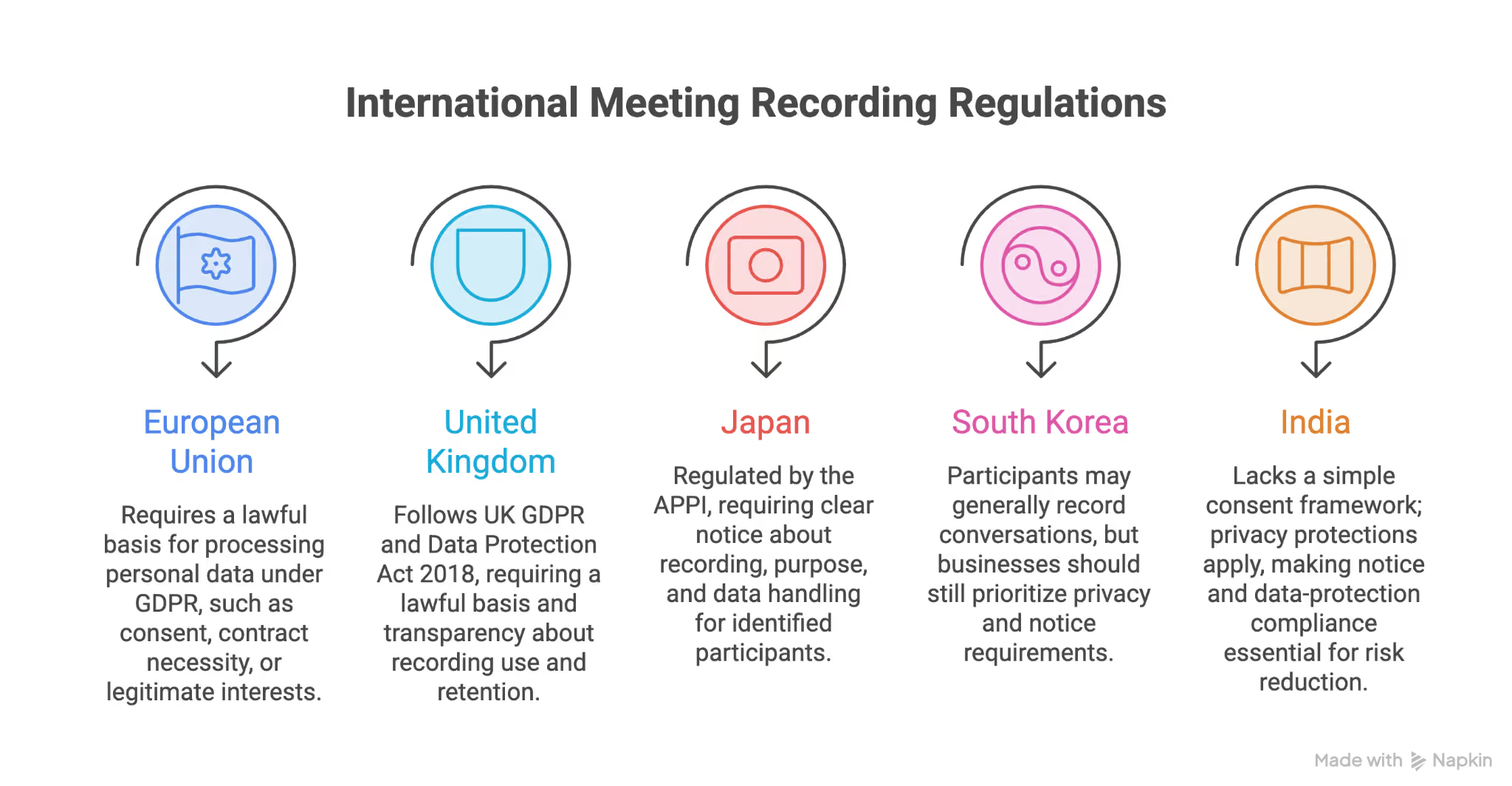
Recording a meeting outside the US is not always governed by a simple one-party or two-party consent rule. In many countries, a recording is treated as personal data, so businesses must consider lawful processing, transparency, purpose, retention, and participants' privacy rights in addition to whether consent is required.
European Union
Under the GDPR, an audio recording that identifies participants can constitute personal data processing. An organization therefore needs a lawful basis for processing it. Consent is one possible basis, but it is not the only one. Depending on the circumstances, an organization may rely on contract necessity, a legal obligation, legitimate interests, or another applicable legal basis.
For workplace and business meetings, the practical takeaway is to tell participants that the meeting is being recorded, explain why the recording is being made, and provide the relevant privacy information. Businesses should also determine how long the recording will be retained and how participants can exercise their data protection rights.
United Kingdom
The UK follows the UK GDPR and the Data Protection Act 2018. Recording a business meeting or call involves processing personal information, so organizations need an appropriate lawful basis and must be transparent about the recording. The UK's Information Commissioner's Office recommends telling people why a call or meeting is being recorded and providing relevant information about its use and retention.
This means UK recording compliance is broader than simply asking, "Did everyone consent?" In some situations, consent may be the appropriate basis; in others, another lawful basis may apply.
Japan
Japan regulates the handling of personal information through the Act on the Protection of Personal Information (APPI). Recording a meeting can therefore raise privacy and data-handling obligations, particularly when the recording contains information that identifies participants.
For businesses, the safer approach is to provide clear notice about the recording, its purpose, and how the information will be handled rather than treating Japan as a simple one-party or two-party consent jurisdiction.
South Korea
South Korea's recording rules differ from the all-party consent approach used in some US states. A participant who is part of a conversation may generally record that conversation, while secretly recording a conversation that the recorder is not participating in raises separate legal issues.
For business meetings, however, companies should still consider privacy and personal data requirements rather than assuming that participant recording rules eliminate the need for notice.
India
India does not have a simple statutory one-party/all-party consent framework equivalent to the US state-by-state model. The Supreme Court has recognized telephone conversations as falling within the scope of privacy protections, while its discussion of R.M. Malkani v. State of Maharashtra also addressed circumstances in which a person participating in a telephone conversation could allow the conversation to be recorded.
As a result, it is better not to describe India simply as a "one-party consent country." For business calls and meetings, providing notice, considering whether consent is appropriate, and following applicable privacy and data-protection requirements can reduce legal and compliance risk.
How to Record a Meeting Compliantly
When you're unsure which recording rule applies, the safest operational approach is to tell participants that you're recording and obtain the required consent before you start. In jurisdictions where notice or acknowledgment is sufficient, a clear announcement can still provide a practical record that participants were informed.
A short announcement is usually enough:
"Before we begin, I want to let everyone know that this meeting is being recorded for note-taking and documentation. Does everyone consent to the recording?"
For business meetings, you can make the process more consistent with a few simple habits:
- Give notice before recording: Make the announcement before you press record, not after the meeting has started.
- Put the notice in writing: Add a note to the calendar invite or meeting chat so participants have a written record as well.
- Give people time to respond: Pause briefly after your announcement so anyone who objects has an opportunity to speak up.
- Define how long you'll keep the recording: Set a reasonable retention period based on why the meeting was recorded.
- Restrict access: Only give the recording and transcript to people who need them, particularly when the meeting contains sensitive or personal information.
How JotMe Can Help
Once you've given participants the appropriate notice, JotMe can simplify the recording and transcription workflow. Instead of recording a meeting in one app and then moving the audio to another tool for transcription, you can use JotMe to record and transcribe meetings across Zoom, Google Meet, Microsoft Teams, and Discord.
The workflow is straightforward:
Step 1: Notify participants that the meeting will be recorded and explain why.
Step 2: Start the meeting and open JotMe, choose a language, and start recording and live translation.
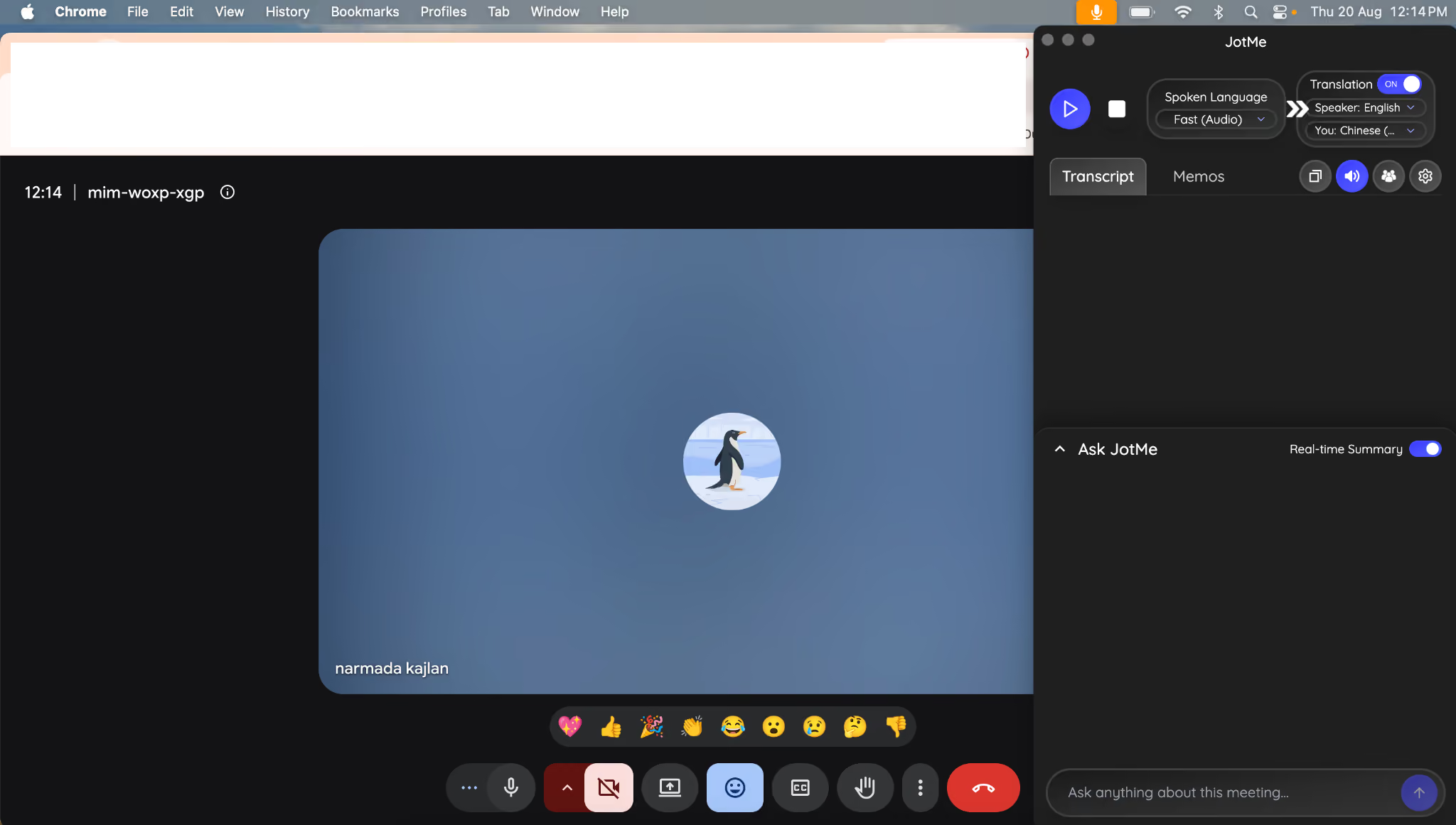
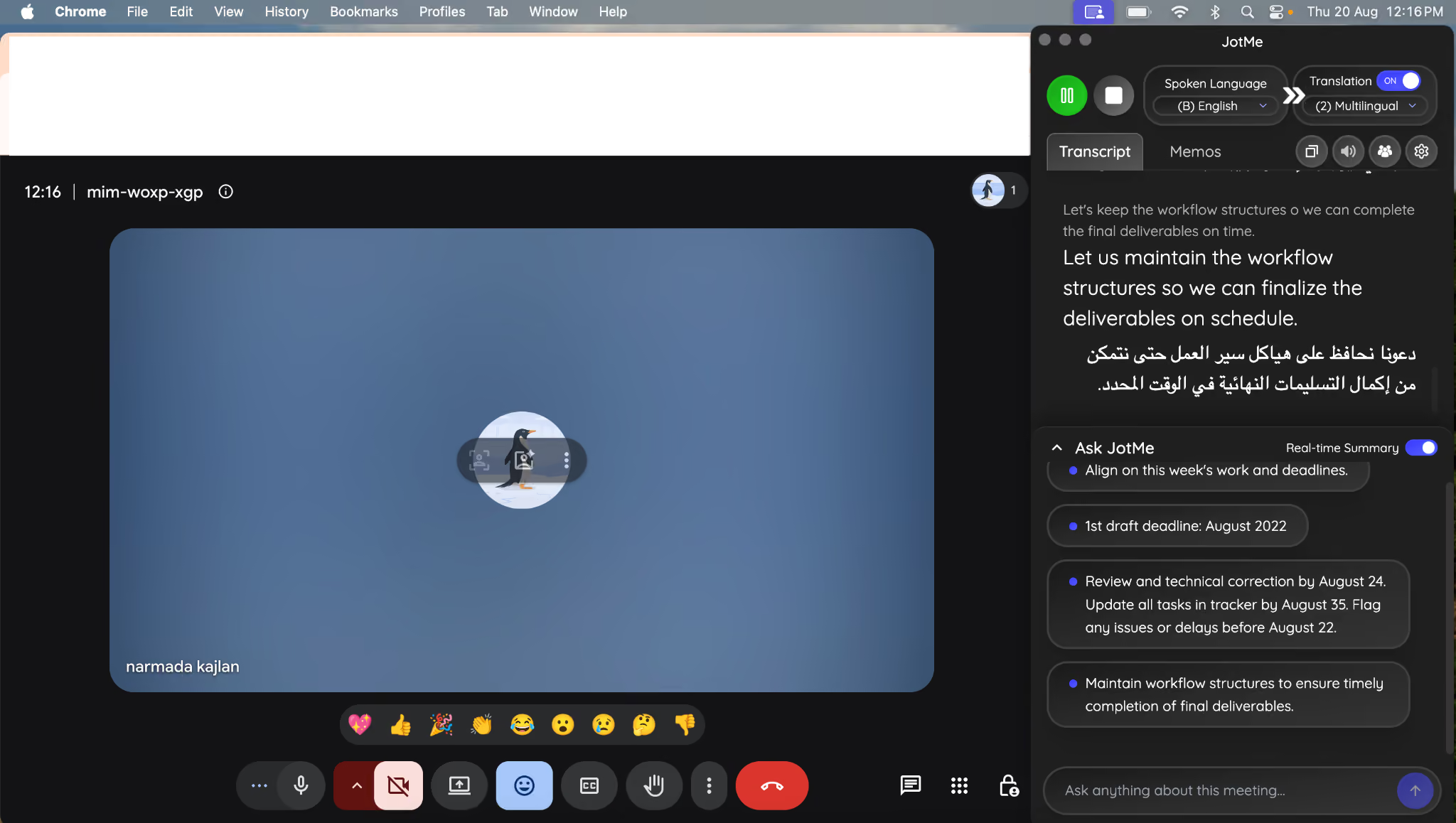
Step 3: Let JotMe transcribe the conversation while keeping the recording and transcript together.
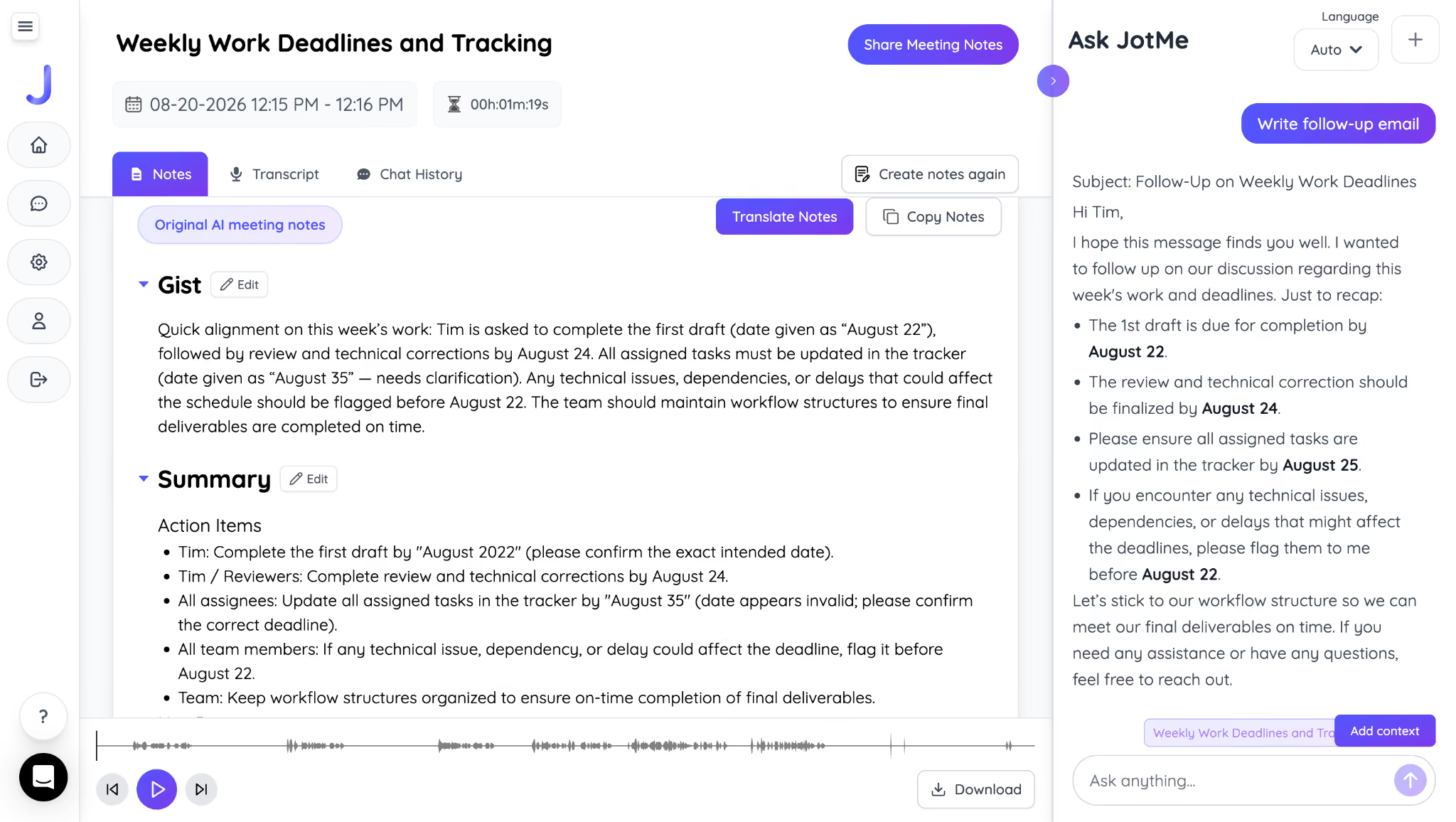
Step 4: Review the transcript after the meeting, use AI-generated meeting notes and summaries, and use Ask JotMe to find information or draft follow-up content based on the conversation.
Manage access and retention according to your organization's privacy and data-retention policies.
This gives teams a consistent workflow across different meeting platforms while keeping the recording and its transcript together. Just remember that using JotMe does not replace your legal obligations: you still need to determine what notice or consent is required for the participants and jurisdictions involved.
Recording Meetings at Work: Employee Consent and Company Policies
Recording a meeting at work involves more than knowing whether your state follows one-party or all-party consent. Employers should also establish a clear recording policy and tell employees when meetings are recorded.
- Notify employees in writing: Include recording practices in an employee handbook or workplace policy, rather than relying only on verbal notice.
- Check where participants are located: Different state or country laws may apply when employees join from different jurisdictions.
- Consider EU workplace requirements: Works councils or employee representatives may have consultation rights around employee monitoring and recording.
- Protect sensitive recordings: Meetings involving performance reviews, disciplinary matters, or HR discussions should have stricter access and retention controls.
Once the policy is clear, teams also need to know how recording works on their meeting platform. JotMe provides guides for recording and transcribing meetings on Zoom , Google Meet, Microsoft Teams, Discord, FaceTime, and WhatsApp calls.
FAQ
Can you record a meeting without telling anyone?
It depends on the applicable recording law. In a one-party consent state, you can generally record a conversation without notifying the other participants if you are part of the conversation. In an all-party consent state, you generally need to notify and obtain consent from everyone before recording. Recording without the required consent can result in civil or criminal penalties, depending on the jurisdiction.
Is a verbal announcement enough to satisfy two-party consent states?
A clear verbal announcement can satisfy the notice requirement in many situations, but simply announcing that a meeting is being recorded does not automatically establish consent in every state. If the law requires consent, participants should have a meaningful opportunity to agree, object, or leave before recording begins. Company policies and platform-specific requirements may also apply.
Can a recording be used in court?
Yes, a legally obtained recording can generally be used as evidence, although admissibility depends on the circumstances and the court. A recording made in violation of applicable recording laws may be excluded and could expose the person who made it to additional legal liability.
What if someone objects to being recorded?
If someone objects, the safest approach is to stop or avoid recording unless you have a clear legal basis to continue. In an all-party consent jurisdiction, continuing to record after an objection can create significant legal risk. You can also offer to continue the meeting without recording or ask the participant to leave if appropriate under your organization's policy.
Does GDPR ban recording meetings?
No, GDPR does not generally prohibit recording meetings, but recording can constitute the processing of personal data and therefore requires an appropriate lawful basis. Organizations should also provide clear notice, explain the purpose of the recording, limit access, and avoid keeping recordings longer than necessary.
Do AI meeting bots and note-takers need consent too?
AI meeting bots and note-takers can be subject to the same recording and privacy requirements as other meeting recordings. If a tool records or transcribes a conversation, organizations should determine whether notice or consent is required under the applicable laws and inform participants before the recording or transcription begins.
Last updated on
August 31, 2026
Follow us on social media:
![JotMe — Is Google Translate Accurate? [2026 Test]](/_webflow-assets/0d0512afc7b037d74dff536f22fed08f.avif)