



Guides
Human Interpreter vs. AI Interpreter: How AI Helps You Save Up to 98% on Live Translation Cost in 2026

Viraj Mahajan
March 10, 2026
Imagine this: A 10-person product review between your Tokyo and New York offices. Two language pairs. One hour. You need simultaneous interpretation so both sides can speak naturally without pausing for translations.
Here is what that single meeting costs with human interpreters:
Four interpreters (two per language pair, because simultaneous interpreters rotate every 30 minutes to manage cognitive fatigue) at $150 to $200 per hour each. That is $600 to $800 for sixty minutes of conversation. Add equipment rental, platform fees, scheduling overhead, and prep time, and you are looking at $1,000+ for one meeting.
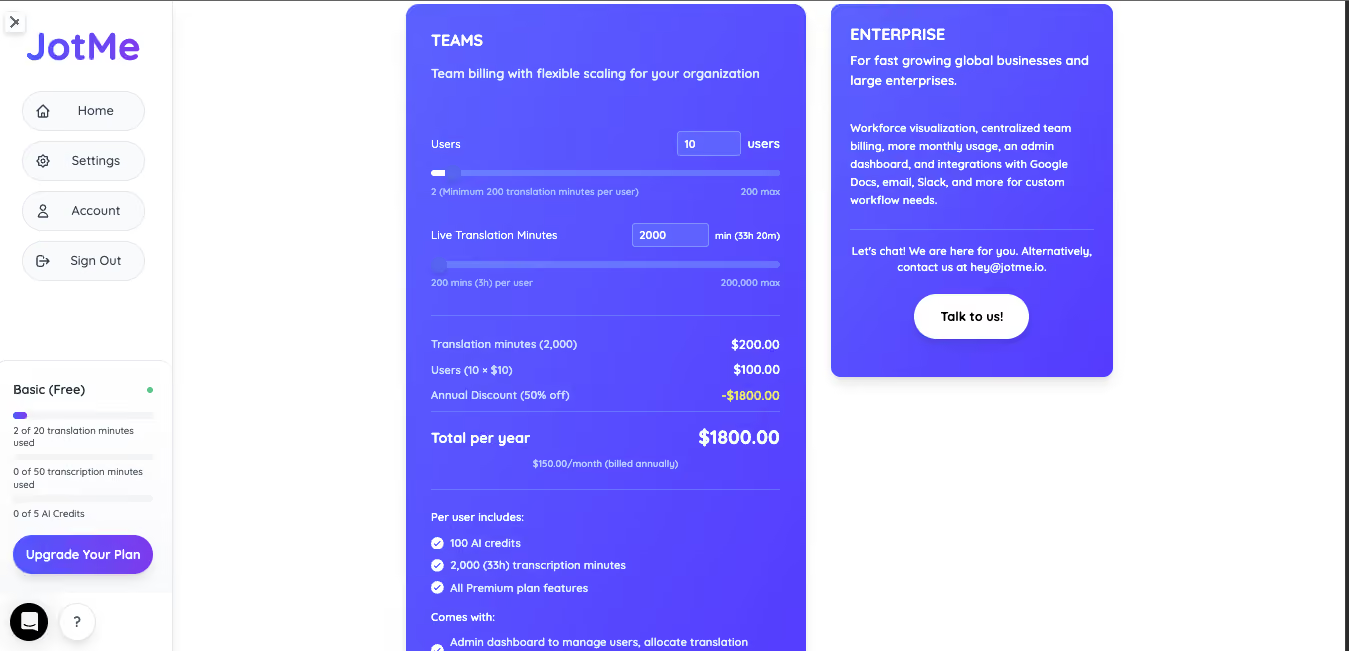
Now here is the same meeting with JotMe: On the Teams plan, a 10-person team gets 2,000 live translation minutes (200 minutes per user) for $150 per month billed annually, which comes to $1,800 per year. Understand this: that is the entire team covered and not just one person or one single meeting.
Do the math: 2,000 minutes per month means 24,000 translated minutes per year, which is 400 hours of live multilingual meetings. Divide $1,800 by 400 hours and you are paying $4.50 per hour of translated meeting time. The same hour that costs $600 to $800 with human interpreters costs less than a latte with JotMe.
And with JotMe, any team member can share their live translation credits with participants outside the plan through a simple URL or QR code, so your clients, partners, or contractors get real-time translation, post-meeting notes, and AI summaries without needing their own subscription.
The cost gap between human interpreters and AI live translation has become so wide that for most business meetings, the question is no longer which is better. It is “why are you still paying $350 an hour for something that costs less than your team's coffee budget?”
This article breaks down exactly what human interpretation costs in 2026, what AI alternatives cost, and where each option makes sense. By the end, you will know exactly how much your multilingual meetings should be costing you.
Human Interpreters vs. AI Live Translation: A Direct Comparison
Before diving into the detailed cost breakdown, here is a head-to-head comparison across the parameters that matter most when choosing between human interpreters and AI live translation tools for business meetings.
What Human Interpretation Actually Costs in 2026
Most companies budget for an interpreter's hourly rate and assume that is the total cost. It rarely is. Human interpretation has a layered cost structure that adds up quickly once you factor in the logistics around the interpreter's time.
Base Rate for Human Interpreter in 2026
According to ZipRecruiter, as of March 09, 2026, the average annual salary for an interpreter in the United States is $70,982, which translates to roughly $34 per hour. PayScale puts the average hourly rate at $23.55, with a range of $15.41 to $49.06. These figures represent staff interpreters in salaried positions.
Freelance and contract interpreters, the kind companies hire for meetings and events, charge significantly more. In-person professional interpreters typically bill between $45 and $150 per hour. For simultaneous interpretation in conference settings, rates in North America range from $150 to $400 per hour. Specialists in rare language pairs, like Japanese and Chinese, or high-stakes domains like legal, medical, or financial interpretation can command $200 to $500+ per hour.
The Two-Interpreter Rule
Simultaneous interpretation is one of the most cognitively demanding tasks a human can perform. Industry standard requires two interpreters per language pair for any session exceeding 60 minutes. They rotate every 20 to 30 minutes to prevent fatigue-related accuracy drops. This means a single two-hour bilingual meeting requires a minimum of two interpreters. A trilingual meeting requires four. A five-language conference requires ten.
Human Interpreter Costs Nobody Puts in the Quote
Beyond the hourly rate, here is what companies routinely underestimate:
Booking minimums: Many interpreters require half-day (4-hour) or full-day (8-hour) minimum engagements, even if your meeting is only 90 minutes.
Equipment rental: In-person simultaneous interpretation requires booths, consoles, transmitters, and receiver headsets. Specialized AV companies charge $500 to $5,000+ depending on the event size and setup complexity.
RSI platform fees: For remote simultaneous interpretation, you need a dedicated platform. The cost for such dedicated platforms range from $300 to $2,000 per day depending on the number of languages and attendees.
Preparation time: Professional interpreters charge for reviewing your meeting materials, slide decks, and glossaries in advance. This is often billed at a reduced hourly rate or as a flat prep fee.
Travel and accommodation: On-site interpretation means flights, hotels, per diems, and ground transport for each interpreter.
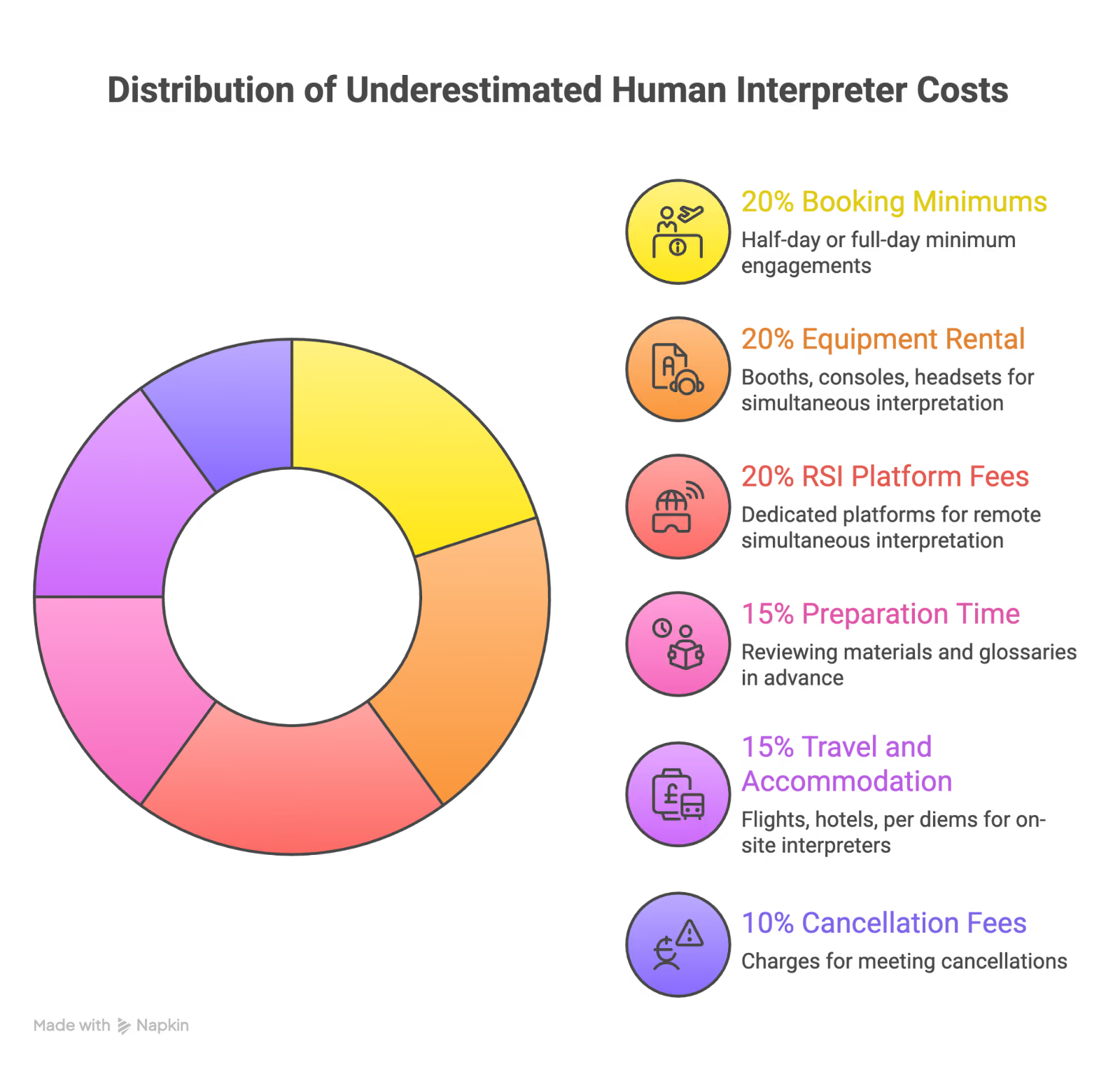
Cancellation fees: In rare scenarios, if you intend to cancel the meeting then most agencies will still bill you; sometimes the cancellation charges are 50 to 100 percent of the agreed fee.
Scheduling lead time: Qualified interpreters for less common language pairs (Japanese-English, Korean-English, Vietnamese-English) often need to be booked weeks in advance. Last-minute bookings, if available at all, come with premium surcharges.
Realistically, a company running four multilingual meetings per month with two language pairs can expect to spend $3,000 to $8,000 monthly on human interpretation, depending on session length, languages, and format.
What AI Live Translation Costs in 2026
AI-powered live translation tools have dropped to a fraction of what human interpreters cost, and the accuracy gap for standard business communication has narrowed considerably. Here is what the current landscape looks like.
JotMe: Ideal for Online & In-Person Multilingual Meetings
JotMe offers real-time translation and transcription across 45+ languages, AI meeting notes, real-time summaries, and multilingual transcription, all without a bot joining your call.
What sets JotMe different from the human interpreters is the fact that JotMe works across Mac, Windows, iPhone, Android, and Chrome extension. Additionally, JotMe captures audio directly from your device without requiring a meeting bot to join. It supports Zoom Meeting, Google Meet, Microsoft Teams, Webex, Slack, Discord, and WhatsApp, as well as in-person conversations via the mobile app.
Other AI Live Translation Tools
Maestra AI starts at $39 per month (billed annually) for its Basic plan (360 minutes of real-time captions). The Premium plan costs $79 per month (billed annually) and includes 180 minutes of real-time translation per language. Business plans go up to $159 and $359 per month (billed annually).
Wordly focuses on events and conferences with pricing based on attendee count and session hours. It offers translated subtitles, audio, transcripts, and summaries. Pricing is not publicly listed for all tiers.
DeepL Voice is available as an add-on for organizations already on Microsoft Teams with a business plan. DeepL works within the Teams ecosystem but does not support other platforms natively.
Boostlingo targets enterprise-level multilingual conferences and hybrid events, combining AI efficiency with human interpreter management. It is best suited for large organizations that need both AI and human accuracy in a single platform.
Among these options, JotMe offers the broadest platform compatibility (Zoom, Teams, Meet, Webex, Slack, Discord, WhatsApp, and in-person), the most accessible pricing for individuals and small teams, a unique no-bot architecture that keeps meetings private, and sharing live translation with URL or through your web camera.
Side-by-Side Cost Comparison: 3 Real Scenarios
Abstract pricing only gets you so far. Here is what the numbers look like in three scenarios that reflect how most companies actually use interpretation services. All JotMe calculations use the Teams plan: $1,800 per year (billed annually), for a 10-person team with 2,000 live translation minutes per month (24,000 minutes annually, or 400 hours), which works out to $4.50 per hour of translated meeting time.
Scenario A: Weekly Bilingual Team Standup
Consider that a 30-person engineering team split between San Francisco and Tokyo holds a one-hour standup every week. One language pair: Japanese-English. Four meetings per month, which equals to 48 meetings per year.
Annual savings with JotMe: $18,600. Let that sink in first because that is a 91% cost reduction. And unlike the human interpreter setup, JotMe also delivers multilingual transcripts, AI meeting summaries, and action items after every session at no extra cost.
Scenario B: Monthly Multilingual All-Hands
A 200-person company hosts a monthly all-hands meeting lasting 90 minutes. Three language pairs: English-Japanese, English-Spanish, English-Korean. One session per month, 12 sessions per year.
Annual savings with JotMe: $29,100.
Notice that the JotMe cost stays flat at $1,800 regardless of how many languages you add during your all-hands meeting. A fourth language pair would push the annual human interpreter bill above $37,000.
Scenario C: One-Day International Conference
A SaaS company hosts an annual customer conference. 500 attendees, 5 language pairs, 8 hours of programming across two stages.
For conferences, the savings go beyond the line items in the table. Eliminating physical booths and receivers removes an entire logistics layer from event planning. No AV vendor coordination, no equipment shipping, no on-site technicians troubleshooting headset batteries mid-session. Attendees simply scan a QR code and select their language.
And after the event, organizers have full multilingual transcripts they can repurpose for blog posts, follow-up emails, and on-demand content, something human interpreters never provide at that price point.
Disclaimer: The cost scenarios above are calculated using average interpreter rates in the United States (based on 2025-2026 data from ZipRecruiter, PayScale, and industry sources) and standard RSI platform and equipment pricing for remote and in-person events. Actual human interpreter costs vary significantly by country, language pair, specialization, session length, and provider.
Similarly, JotMe costs in these scenarios are based on the Teams plan at $1,800 per year (10 users, 2,000 translation minutes per month), which reflects the 50% annual billing discount that teams receive when they opt for yearly pricing. Monthly billing, different team sizes, or higher translation minute allocations will result in different totals. For the most current JotMe pricing for Teams, you will need to signup and calculate the amount using the built-in calculator.
Where Human Interpreters Still Win When it Comes to Translation
AI live translation has overtaken human interpreters for the vast majority of business communication scenarios. That said, there are several situations where a trained human interpreter remains the better choice.
Legal proceedings: Court hearings, depositions, and contract negotiations where a single mistranslated word can change the legal outcome. In these scenarios, certified legal interpreters carry professional liability and understand jurisdiction-specific terminology.
Medical consultations: Most AI live translation tools, like JotMe can handle medical nuances with ease. However, most patient-doctor conversations involve diagnosis, treatment decisions, or informed consent. Medical interpreters are trained to handle the emotional weight and clinical precision these conversations demand.
Diplomatic settings: It is always recommended to opt for human interpreters in high-level government negotiations, treaty discussions, and formal international proceedings where protocol, tone, and cultural signals carry as much meaning as the words themselves.
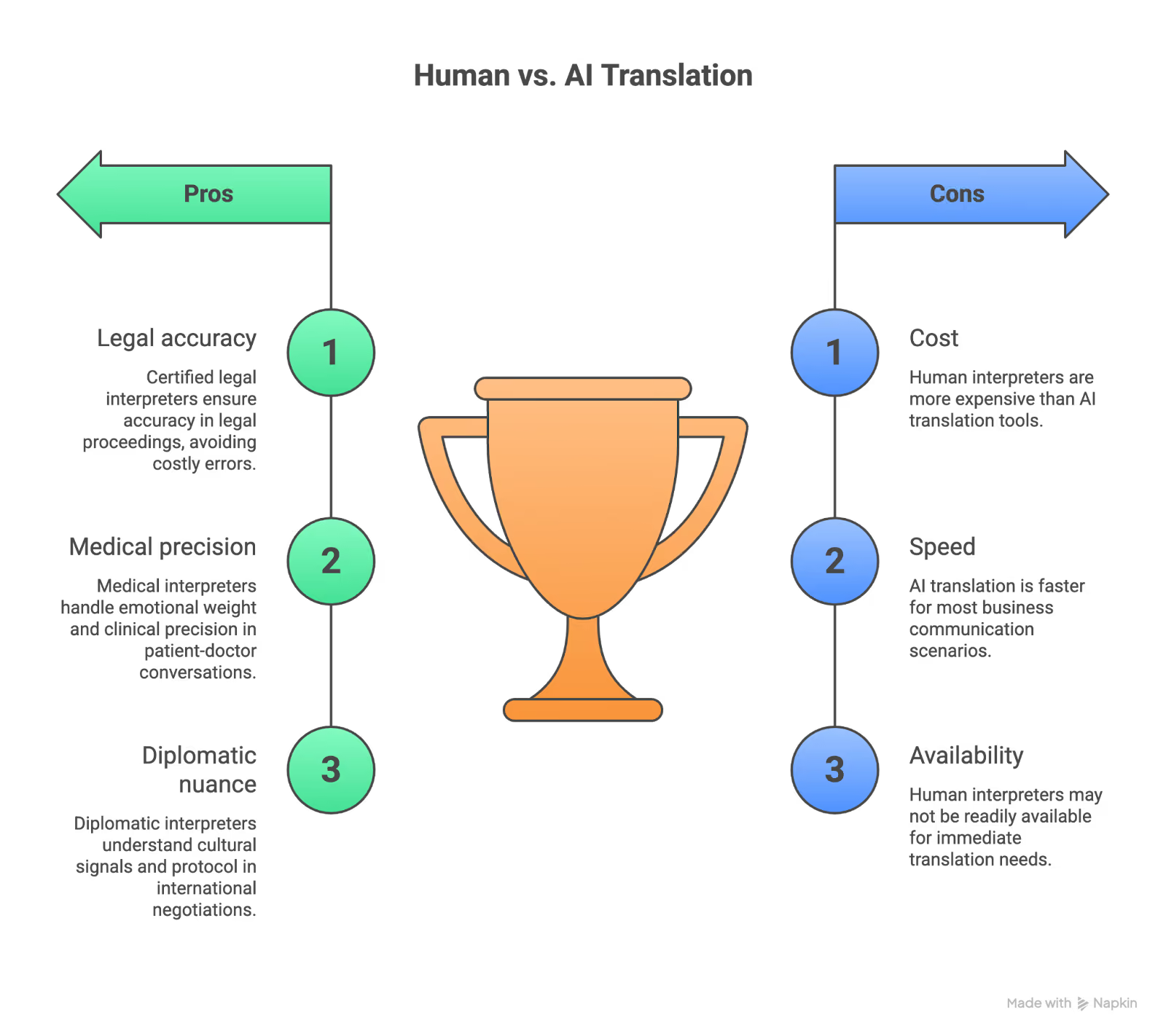
In these contexts, the cost of a human interpreter is justified because the cost of miscommunication can be catastrophic. A misinterpreted legal term can void a contract. A mistranslated dosage can endanger a patient. And that’s why, you can take assistance from AI tools, but it is highly recommended to hire a professional interpreter.
For everything else, including daily standups, client calls, product demos, internal all-hands meetings, onboarding sessions, training workshops, webinars, and informal cross-border collaboration, AI live translation delivers accuracy that is more than sufficient at a cost that is 99% lower.
Where AI Translation Has Overtaken Human Interpreters
The accuracy gap between AI and human interpreters for standard business communication has narrowed dramatically. In 2020, AI translation was a novelty, but as the large language models have evolved, AI translation is the default for teams that communicate across languages every day.
Here is what has changed in 2026:
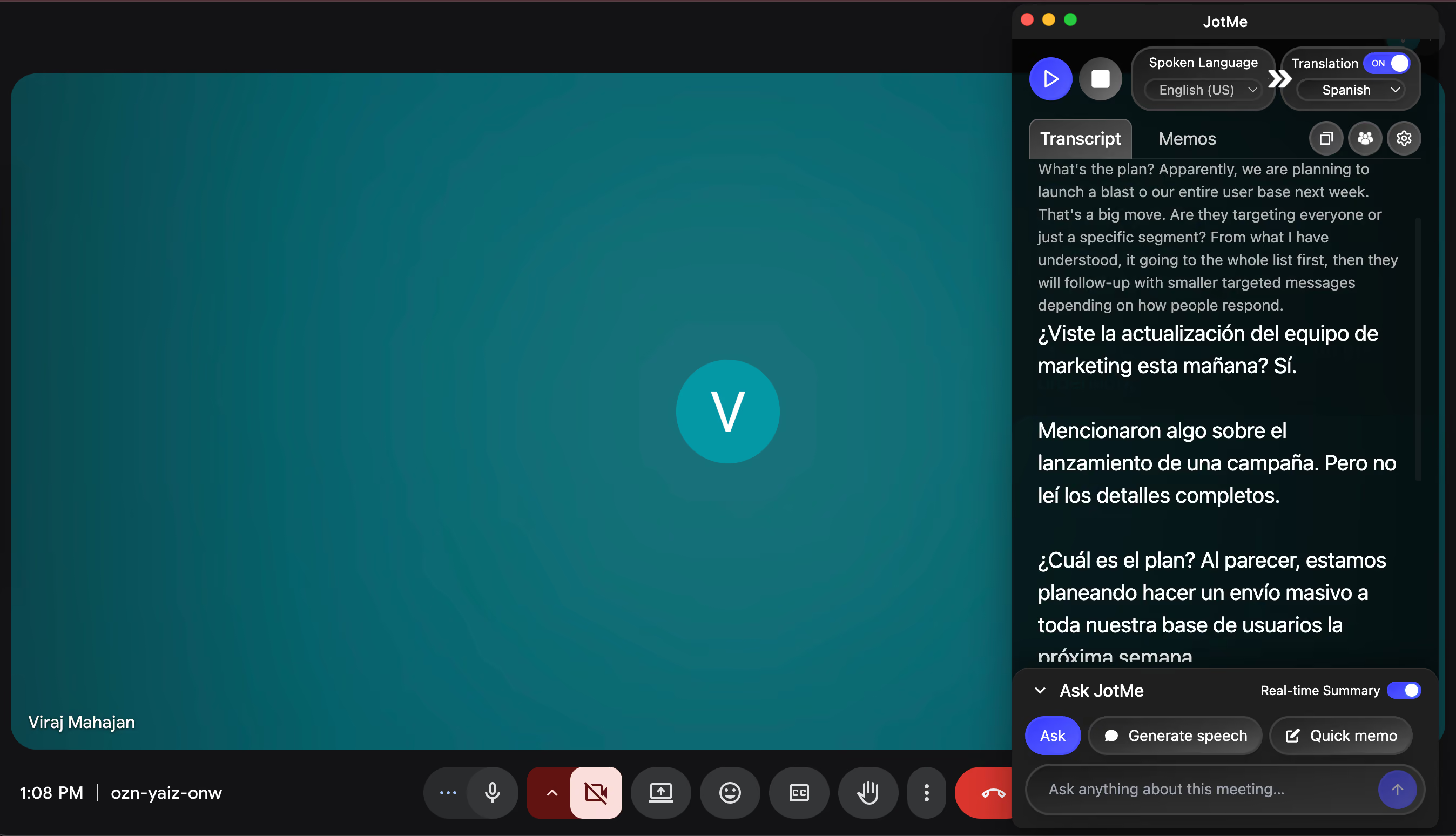
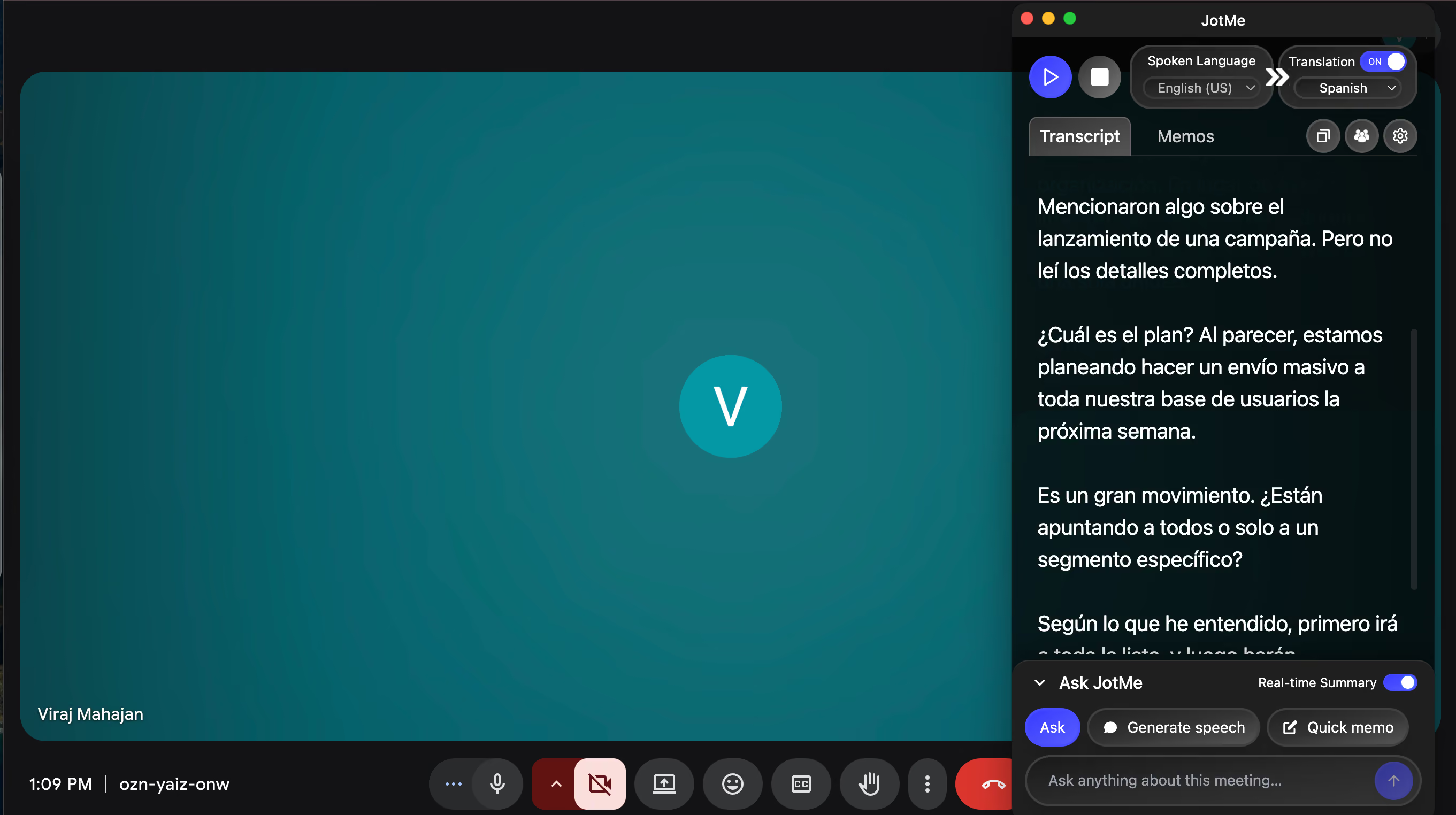
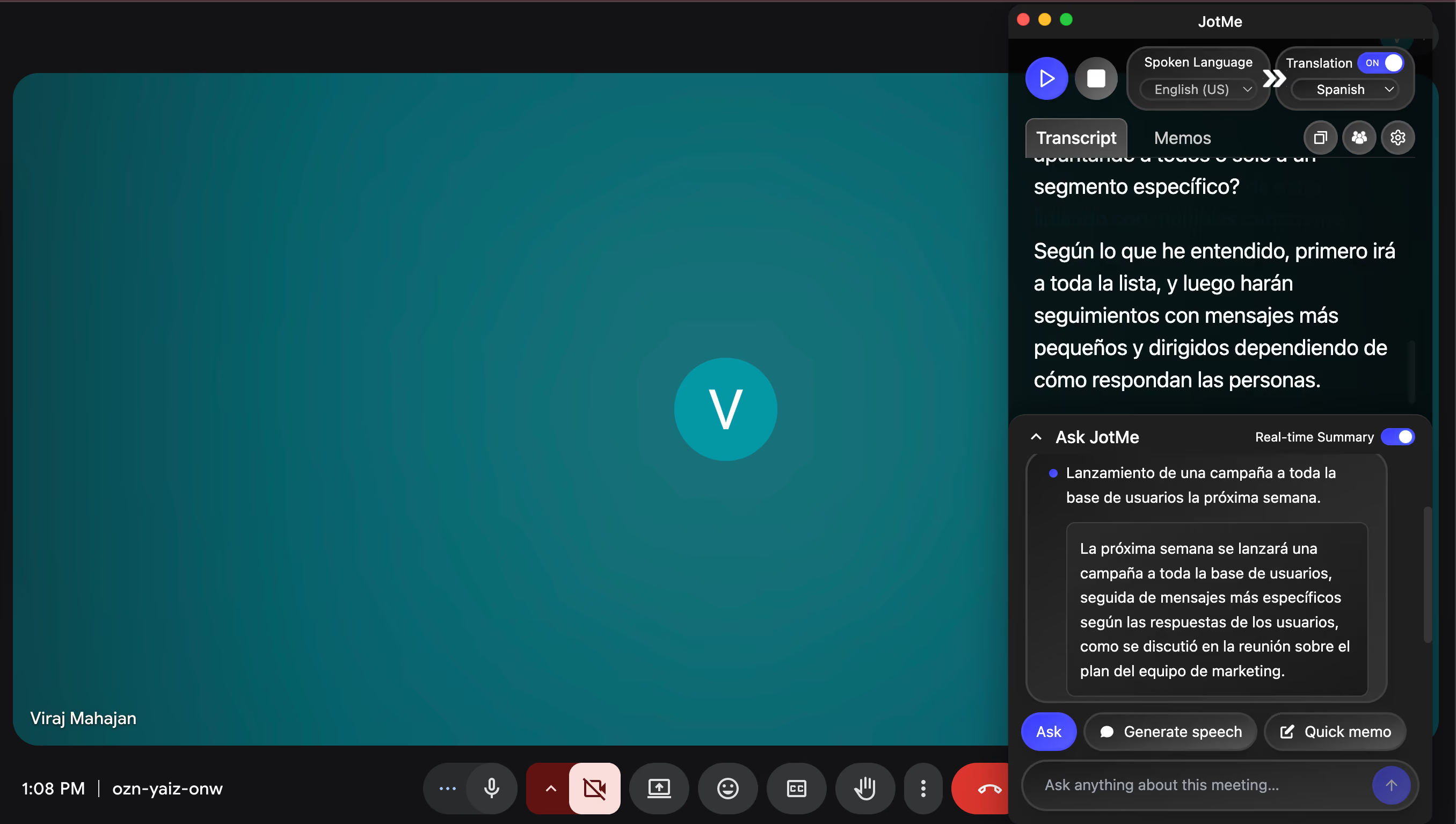
Contextual Understanding: Modern AI translation engines like JotMe use advanced speech recognition that understands intent and meaning. When someone in a product meeting says "we are planning a launch blast," JotMe is not going to provide the literal phrase; rather it is going to translate the concept.
Industry-specific Vocabulary: JotMe handles technical jargon in SaaS, finance, engineering, and marketing contexts with consistent accuracy. The translation engine adapts to the domain of the conversation and makes sure that there is nothing that gets lost in translation (pun intended).
Multilingual Simultaneous Support: JotMe simultaneously translates in 10 languages during the meeting. A human interpreter team would need 20 interpreters to cover the same range in a single meeting.
Post-meeting intelligence: Human interpreters leave when the meeting ends, but not JotMe. JotMe generates multilingual transcripts, AI-powered meeting notes, summaries, and action items that your team can reference, translate, and share after the call.
No behavioral change required: When a human interpreter is present, speakers unconsciously shorten their sentences, pause more frequently, and simplify their vocabulary. With AI running in the background, people speak naturally. The conversation flows the way it would if everyone shared a language.
Hidden Cost Nobody Talks About: Meeting Friction
Even when a company has the budget for human interpreters, the operational friction they introduce is a cost in itself.
For instance, let’s consider the scheduling dependency. Your meeting happens when the interpreter is available. For teams spanning Tokyo, London, and New York, finding a time slot that works for participants and interpreters across three time zones turns a simple scheduling task into a logistics puzzle.
Another example here would be having a spontaneous meeting. A quick 15-minute sync to resolve a blocker? Not if you need to book an interpreter 48 hours in advance. The blocker stays unresolved until the next scheduled session.
Another major hiccup for most of the large businesses are privacy and trust. An interpreter is a third party in your conversation. In sensitive discussions around M&A, product strategy, personnel changes, or client negotiations, the presence of an outside listener changes what people are willing to say. JotMe captures audio directly from your device. No bot joins the call. No third party listens.
Understand this, these friction points do not just affect individual meetings. Over weeks and months, they shape how teams communicate. Teams that depend on interpreters hold fewer cross-border conversations. They default to English-only meetings where non-native speakers participate at a disadvantage.
How to Get Started with AI Translation for Your Team
Switching from human interpreters to AI live translation does not require an organization-wide rollout. Most teams start small and scale once they see results.
Step 1: Evaluate JotMe’s Accuracy for Free
Download JotMe on Mac, Windows, or your phone. Sign up for the free plan and join your next multilingual meeting and let JotMe run alongside the conversation. The free plan gives you 20 minutes of translation, enough to evaluate accuracy in your specific context.
Step 2: Move to JotMe’s Pro or Teams Plan
Once you have seen how the translation handles your team's typical conversations, upgrade to Pro ($10/month for 200 minutes) or Premium ($15/month for 500 minutes) or Teams plan.
Step 3: Share Live Translation Across the Team With JotMe
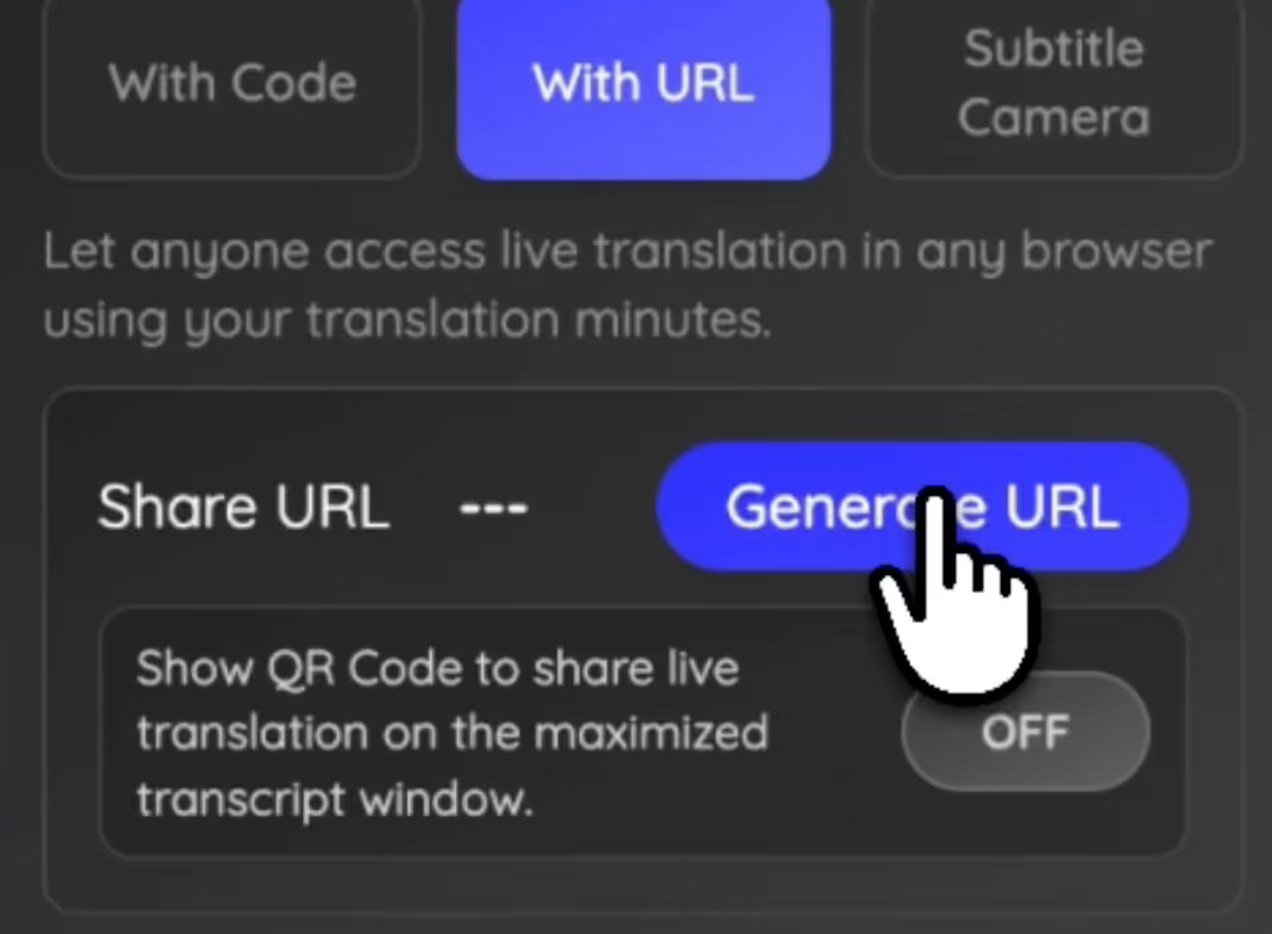
JotMe's share-translation-minutes feature lets you extend live translation access to teammates and clients who do not have a paid plan. Start a translated session and share the code using the URL or QR code. They get live translation, post-meeting notes, and summaries without needing their own subscription.
$350/Hour vs. $4.50/Hour: What to Choose for Your Multilingual Meetings
A few years ago, the conversation about multilingual meetings was about finding the right interpreter, but as we have entered the world where half of workflow is automated using AIs, the conversation about multilingual meetings is about whether you can justify spending $350 an hour on something that costs $4.50.
The accuracy gap for everyday business communication has closed. However, the cost gap has not; rather it has widened. A 10-person team spending $1,800 a year on JotMe gets 2,000 transcription minutes per user, automatic multilingual transcripts, AI meeting notes, and the freedom to schedule a cross-border call in two minutes instead of two weeks.
The same team spending that amount on human interpreters gets roughly five hours of simultaneous interpretation. So, what should you do? Well, we recommend starting with JotMe’ free plan today. See how effectively JotMe translates the meeting and how easy it is to use the AI insights post meeting. Once you are satisfied, get in touch with our team and avail the Teams plan for your multilingual global teams.
FAQ on AI Live Translation
Is AI translation accurate enough for business meetings?
Yes, AI translation is enough for standard business communication. JotMe's contextual translation engine understands industry jargon, speaker intent, and conversational nuance across 45+ languages. It is trained on business contexts and handles technical vocabulary in SaaS, finance, engineering, and marketing well.
How much does a human interpreter cost per hour in 2026?
The cost of a human interpreter varies widely. Staff interpreters average $24 to $34 per hour. Freelance in-person interpreters charge $45 to $150 per hour. Simultaneous conference interpreters in North America range from $150 to $400 per hour, and specialists in rare language pairs or high-stakes domains can charge $200 to $500+. These rates do not include equipment, platform fees, travel, or the cost of booking two interpreters per language pair for sessions over an hour.
Can AI replace human interpreters completely?
No, AI will not replace human interpreters completely. Human interpreters still hold the edge in legal proceedings, medical consultations, diplomatic negotiations, and creative exchanges. However, for most business scenarios, AI live translation tools like JotMe have already replaced the need for human interpreters. Daily meetings, client calls, all-hands sessions, training, and webinars are all well within AI's accuracy range.
What is the cheapest live translation tool for meetings?
JotMe offers the most accessible entry point. The free plan includes 20 minutes of live translation per month. The Pro plan at $10 per month covers 200 minutes, and the Premium plan at $15 per month covers 500 minutes. Competitors like Maestra start at $39 per month. Wordly uses event-based pricing that typically runs higher for recurring meeting use.
Does JotMe work with Zoom, Teams, and Google Meet?
Yes, JotMe works across Zoom, Google Meet, Microsoft Teams, Webex, Slack, Discord, and WhatsApp. It also supports in-person conversations through its mobile app. JotMe mobile app and desktop version captures audio directly from your device without requiring a bot to join the meeting, which means no host permissions are needed and your calls stay private.
How many languages can JotMe translate simultaneously?
JotMe supports up to 10 simultaneous languages in a single session using its multilingual transcription mode. The platform covers 45+ languages total on the desktop app. For a human interpreter team to match this range in a single meeting, you would need 20 interpreters.
Last updated on
July 29, 2026
Follow us on social media:
![JotMe — Is Google Translate Accurate? [2026 Test]](/_webflow-assets/0d0512afc7b037d74dff536f22fed08f.avif)