

Guides
Top 10 HR Tools for Diversity and Inclusion in Companies (Tested in a Live Onboarding Call)

Viraj Mahajan
May 25, 2026
.avif)
Why do most diversity and inclusion programs in enterprise companies fail to deliver measurable results, even when the budget keeps growing year after year?
The answer is simpler than most HR leaders want to admit. The tools operate in the wrong place. They measure outcomes after the fact instead of shaping the moments where inclusion is actually built or lost. Based on our research, we found out that three patterns show up across almost every enterprise rollout that underperforms:
- HR Tools that report on representation but never touch the daily meeting where a new hire goes silent
- Analytics dashboards that surface a problem six months after the employee who experienced it has already disengaged
- Annual training programs that change opinions inside the workshop, but nothing inside the workflow
The cost of this misalignment is no longer abstract. McKinsey's 2023 Diversity Matters Even More report shows companies in the top quartile for ethnic diversity outperform the bottom quartile by 39% on profitability, up from 36% in 2020, and the gap widens every year. The 10 HR Tools in this article address the gap at the layer where it actually exists, including the live meeting, the hiring panel, the manager's daily inbox, and the compensation review. For buyers comparing the best HR software, HR management software, or human resources software, each one earns its place by changing what happens in the workflow rather than producing a quarterly slide about it.
What is Diversity and Inclusion in the Workplace?
Diversity and inclusion in the workplace describe two connected ideas that enterprise HR teams keep collapsing into a single phrase. Diversity refers to the mix of identities and lived experiences inside a workforce, including gender, ethnicity, age, neurotype, disability, sexual orientation, religion, and socioeconomic background.
Whereas, Inclusion refers to the conditions under which those identities can actually contribute. A diverse and inclusive workplace creates room for every voice to shape decisions, beyond simply showing up on the headcount slide.
The distinction matters operationally because the HR Tools that drive each one differ. Representation analytics measure diversity. Live meeting translation, equitable hiring panels, and inclusive manager nudges measure and shape inclusion. Most enterprise rollouts buy the first category and forget the second, which is why diversity and inclusion in the workplace stalls inside companies that hit their diversity quotas without moving the inclusion needle.
What Are the Main Types of HR Tools for Diversity and Inclusion?
HR tools for diversity and inclusion fall into four operational categories, and enterprise procurement teams typically build the stack one category at a time rather than buying everything at once. The categorization below mirrors how most human resources software vendors, HR platforms, and HR software systems position their offerings, and it gives HR leaders a procurement shortcut when shortlisting the right HR product against a specific gap.
Communication and Collaboration HR Tools
Communication tools shape the daily interactions where inclusion either lands or breaks. Live translation platforms, accessibility-aware messaging apps, and meeting transcription services belong in this category. JotMe and Slack carry this layer in the stack, covered later in this article.
Hiring and Recruitment HR Tools
Hiring tools intervene at the point where most diversity gaps either form or get fixed. Inclusive job description writers, panel diversity schedulers, and structured interview platforms operate in this category. Textio, GoodTime, and HireVue cover this layer in the stack.
HR Analytics Tools and Reporting Platforms
HR analytics tools combine representation data with engagement, pay equity, and inclusion sentiment, and the best HR reporting tools surface that combined picture as board-ready output. Diversio, Culture Amp, and Syndio operate in this category, with each one addressing a distinct slice of the analytics surface for teams comparing an HR analytics tool or an HR recording tool.
Learning and Manager Enablement HR Tools
Manager training and real-time inclusion coaching belong in the learning category, which is where annual workshops get replaced by continuous interventions inside the workflow. LifeLabs Learning and Included AI cover this layer in the stack.
Which HR Tools Improve Communication for Multilingual Teams?
Communication is where most diversity and inclusion programs in enterprise companies quietly succeed or fail, often inside meetings that look perfectly fine on the surface. Non-native English speakers go quiet the moment the meeting pace accelerates, while deaf and hard-of-hearing employees lose context that auto-captioning fails to recover, and global hires across time zones inherit recordings nobody ever re-watches. The two HR Tools below address this layer directly, and they also show how HR tech tools and HR automation tools can work inside the live conversation itself, where inclusion is either built or eroded minute by minute.
JotMe: Real-Time Meeting Interpretation Built for Enterprise HR
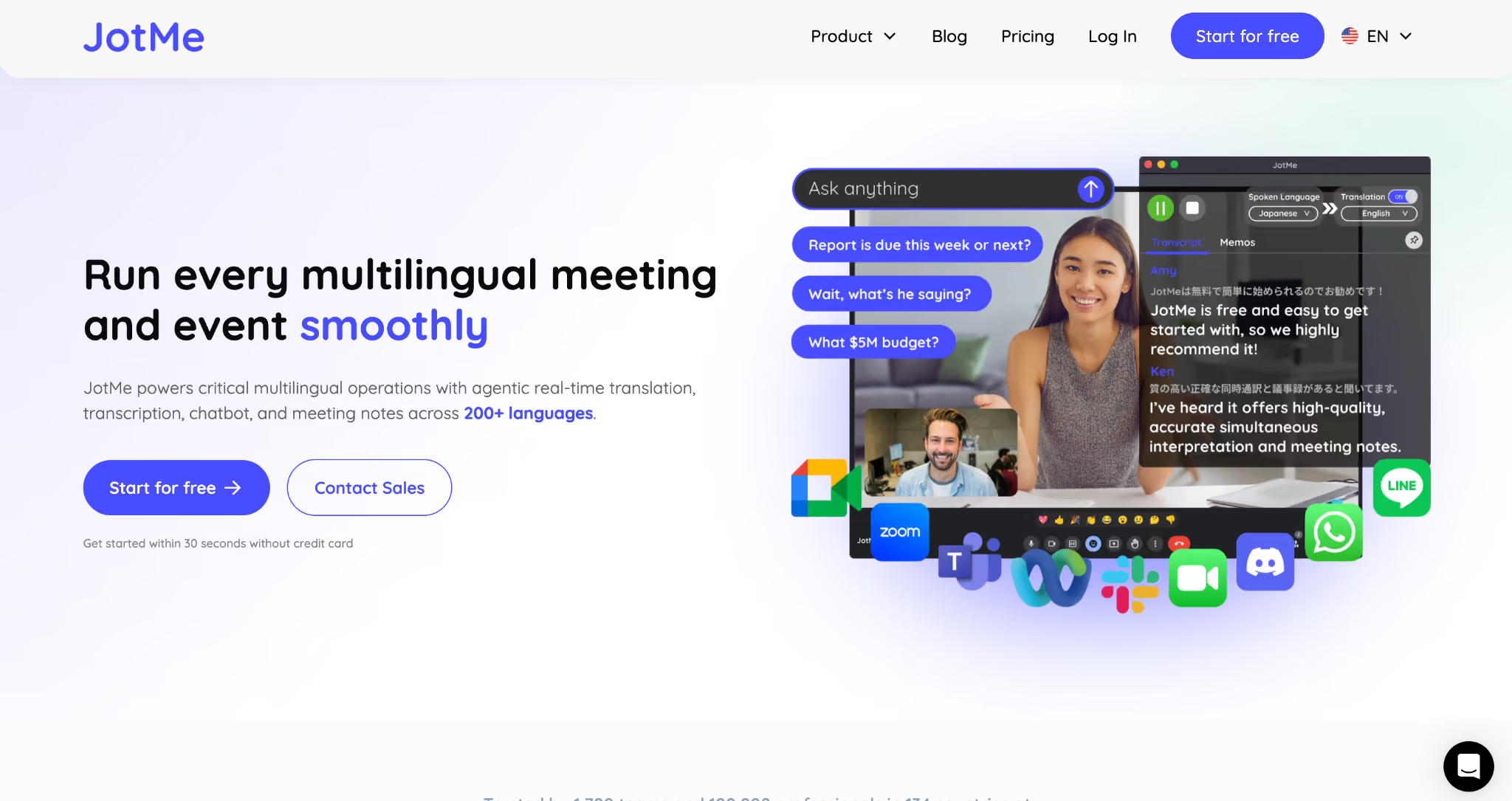
JotMe leads this list because it interprets live multilingual meetings in 200+ languages, while preserving the cultural register of what was actually said. JotMe joins a Zoom or Teams call through a no-bot architecture, which means it operates in the background without a visible participant alerting the new hire that they are being interpreted. Over 1,700 organizations run JotMe across global hiring, multilingual onboarding, and international team meetings. This makes JotMe a practical HR AI tool for global HR teams and one of the AI tools for HR professionals who need language support inside real workflows.
Where most voice-to-text translation tools deliver speed by stripping nuance, JotMe carries the politeness markers, the hesitation, and the cultural softness of a phrase across languages. That difference matters most when a new hire admits nervousness in their native language, because the manager hears the worry behind the words, not just a flat sentence stating that the meeting pace is fast.
How Does JotMe Handle a Multilingual Onboarding Call?
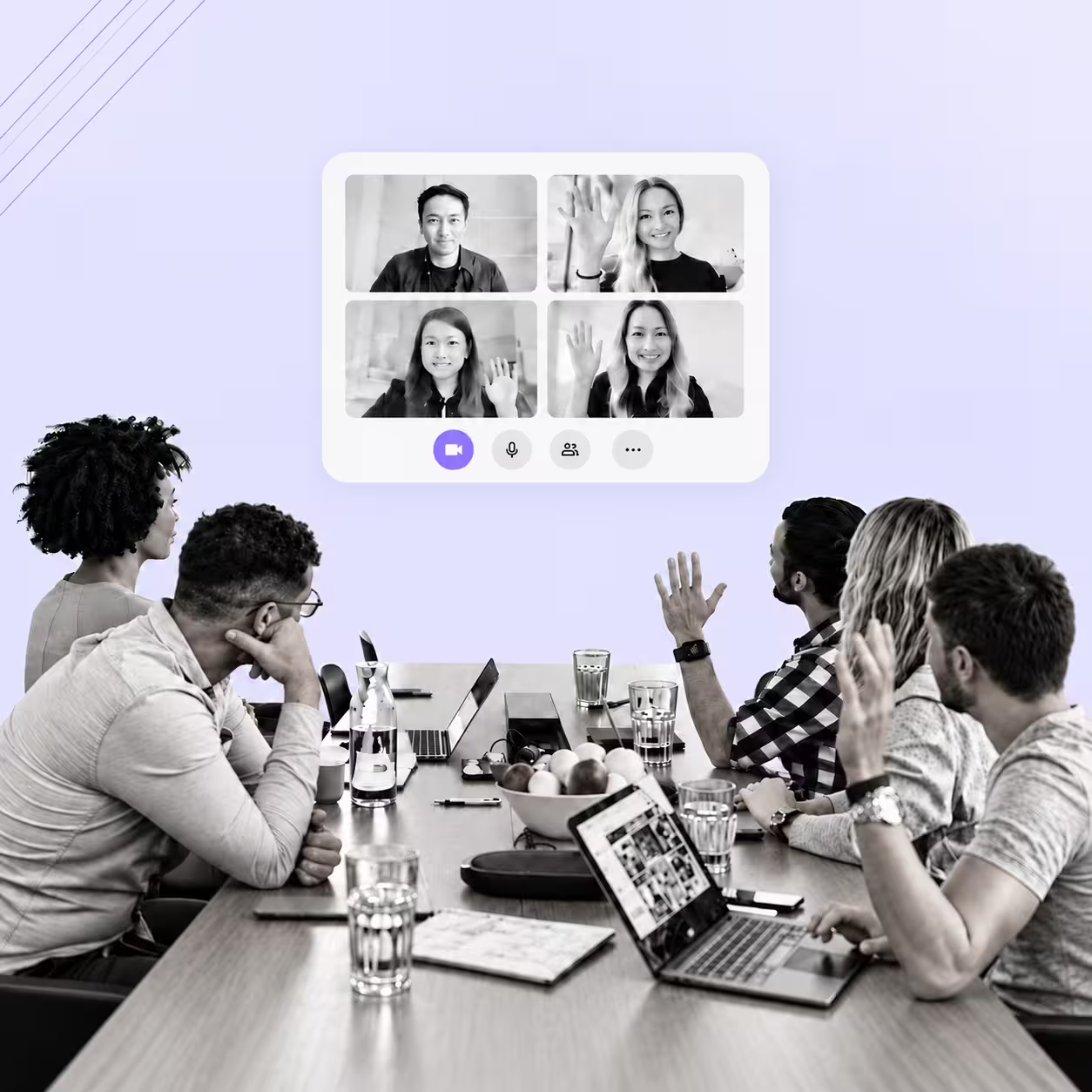
To put JotMe through a real enterprise scenario, we ran it during an onboarding session where an HR manager in English met a new hire from China who responded in Mandarin throughout the call. JotMe interpreted every line live and held the cultural register intact, and the trimmed transcript appears below with each Mandarin line followed by its English interpretation:
HR Manager: Good morning. Welcome to the company. I will walk you through onboarding today.
JotMe (live English): Hello. Nice to meet you. I am a bit nervous today because this is my first time joining an international company.
HR Manager: Totally understandable. First days are always a little overwhelming.
JotMe (live English): It went okay, but the traffic this morning was really terrible. I almost ran late.
HR Manager: Your department works closely with teams in Europe and Southeast Asia, so you will probably attend international meetings often.
JotMe (live English): My English listening is still adjusting. What should I do if the meeting pace is too fast?
HR Manager: Do not worry. Many employees here are multilingual. Transcripts get generated automatically, too.
JotMe (live English): That is really convenient. My previous company did not have this.
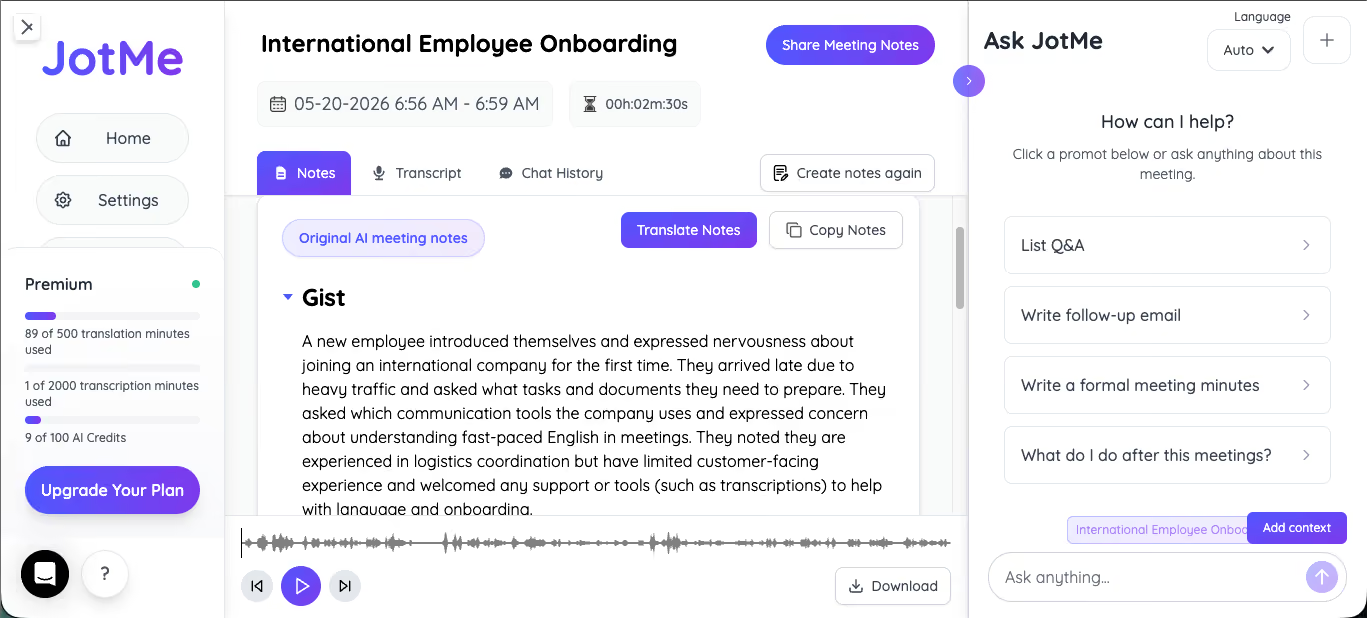
As you can see from the above transcript and screenshot, there were a total of three concerns that emerged through the new hire's Mandarin responses:
- Day-one nervousness
- Near-late arrival, and
- English listening needed time to adjust to the international meeting pace.
JotMe carried each of these issues across into English with the meaning intact. The HR manager responded with warmth at every turn because the platform delivered context, and not a flattened literal translation.
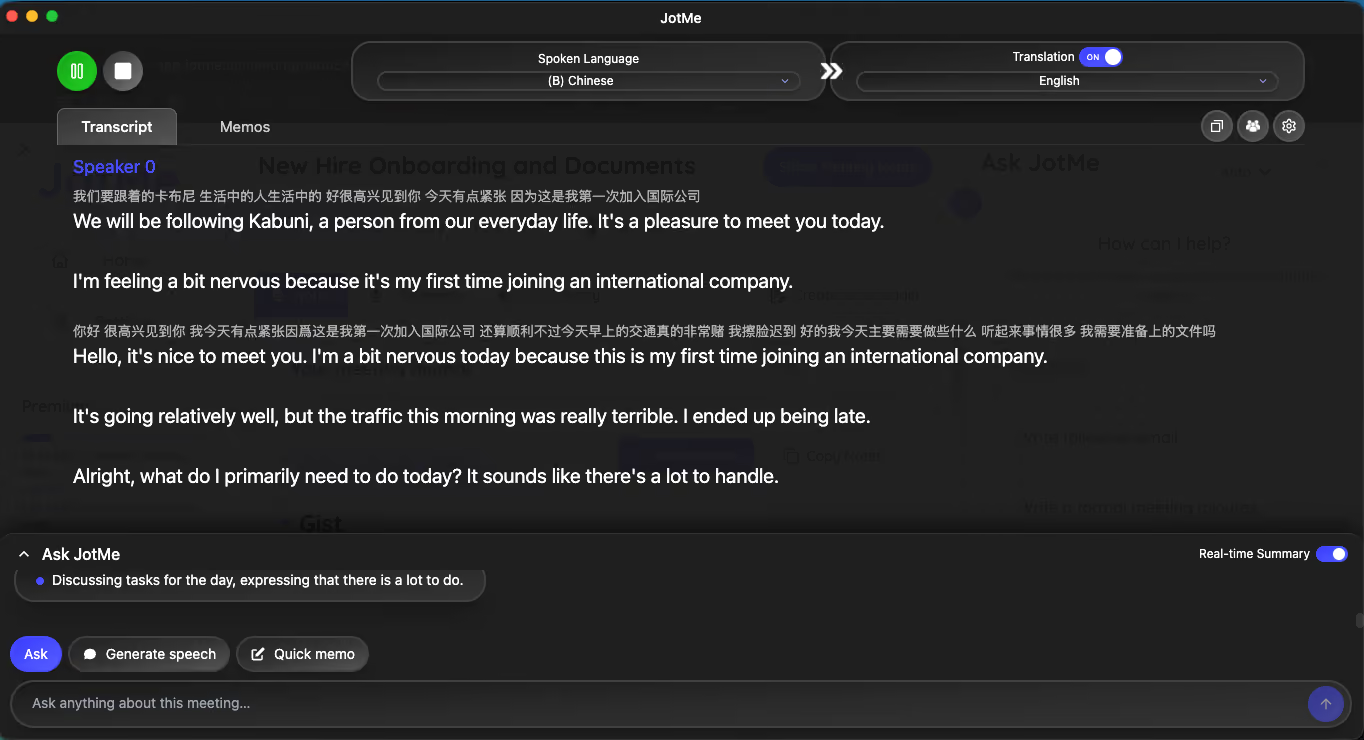
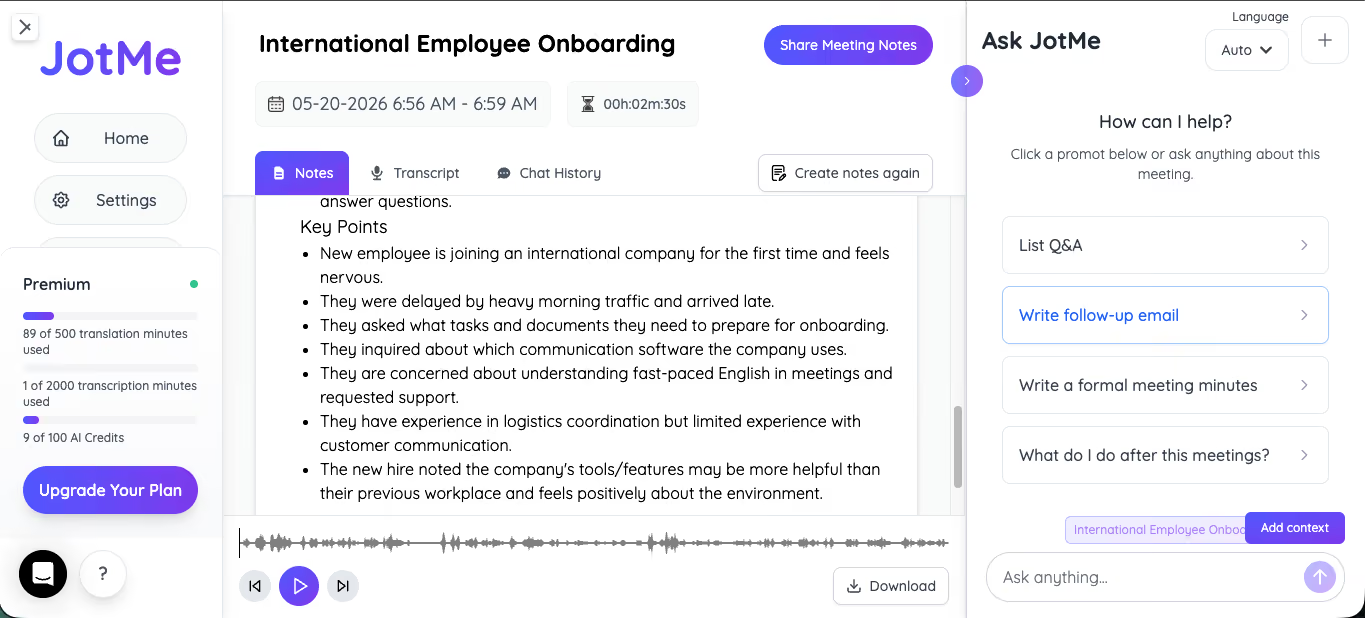
What JotMe Delivers After the Call
JotMe works as a real-time AI note taker and HR automation tool, producing four outputs the moment a call ends:
- Bilingual transcripts with Mandarin and English aligned side by side, ready to share or archive
- AI meeting notes covering the gist, key points, and recommended next steps
- An Ask JotMe panel that surfaces insights as prompts, including "Concerned about missing documents to prepare" and "Question about communication software used by the company."
- One-click follow-up email drafts in either language, so the HR manager could send a recap in Mandarin without opening of the best translation services.
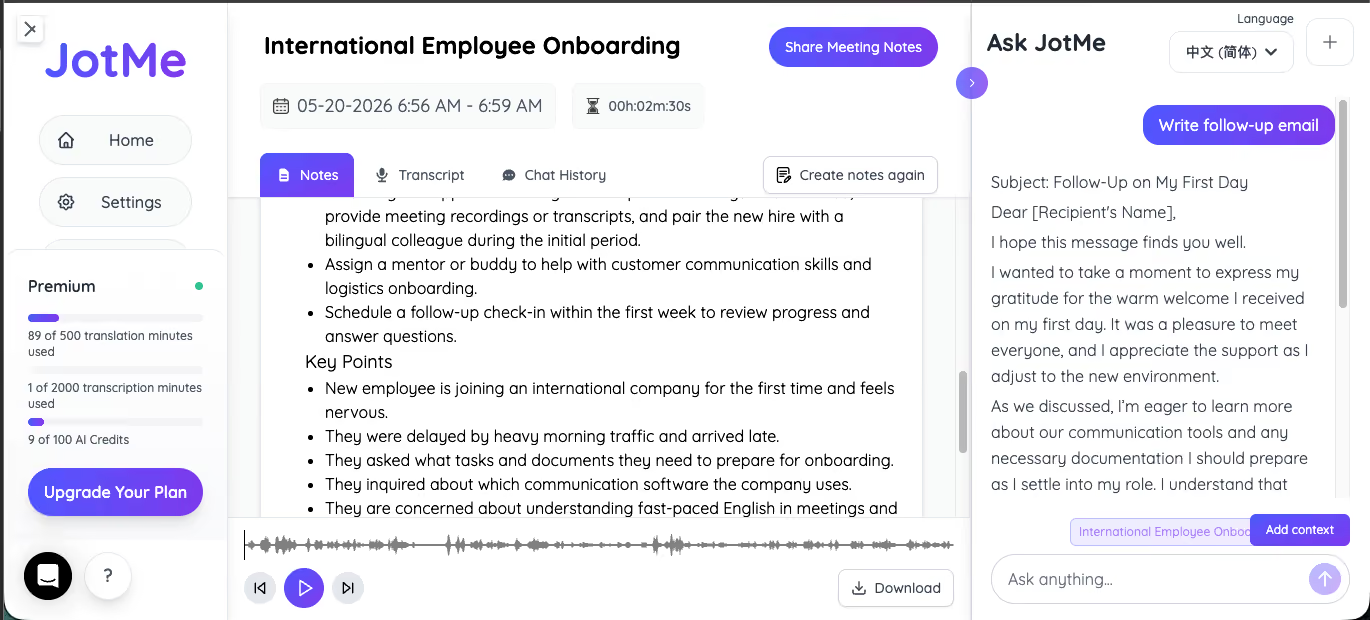
HR managers running 10 to 15 onboarding calls a week cannot hold every nuance in memory. JotMe converts the nuance into an action item, surfaced inside the post-call panel rather than buried inside a transcript that no one reopens.
JotMe Teams Plan: Enterprise Pricing
The JotMe Teams plan starts at a minimum of 2 users with 200 translation minutes per user, and scales up to 200 users and 200,000 minutes for larger enterprises. As an example, a 5-user team with 5,000 live translation minutes per month, equivalent to roughly 83 hours of interpreted conversation, comes out to $3,300 per year, billed at $275 per month annually, after the 50% annual discount. Pricing remains custom across the range, based on user count and translation minute volume.
HR teams running weekly leadership meetings, multilingual onboarding, and quarterly all-hands across a global workforce typically consume between 2,000 and 5,000 minutes per month. The Teams plan covers that range with headroom for organic growth.
Key Features
- Live interpretation in 200+ languages: Two-way audio interpretation that runs inside Zoom, Teams, and Google Meet without modifying meeting settings.
- No-bot architecture: JotMe offers a bot-less real-time translation, so participants never see an interpretation bot in the participant list.
- Contextual nuance engine: Preserves politeness markers, hesitation, and cultural register across languages rather than producing literal word-for-word output.
- Ask JotMe insight panel: Surfaces specific concerns and action items as conversational prompts after the call ends.
- Bilingual transcript export: Side-by-side language transcripts available for archiving, sharing, or compliance review.
- One-click multilingual email drafts: Generates follow-up email content in either language directly from the call summary.
Slack: The Daily Communication Layer for Inclusive Teams
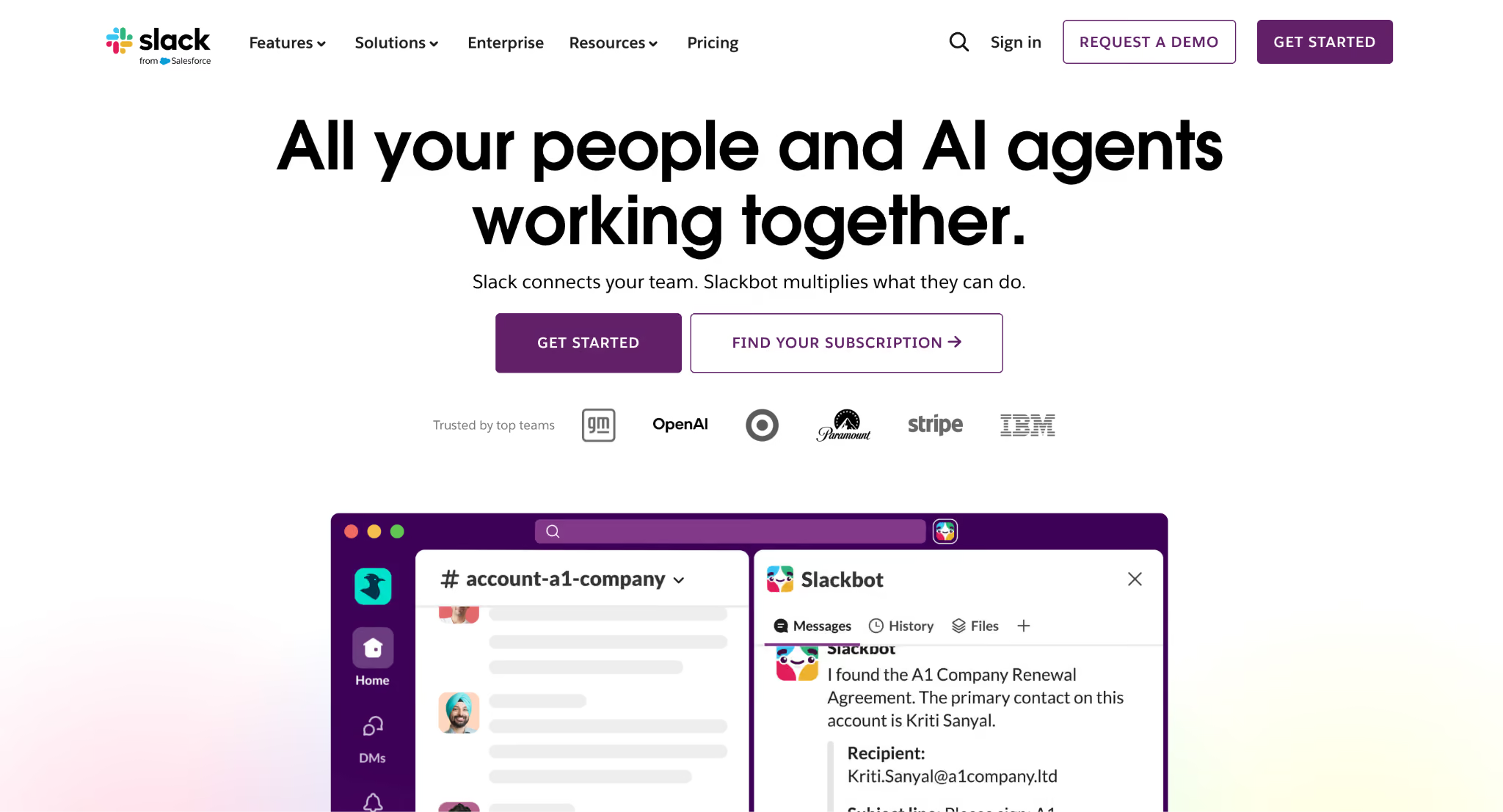
Slack shapes daily communication across distributed and multilingual workforces, where the small inclusion choices inside the platform compound into something larger. Slack Pronouns in profiles establish identity from the first message, and accessibility settings cover screen readers and keyboard navigation across the workforce. No single feature carries the weight alone, but together they change how a new hire experiences week one. According to Glassdoor's D&I workplace survey, 76% of job seekers say a diverse workforce is an important factor when evaluating offers, and Slack's visible inclusion settings signal that culture long before the new hire ever joins a meeting.
Slack also functions as the integration hub for several other HR Tools in this article. Included.ai, an AI coaching layer that surfaces inclusion nudges inside daily workflows, delivers those nudges through Slack, and Culture Amp, the enterprise engagement and inclusion survey platform, pushes pulse surveys directly into channels. When a Huddle happens across two languages, JotMe transcribes the Slack huddle in real time right from the system’s audio, which turns a spontaneous Slack conversation into something that a non-native English speaker can join without preparation.
Key Features
- Pronouns and identity controls: Profile-level pronoun fields and identity settings that normalize identity disclosure across the workforce.
- Huddles: Lightweight audio rooms that recreate spontaneous hallway conversation for distributed teams.
- Accessibility controls: Screen reader support, keyboard navigation, high-contrast themes, and configurable notification behavior.
- Integration ecosystem: Direct integrations with Included.ai, Culture Amp, JotMe, and most enterprise HR Tools in this article.
- Channel governance controls: Admin tooling to prevent invite-only channels from becoming exclusion vehicles inside distributed teams.
Which HR Tools Reduce Hiring Bias in Enterprise Recruitment?
Hiring is where diversity & inclusion in companies either takes shape or quietly breaks early, often before a single resume reaches a recruiter. A biased job description filters candidates from the start, while a non-diverse interview panel produces a consensus that mirrors itself, and rushed scheduling defaults to whoever is available rather than whoever is right. The three HR tools below act on these inflection points directly, which determines the words that get written, the people in the room, and the questions that get asked.
Textio: AI That Catches Biased Language Before You Hit Publish
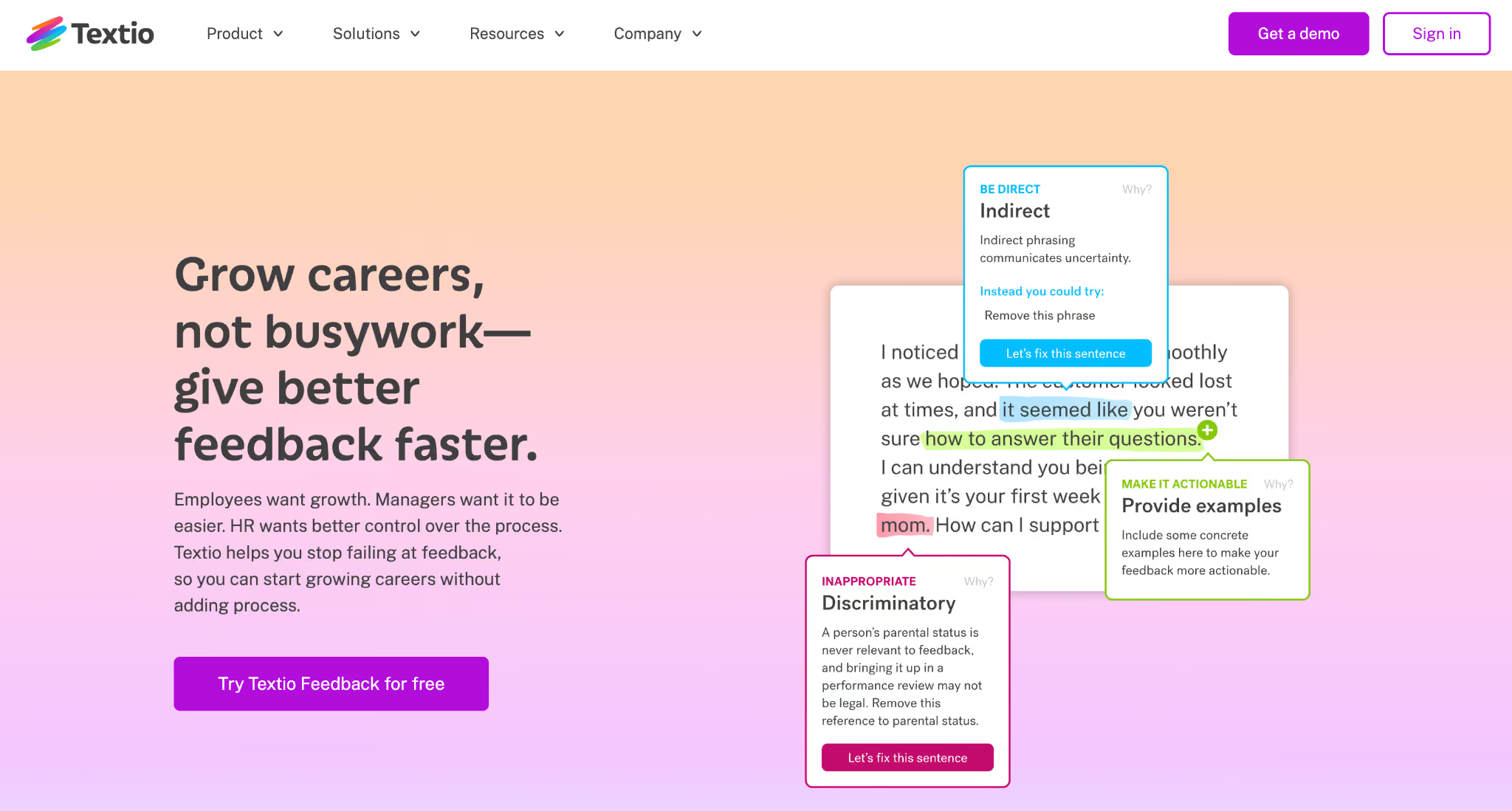
Textio rewrites job copy in real time so recruiters catch exclusionary phrasing before a job post goes live. The platform draws on outcome data from billions of historical job posts, which means the bias flags map to actual hiring results rather than a static list of banned words. Enterprise HR teams that roll Textio across a recruiting function typically observe measurable shifts in applicant pool diversity within a quarter.
Textio extends beyond job posts into performance reviews and recruiting emails, where Textio earns its place as one of the AI tools for remote teams and HR worth standardizing across an entire hiring organization. Enterprise procurement teams shortlisting AI tools for HR for diversity & inclusion in companies almost always include Textio in the first round.
Key Features
- Real-time bias detection: Flags gendered language, exclusionary phrasing, and patterns correlated with reduced applicant diversity inside the editor.
- Outcome-data scoring: Scoring engine trained on billions of historical job posts and downstream hiring results.
- Cross-document coverage: Bias detection extends to performance reviews, recruiting emails, and internal communications.
- Team-level analytics: Dashboards showing how individual recruiters and teams shift their writing patterns over time.
- ATS integration: Plugs into major applicant tracking systems to close the loop between job copy and hiring outcomes.
GoodTime: Interview Scheduling That Builds Diverse Panels Automatically
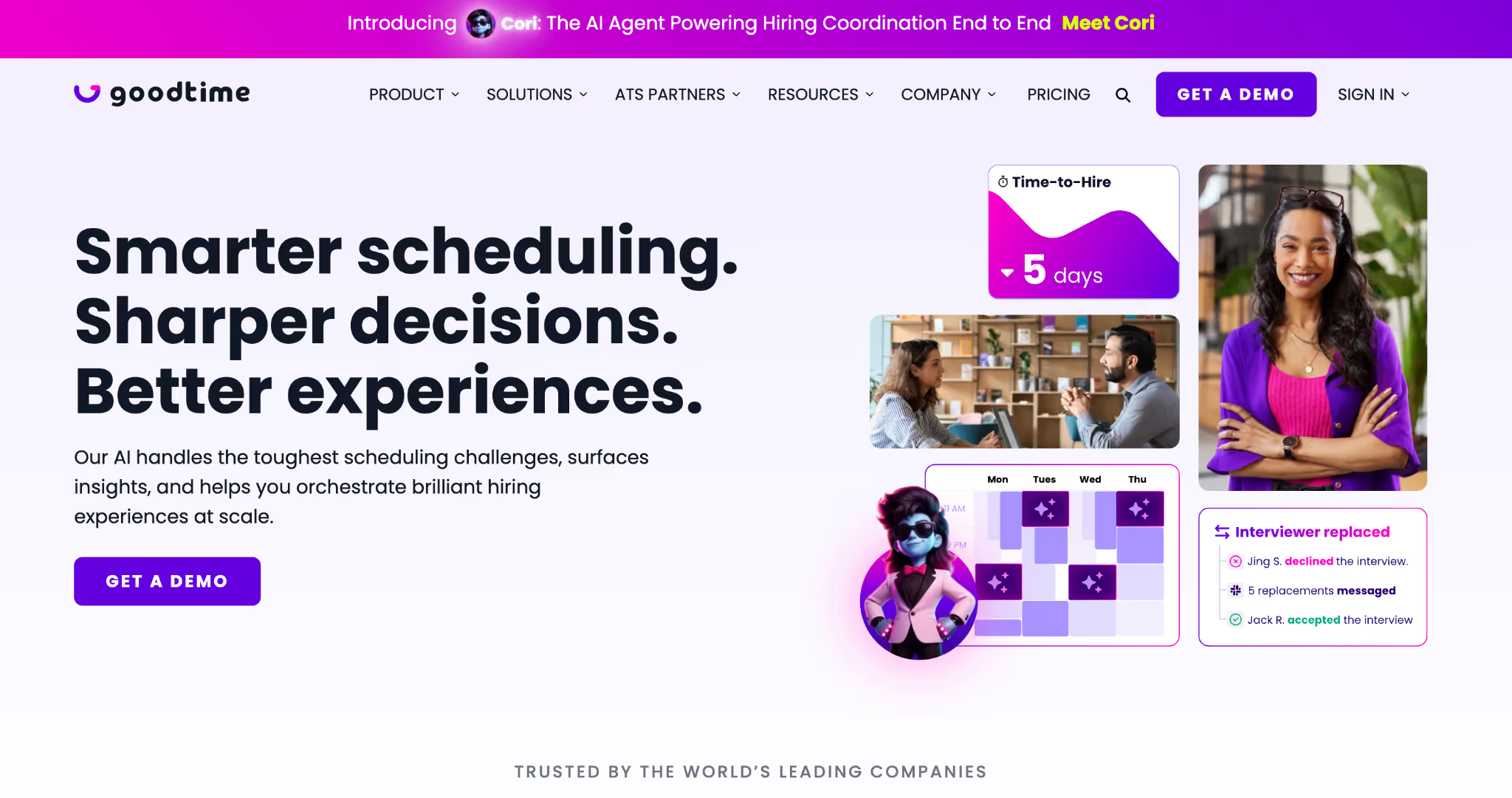
GoodTime automatically constructs interview panels that meet the diversity parameters set by the HR team, addressing the most widely documented bias in candidate evaluation. When interview panels look demographically similar to one another, they tend to favor candidates who match that pattern, and most enterprise recruiting teams know this is happening but lack the operational capacity to fix it.
By converting panel diversity from an intent into a scheduling default, GoodTime removes the most common reason diverse panels fail to materialize in the first place, which is that nobody had the time to assemble one manually.
For enterprise HR teams running high-volume hiring, GoodTime ranks among the strongest AI tools for HR in the operational stack because the platform converts a policy line in a DEI deck into an actual default inside the recruiter's calendar. It also fits the HR automation tools category because panel diversity becomes a scheduling rule rather than a manual recruiter reminder.
Key Features
- Panel diversity logic: Configurable rules that prevent non-diverse panels from forming as a default behavior.
- Interviewer load balancing: Distributes interview workload across the available pool to prevent burnout on a small subset of interviewers.
- Candidate experience tracking: Surveys and analytics covering candidate-side experience across the interview cycle.
- ATS integration: Connects directly with Greenhouse, Lever, Workday, and most enterprise applicant tracking systems.
- Reporting layer: Panel composition reports that feed into HR Reporting Tools workflows for board-level visibility.
HireVue: Structured Interviews Backed by Validation Research
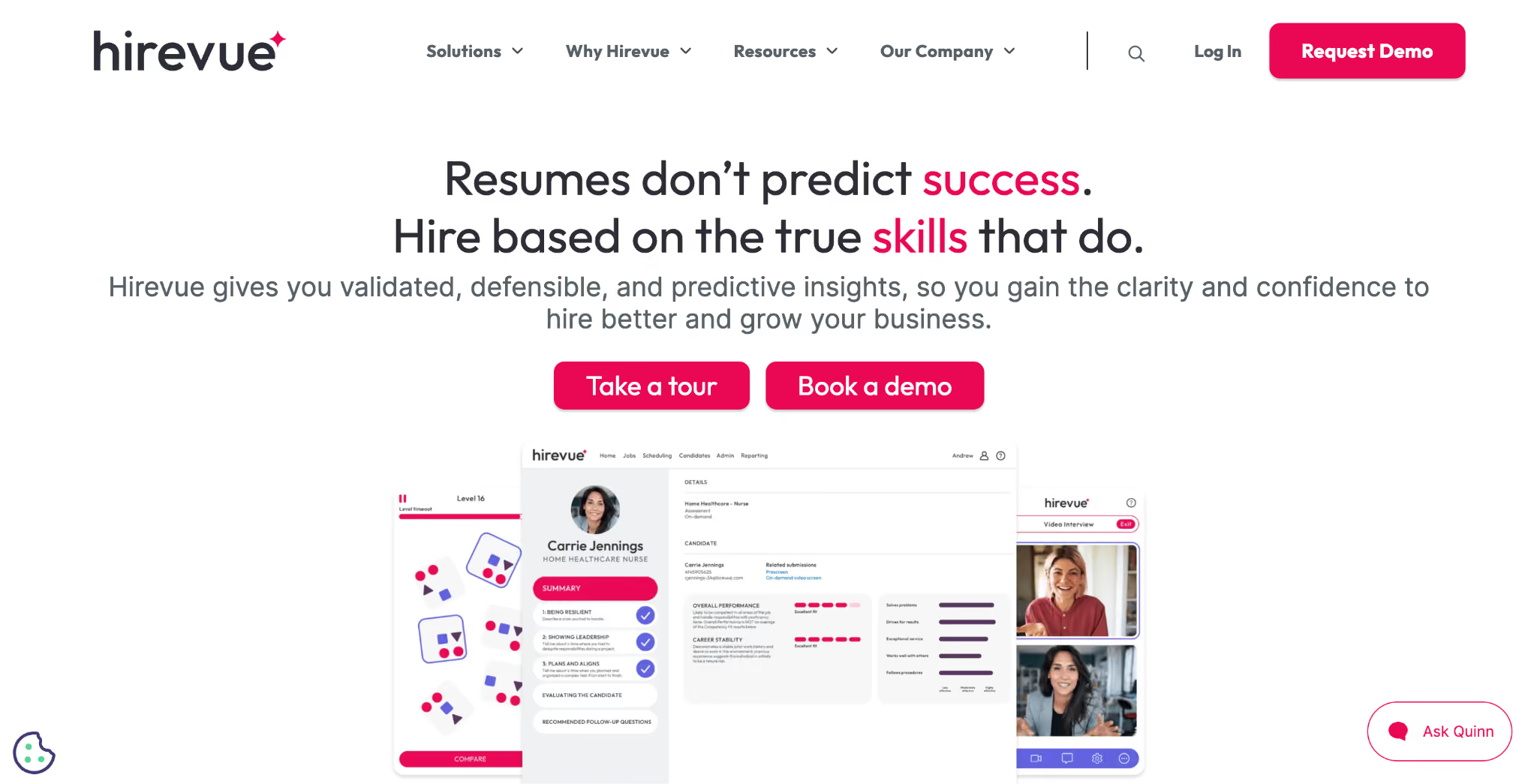
HireVue gives every candidate the same questions, in the same order, scored against the same rubric. That consistency removes the most common source of hiring bias, which is interviewers making up the criteria as they go and remembering the candidates they personally connected with. Two candidates with similar qualifications now compete against the same standard rather than against whichever standard the interviewer assembled that morning.
HireVue also pulled facial analysis from its assessment models in 2021 after independent audits raised concerns, which is the kind of move enterprise procurement teams pay attention to. HireVue stands among the AI Tools for HR that respond to bias audits rather than burying the findings, and decision-makers comparing the best AI tools for HR or HR assessment tools notice that right away.
Key Features
- Structured interview framework: Question libraries and scoring rubrics validated against job-relevant performance criteria. HireVue serves as the structured-interview HR tool in most enterprise hiring stacks.
- Asynchronous video interviewing: Recorded video responses that allow distributed teams to review candidates outside of live scheduling.
- Job-relevant assessments: Library of cognitive, behavioral, and game-based assessments with adverse-impact testing documentation.
- Interviewer calibration tools: Training and scoring-consistency tools for interviewers across distributed hiring teams.
- Audit transparency: Public bias audit documentation and a history of removing features that failed independent review.
Which HR Analytics Tools Measure Diversity & Inclusion in Companies?
Most diversity & inclusion efforts in companies stall at measurement, where data piles up and decisions never follow. Demographic data lives inside the HRIS, while engagement surveys land twice a year and rarely connect back to it, and the gap between representation and lived experience stays open quarter after quarter. The three HR analytics tools below fire action triggers when thresholds are crossed, which sets them apart from the dashboards that produce another quarterly slide nobody reads and from broad HR software tools that only store employee records.
Diversio: HR Analytics Tool That Benchmarks You Against Your Industry
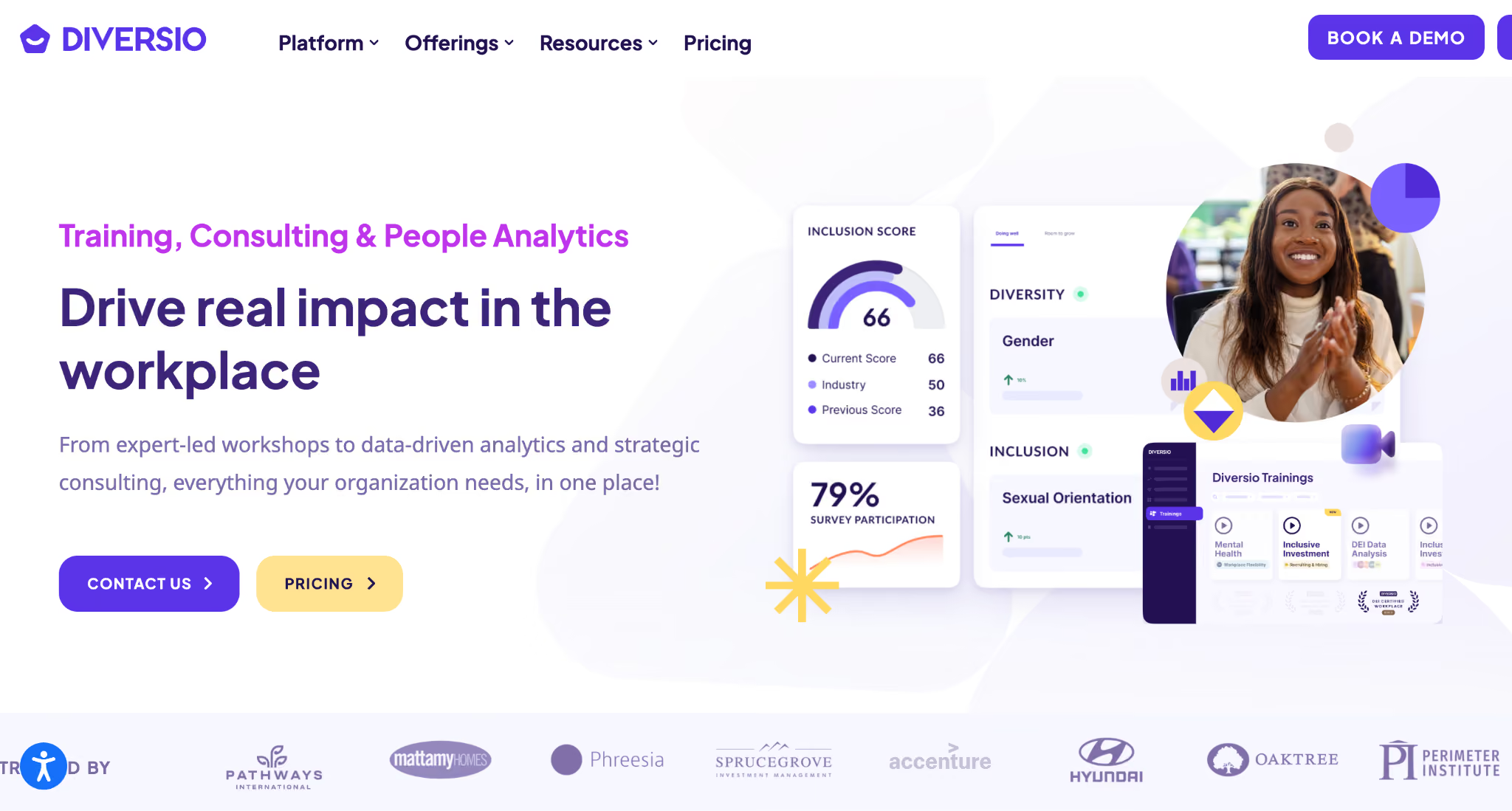
Diversio combines representation data with employee experience scores, then benchmarks the combined picture against industry peers. Most HR analytics tools stop at representation, which only tells you who is in the room. Diversio adds the inclusion sentiment layer, which tells you whether the people in the room feel like they belong. That combination earns Diversio its place among the Best tools for HR analytics for enterprise HR teams reporting to a board.
Diversio also functions as one of the AI tools for HR worth shortlisting for analytics-heavy enterprises running diversity & inclusion in companies at scale. The recommendation engine reads the patterns in your own DEI data and tells you what to fix next. If the data show that women in your engineering org are leaving within 18 months at twice the rate of men, the engine surfaces that retention gap and points to the specific interventions linked to it, such as manager training on that team, exit interview reviews, or compensation analysis. Most analytics tools stop at flagging the gap, which leaves the HR team to figure out what to do about it on their own.
Key Features
- Cross-company benchmark library: Compares your DEI metrics against peer companies across industries and geographies.
- Inclusion sentiment scoring: Employee-experience layer that goes beyond representation counting.
- AI recommendation engine: Surfaces specific interventions tied to the data patterns inside your organization.
- HRIS integration: Connects with Workday, BambooHR, SAP SuccessFactors, and other enterprise HR systems.
- Board-ready HR Reporting Tools: Pre-built report templates designed for executive and board-level review.
Culture Amp: Engagement Surveys With Inclusion Built In
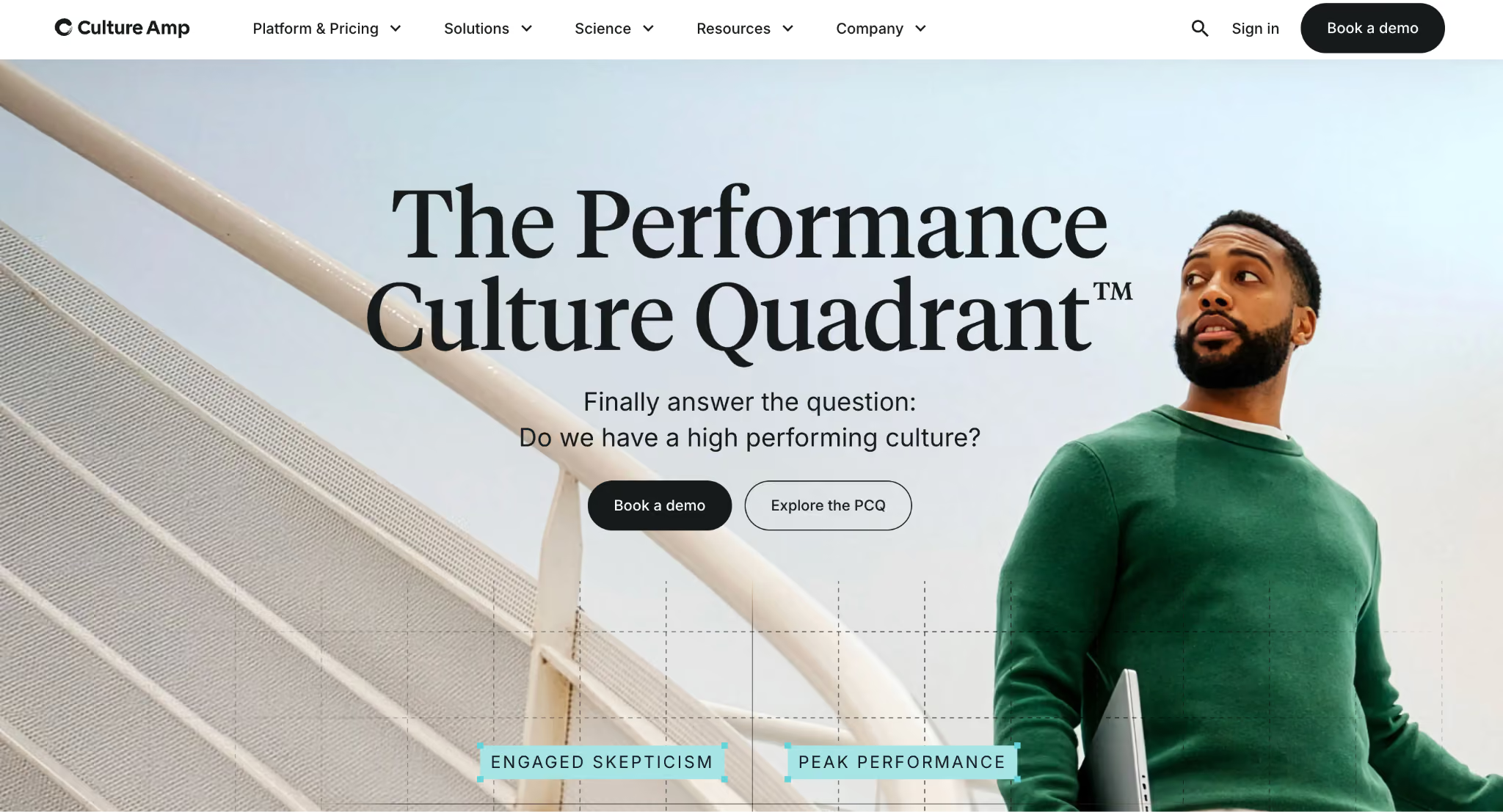
Culture Amp runs engagement and inclusion surveys backed by a research-validated question library. The People Science team designs every question against published organizational research, which means an inclusion score from Culture Amp holds up against the academic literature, rather than only against vendor claims.
For enterprise HR teams, Culture Amp ranks among the Best tools for HR analytics in the engagement category because the platform produces team-level inclusion scores, manager dashboards, and longitudinal trend reports that plug cleanly into HR reporting tools workflows. Cloverpop's research on 600 business decisions across 200 teams found that inclusive teams make better decisions 87% of the time and reach those decisions twice as fast in half as many meetings. Culture Amp gives an HR team the visibility to identify which teams operate that way and which ones need intervention.
Key Features
- Research-validated question library: Inclusion and engagement questions designed against published organizational research.
- Team-level scoring: Inclusion scores broken down by team, manager, and demographic segment for granular action planning.
- Manager dashboards: Direct-manager-level visibility into engagement and inclusion data, with recommended actions.
- Longitudinal trend reporting: Year-over-year tracking that connects engagement intervention to outcome change.
- Performance integration: Engagement data ties into performance and development workflows inside the same platform.
Syndio: Pay Equity Analytics Built for the Regulatory Curve
Syndio is the pay equity platform every enterprise HR team needs operational before June 7, 2026, when the EU Pay Transparency Directive takes full effect across EU member states. From that date, employers with 150 or more workers will need to start reporting their gender pay gap from 2027 onwards, using their 2026 compensation data as the baseline. Non-compliance carries fines, compensation requirements, and wage underpayment recovery, which means Syndio's statistical pay equity analyses are the layer that holds up under regulatory review.
US enterprises operating under state pay transparency laws in California, Colorado, New York, and a growing list of others face the same exposure. The Syndio remediation modeler identifies pay gaps and then models the cost and impact of different remediation paths, which gives compensation teams a way to act on the data rather than only reporting it. Pay equity remains one of the most measurable angles of diversity & inclusion in companies, and Syndio bridges that data into operational decision-making rather than producing pure compliance documentation.
Key Features
- Statistical pay equity analysis: Regression-based pay gap detection that controls for legitimate compensation drivers.
- Remediation modeling: Cost and impact modeling for different remediation paths before executing any adjustments.
- Regulatory compliance reporting: Pre-built reports for the EU Pay Transparency Directive, US state pay laws, and other jurisdictions.
- Ongoing pay monitoring: Real-time monitoring that catches new pay gaps as compensation decisions get made.
- HRIS and compensation system integration: Connects with Workday, ADP, and other enterprise compensation systems for live data feeds.
Which HR Tools Train Managers in Inclusive Leadership?
Annual diversity training does not change behavior, and the research on that point has been settled for over a decade. Workshops shift opinions inside the room, while managers return to the same email threads, the same performance review forms, and the same hiring conversations that quietly reinforce the patterns the training was meant to address. The two HR Tools below replace the one-time workshop with continuous interventions, which target the management layer where diversity & inclusion in companies either compounds or evaporates.
LifeLabs Learning: Live Cohort Training That Changes Manager Behavior
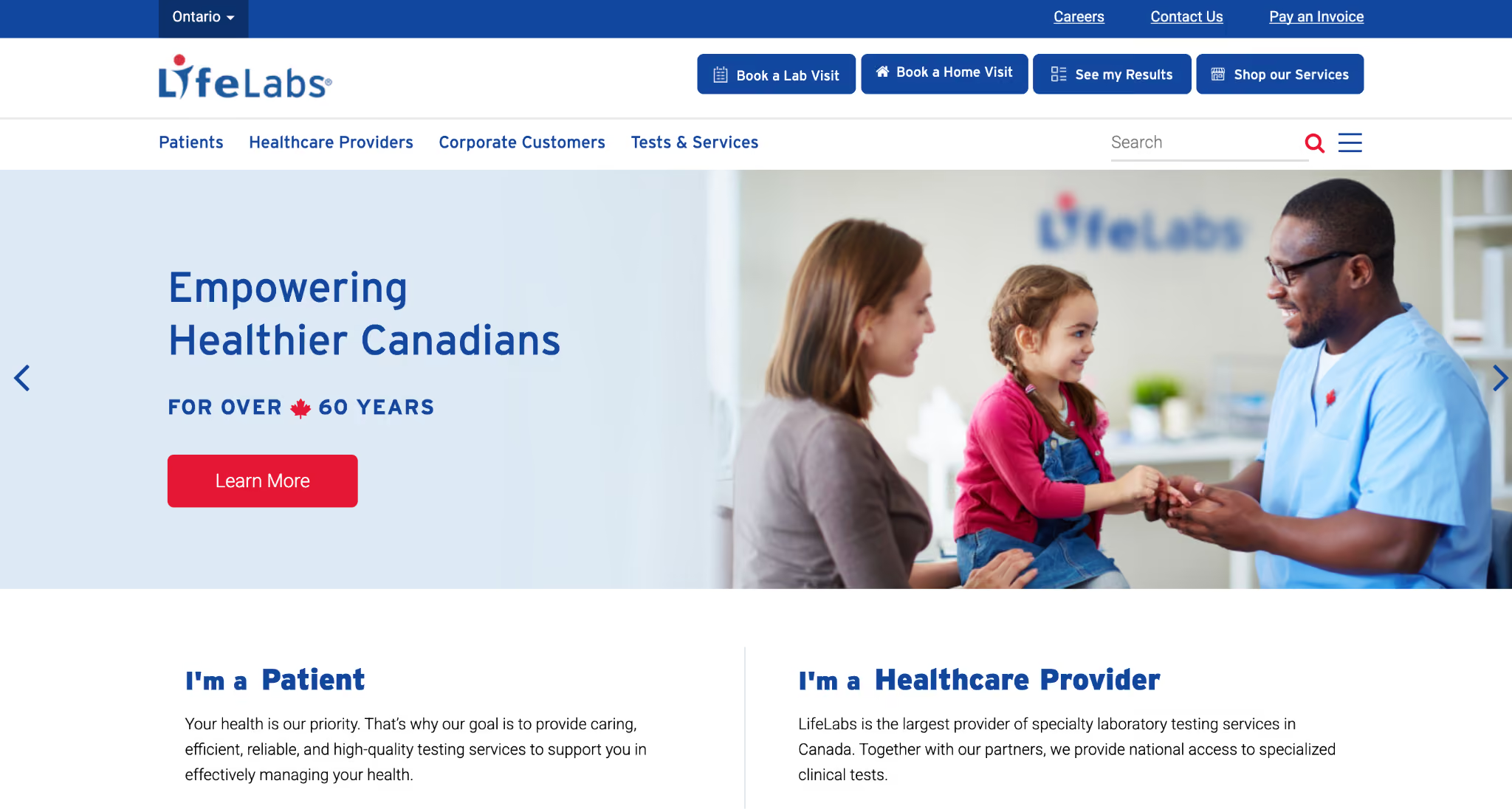
LifeLabs Learning runs live cohort-based skill labs for managers, with a curriculum built around specific inclusive leadership behaviors such as giving feedback equitably, running meetings where every voice gets heard, recognizing privilege patterns, and building psychological safety. Live cohorts produce higher behavior change than asynchronous video libraries because managers practice the skill inside the session and receive peer feedback in real time.
For enterprise L&D teams, LifeLabs embeds inclusive leadership directly into the management layer, which determines whether diversity & inclusion in companies' efforts compound or stall.
Key Features
- Live cohort sessions: Small-group interactive labs led by certified facilitators rather than recorded video content.
- Inclusive leadership curriculum: Skill labs covering equitable feedback, inclusive meeting facilitation, and psychological safety.
- Peer practice format: Managers practice skills inside the session and receive real-time peer feedback.
- Behavior-change measurement: Pre and post-assessments that measure actual skill application, not just session completion.
- Enterprise rollout support: Dedicated program managers for global enterprise deployments across multiple regions.
Included AI: AI Coaching That Catches Bias in the Moment
Included AI, now acquired by Phenom, delivers inclusion nudges directly inside Slack and email, in the exact moment a manager writes a performance review or makes a hiring decision. That timing is the entire point. The gap between annual inclusion training and the daily moments when bias plays out is where most DEI programs fail, and Included AI closes it by working within the tools managers already use.
Among the best AI tools for HR in the inclusion category, Included AI shares a philosophy with JotMe. Both platforms operate at the daily-touch level. Both intervene within the workflow rather than producing a post hoc report. Enterprise teams building serious diversity & inclusion in companies' stacks usually pair the two.
Key Features
- Real-time AI nudges: Inline inclusion coaching delivered inside Slack messages, emails, and document editors.
- Performance review coaching: Detects biased language inside performance reviews before the review reaches the employee.
- Hiring decision support: Surfaces inclusion considerations during candidate evaluation conversations.
- Calibrated nudge frequency: Adjustable nudge cadence per manager to prevent coaching fatigue across the workforce.
- Manager-level analytics: Tracks individual manager improvement on inclusive behavior over time.
How Do the 10 HR Tools Map Across Categories and Use Cases?
The matrix below organizes all 10 HR Tools by category, primary use case, starting price, and key feature. Use it as the shortlist filter before deeper procurement evaluation on any single HR software comparison. Every enterprise procurement conversation about diversity & inclusion in companies starts with this view.
How Do You Roll Out HR Tools for Inclusion Without Wasting Budget?
Start with the tools your team will actually use during the workday, then add the ones that measure what happened. JotMe and Textio belong in that first group because they work within the meeting or the job post, where inclusion either lands or gets lost. Diversio and Culture Amp come next, once there is something real to measure. The five rules below walk through the full sequence, which is how enterprise HR teams keep the rollout inside budget while evaluating HR management tool options.
Start With the Daily-Workflow Layer Before the Dashboard
Build the tools your team uses every day before you buy the ones that report on them. Most enterprise HR teams reverse this order because the board asks for dashboards first, but the sequencing breaks the whole logic of the rollout. JotMe’s Agentic AI for live translation inside a meeting and Textio inside a job post change what actually happens that day, which gives the dashboards something real to measure later. Once the daily workflow layer is in place, the analytics layer on top of it actually tracks behavior that has shifted.
Test HR Tools in a Real Workflow Before Buying
Run a 30-day pilot inside a real workflow before signing the contract, because vendor demos only show you the best case. Test JotMe against a real onboarding call, GoodTime against an actual interview panel, or Textio against the next batch of job posts your team plans to publish, which is the only way to see how the tool behaves under your conditions. The tools that survive the pilot are the ones worth buying, and those that struggle within your workflow will struggle just as much after procurement signs off.
Pair Every HR Analytics Tool With an Action Trigger
Decide what action fires every time an HR analytics tool flags something, because data without a defined response turns into background noise. If the inclusion score for a team drops below a threshold, name the manager who gets coached, the survey that gets sent next, or the compensation band that goes into remediation review. The dashboards that change behavior are the ones that route directly to a decision, and the dashboards that become quarterly rituals are the ones nobody attached an action to in the first place.
Audit Meeting Culture for Linguistic Inclusion
Run a quarterly audit of which meetings inside your enterprise actually include non-native English speakers and which ones quietly exclude them, because this is the most under-measured inclusion gap inside global teams. Look at which calls carry live translation, which produce multilingual transcripts, and which managers adjust their pace when the room is mixed. The audit tells you exactly where tools like JotMe pay back the investment: in meetings with global team members on the call, but with no language support.
Build Pay Equity Audits Into the Annual Rhythm
Run a pay equity audit every year as part of the compensation cycle, because pay carries the most direct legal exposure of any inclusion metric on the board. Tools like Syndio turn this into a permanent operational rhythm rather than a one-off project; the legal team scrambles to complete before a deadline. With the EU Pay Transparency Directive coming into full effect on June 7, 2026, the audit moves from a best-practice item to a compliance requirement, meaning enterprises that build it into their annual rhythm now will be the ones who hit the deadline without panic.
What Key Features Should HR Tools for Diversity and Inclusion Include?
Enterprise procurement teams shortlist HR management tools against a recurring feature set, and the same checklist applies across hiring, analytics, learning, and communication categories. The features below cover the procurement minimum for any HR software entering an enterprise inclusion stack.
- Integration depth with the existing HRIS, ATS, and communication platforms, because a tool that lives outside the daily workflow rarely produces sustained behavior change.
- Bias audit transparency and published validation research, especially for AI Tools for HR that make recommendations or score candidates.
- Multilingual support across the languages the enterprise actually operates in, with cultural register preserved rather than literal word-for-word translation.
- Accessibility compliance covering screen readers, keyboard navigation, and configurable interfaces for employees with visual, auditory, or motor needs.
- Granular role-based permissions and audit trails for any tool that touches compensation, performance, or sensitive demographic data.
- Action triggers are tied to threshold events because dashboards without defined response actions turn into background noise across an enterprise rollout.
- Scalability across regions, time zones, and headcount tiers, because the procurement decision usually outlasts the team that made it.
Which HR Tool Should You Start With for Diversity and Inclusion?
Picture the next ten onboarding calls your HR team has scheduled this month. Three of them involve new hires from regions where English is a second or third language, and at least one of those new hires will spend the first thirty minutes nodding along to instructions she is only catching half of, because the manager on the other side of the call has no way of knowing what she missed. That is the moment most diversity and inclusion budgets fail to reach, and it is also where JotMe earns its place at the top of any enterprise inclusion stack in 2026. Among the best tools for HR, JotMe translates the call in real time, captures the meaning behind the words, and gives the HR manager a follow-up email draft in the new hire's preferred language before the next meeting starts.
The analytics layer, the pay equity tooling, and the manager training programs all earn their place inside an enterprise stack, but they earn it after the daily workflow layer goes live and starts producing the behavior those analytics are meant to measure. Buying the dashboard before the workflow tools is the most common reason enterprise inclusion budgets get spent without anything changing on the ground.
If you want to put JotMe inside a real workflow before committing, the Teams plan is built for exactly that kind of pilot. Pricing scales with the number of users and the volume of live translation minutes you need each month, which means a focused onboarding pilot can run on the same tier that supports a global enterprise rolling JotMe across every department.
FAQs
What Are the Best HR Tools for Diversity & Inclusion in Companies?
The Best HR Tools for diversity & inclusion in companies span four categories: communication (JotMe, Slack), hiring (Textio, GoodTime, HireVue), analytics (Diversio, Culture Amp, Syndio), and learning (LifeLabs Learning, Included.ai). Enterprise HR teams typically deploy three to five of these, depending on headcount and global footprint, while broader best HR software stacks may also include payroll, HRIS, performance management, and learning systems.
Which AI Tools for HR Support Multilingual Teams?
JotMe leads the AI tools for HR list in the multilingual category. The platform interprets live meetings in 200+ languages while preserving cultural nuance, and joins calls through a no-bot architecture. Culture Amp also supports multilingual employee experiences within respective categories. For enterprise teams shortlisting AI tools for HR professionals across global workforces, JotMe usually anchors the communication layer.
How Do HR Analytics Tools Measure Inclusion?
The strongest HR analytics tools combine three data layers. Representation data identifies who is in the room. Sentiment data measures whether they feel like they belong. Behavioral data tracks who gets promoted, who gets feedback, and who gets airtime. Diversio and Culture Amp rank among the best tools for HR analytics in this combined-layer category, and both appear consistently when enterprise teams shortlist the best tools for HR analytics for inclusion measurement.
What Is the Difference Between HR Reporting Tools and HR Analytics Tools?
HR reporting tools produce structured outputs: dashboards, regulatory reports, and board summaries. HR analytics tools generate insights, identify patterns, and model outcomes. Most enterprise platforms, including Culture Amp and Syndio, offer both layers, though the depth of each varies between vendors.
Can Smaller Enterprise Companies Afford HR Tools for Diversity and Inclusion?
Yes, the HR tools stack scales with company size. For 50 to 500 employees, a focused enterprise solution like JotMe, Textio, Culture Amp, and Slack covers most of the inclusion surface without procurement complexity. The full enterprise stack with Diversio, Syndio, and HireVue becomes worthwhile for companies with over 500 employees.
How Does JotMe Support Inclusive Onboarding?
JotMe translates, transcribes, takes meeting notes, provides an AI meeting summary with cultural nuance preserved, generates AI meeting notes with key insights surfaced, and produces one-click follow-up emails in either language. The no-bot architecture keeps the interpretation invisible inside the call, so new hires never feel flagged or self-conscious about being interpreted.
What Are the Four Types of Diversity in the Workplace?
The four types of diversity most enterprise HR teams measure are internal diversity (race, ethnicity, age, gender, sexual orientation, neurotype, physical ability), external diversity (socioeconomic status, education, religion, citizenship, family status), organizational diversity (role, seniority, department, location, tenure), and worldview diversity (political belief, life experience, cultural background). Most HR analytics tools cover internal diversity by default, and the more advanced platforms layer in organizational and worldview signals to give a fuller picture of diversity and inclusion in the workplace.
What Is DEIB and How Does It Differ from D&I?
DEIB stands for diversity, equity, inclusion, and belonging, and the framework extends classic D&I by adding two operational layers. Equity addresses whether processes give every employee a fair shot at advancement, pay, and recognition. Belonging measures whether employees feel safe enough to bring their full identity to work. Enterprise platforms like Culture Amp and Diversio now measure all four layers, which is why DEIB has become the working vocabulary inside most large HR organizations.
What Are Examples of DEI Initiatives Inside Enterprise Companies?
Common DEI initiatives include employee resource groups (ERGs) for underrepresented identities, mentorship programs that connect early-career employees with senior leaders, structured interview rubrics, panel diversity scheduling, pay equity audits, inclusive job description tooling, multilingual onboarding, and manager-level inclusion coaching. The 10 HR Tools covered in this article support most of these initiatives directly, with JotMe handling multilingual onboarding, Textio covering job description language, GoodTime building diverse panels, Syndio running pay equity, and Included AI providing manager nudges.
What Are the Four Pillars of Diversity and Inclusion?
The four pillars most enterprise HR frameworks reference are representation, equity, inclusion, and accountability. Representation covers workforce composition. Equity covers fair processes for pay, promotion, and access. Inclusion covers the daily experience of belonging and voice. Accountability covers measurable goals, executive ownership, and transparent reporting on progress. A complete enterprise diversity and inclusion stack assigns at least one HR tool to each pillar, which is why the matrix earlier in this article spans communication, hiring, analytics, and learning categories.
What Is the Difference Between HR Software and HR Analytics Tools?
Human resources software is the broader category that includes HRIS platforms, payroll systems, applicant tracking systems, performance management tools, learning management systems, and other HR software tools. HR analytics tools sit on top of that data layer, surfacing patterns, benchmarking against peers, and modeling outcomes. For diversity and inclusion in companies, the analytics layer is where Diversio, Culture Amp, and Syndio operate, while the underlying HR software typically covers Workday, BambooHR, or SAP SuccessFactors as the system of record.
How Do You Choose the Right HR Product for an Inclusive Workplace?
Start with the inclusion gap your team experiences most often, then map the HR product to the gap rather than the brand. If multilingual meetings are losing new hires in the first 30 days, communication tools like JotMe come first. If hiring pipelines show diverse candidates dropping at the interview stage, GoodTime and HireVue take priority. If the board is asking for pay equity reporting under EU or US regulatory rules, Syndio leads the shortlist. The mistake most enterprise teams make is buying the analytics product first, because dashboards measure behavior that the daily workflow tools have not yet changed. That is why a strong HR tool shortlist should balance workflow change, analytics depth, automation, and employee experience instead of chasing a single all-in-one platform.
Are Free AI Tools for HR Enough for Diversity and Inclusion?
Free AI tools for HR can help with first-draft job descriptions, meeting summaries, or policy brainstorming, but they are rarely enough for enterprise diversity and inclusion workflows. HR teams need audit trails, permissions, HRIS or ATS integrations, security review, and repeatable reporting. Use free AI tools for HR for experimentation, then move critical workflows such as multilingual onboarding, bias detection, pay equity, and HR reporting into enterprise-ready tools.
What Is the Difference Between HR Tools, HR Tech Tools, and HR Management Tools?
HR tools are the broadest term and can include communication, hiring, analytics, learning, and payroll. HR tech tools refer to software that modernizes a specific workflow with automation, AI, analytics, or integrations. HR management tools focus on operating the employee lifecycle, including onboarding, engagement, performance, compensation, and compliance. In other words, these are the tools HR teams use when they compare software for HR workflows and specialized inclusion platforms. The right stack usually combines all three rather than relying on one generic HR tool.
Last updated on
July 29, 2026
Follow us on social media: