


Resources
New GPT-Live Update: Language Learning and Real-Time Translation

Taka Shirasu
July 9, 2026
6
min read
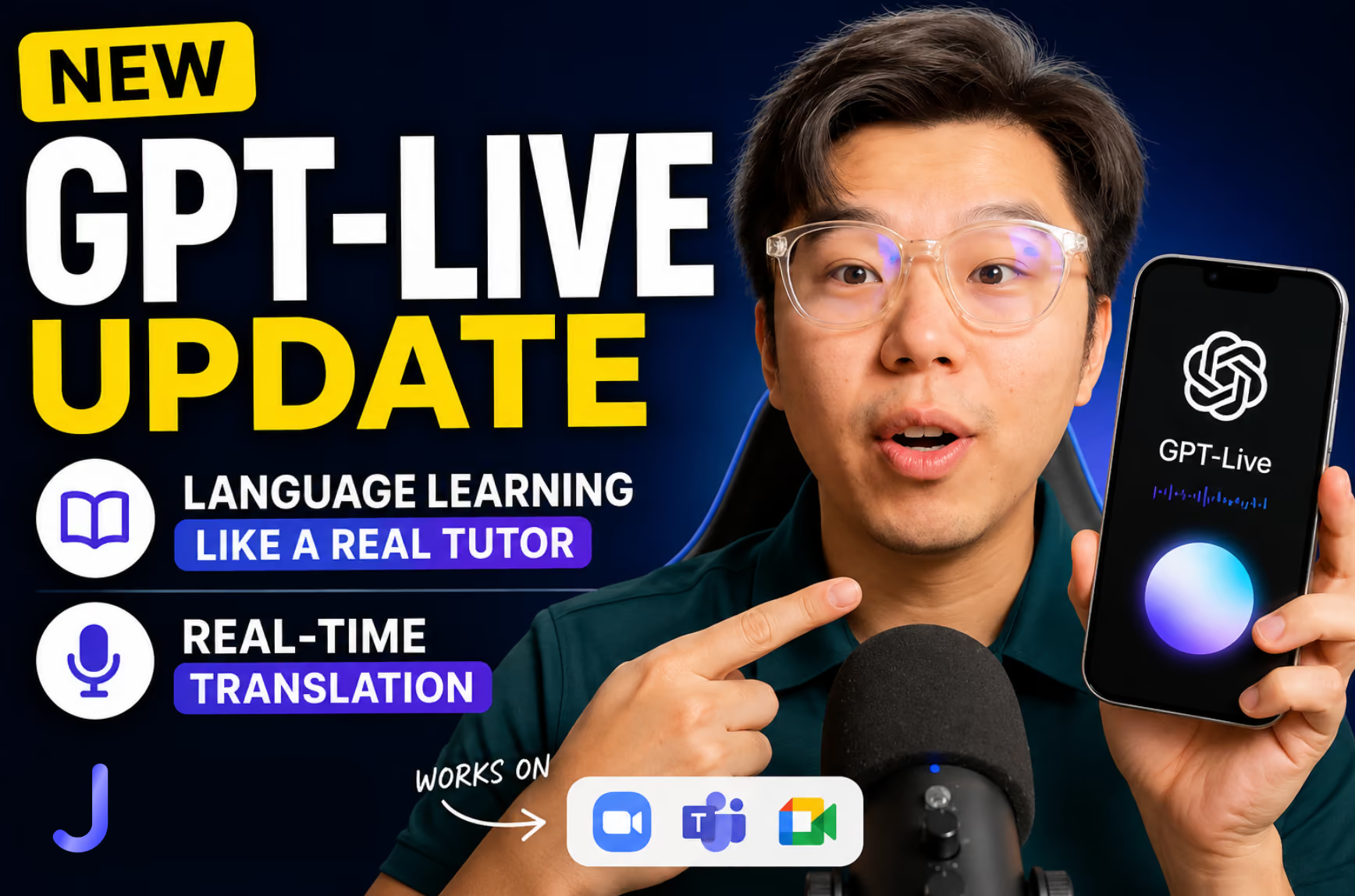
OpenAI's GPT-Live update is one of those product moments that makes a long-running shift suddenly feel obvious. For years, voice AI has mostly worked in turns: you speak, you stop, the model thinks, and then it answers. GPT-Live moves the experience closer to how real conversation works. It can respond with less friction, adapt to the speaker's pace, and make speaking with AI feel less like operating a tool and more like being in a live exchange.
For us at JotMe, this update is exciting because it validates something we have believed for a long time: AI is becoming conversational. But the next challenge is bigger than making one person talk naturally with one AI assistant. The real challenge is making people communicate naturally with each other across languages, devices, meeting platforms, content formats, and business workflows. That is where conversational AI becomes multilingual communication infrastructure.
Watch the video to see GPT-Live in action and how JotMe extends these capabilities into real-world multilingual communication.
GPT-Live makes language learning feel more human
The first experience that stands out with GPT-Live is language learning. Most language learning products still follow a structured path: memorize vocabulary, repeat phrases, answer quizzes, and move to the next lesson. That structure is useful, especially when someone needs grammar, repetition, and a habit loop. But real language ability does not grow in a straight line, because every learner starts from a different place and wants to use the language in a different situation.
Someone who studied French in high school needs a different experience from someone preparing for a business trip to Paris. A person who wants to practice customer calls needs something different from a traveler who only wants to order food confidently. GPT-Live makes the learning experience feel more personal because the learner can simply start talking. You can say, "I learned French in school, but I forgot most of it," or "Please speak slowly and correct my pronunciation," and the experience can immediately adjust around that context.
That is what makes conversational AI so compelling for language learning. Instead of forcing every learner through Lesson 14, it can respond to the learner's actual ability, goal, and confidence level in the moment. The AI can slow down, increase difficulty when the learner is ready, explain mistakes in a different way, and role-play a realistic situation. It feels less like software asking you to complete a unit and more like a private tutor helping you practice the exact conversation you need.
GPT-Live does not replace structured learning. It changes what practice can become
This does not mean structured learning tools suddenly become irrelevant. Products like Duolingo are still useful for building vocabulary, grammar, and daily learning habits. They give people a clear path and a reason to return every day. GPT-Live solves a different problem: it gives people a more natural place to practice fluency after they understand the basics, or even while they are still building them.
The future of language learning will probably combine both approaches. Learners can use structured lessons to build foundations, then use conversational AI to practice real scenarios that never fit neatly into a curriculum. That might be a restaurant conversation, a job interview, a sales call, a parent-teacher meeting, or a technical discussion with an overseas teammate. The important shift is that practice becomes adaptive instead of fixed.
Real-time translation is finally starting to feel natural
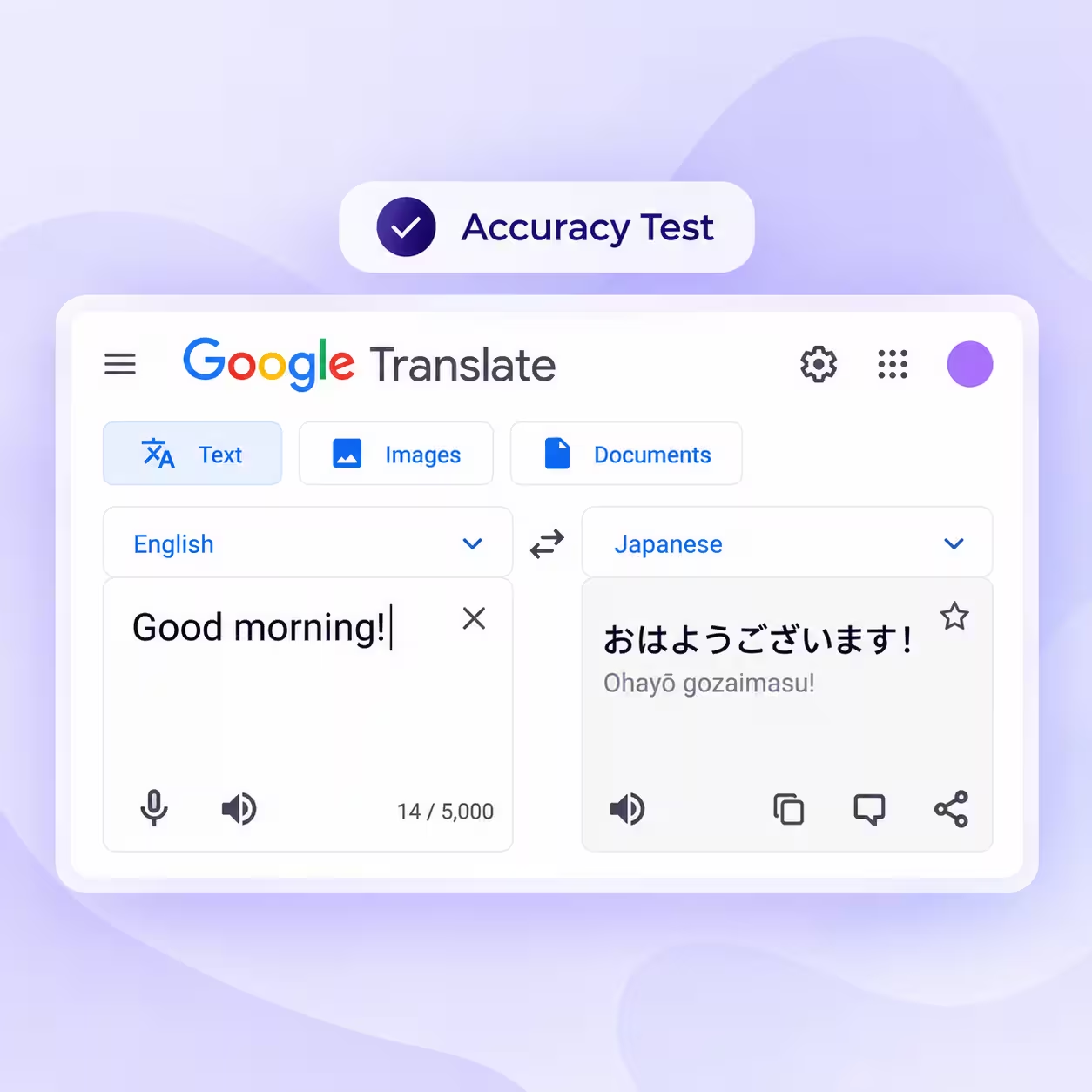
GPT-Live also shows how much real-time translation has improved. For personal use, the experience can feel almost magical: you speak in one language, the AI understands the meaning, and it responds in another language with very little friction. For travel, casual conversations, language practice, and everyday assistance, this is a major step forward. It reduces the awkward pauses that used to make machine translation feel mechanical and makes translated conversation feel closer to a normal exchange.
But once you move beyond personal use, the problem becomes much harder. Translation is no longer just about what one person hears from an AI. It becomes a communication problem between multiple people, devices, apps, languages, and workflows. A smooth one-on-one AI demo is very different from a multilingual business meeting where several people need translated captions, meeting transcripts, AI notes, and follow-up context in the languages they actually work in.
Translation between people is harder than translation with AI
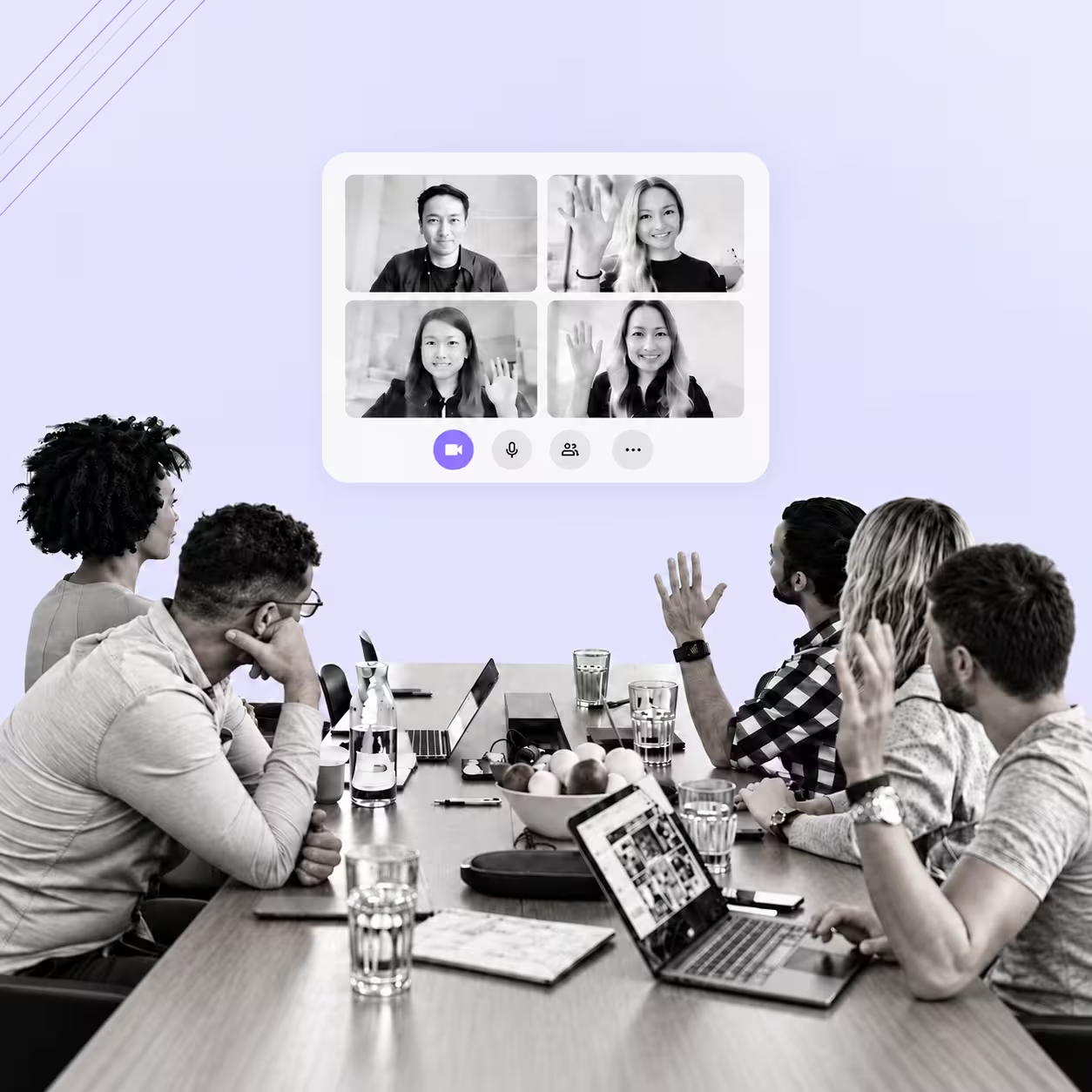
Imagine you are speaking Japanese and your colleague speaks English. Both of you need translated captions, both of you need a reliable transcript, and both of you need the conversation to feel natural enough that you can interrupt, clarify, and respond without losing the thread. Now imagine one person is joining from Zoom, another is on Microsoft Teams, someone else is watching through a browser, and another teammate needs the transcript afterward. Suddenly the hard part is not only translation quality. The hard part is delivering the right language to the right person in the right place without breaking the meeting.
This is why multilingual communication requires more than a voice model. You need audio routing, caption delivery, device compatibility, low latency, speaker context, meeting memory, and a way for people who are not using the same app to still follow the translation. You also need the conversation to survive after the call ends. The transcript, notes, summary, action items, and follow-up messages all need to carry the same meaning across languages.
That is where JotMe live translation is designed to help. Rather than only translating what one person hears, JotMe is built around multilingual communication between people. The goal is that someone can speak Japanese, someone else can follow in English, another teammate can read captions in Korean, and the entire team can still leave with a shared record of what was discussed. The experience should feel like communication, not like everyone is fighting with separate translation tools.
Online meetings are one of the hardest translation environments
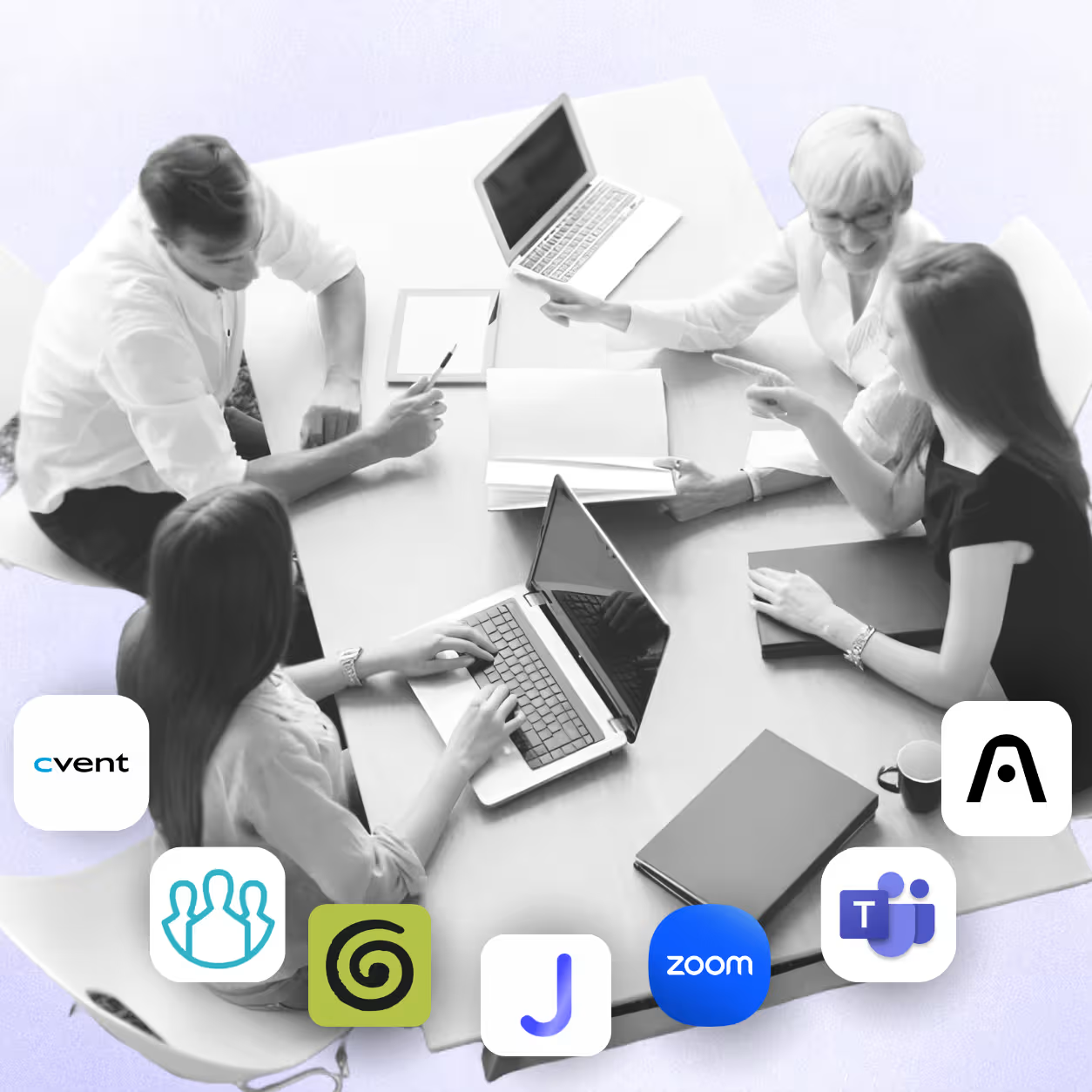
Voice AI demonstrations often look simple because they control the environment. Real business meetings do not. Teams use Zoom, Google Meet, Microsoft Teams, Cisco Webex, browser calls, webinars, and live events, and each platform handles audio differently. A real meeting translation system has to capture microphone audio, capture remote speakers, separate system audio, prevent echo, avoid feedback loops, keep captions synchronized, and maintain latency low enough that the meeting still feels live.
These details matter because business meetings are not just streams of sentences. They include interruptions, project names, customer names, technical terms, internal abbreviations, prior decisions, and moments where one phrase can change the meaning of the whole discussion. If the translation uses a different term every time, misses context from earlier in the call, or arrives too late, people stop trusting it. Translation quality is not just about whether a sentence is grammatically correct. It is about whether the meeting still works.
JotMe was built around that real-world messiness. It supports live multilingual meetings with real-time captions, translated transcripts, AI meeting notes, summaries, and follow-up context. The point is not to make a clean demo in a controlled setting. The point is to help global teams run actual meetings where people speak different languages and still need to make decisions together.
Translation does not stop when the meeting ends
Business communication happens far beyond live calls. Employees watch YouTube tutorials, teams share product demo videos, companies create internal training materials, customer success teams send follow-up documents, and executives present webinars or live events. If every piece of content needs to be manually recreated for every language, localization becomes slow and incomplete. The more global a company becomes, the more language becomes part of everyday work instead of a separate translation project.
This is why JotMe is moving toward an AI multilingual workspace, not only a meeting translator. Available today, JotMe can help teams translate live meetings, keep meeting transcripts, generate AI notes, and translate uploaded audio or video transcripts. Broader team chat and document localization workflows are the direction we are building toward, because the work usually continues after the meeting in messages, documents, recordings, and approvals.
That matters especially for businesses where language barriers block execution, not just understanding. A translated meeting is useful, but the real value comes when the translation stays connected to the follow-up work. People should not have to restart from zero every time the communication format changes.
Context matters as much as translation quality
Modern AI models are already strong translators, but businesses do not only need a grammatically correct sentence. They need the right meaning in the right context. A phrase can change depending on the project, customer, department, industry, or previous conversation. A product name should stay consistent. A technical term should not be translated three different ways across three meetings. A customer-specific phrase should not lose its meaning just because the AI starts every session from zero.
This is why context matters so much. A good multilingual system should understand the meeting that happened last week, the glossary your team already uses, the project names your company depends on, and the way your organization talks about its own product. Without that context, even an excellent translation model can produce output that feels slightly wrong. It may be accurate in isolation, but inconsistent inside the workflow.
At JotMe, we believe translation becomes significantly more valuable when it understands the work around the conversation. Meeting history, transcripts, project knowledge, and custom terminology can all help produce translations that are not only fluent, but operationally useful. For businesses, consistency is often just as important as raw accuracy because the cost of confusion is paid later in follow-up work, customer alignment, and internal execution.
GPT-Live validates where multilingual communication is heading
We do not see GPT-Live as a competitor. We see it as validation. It shows that conversational AI is reaching a point where speaking naturally with software can feel normal. That is a major shift, and it will change how people learn languages, practice conversations, translate everyday speech, and interact with technology.
The next challenge is making multilingual communication between people feel just as natural. That requires more than a powerful model. It requires audio routing, cross-platform support, context management, meeting memory, transcripts, accessibility, content localization, and enterprise workflows that fit into the way people already work. In other words, it requires communication infrastructure around the AI.
That is the future we are building toward at JotMe. Whether someone is learning a new language, joining a Japanese-English business meeting, watching a training video, collaborating with an international team, or communicating with customers across languages, the goal is the same: remove language barriers without forcing people to change how they communicate. GPT-Live shows how natural talking with AI can become. JotMe is focused on making multilingual work between people feel just as natural.
Last updated on
July 29, 2026
Follow us on social media: