Guides
Best Document Translator in 2026: 40 Tools Tested and Ranked

Narmada Kajla
July 31, 2026

JotMe is the best document translator for users who need accurate file translation with strong format support, 200+ language coverage, and support for formats such as PDF, DOCX, PPTX, XLSX, HTML, HTM, TXT, XLF, XLIFF, SRT, IDML, XML, JSON, DITA, and MIF files up to 100 MB.
For users who need high-quality AI translation with a focus on natural language output, DeepL is a strong choice, especially for European languages and professional documents. ChatGPT works best for flexible translation workflows that need extra help with rewriting, summarizing, or explaining translated content.
We tested and evaluated tools based on website content of 40 document translation tools across formatting accuracy, OCR performance, language support, privacy, file handling, and pricing.
Let’s take a quick look at which translator tool will work for you:
Key Takeaways
- Best overall document translator: JotMe for accurate translations, 200+ languages, and broad file format support. You can try it at app.jotme.io to see why JotMe is one of the best document translators.
- Best free document translator: Google Translate for quick document translation without a paid plan.
- Best for scanned PDFs: JotMe for AI-powered document translation with OCR support, alongside Adobe Acrobat Pro for scanned file handling.
- Typical cost to translate one contract: JotMe starts at 10 AI credits for documents up to 50,000 characters.
- Best privacy and file retention policy: JotMe is GDPR compliant, making it secure document processing without storing translated files on its servers.
Quick Overview of Each Tested Document Translator
- JotMe: Best for quick and professional document translation with AI-powered accuracy and formatting preservation across 200+ languages.
- DeepL Pro: Ideal for European language marketing content and short-form documents with natural-sounding output.
- Google Translate: Great for quick, casual translations across 100+ languages with unlimited free web use.
- Taia: Ideal for businesses and teams translating full documents with hybrid AI + human review options.
- Smartcat: Ideal for hybrid marketplace + TMS workflows with AI Agents translating documents while preserving layout.
- Pairaphrase: Ideal for enterprise teams needing secure, scalable document translation with Microsoft 365 integration.
- DocTranslator: Ideal for quick online document translation preserving original layout across 100+ languages with free tier.
- Adobe Acrobat Pro: Ideal for PDF-heavy workflows with built-in translation and OCR for scanned documents.
- SYSTRAN: Ideal for secure on-premise deployment and regulated industries requiring GDPR-compliant translation.
- Smartling: Ideal for enterprise web/app localization with structured approval chains and large-scale campaign workflows.
- ChatGPT: Ideal for creative copy adaptation and tone-matching across languages, not structured documents.
- Microsoft Translator: Ideal for Microsoft ecosystem integration with real-time document translation via Azure.
- Claude: Ideal for nuanced document translation with superior context understanding and natural language output.
- SDL Trados Studio: Ideal for professional translators and agencies needing an industry-standard CAT tool with TM and terminology management.
- memoQ: Great choice for enterprises and LSPs with flexible translation management and compatibility with Trados/Wordfast.
- Lokalise: Ideal for SaaS/mobile app localization with continuous string updates and Git-driven workflows.
- XTM Cloud: Ideal for cloud-based enterprise translation management with AI-powered workflows.
- TransPerfect: Ideal for large-scale enterprise localization partnerships with full-service LSP capabilities.
- TextMaster: Ideal for SMB content translation with on-demand human translators.
- Gengo: Ideal for on-demand human translator marketplace with quick turnaround.
- Translated: Ideal for AI-first + human hybrid workflows with professional linguist review.
- Unbabel: Ideal for customer service translation with multilingual support automation.
- Worldly Translations: Ideal for document translation services with 8 language support.
- Amazon Translate: Ideal for AWS integration with batch document translation and custom model support.
- Reverso Documents: Ideal for PDF/Word/PPT translation with OCR and 27 languages, unlimited documents.
- iLovePDF: Ideal for free online PDF translation with AI-powered layout preservation across multiple languages.
- Smallpdf: Ideal for simple PDF tools including translation with formatting preservation.
- Canva Translate: Ideal for design-focused document translation with 134 languages and visual context.
- OpenL Doc Translator: Ideal for privacy-focused document translation with 100+ languages and OCR for scanned PDFs.
- Doclingo: Ideal for an AI document translation platform for PDFs, Word, and business documents with formatting preservation
- WPS AI: Ideal for an all-in-one office suite with AI-powered PDF translation and document chat.
- Quillbot: Ideal for students and academic paraphrasing with translation capabilities.
- Wordvice.ai: Ideal for research paper and academic document translation with editing services.
- Localazy: Ideal for continuous app localization with developer-focused workflows.
- Weglot: Ideal for no-code website translation with fast multilingual site launch.
- Zoviz: Ideal for free instant document translation with 100+ languages, formatting preservation, and secure private processing. zoviz+1.
- Belindoc: Ideal for completely free unlimited AI document translation with top-tier format parsing and multiple model selection.
- O.Translator: Ideal for professional-grade document translation with preview-first pricing and custom terminology.
- Immersive Translate: Ideal for bilingual document reading with 20+ AI engines, side-by-side translation, and OCR for scanned PDFs.
- NoteGPT: Ideal for free PDF translation with original layout preservation, bilingual display, and large file support up to 50MB.
What is a Document Translator and How Does It Work
A document translator converts an entire document from one language to another while preserving as much of the original formatting as possible. Depending on the platform, it can translate text, tables, images, and scanned documents using AI, professional human translators, or a combination of both.
AI Document Translators
AI document translators use large language models and neural machine translation to translate documents in seconds. Most tools support common formats like PDF, DOCX, PPTX, and XLSX, while advanced platforms also preserve layouts, translate scanned PDFs with OCR, and process multiple files at once. JotMe, DeepL, Google Translate, Microsoft Translator, and ChatGPT are popular examples of AI document translators.
Human Translation Services
Human translation services rely on professional translators instead of AI. They are the preferred choice for contracts, court documents, immigration paperwork, medical records, and other files that require certified or industry-specific translations. The trade-off is higher cost and longer turnaround times.
Hybrid Translation Platforms
Hybrid translation platforms combine human interpretation and AI translation. AI produces the initial translation, then professional linguists review terminology, grammar, and formatting before delivery. This approach is common for multilingual business content, technical documentation, and customer-facing materials. Taia, Smartcat, and Pairaphrase are examples of hybrid document translation platforms.
Which Document Translator is Best in 2026
JotMe is the best document translator in 2026 based on our testing of 40 translation tools.
During testing, JotMe delivered the most consistent results across formatting preservation, OCR accuracy, language support, and document handling.
JotMe supports more than 200 languages and works with a wide range of file formats, including PDF, DOCX, PPTX, XLSX, HTML, HTM, TXT, XLF, XLIFF, SRT, IDML, XML, JSON, DITA, and MIF files up to 100 MB.
For legal documents, JotMe successfully translated an English estate planning agreement into Japanese while preserving the original meaning. The English to Japanese translated version used clearer, modern wording instead of outdated legal phrases. For example, “attached hereto” was replaced with “attached to this agreement,” which improved readability without changing the legal intent.
Original text
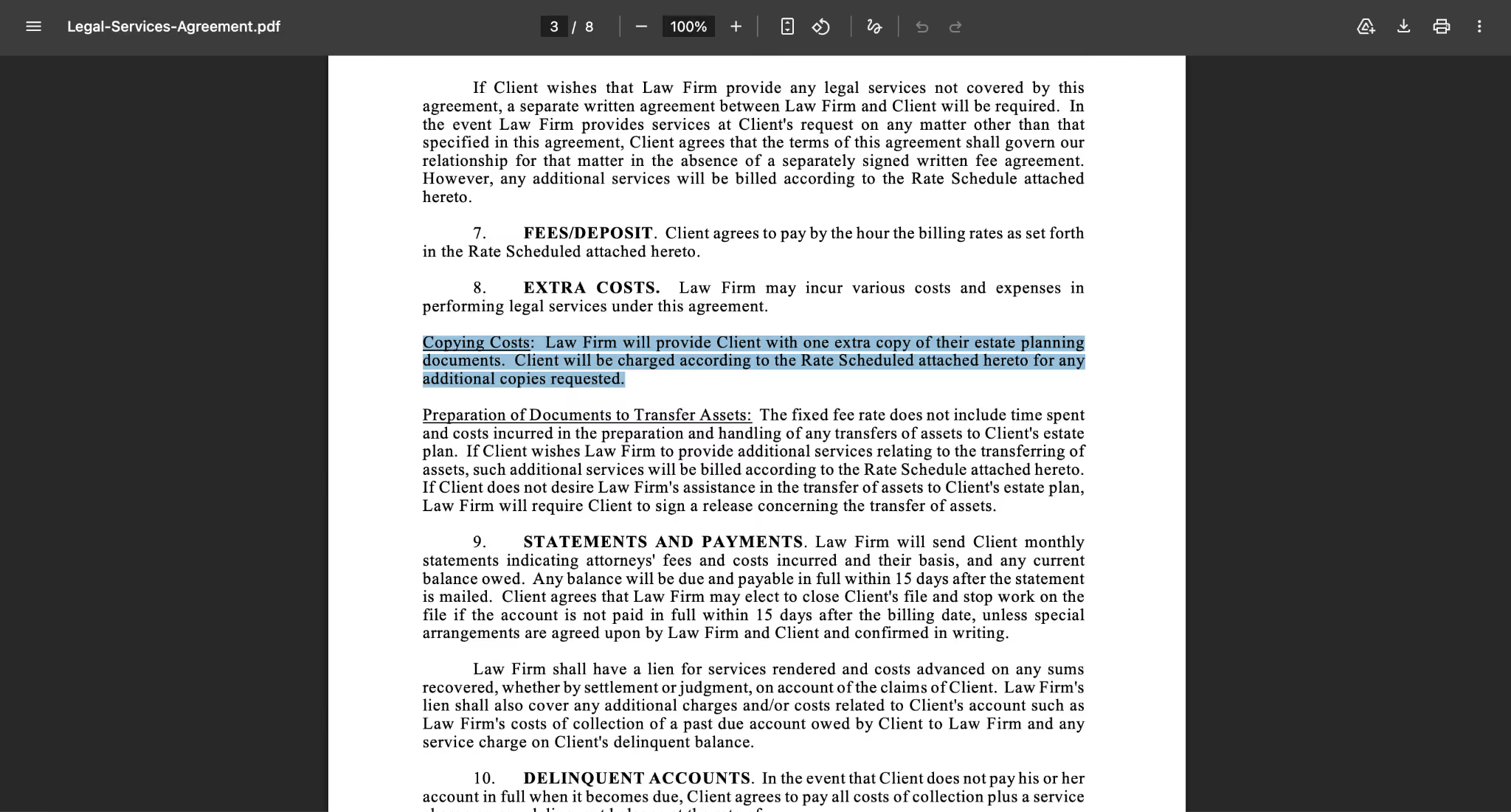
Original Text:
Copying Costs: Law Firm will provide clients with one extra copy of their estate planning documents. Client will be charged according to the Rate Scheduled attached hereto for any additional copies requested.
JotMe Translation Result In Japanese:
In English:
Copying Costs: Our law firm provides the client with one additional copy of the estate planning documents. If additional copies are requested, the client will be charged in accordance with the fee schedule attached to this agreement.
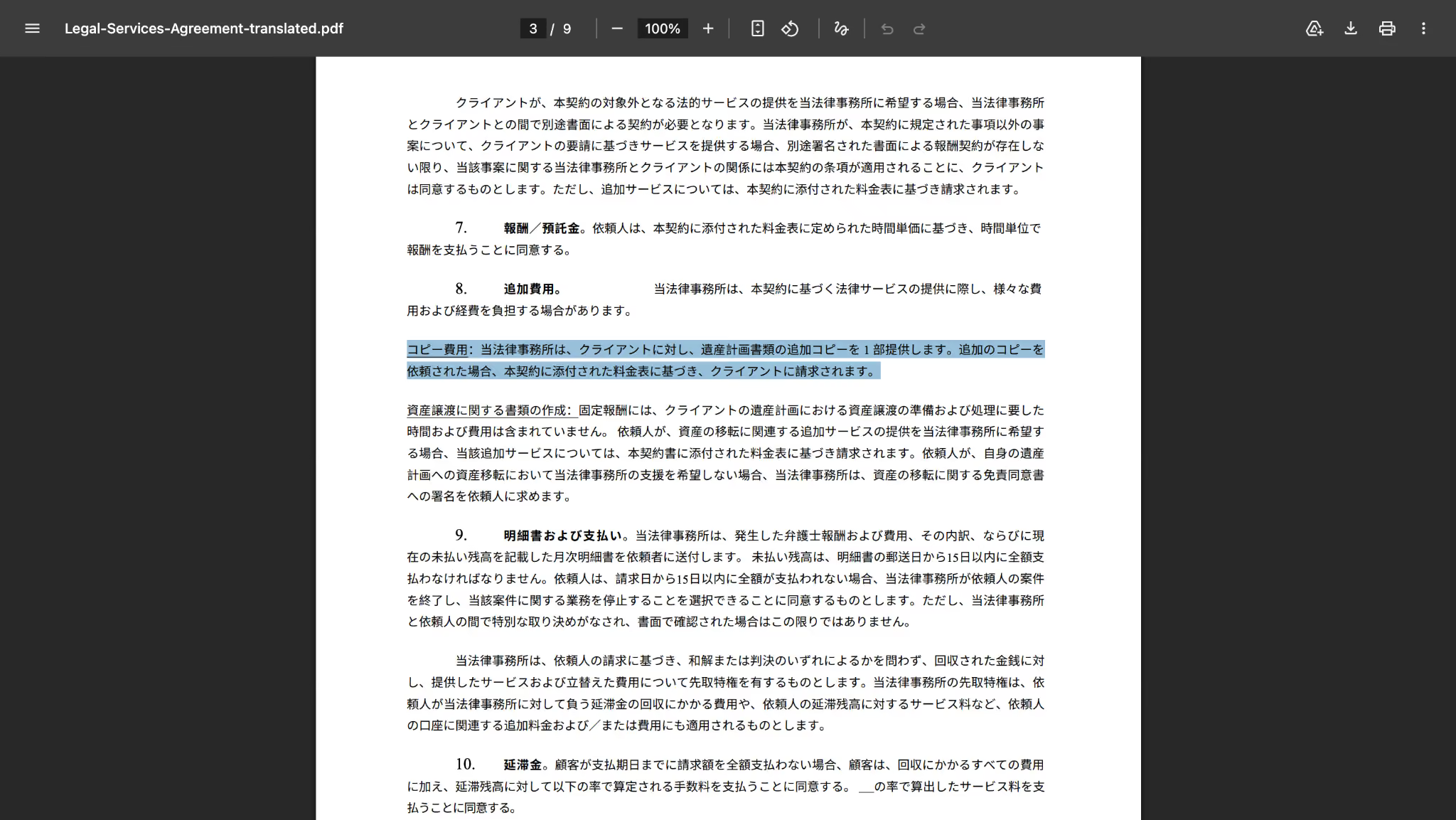
JotMe handled the context correctly instead of translating word-for-word. The result kept the legal meaning while using language that was easier for clients to understand.
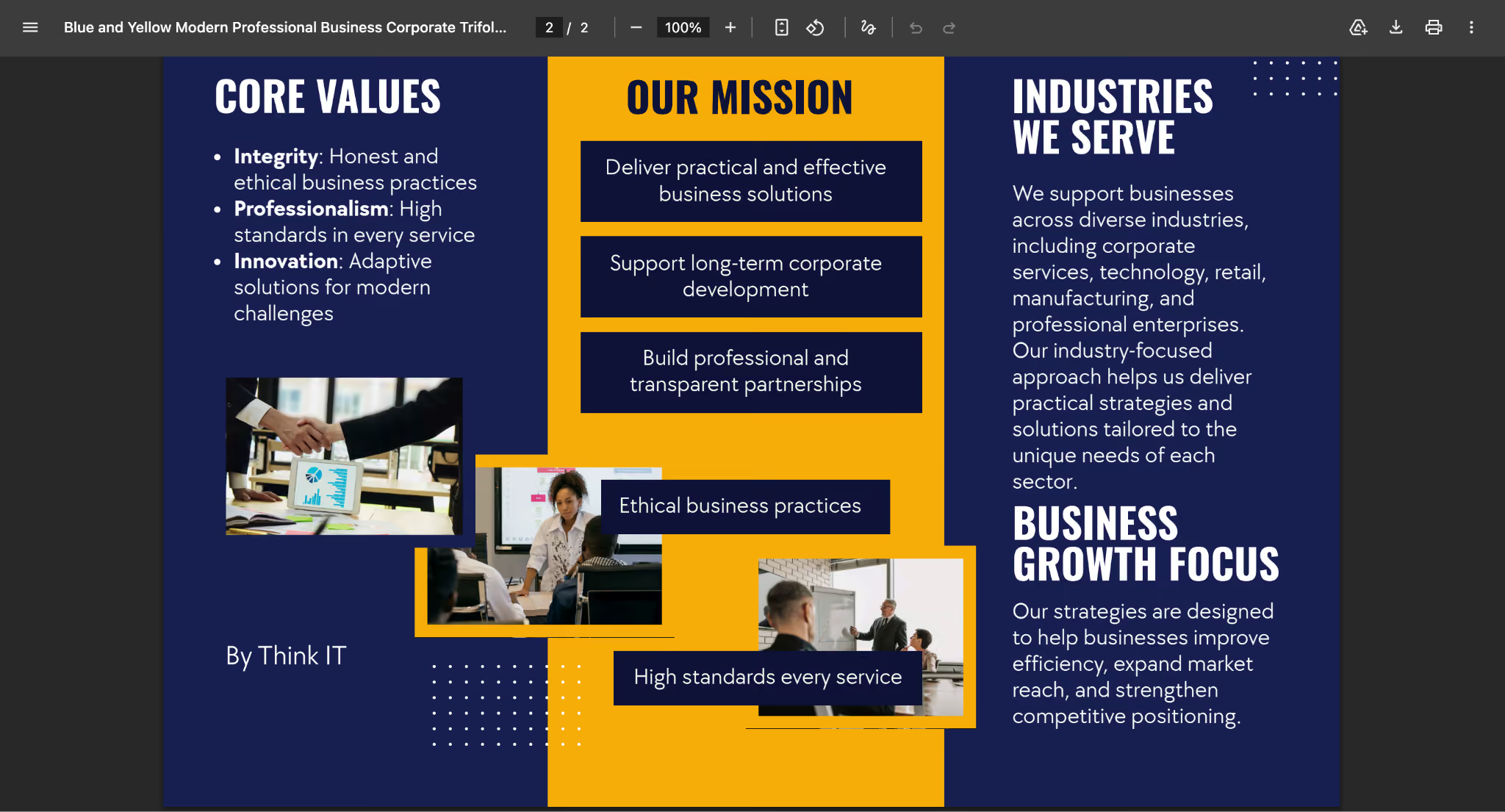
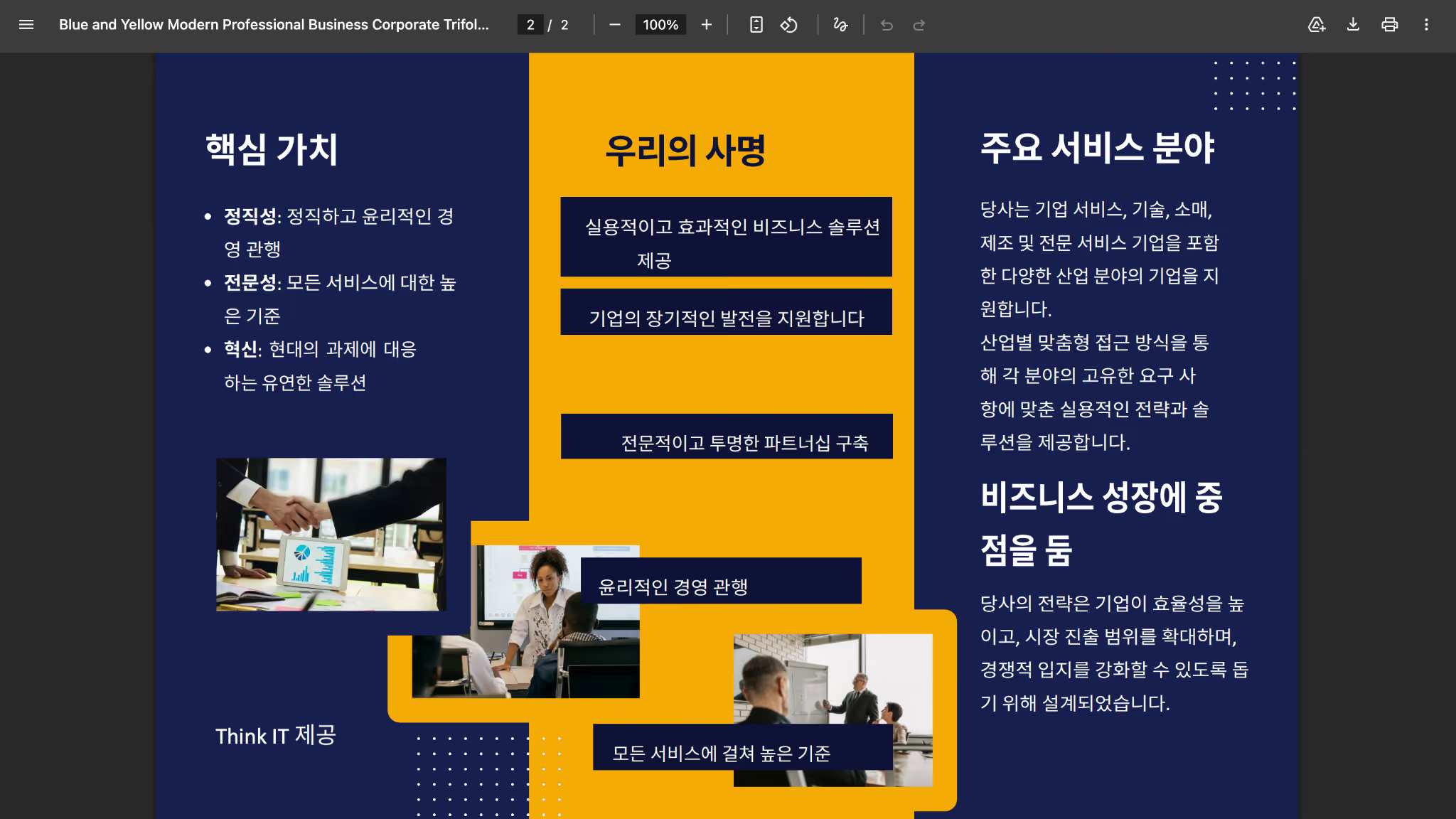
For brochure translation, we tested JotMe with an English to Korean translation. JotMe maintained the original content structure and adapted the translation according to the context of the document rather than producing a literal word-for-word output.
Original Brochure
JotMe Translated Brochure
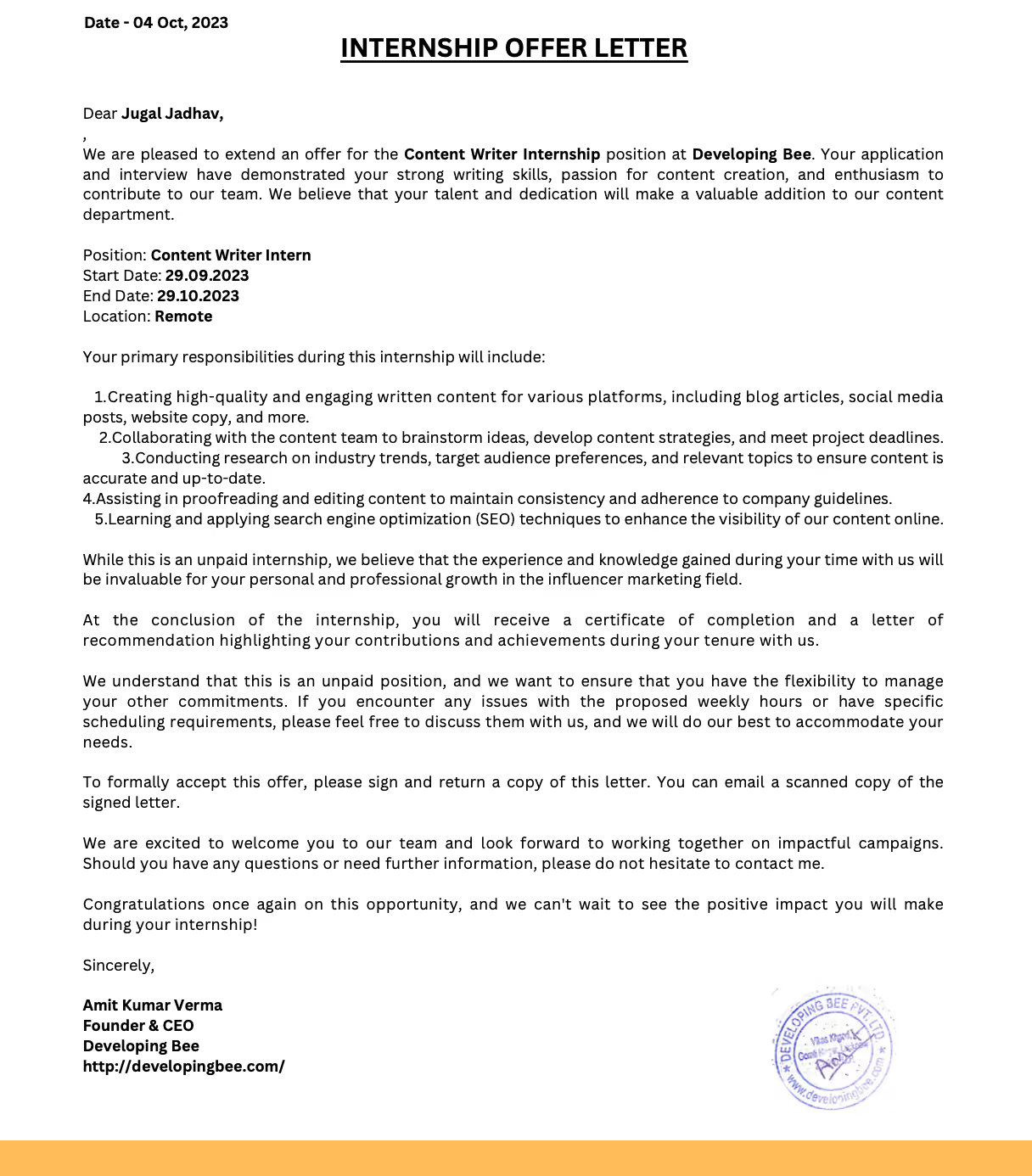
For scanned documents, JotMe performed well in our OCR test. It captured 90% of the text from the scanned file and successfully translated the document from English to Portuguese. The translated output preserved the extracted content without missing important information from the original scan.
Original OCR Document:
JotMe Translated OCR Document:
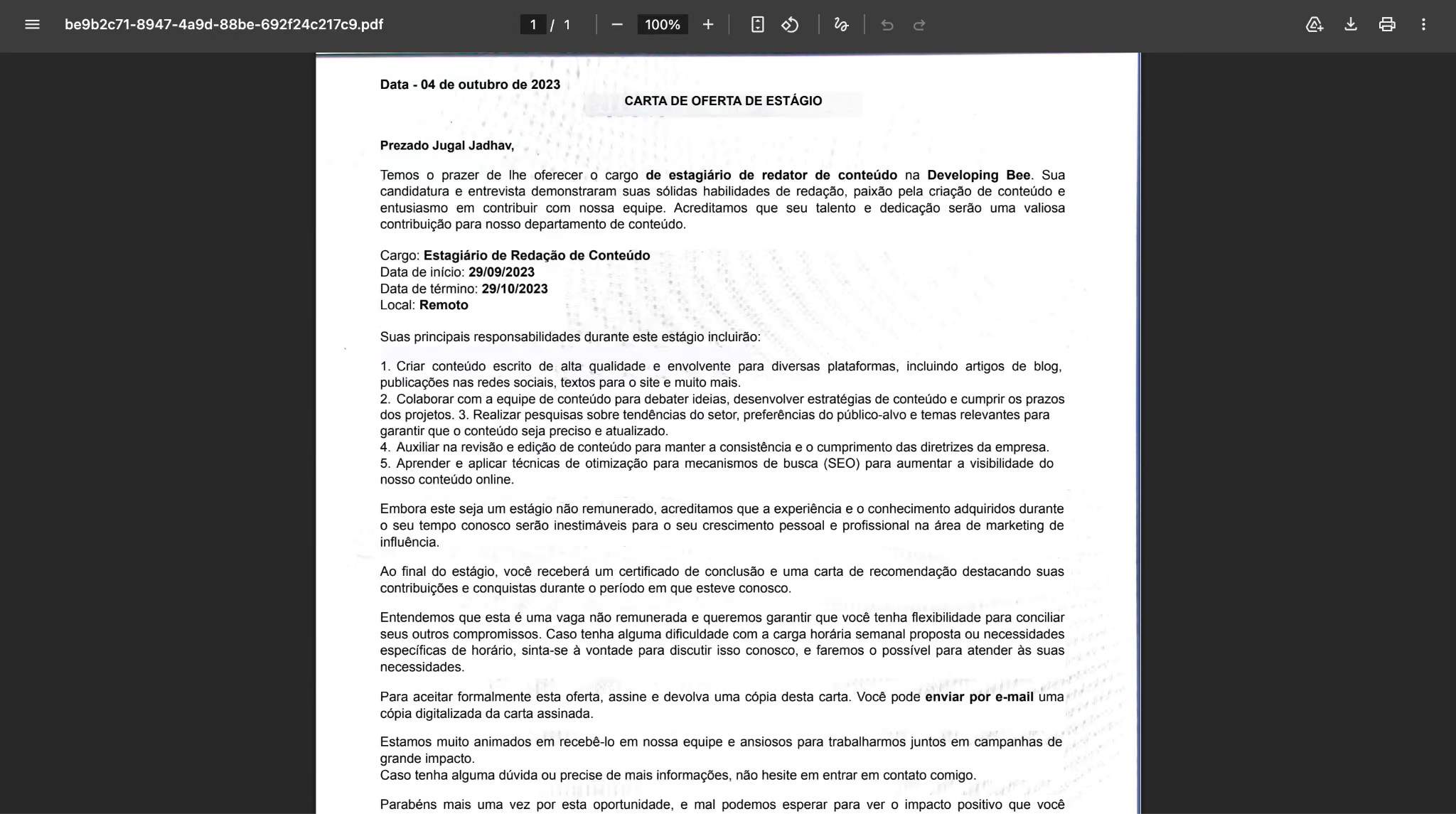
These tests show why JotMe ranked first among the document translators we reviewed. It combines broad language coverage, strong file support, OCR capability, and reliable formatting preservation in one workflow.
How Did We Test Each Document Translator
We tested each document translation software tool using real-world files that reflect common translation needs: scanned documents, legal agreements, and internal business documents. Every tool was evaluated using the same documents and language pairs to compare translation quality, formatting preservation, OCR accuracy, and overall usability.
To evaluate each tool consistently, we used the same set of criteria across all documents, focusing on translation quality, document handling, performance, and privacy considerations.
Test 1: Scanned Document (English → Arabic)
Scanned documents are one of the biggest challenges for document translators because the tool must first recognize the text before translating it.
We tested a scanned form to compare OCR extraction and translation quality.
JotMe performed well in this test, as you can see in the above section. It successfully captured the text from the scanned document and translated the content without losing important information from the original file.
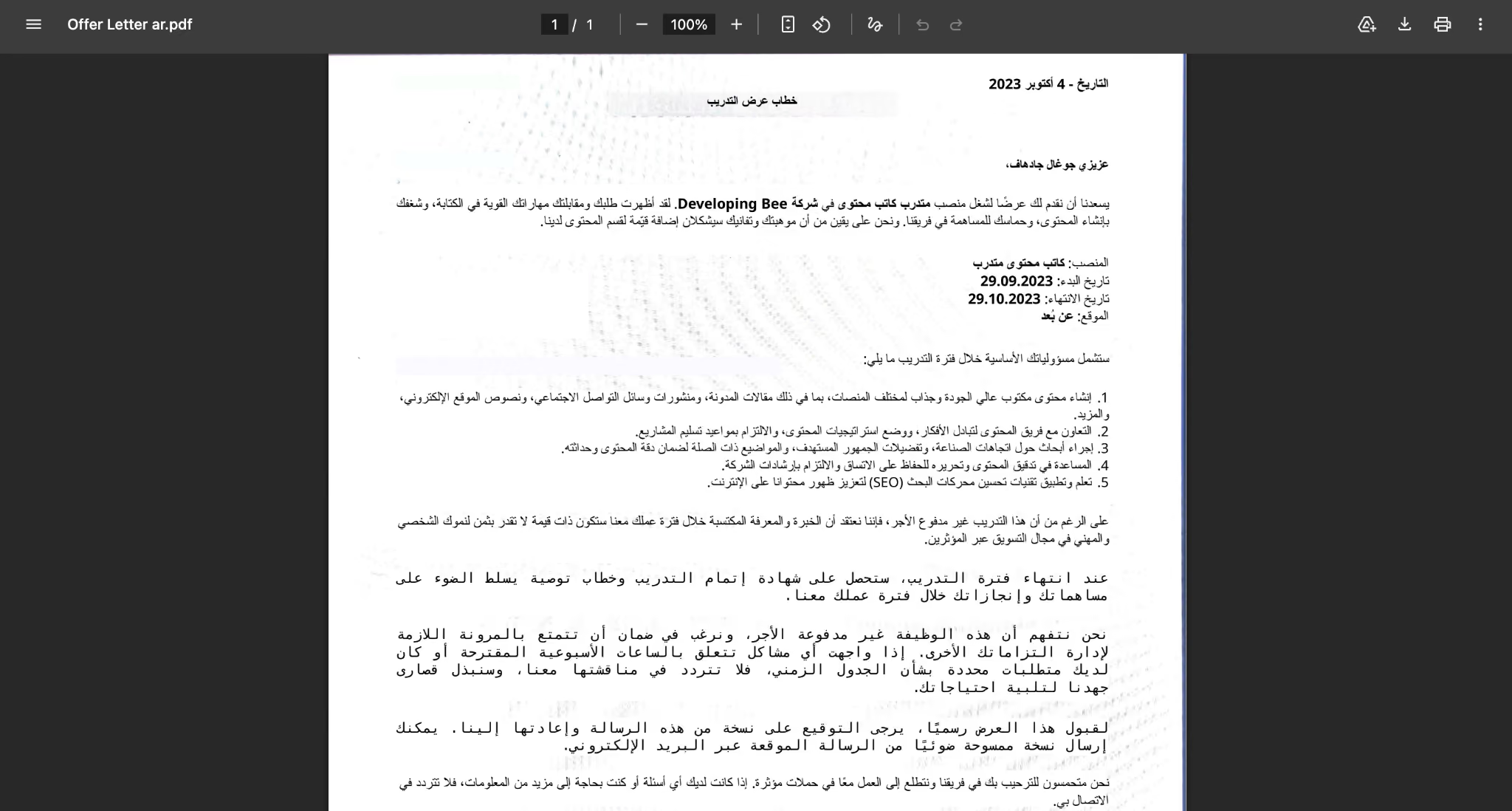
We tested on DeepL, which worked great with English to Arabic translation, but the formatting was not the same as the original.
DeepL Pro scanned form translation from English to Arabic:
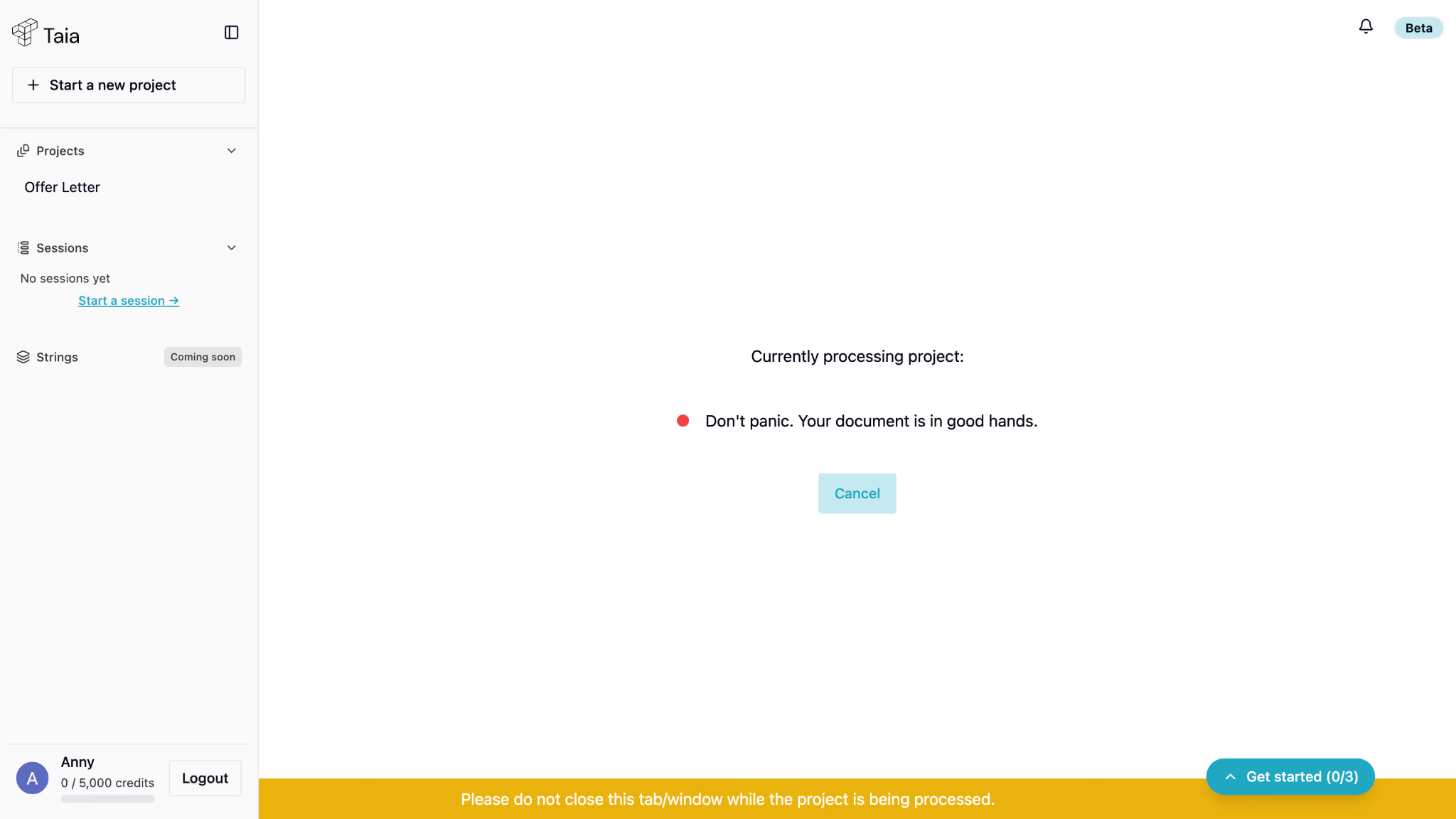
Taia could not complete this test. Since Taia does not support direct PDF uploads, we converted the file into DOCX format before testing. After three attempts, the tool processed the document for nearly 20 minutes before displaying an error and failing to generate a translation.
Google Translate OCR file translation in Arabic:
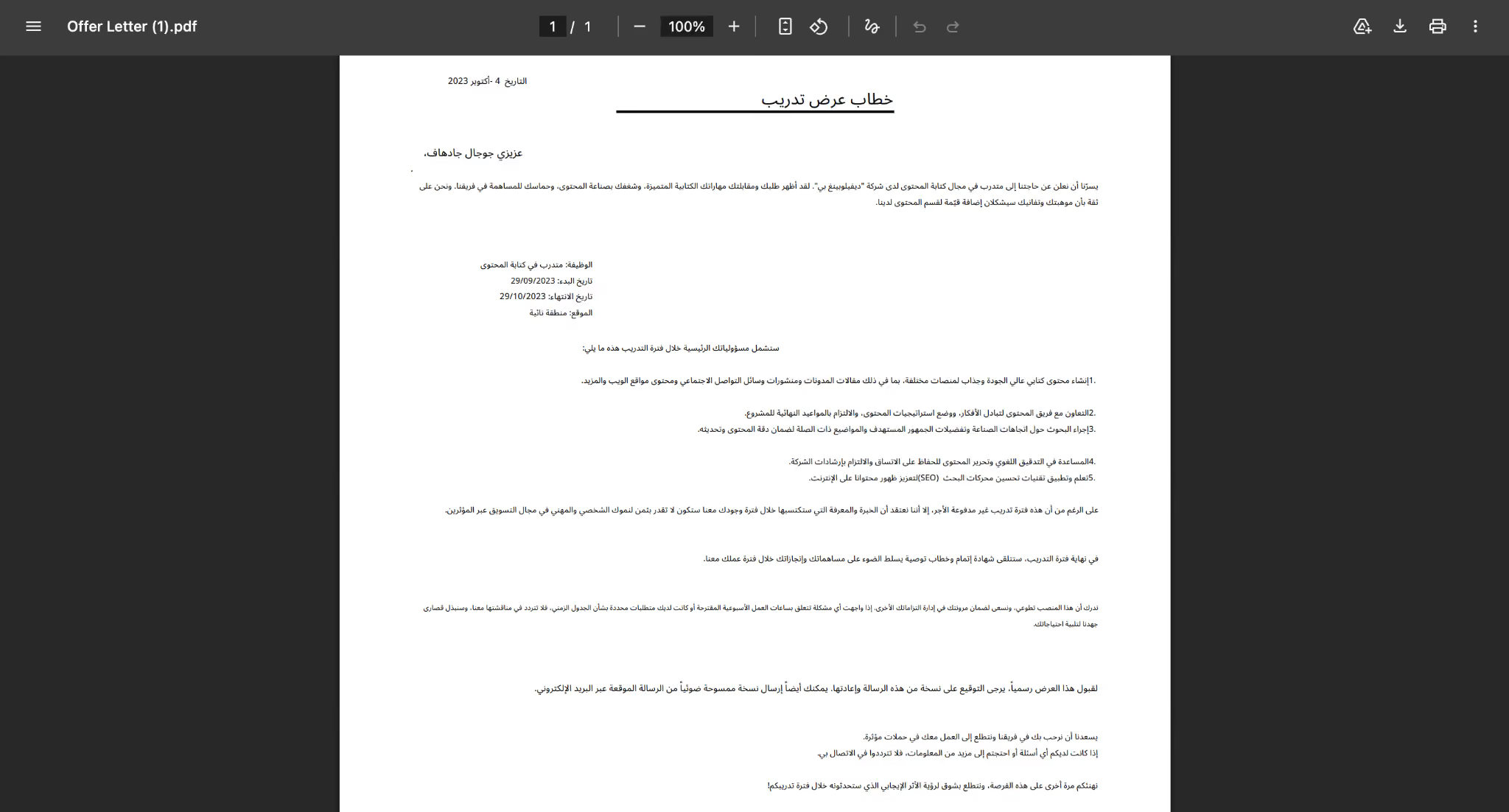
Google Translate also translated the scanned document with good accuracy. However, it struggled to maintain the original formatting after translation, which required additional adjustments.
Test 2: Contract Translation (English → Spanish)
Legal documents require more than direct translation. The tool must understand formal language, preserve terminology, and maintain the original document structure.
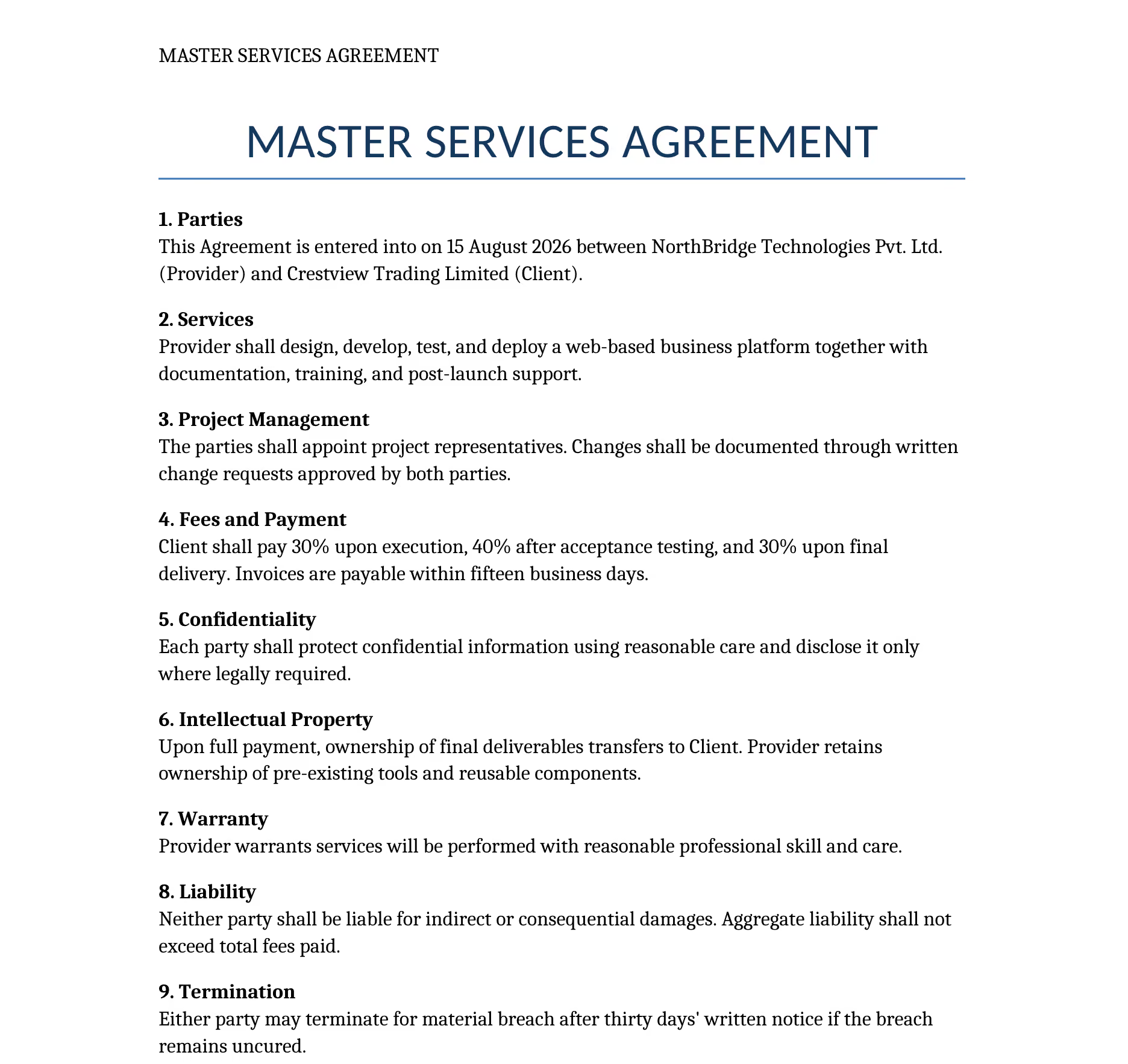
We tested a one-page service agreement to evaluate how each platform handled legal content.
Original Document in English:
SYSTRAN translated the contract from English to Spanish:
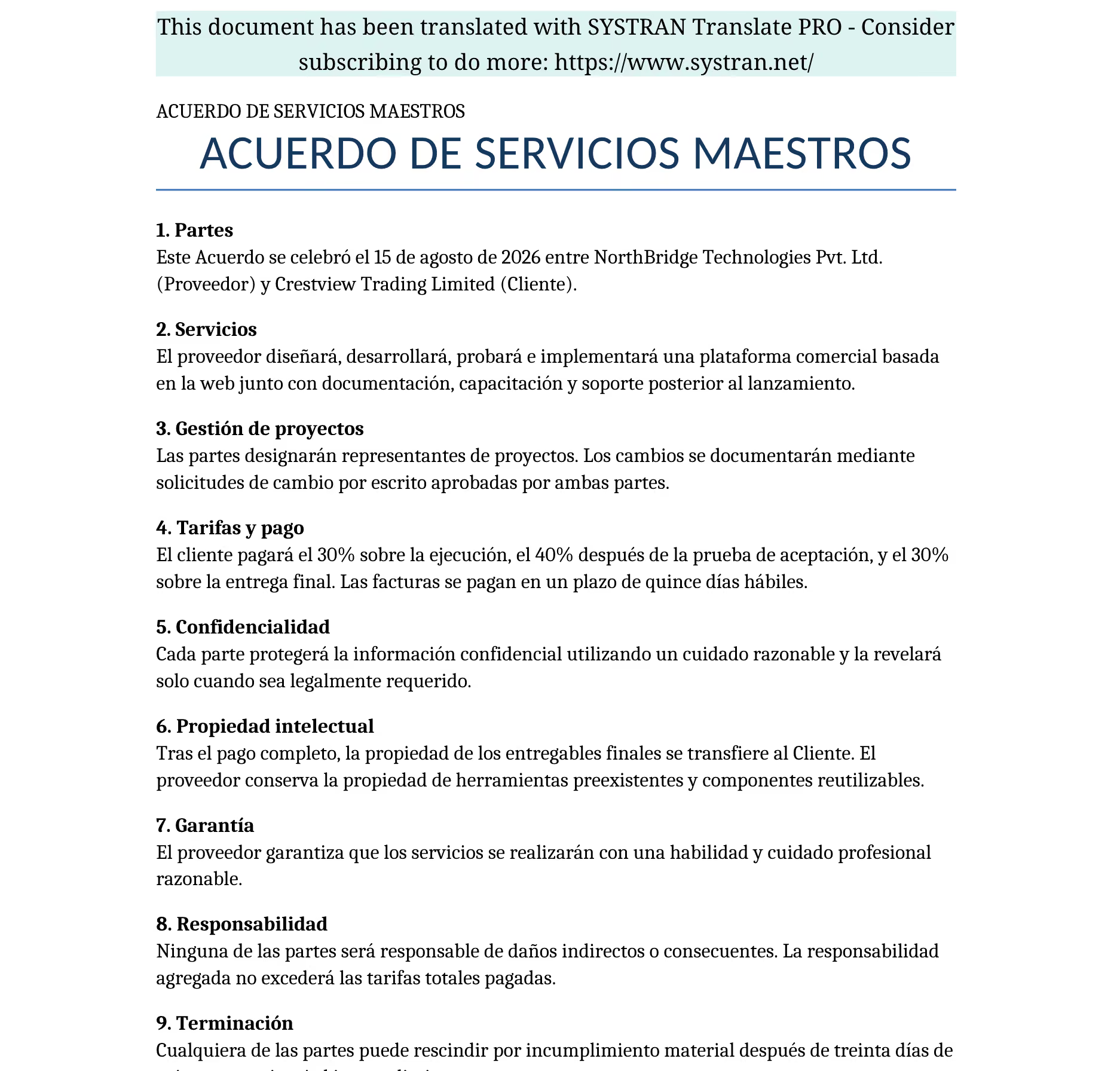
SYSTRAN translated the contract document from English to Spanish accurately and kept the formatting untouched, but it added its watermark. If you share it with your client, then you need a separate tool to remove the watermark and then share.
JotMe translated the same contract into Spanish in under one minute without adding a watermark. It also improved the sentence structure to better match formal contract writing while keeping the original meaning.
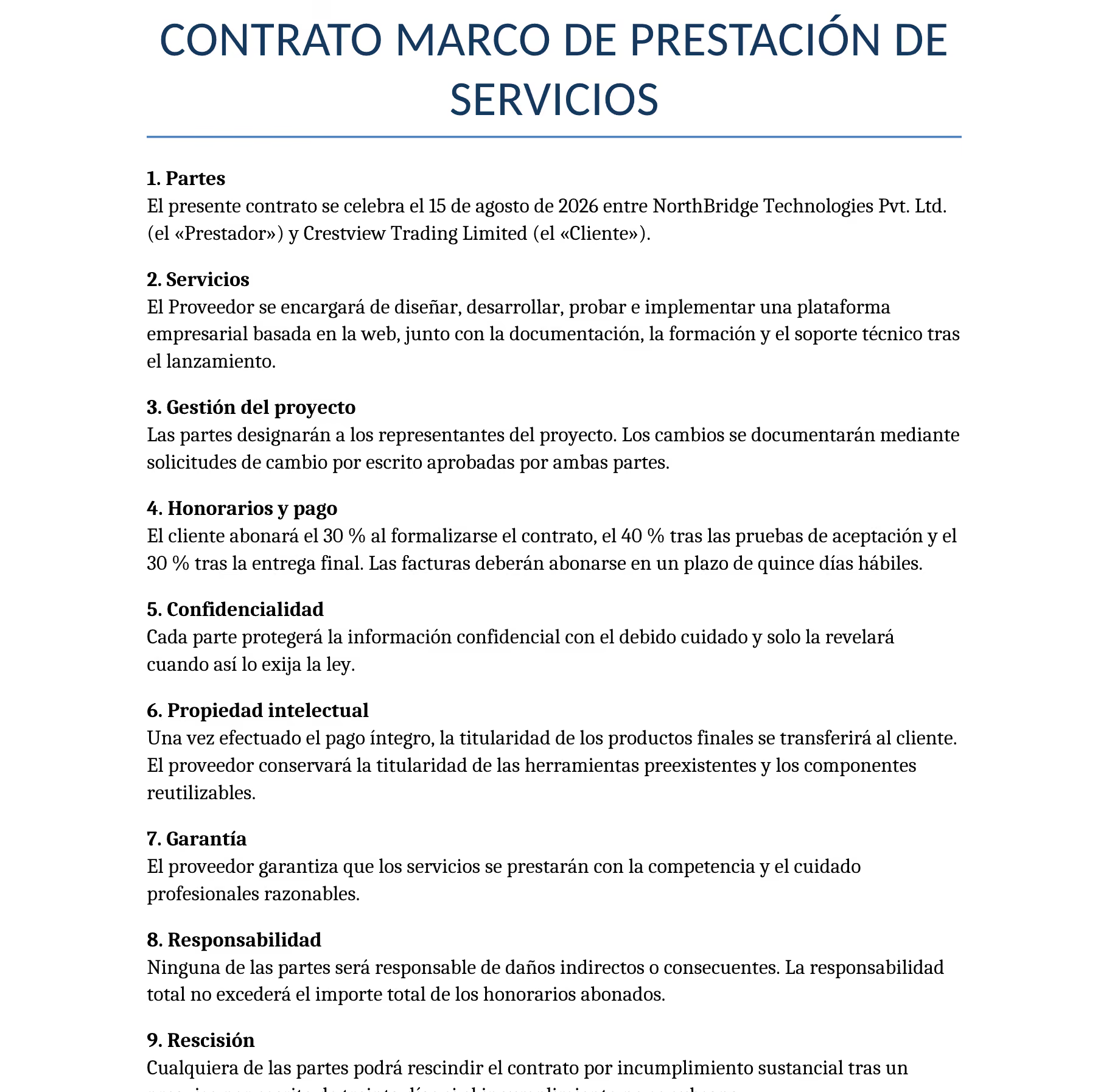
JotMe didn't just translate the contract. It also improved the sentence structure to better suit a formal contract. For example, it rewrote "Provider shall design, develop, test, and deploy..." as "The Provider shall be responsible for designing, developing, testing, and implementing...", making the clause more precise, legally appropriate, and easier to interpret without changing its meaning.
Original Text: Provider shall design, develop, test, and deploy a web-based business platform together with documentation, training, and post-launch support.
JotMe translation in Spanish:
El Proveedor se encargará de diseñar, desarrollar, probar e implementar una plataforma empresarial basada en la web, junto con la documentación, la formación y el soporte técnico tras el lanzamiento.
Meaning in English:
The Provider shall be responsible for designing, developing, testing, and implementing a web-based enterprise platform, along with documentation, training, and post-launch technical support.
Test 3: HR Policy Translation (English → Chinese)
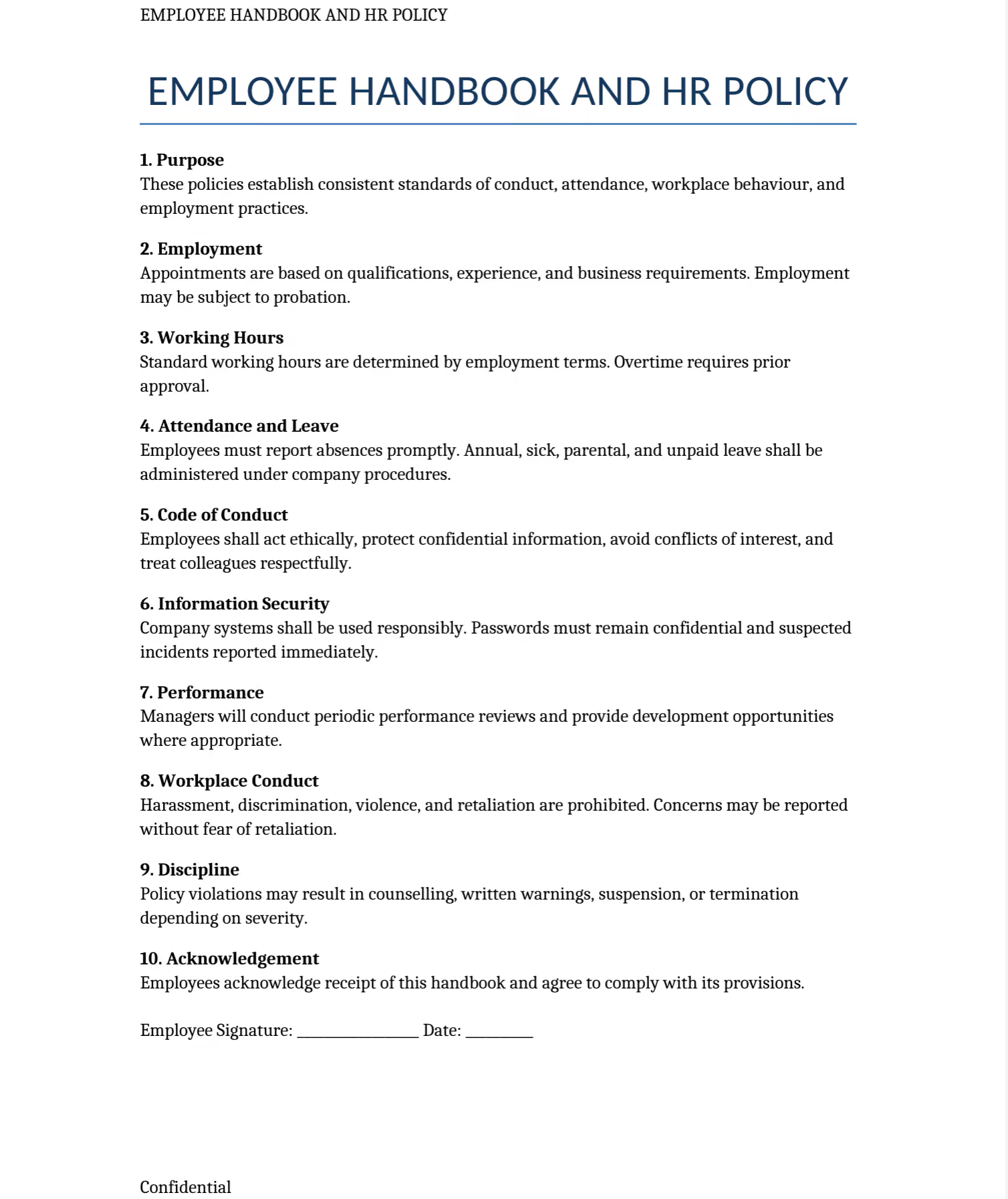
HR documents often contain structured information, headings, and internal policies that require consistent translation.
We tested a one-page HR policy document to evaluate content completeness and formatting retention.
Original Document:
ChatGPT translate document:
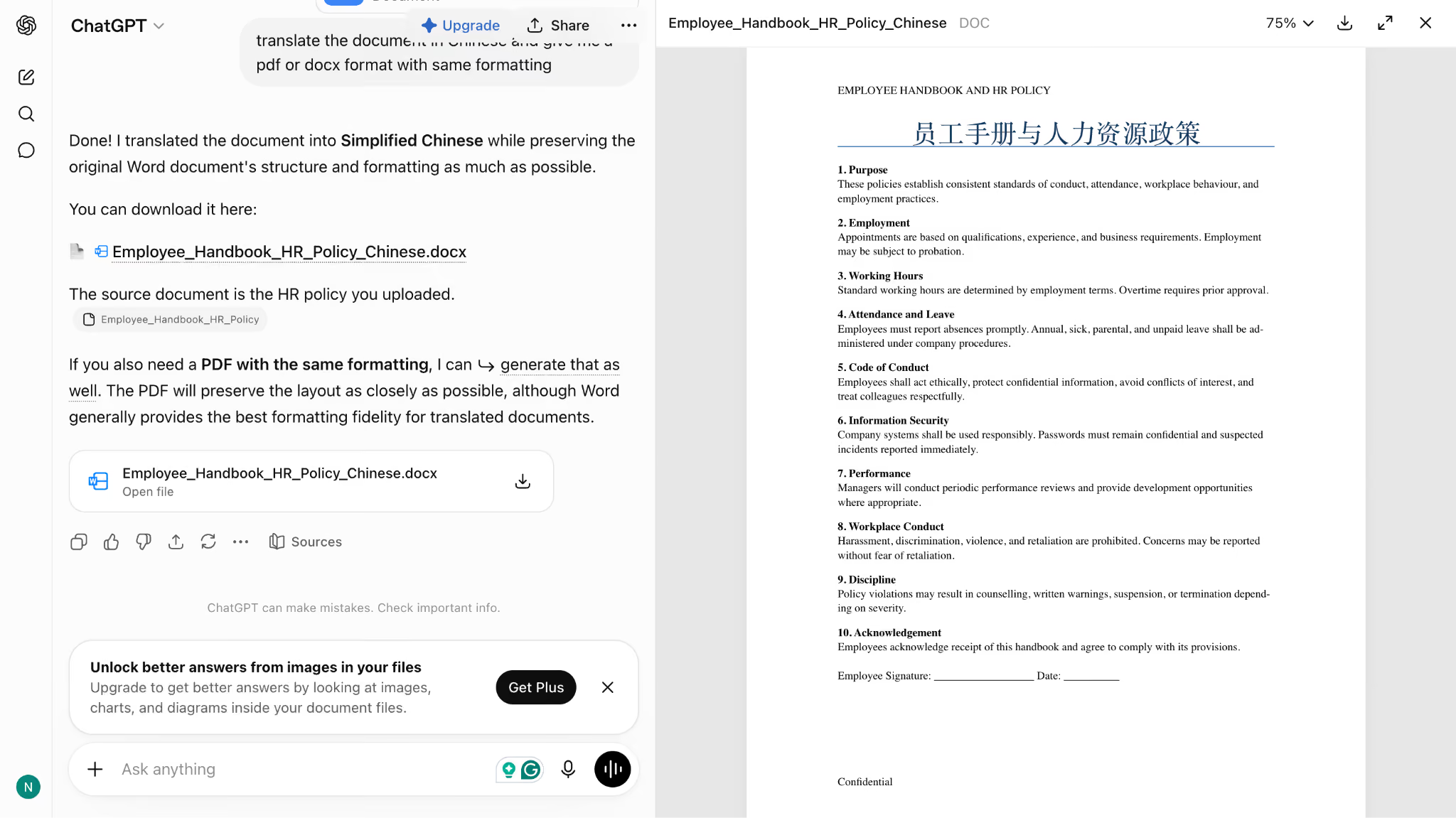
As you can see, ChatGPT translated the main heading but left most of the document content unchanged in English. It could not produce a complete Chinese translation of the file.
Doclingo English to Chinese:
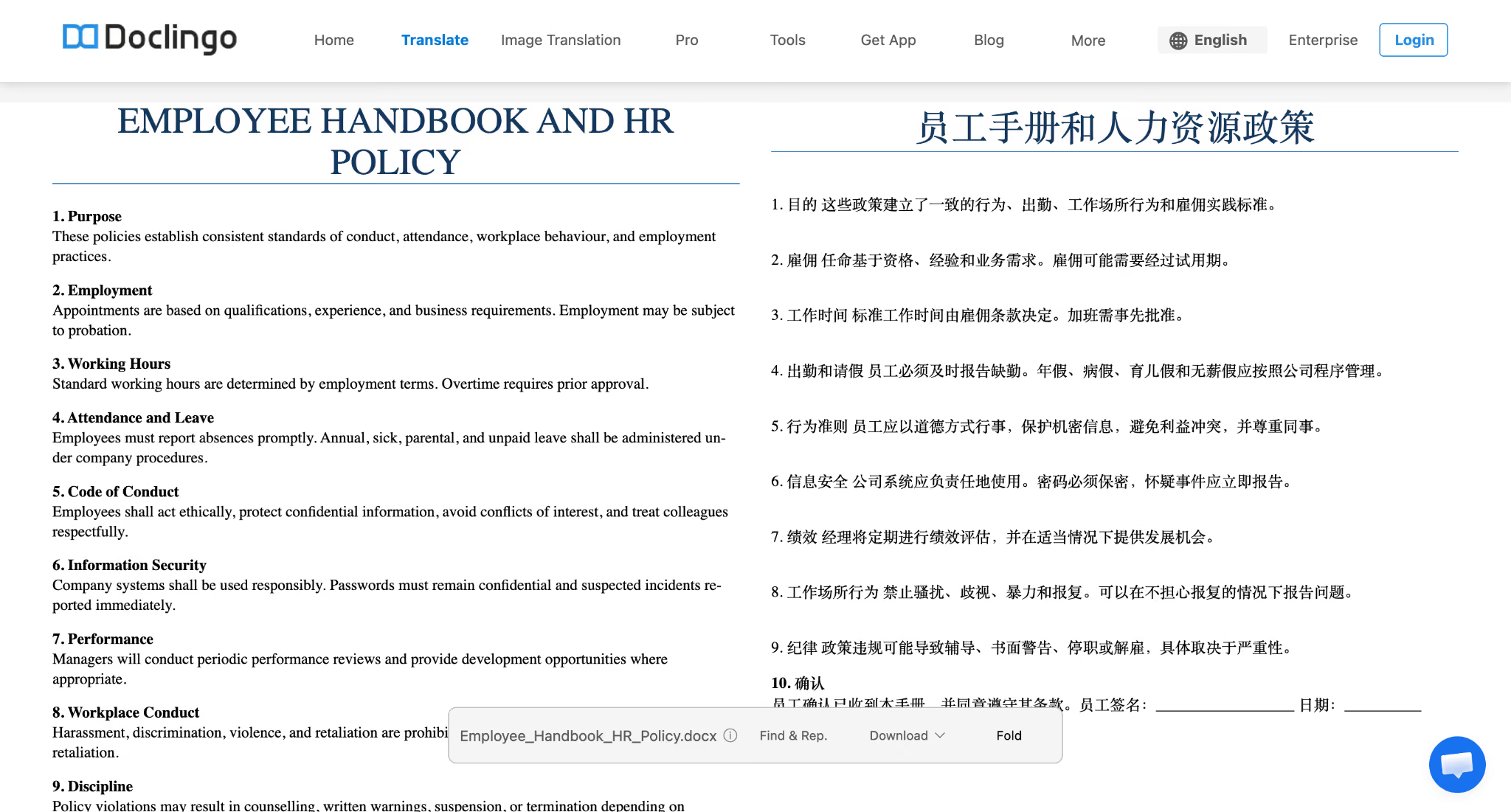
Doclingo completed the translation but struggled with formatting preservation and translation accuracy. The document structure changed after processing, and some translated sections lacked accuracy.
Scoring Methodology
Each document translator was evaluated across seven areas:
- Translation accuracy
- Context preservation
- Formatting retention
- OCR performance
- Language support
- File compatibility
- Privacy and pricing
The purpose of this testing process was to compare document translation software based on actual output quality rather than feature lists or vendor claims.
Best Document Translators We Tested in 2026
JotMe, DeepL, SYSTRAN, ChatGPT, and Microsoft Translator are some of the best translation software. Let’s find out which document translator suits your use case, detailed pricing, and where these tools slow down:
JotMe
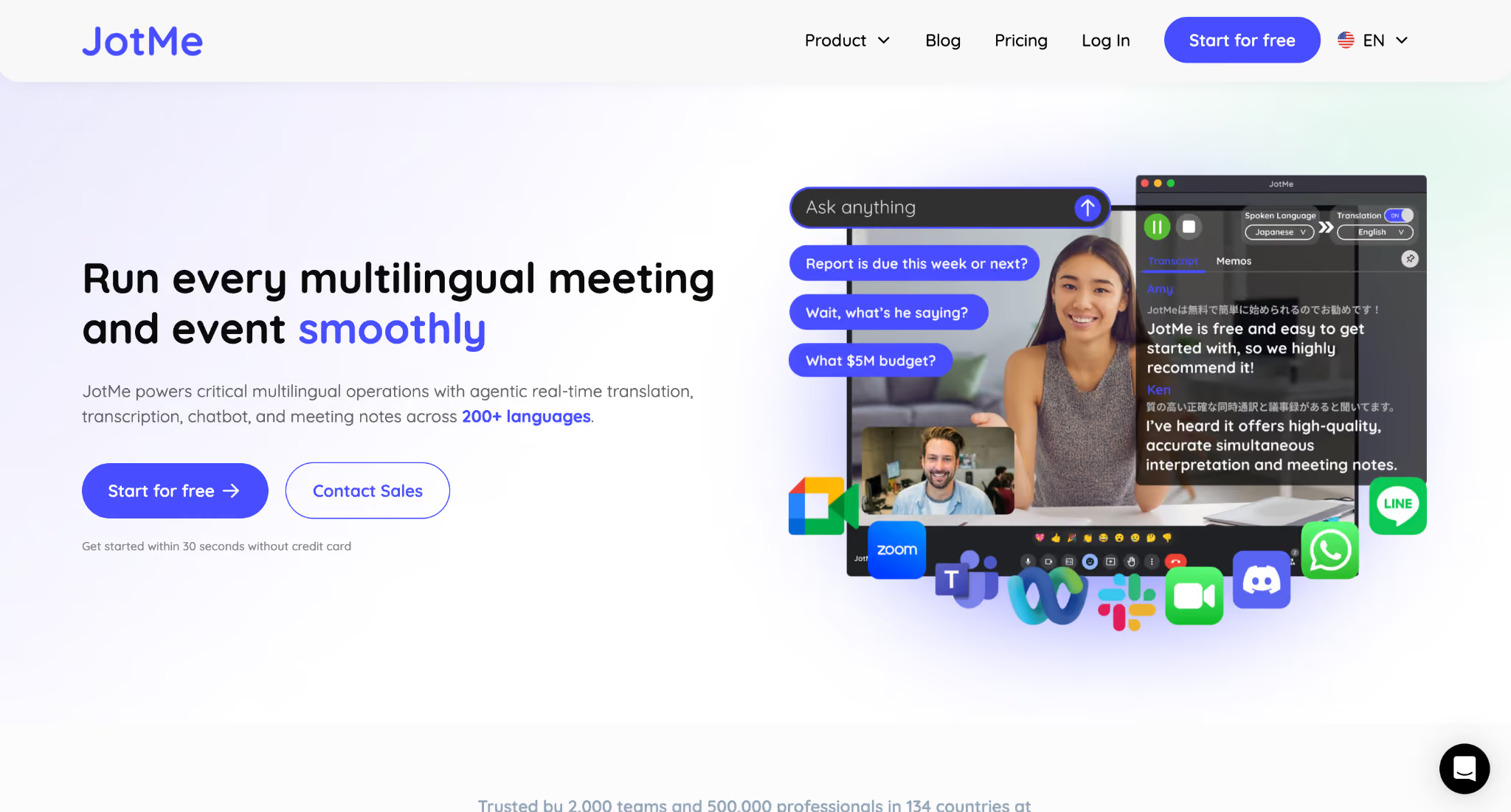
Overall Score: 9/10
Best for: JotMe is best for users who need accurate document translation with preserved formatting, OCR support, and a workflow to understand and discuss translated documents.
Formatting result: JotMe preserved document structure well during testing, including headings, tables, numbering, and page layout across contracts and brochures.
Languages supported: JotMe supports 200+ languages and 39,000+ language pairs, including English, Chinese, Japanese, Korean, Spanish, French, German, and Arabic.
Free plan: JotMe’s free plan includes 5 AI credits, which can be used for trying JotMe’s AI-powered translation features. It also includes limited live transcription minutes and access to basic AI features.
Paid plan: JotMe uses AI credits for document translation instead of charging per page. PDF translation starts at 10 AI credits for documents up to 50,000 characters. The Pro plan starts at $10/user/month and includes 20 AI credits, while the Premium plan costs $15/user/month and includes 50 AI credits with higher translation and transcription limits.
The catch: JotMe performed consistently across legal agreements, brochures, and OCR-based PDFs. However, during our scanned PDF test, it failed to capture around 10% of the document content before translation, showing that OCR accuracy can still depend on scan quality.
DeepL Pro
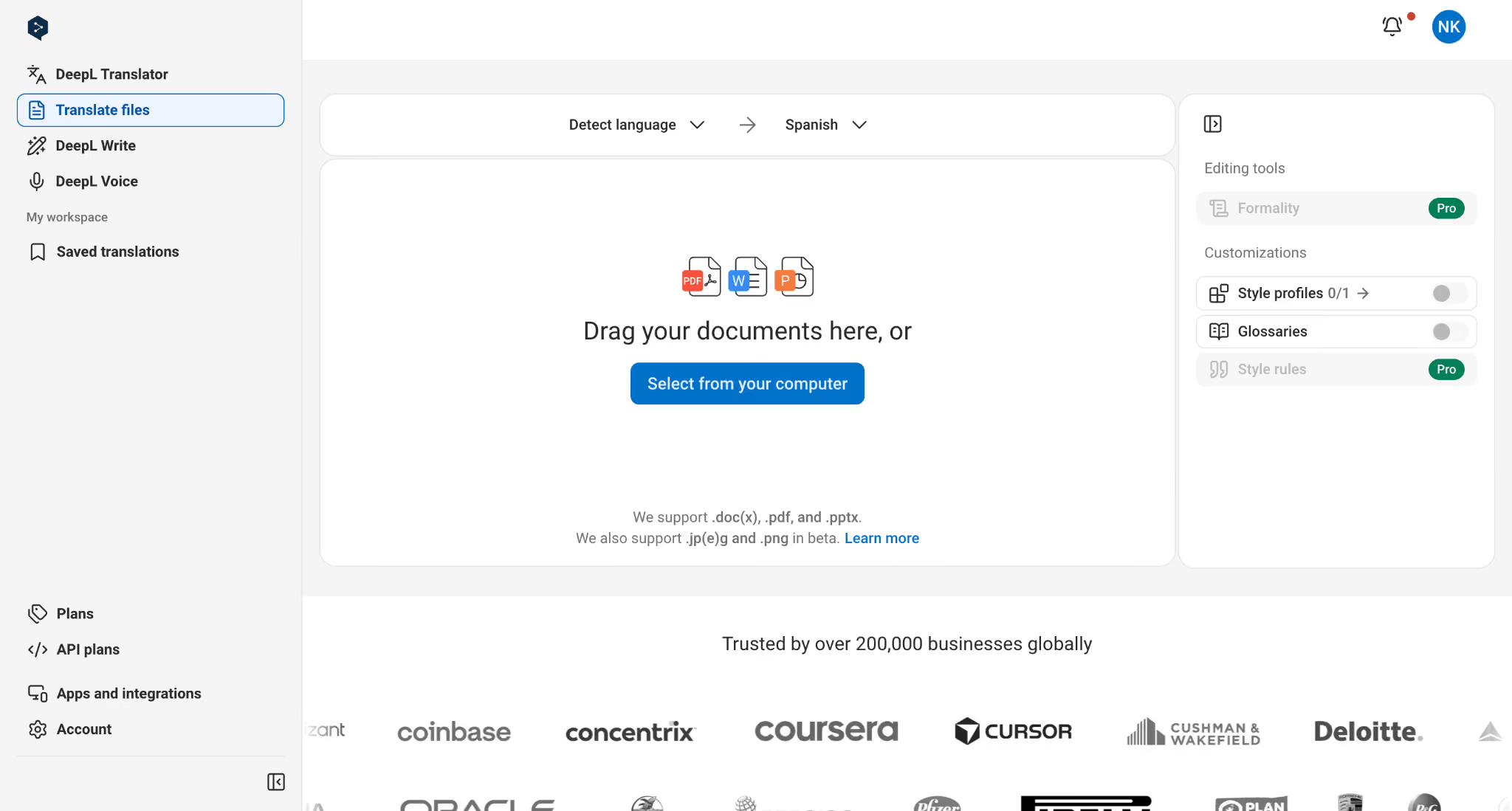
Overall Score: 8.5/10
Best for: Users who prioritize natural, accurate translations and need strong language understanding, especially for professional documents where wording quality matters more than perfect formatting retention.
Formatting result: DeepL translated documents accurately, but during testing it did not fully preserve the original formatting of the scanned PDF, requiring additional layout adjustments after translation.
Languages supported: Supports 30+ languages, including English, Spanish, Chinese, Japanese, Korean, French, German, Italian, Portuguese, and Dutch.
Free plan: DeepL offers a free version with limited translation features. It supports basic text translation and includes limited file translation, but advanced document translation features require a paid plan.
Paid plan: DeepL Pro starts at $8.74/month (billed annually) for individual users and includes 300,000 characters per month, 3 file translations per month, full-page translation, and no data training. Team plans start at $28.74/user/month and increase file translation limits, glossaries, collaboration controls, and administration features.
The catch: DeepL performed very well when translating the content itself. In our scanned PDF test, it accurately translated the English document into Arabic, but the final output did not maintain the original document formatting, meaning users may need to manually fix the layout before sharing the translated file.
Google Translate
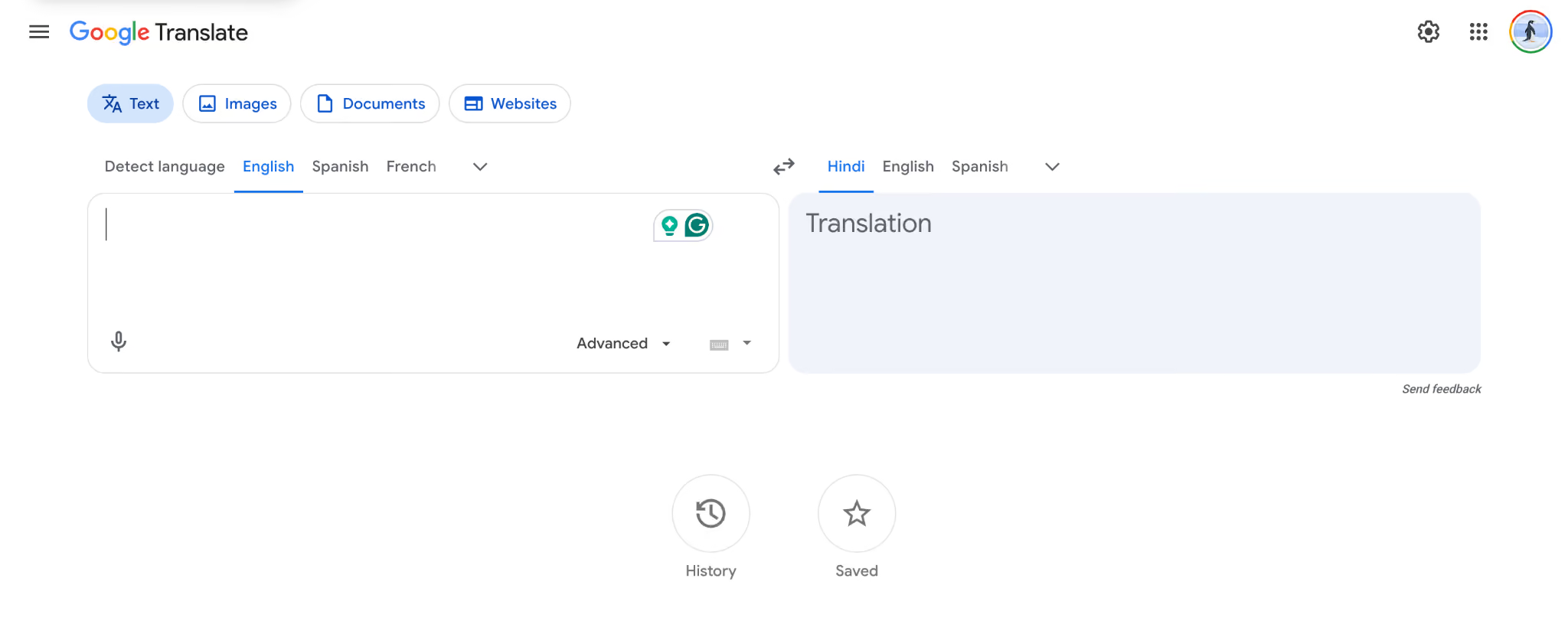
Overall Score: 7/10
Best for: Users who need a free and quick way to understand PDF content without requiring professional formatting or advanced document workflows.
Formatting result: Google Translate produced accurate translations during testing, but the original formatting changed after translation, especially in documents where spacing, alignment, and structure mattered.
Languages supported: Supports 100+ languages, including English, Spanish, Chinese, Arabic, Japanese, Korean, French, German, Hindi, and Portuguese.
Free plan: Google Translate is completely free and allows users to translate supported documents without creating a paid account. It works well for quick translations, references, and personal documents where maintaining the original design is not a priority.
Paid plan: Google Translate does not offer a paid document translation plan. Users who need enterprise translation workflows, stronger privacy controls, or advanced document handling usually need to use Google Cloud Translation services instead.
The catch: Google Translate handled the scanned document translation with good accuracy, but it struggled with formatting preservation. The translated content was understandable, but the document required additional adjustments to restore the original structure and appearance.
Taia
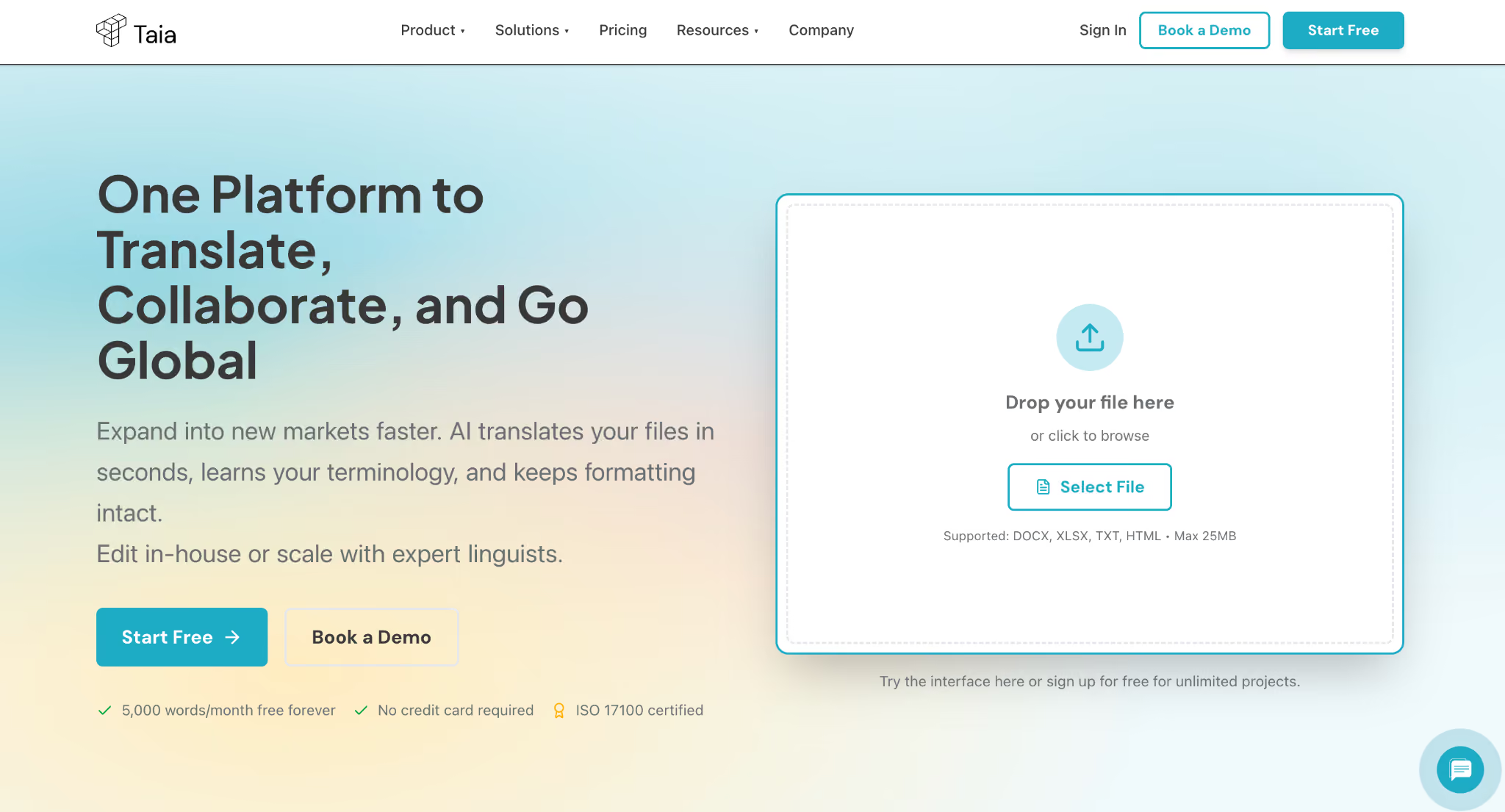
Overall Score: 6.5/10
Best for: Businesses that need more than basic document translation and want a complete workflow with AI translation, human review, translation memory, and team collaboration features.
Formatting result: Taia is designed to preserve document formatting and layout across 65+ file formats, but we could not fully verify PDF formatting preservation because direct PDF upload was not available during testing.
Languages supported: Supports 204 languages, including English, Spanish, Chinese, Japanese, Korean, Arabic, French, and German.
Free plan: Taia offers a free plan with 5,000 AI words per month, support for basic translation workflows, and no credit card requirement. It is suitable for users who want to test AI document translation before upgrading.
Paid plan: Taia’s paid plans start at €9/month for 20,000 AI words. The Pro plan costs €39/month and includes 100,000 AI words, 65+ file formats, unlimited collaboration, translation memory, glossaries, style guides, and API access. Enterprise plans include custom workflows, integrations, and additional security controls.
The catch: During our testing, Taia could not complete the scanned PDF translation workflow. Since it does not support direct PDF uploads, we converted the file into DOCX format, but after multiple attempts, the translation failed to generate successfully.
Smartcat
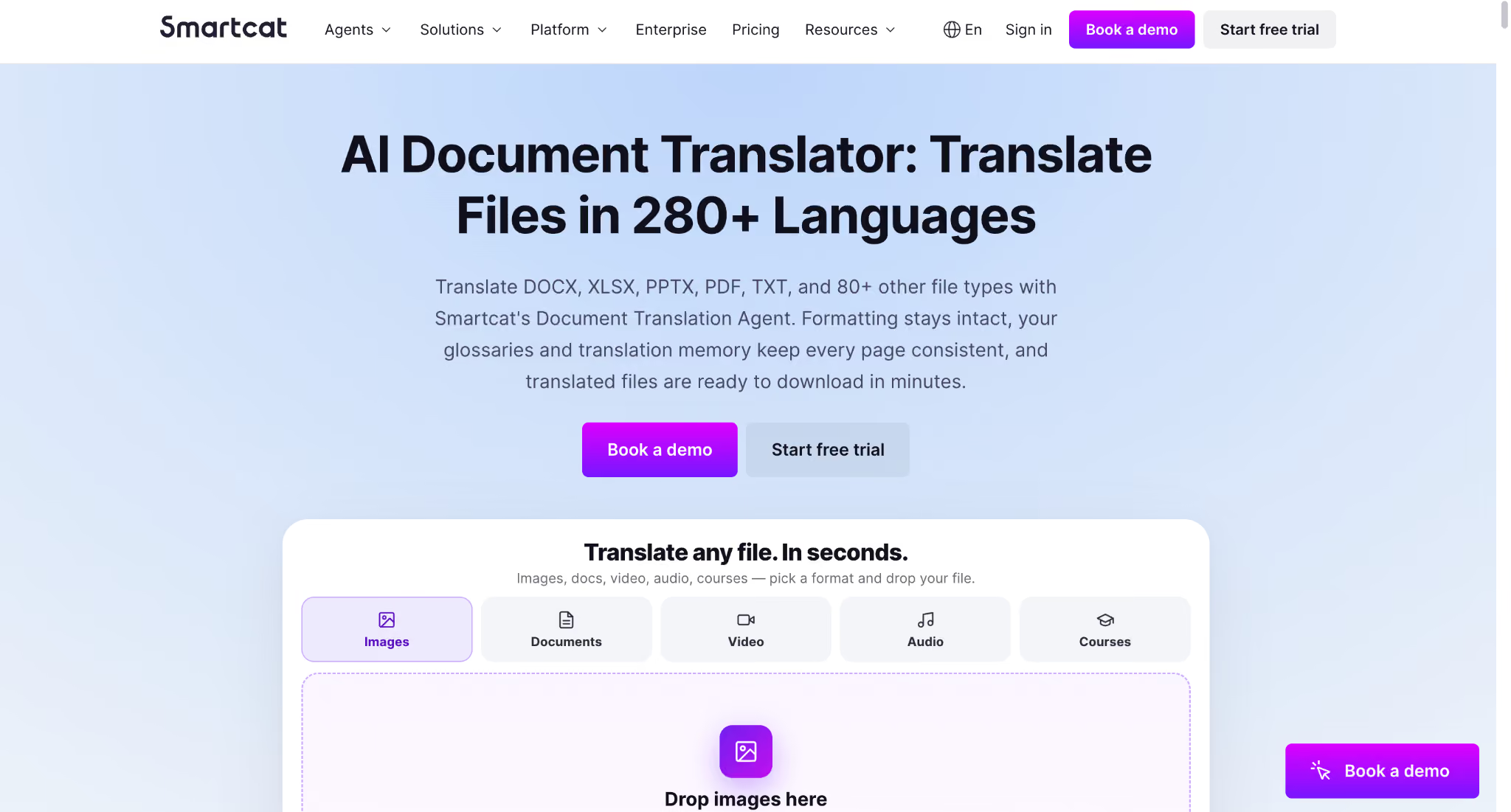
Overall Score: 8/10
Best for: Teams and enterprises that need large-scale translation workflows, localization management, and collaboration between AI translation systems and professional linguists.
Formatting result: Smartcat supports 50+ file formats, including PDF, DOCX, and design files, and is designed to preserve document structure while allowing teams to review and edit translations.
Languages supported: Supports 280+ languages, including English, Spanish, Chinese, Japanese, Korean, French, German, Arabic, and Portuguese.
Free plan: Smartcat offers a free trial that allows users to explore its translation platform and collaboration features. However, advanced enterprise workflows, AI coworkers, integrations, and professional translation services require paid plans.
Paid plan: Smartcat pricing is focused on business workflows rather than individual PDF translation. Plans start with Adapt at $1,200/year and scale to enterprise packages starting at $24,000/year or higher. Paid plans include AI translation workflows, unlimited users, integrations, professional linguist access, quality review tools, and enterprise controls.
The catch: We could not test Smartcat directly with our document set because a full evaluation requires account access and its enterprise-oriented workflow. The rating is based on Smartcat’s documented capabilities, supported file formats, language coverage, AI translation features, and collaboration tools.
Pairaphrase
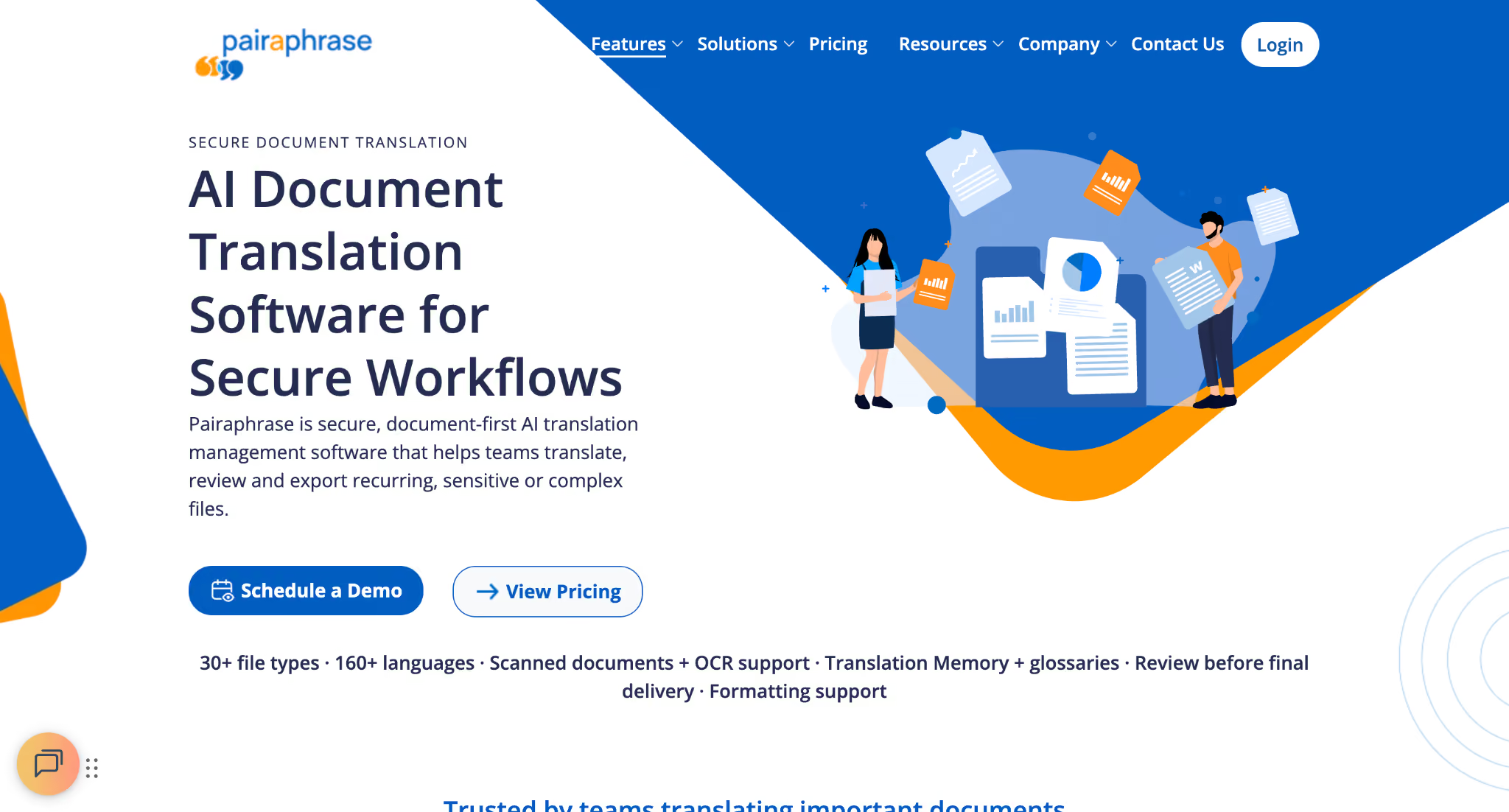
Overall Score: 8/10
Best for: Organizations handling sensitive or recurring document translation workflows that need security controls, terminology management, OCR support, and human review before final delivery.
Formatting result: Pairaphrase is designed to preserve document structure, including layouts, tables, fonts, and images across supported file types, although we could not verify formatting performance through our own file tests.
Languages supported: Supports 160+ languages, including English, Spanish, Chinese, Japanese, Korean, Arabic, French, and German.
Free plan: Pairaphrase does not offer a fully featured free plan for ongoing document translation. The platform provides limited trial options and mainly targets business users who need secure translation workflows.
Paid plan: Pairaphrase plans start at $3,420/year for the Bronze plan, which includes 600,000 translated words, 30+ file formats, and support for multiple translation engines. Higher plans add OCR for scanned documents, DeepL and ChatGPT translation engines, AI tools, larger word limits, and additional collaboration features.
The catch: We could not test Pairaphrase directly with our document set because the platform requires a business-oriented workflow rather than a simple self-service translation process. The rating is based on its documented capabilities, including OCR support, Translation Memory, glossary management, security controls, and supported file formats.
DocTranslator
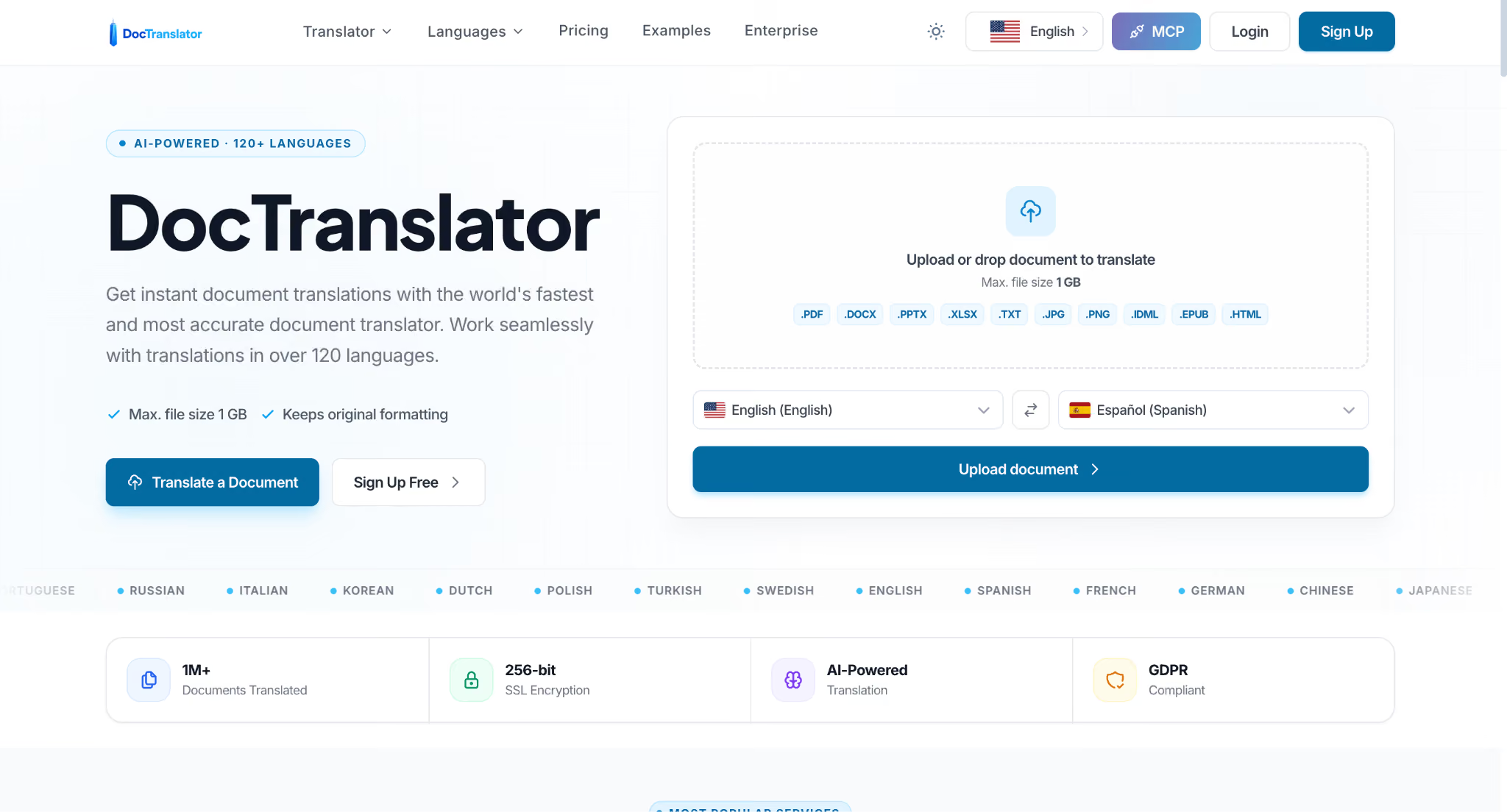
Overall Score: 7.5/10
Best for: Users who need a simple document translation tool that supports large files, multiple formats, and affordable pay-per-use translation.
Formatting result: DocTranslator focuses on maintaining original document formatting and supports files such as PDF, DOCX, PPTX, XLSX, and IDML, but we could not verify complex layout preservation through our own testing.
Languages supported: Supports 120+ languages, including English, Spanish, French, German, Chinese, Japanese, Korean, Arabic, Hindi, Portuguese, and Italian.
Free plan: DocTranslator offers a 7-day trial for $2, allowing users to translate up to 10 pages or 3,000 words before choosing a paid plan. This makes it easier to test the service before committing.
Paid plan: The paid plan starts at $14.99/month and includes up to 100 pages or 30,000 words per month, support for 120+ languages, unlimited file storage, and common document formats. An annual plan is available at $135/year, reducing the monthly cost for regular users.
The catch: We could not directly test DocTranslator with our document samples, so the rating is based on its documented features, pricing, supported file formats, and translation workflow.
Adobe Acrobat Pro
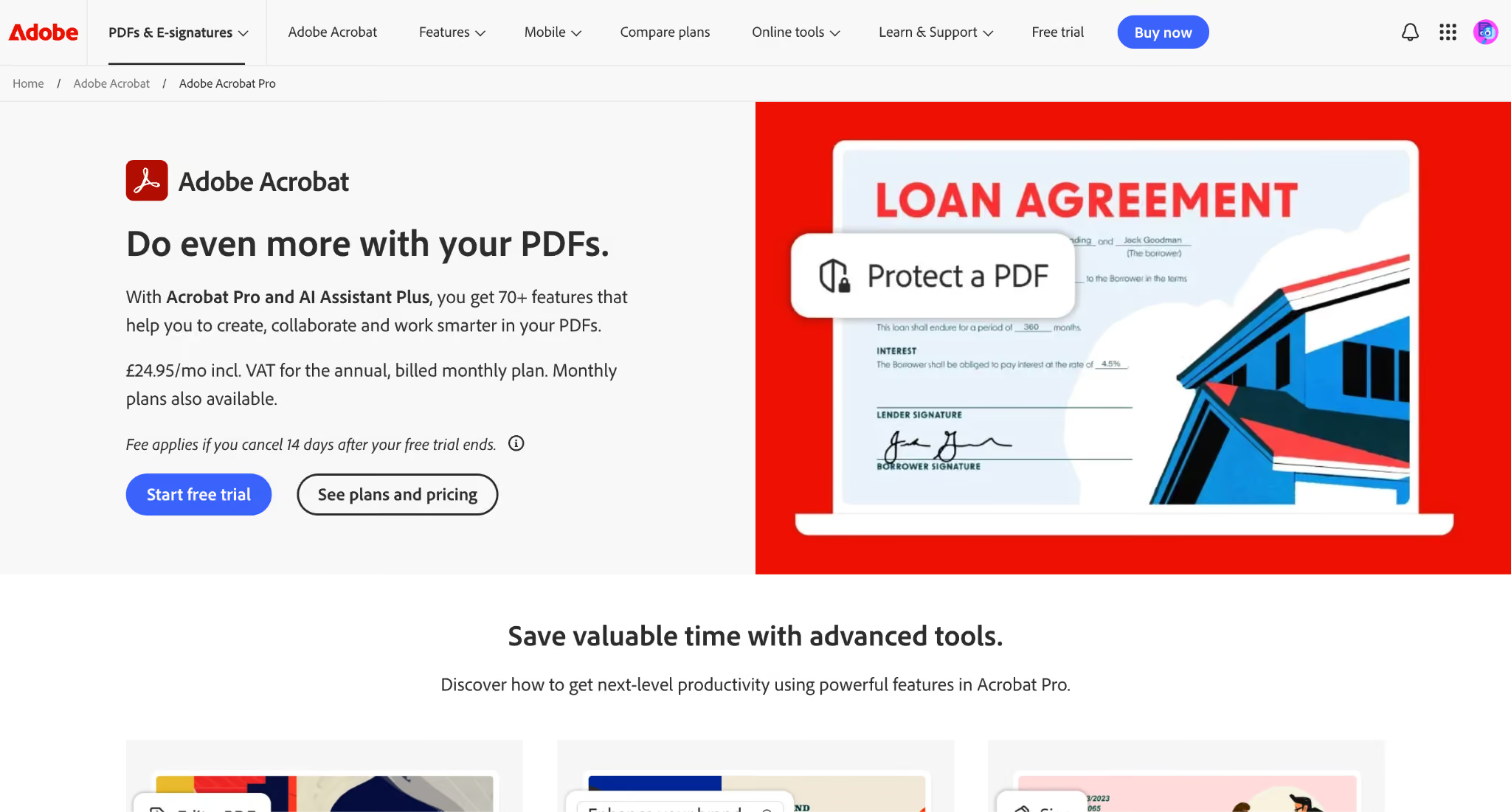
Overall Score: 8/10
Best For: Users who already work with PDFs and need more than translation, including editing, OCR, document conversion, security, and e-signature features.
Formatting Result: Adobe Acrobat Pro keeps the original PDF structure, layout, tables, and visual elements intact because it works directly with PDF files rather than converting them into another format.
Languages Supported: Adobe Acrobat Pro does not work as a dedicated document translation platform. Its translation capabilities mainly come through integrations and AI features, while Adobe’s core strength is PDF editing, OCR, conversion, and document management.
Free Plan: Adobe does not offer a permanent free plan for Acrobat Pro. Users can access a free trial before choosing a paid subscription.
Paid Plan: Acrobat Pro costs $19.99/month when billed annually. It includes advanced PDF editing, OCR conversion, document protection, e-signatures, redaction, PDF comparison, AI assistance, and tools for managing professional documents.
Other available plans include:
- Acrobat Standard: $14.99/month for basic PDF editing, conversion, and signing tools.
- Acrobat Studio: $24.99/month with additional AI features, PDF Spaces, Acrobat AI Assistant, and Adobe Express Premium.
The Catch: Adobe Acrobat Pro is primarily a PDF editing and management tool, not a dedicated document translator. Its advantage is combining PDF editing, OCR, and document workflows in one place.
For contracts, forms, and business PDFs, Adobe’s PDF foundation is useful. However, full document translation requires the Adobe Express workflow and may involve extra steps.
SYSTRAN
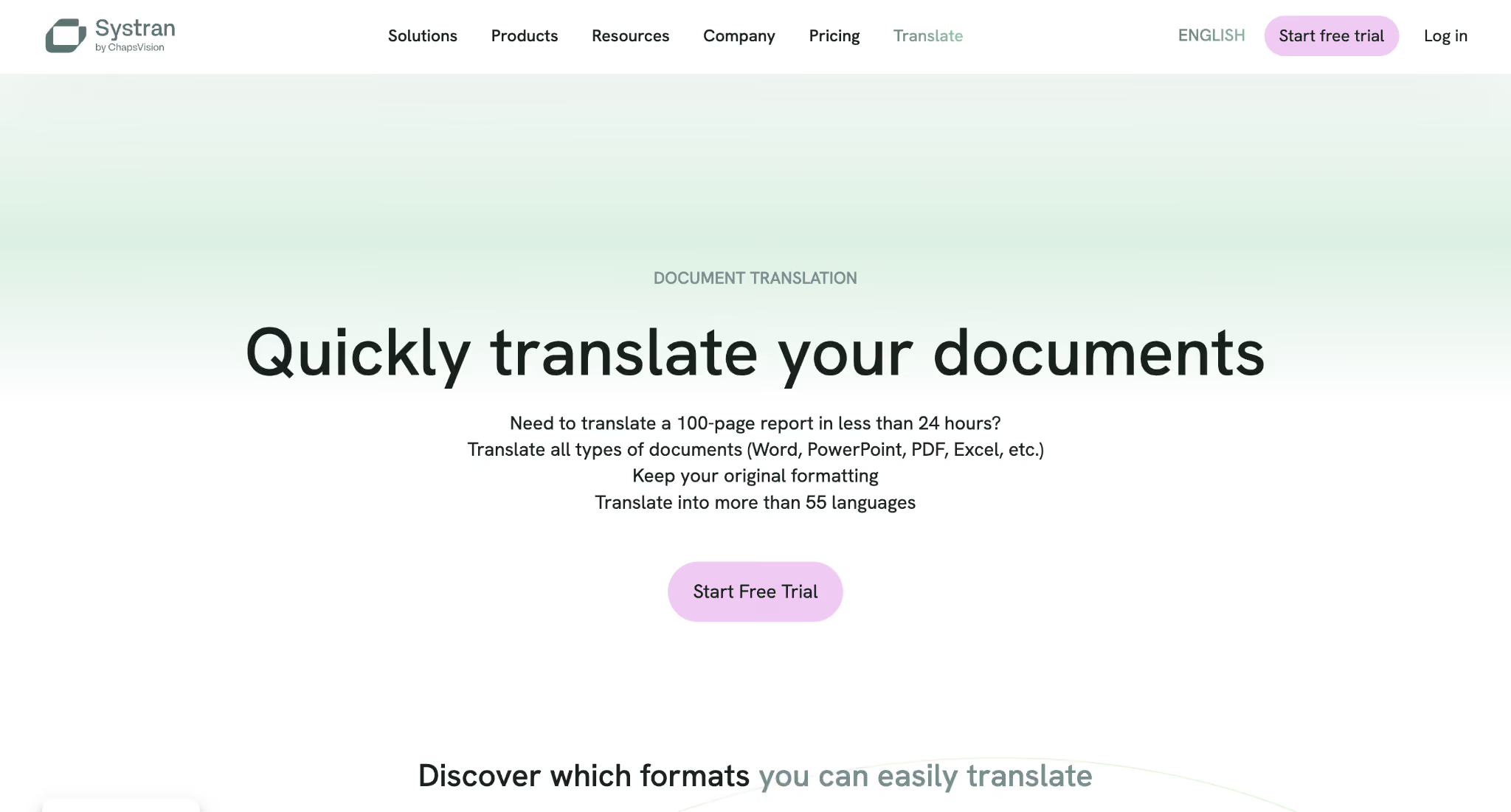
Overall Score: 8/10
Best For: Businesses that need secure document translation with domain-specific language support, especially for legal, technical, financial, and enterprise documents.
Formatting Result: SYSTRAN performed strongly on document handling. It supports direct PDF translation and aims to preserve formatting, including layouts, tables, and document structure.
Languages Supported: SYSTRAN supports translation into 55+ languages, including commonly used pairs such as English, French, Spanish, German, Chinese, Japanese, Arabic, and Portuguese.
Free Plan: SYSTRAN offers a free trial for users who want to test document translation before purchasing a plan. The free access is limited compared with paid subscriptions.
Paid Plan:
SYSTRAN Translate Pro offers two main plans:
- Pro Plus: €24.99/month per user
Includes unlimited text translation, file translation, PDF translation, around 600 pages of text per month, 55 languages, Microsoft Office add-ins, dictionaries, and full data privacy. - Pro Premium: €49.99/month per user
Includes everything in Pro Plus, plus around 2,000 pages per month, translation memories, post-editing features, CAT tool/TMS connectors, and advanced workflow support.
Enterprise users can choose SYSTRAN’s cloud or on-premise solutions with additional security and customization options.
The Catch: SYSTRAN delivered accurate translation quality in our contract test. It translated the English service agreement into Spanish while keeping the formatting untouched. However, the translated document included a watermark.
If you plan to share the translated file with clients or external teams, you will need an additional step to remove the watermark before final delivery.
Smartling
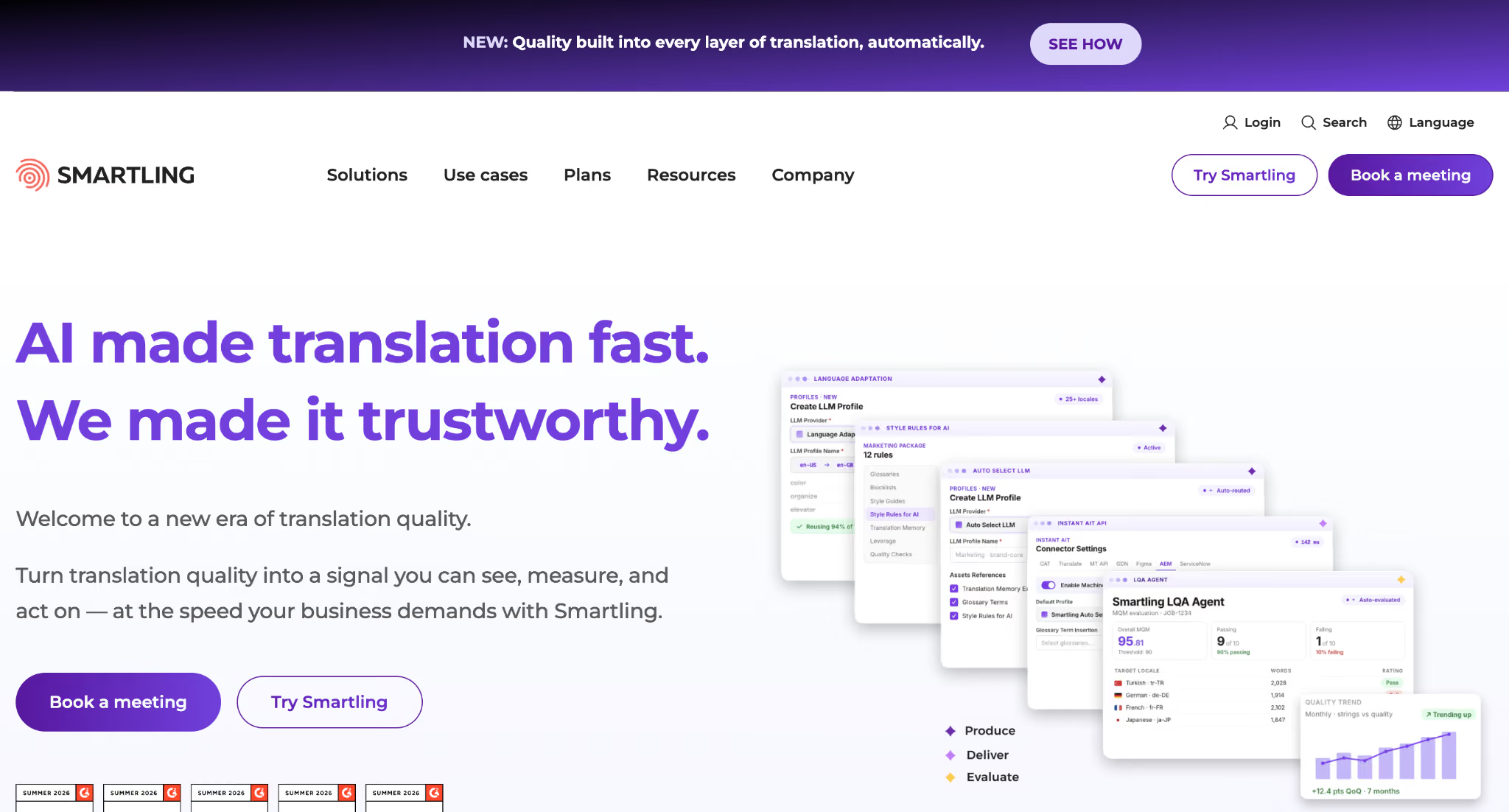
Overall Score: 8.5/10
Best For: Enterprise teams that need a complete translation management system for websites, software, marketing content, support resources, and large-scale localization workflows.
Formatting Result: Smartling focuses on maintaining content structure across different formats and workflows, with built-in localization tools, integrations, and translation management features.
Languages Supported: Smartling supports multiple languages through its AI translation workflows and professional linguist network. The exact language availability depends on the selected workflow and translation service.
Free Plan: Smartling does not offer a public free plan.
Paid Plan: Smartling uses custom pricing based on business needs, including content volume, languages, integrations, workflow requirements, and human translation support.
The Catch: We could not test Smartling directly, so this rating is based on its documented features, workflows, and enterprise capabilities.
ChatGPT
Overall Score: 7/10
Best For: Users who need quick document assistance, translation help, rewriting, summarization, and language improvements alongside general AI capabilities.
Formatting Result: ChatGPT can process uploaded documents, but formatting preservation depends on the file type and workflow. In our HR policy test, it was unable to maintain the complete document structure because most content remained untranslated.
Languages Supported: ChatGPT supports translation across many languages, including English, Spanish, Chinese, Arabic, French, German, Japanese, Hindi, and many others.
Free Plan: The free plan provides limited access to ChatGPT features, including limited messages, uploads, image generation, deep research, memory, and other advanced capabilities.
Paid Plan: ChatGPT offers multiple paid plans, including Go ($8/month) with expanded access to messages, uploads, image creation, and memory; Plus ($20/month) with advanced reasoning models, higher limits, deep research, projects, and custom GPTs; and Pro (starting at $100/month) for heavy users who need maximum usage limits, advanced reasoning, and expanded productivity features.
The Catch: ChatGPT is a powerful AI assistant, but it is not a dedicated document translation tool. In our HR Policy translation test, it translated the main heading into Chinese but left most of the document content unchanged in English, meaning it could not complete a full document translation workflow reliably.
Microsoft Translator
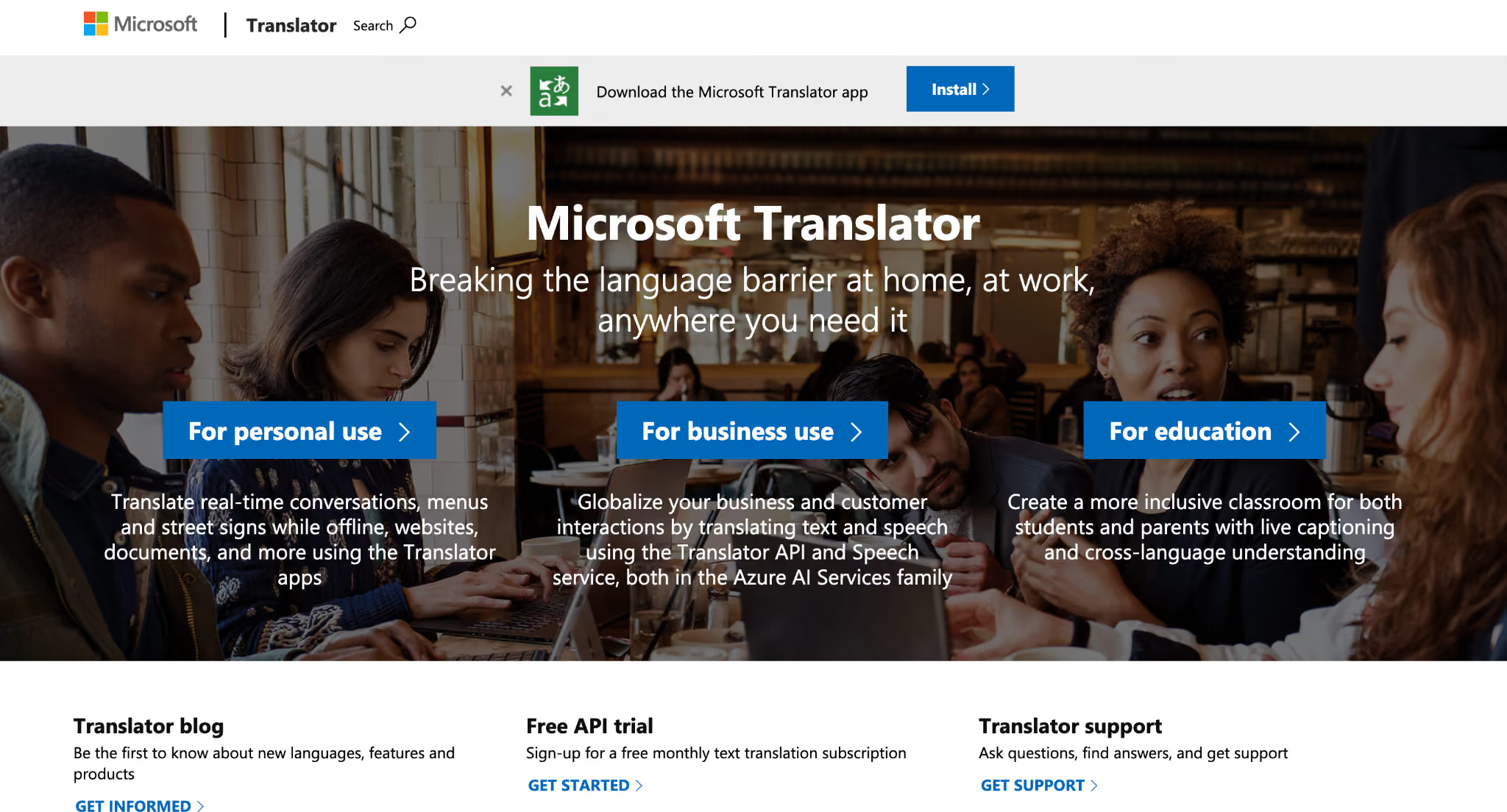
Overall Score: 8/10
Best For: Businesses and developers who need scalable document translation through Azure, especially for large files, batch translation, and applications that require API-based workflows.
Formatting Result: Microsoft Translator’s Document Translation feature preserves original formatting for supported files, including headings, tables, layouts, and document structure.
Languages Supported: Microsoft Translator supports 180+ languages, including English, Spanish, Chinese, French, German, Arabic, Japanese, Hindi, and many other major language pairs.
Free Plan: Microsoft Translator offers a free tier with up to 2 million characters per month for text translation.
Paid Plan: Microsoft Translator follows a pay-as-you-go pricing model through Azure. Text translation costs $10 per million characters, document translation costs $15 per million characters, and image document translation costs $8 per 1,000 images. Custom text translation is priced at $40 per million characters.
The Catch: Microsoft Translator is a powerful enterprise translation service, but it is mainly designed for developers and businesses using Azure workflows. Users looking for a simple upload-and-translate document tool may find the setup process more technical than other document translators.
28 Additional Document Translation Tools: Quick Overview
After testing and reviewing the leading document translation tools in detail, there are several other translation software options worth considering depending on your workflow. While some tools focus on AI-powered document translation, others are built for professional localization, developer workflows, academic content, or enterprise language management.
This comparison includes language translation software designed for different use cases, from professional CAT tools and enterprise translation management systems to simple document translators and AI-powered platforms. Since these tools serve different audiences, the right choice depends on factors such as translation quality, workflow requirements, file types, collaboration needs, and budget.
AI & General Document Translation Tools
Professional CAT Tools & Translation Management
Human Translation & Localization Services
PDF & Document Translation Tools
Website & Content Localization Platforms
Academic & Writing-Focused Translation Tools
What Does Document Translation Cost
The price of document translation depends less on the software itself and more on how often you translate, how large your documents are, and whether you need AI-only or professional translation.
For example, translating a one-page contract every month has a very different cost than translating hundreds of product manuals or employee handbooks.
Real Cost Comparison:
If you only translate a few contracts each month, paying for an enterprise localization platform rarely makes financial sense. A subscription like JotMe, DeepL Pro, or ChatGPT Plus will usually be enough. On the other hand, businesses translating thousands of pages each month often save money with usage-based services like Microsoft Translator or enterprise platforms that offer custom pricing.
Which Document Translator Fits Your Use Case
Not every document needs the same translation software. A legal contract has different requirements than a marketing brochure or a scanned PDF. Here's the list of the best document translation tools we would choose for the most common document translation scenarios.
Contracts & Legal Documents
Winner: JotMe
JotMe preserves document formatting, supports scanned documents with OCR, and handles legal terminology well without breaking layouts.
Also consider:
- Taia for AI + professional human review
- Pairaphrase for compliance-focused enterprise workflows
- DeepL Pro for high-quality legal drafts
Technical Manuals
Winner: JotMe and SYSTRAN
JotMe is a strong choice for technical document translation software with OCR support, formatting preservation, and multilingual document workflows. SYSTRAN is ideal for terminology-heavy technical content with its industry-specific translation models that adapt to professional domains.
Also consider:
- Taia for AI translation with Translation Memory and glossary-based terminology consistency
- SDL Trados Studio for professional translators managing complex technical projects
- memoQ for enterprise teams needing advanced terminology management
- Microsoft Translator for high-volume technical document translation workflows
HR Policies & Internal Documentation
Winner: JotMe
JotMe keeps tables, headings, and formatting intact while supporting more than 200 languages, making it ideal for employee handbooks, HR policies, and internal documents.
Also consider:
- DeepL Pro
- Adobe Acrobat Pro
- ChatGPT for improving wording after translation
Marketing & Brand Content
Winner: DeepL Pro and JotMe
DeepL Pro produces natural-sounding translations that work well for marketing copy while maintaining document structure. JotMe is a strong option for multilingual marketing documents where formatting preservation, quick translation, and support for multiple languages are important.
Also consider:
- Taia for maintaining brand terminology with Translation Memory and glossary support
- Smartling for enterprise-scale marketing localization workflows
- ChatGPT for refining translated copy and adapting brand tone
Research Papers
Winner: ChatGPT and Claude
ChatGPT is useful for improving readability, explaining complex academic language, and refining translated research papers. Claude is a strong choice for nuanced long-form translation where context, tone, and detailed explanations matter.
Also consider:
- JotMe for multilingual document translation with formatting preservation and OCR support
- Wordvice.ai for academic editing and language improvement workflows
- DeepL Pro for high-quality translations, especially for European languages
Scanned Archives & Image-Based PDFs
Winner: JotMe
JotMe combines accurate OCR with strong formatting preservation, making it one of the best choices for scanned contracts, invoices, forms, and archived PDFs.
Also consider:
- Microsoft Translator for large-scale document translation through Azure workflows
- SYSTRAN for secure document translation with OCR and enterprise-focused workflows
- Pairaphrase for sensitive scanned documents requiring controlled translation workflows
Which Document Translators Protect Your Files Best
If privacy is your top priority, the safest picks are the tools that either delete files quickly, do not keep documents after processing, or offer strong enterprise controls. Based on our testing, JotMe stands out because it saves no document to a server.
For most business translation software use, JotMe is one of the best privacy-first options because it does not keep documents on a server. If you need formal compliance coverage, DeepL Pro and SYSTRAN are the strongest options.
How Document Translation Fits Into Global Communication
Document translation is often the first step in international collaboration. A translated contract, proposal, report, or technical document helps teams communicate clearly before a conversation even begins. But global communication rarely stops after the document is translated.
A typical workflow looks like this:
1. Translate the document
A company translates a contract, proposal, product document, or internal file using translation software for documents that preserves formatting, terminology, and key information.
2. Share the translated document
The translated file is sent to suppliers, clients, partners, or international teams so everyone can review the same information in their preferred language.
3. Discuss and finalize decisions
The next step usually happens in a meeting. Instead of translating documents and conversations separately, tools like JotMe help bridge that gap by supporting real-time meeting translation across 200+ languages.
This creates a connected workflow where documents, discussions, and decisions stay aligned, helping global teams collaborate faster and reduce misunderstandings.
For a detailed step-by-step process, see our guide on how to translate doc file online.
Which Document Translator Should You Choose
The best document translator depends on whether you need professional-quality documents, enterprise workflows, academic assistance, or simple text translation.
For most users: Choose JotMe
JotMe is the strongest overall choice for document translation because it combines 200+ language support, OCR, formatting preservation, and support for a wide range of file formats. It works well for contracts, reports, business documents, and multilingual workflows where accuracy matters.
For enterprise localization teams: Choose Smartcat or SYSTRAN
Smartcat is better suited for large localization workflows with translation management, collaboration, and professional linguist support. SYSTRAN is a better fit for organizations that prioritize security, industry-specific terminology, and controlled deployment.
For students and researchers: Choose JotMe or ChatGPT
ChatGPT is useful for explaining complex language, improving readability, and working with academic content. JotMe is a better choice when you need the complete document translated while keeping the original structure and formatting.
For legal and business-critical documents: Choose JotMe
JotMe is the safer choice for contracts, agreements, and internal documents where preserving meaning, structure, and terminology is essential.
If you are comparing options, start by translating one important document and check three things: translation accuracy, formatting preservation, and terminology consistency.
FAQs
Which document translator keeps tables intact?
JotMe keeps tables, headings, numbering, and document structure intact during translation. It is designed for business documents where formatting matters, including contracts, reports, presentations, and PDFs that need to look similar after translation.
Can free document translators handle business files?
Free tools like Google Translate and ChatGPT can handle basic document translation and quick understanding. However, for professional output with preserved formatting, consistent terminology, and reliable file handling, JotMe is a stronger choice.
Which document translator works best for scanned documents?
JotMe works best for scanned documents because it combines OCR with document translation. It can extract text from scanned PDFs, translate the content, and maintain the original structure better than general translation tools.
Do document translators preserve brand fonts?
Yes. JotMe preserves document formatting elements such as headings, tables, spacing, and layout. While exact font handling can depend on the original file type, it helps maintain the visual structure needed for branded documents.
Which document translator is safest for legal contracts?
JotMe is a strong choice for legal contracts because it focuses on accurate translation, formatting preservation, and secure document handling. It helps maintain legal meaning while improving readability without changing the intent of contractual language.
What's the cheapest way to translate 100 documents?
ChatGPT can be a low-cost option for basic translation tasks. However, if you need professional-quality results across many documents with consistent formatting, JotMe provides a more reliable document translation workflow.
Which document translator is best for technical manuals?
JotMe is one of the best options for technical manuals because it preserves context, supports complex file formats, and handles terminology-heavy documents where simple word-for-word translation can create errors.
Can ChatGPT translate an entire document?
Yes, ChatGPT can translate complete documents, summarize content, and improve wording. However, it may struggle with formatting preservation and some longer multilingual files, especially when consistent document structure is required.
Which document translator supports the most file formats?
JotMe supports one of the widest ranges of document formats, including PDF, DOCX, PPTX, XLSX, HTML, XML, JSON, XLIFF, IDML, DITA, and MIF files, making it suitable for diverse translation workflows.
Last updated on
August 24, 2026
Follow us on social media: