

Guides
AI Note Taking for Therapists: 7 Tools Tested [2026]

Lovely Mangla
June 18, 2026
A Mandarin-speaking founder books a session with an English-speaking therapist. He describes months of broken sleep, a chest that tightens before every investor call, and a mind that refuses to switch off. The clinician wants to help, yet half of what the founder says arrives a beat late through a human interpreter, and the emotional texture thins out on the way across.
AI note taking for therapists changes that moment.
The right AI app captures the session, renders it in both languages as it happens, and hands the clinician structured notes the second the call ends. Documentation already pulls 2 to 3 hours out of a therapist's day, and a language gap widens that load while putting clinical nuance at risk.
This guide compares 7 AI note taking tools for therapists, starting with the one built for cross-language sessions, so you can choose with privacy, compliance, and your clients in clear view.
Best AI Note Taking App for Therapists: Quick Comparison
The table below ranks the 7 tools therapists name most often, with JotMe first for its cross-language reach. Read it as a shortlist, then use the reviews further down to match a tool to how you actually practice.
Two patterns jump out:
- Every therapist-focused tool treats HIPAA and a signed Business Associate Agreement as the entry ticket, and almost every one captures English far better than any other language.
- JotMe stands on the opposite side of that second line, which is exactly why it belongs at the top of a cross-language list.
What Is AI Note Taking for Therapists?
AI note taking for therapists is software that listens to a counseling session, transcribes the conversation, and drafts structured clinical notes in formats like SOAP, DAP, or BIRP. It cuts the hours clinicians spend writing notes after each client, and the strongest tools now transcribe and translate across languages while the session is still running.
Most tools fall into one of five capture styles, and the style decides how much work lands back on you:
- Ambient recording: The tool listens to the live session and drafts a note from the conversation, so you carry almost nothing in your head. Freed and Abridge work this way.
- Dictation: You speak a summary after the session, and the tool structures it. Faster than typing, though you still reconstruct the session from memory.
- Prompt or summary: You type a few lines and the tool expands them into a note. AutoNotes leans on this, and quality tracks how specific your prompt is.
- Measurement-based: The note builds around validated scales like the PHQ-9 and GAD-7. Blueprint follows this model for insurance-heavy practices.
- Real-time cross-language capture: The tool transcribes and translates a multilingual session as it happens, then drafts notes in your working language. JotMe owns this lane and supports 200+ languages.
The note format itself shapes the choice. A SOAP note splits the record into Subjective, Objective, Assessment, and Plan; a DAP note compresses that into Data, Assessment, and Plan; and BIRP, GIRP, and SIRP reorganize the same clinical thinking around behavior, interventions, and goals. A good AI note taking app lets you pick the format your board and your insurers expect, then drafts to it consistently across every client.
That last capture style matters more every year. Therapists increasingly see clients who speak Spanish, Mandarin, Korean, Arabic, or Hindi at home, and the four older capture styles assume one shared language in the room.
How Did We Evaluate These AI Note Taking Tools?
We weighted the criteria that decide whether a tool survives in a real practice, not the feature lists on each homepage. Compliance came first because a US clinician cannot put protected health information into a tool that lacks HIPAA coverage and a signed Business Associate Agreement.
After compliance, six factors shaped the ranking:
- Note quality: Does the draft read like clinical documentation, or like a generic summary you rewrite anyway?
- Edit burden: How much cleanup does a note need before you sign it?
- Capture method: Ambient, dictation, prompt, measurement, or real-time translation, matched to your session style.
- Privacy posture: Audio deletion, model-training opt-out, encryption strength, and consent support.
- Workflow fit: How cleanly the note reaches your electronic health record or notes tool.
- Language coverage: Whether the tool serves clients who do not speak your working language.
One thing we want stated plainly
AI tools draft notes. You stay responsible for the official record, for clinical judgment, and for client consent. Keep your signed notes in a HIPAA-compliant system, and confirm recording rules with your licensing board.
Research backs the urgency. A 2024 JAMA Network Open study on ambient documentation links charting load to burnout and to how clinicians rate the quality of their own care, which is why the capture method you choose shapes far more than convenience.
Why Does Cross-Language Communication Break Therapy Notes?
Therapy runs on language. When a client and clinician share only part of a language, the notes inherit every gap in the conversation. U.S. Census Bureau data show that more than 72 million people age 5 and older speak a language other than English at home, and many of them reach a therapist who does not speak that language. The usual fix, a human interpreter, helps the conversation and complicates the record.
Interpreters introduce a third voice, a delay, and a cost. A qualified medical interpreter can run $350 per hour, and the lag between speech and live translation flattens the emotional cues a therapist reads for. By the time the clinician starts to write, the session exists in fragments: what the client said, what the interpreter relayed, and what got lost between the two. A misread idiom or a softened emotion can quietly steer the next assessment in the wrong direction.
JotMe removes the middle layer.
JotMe interprets the session in context rather than swapping words one for one, so the meaning a client packs into a phrase survives the crossing. The clinician reads the client's words in English as the client speaks them, and the transcript keeps both languages side by side for later review.
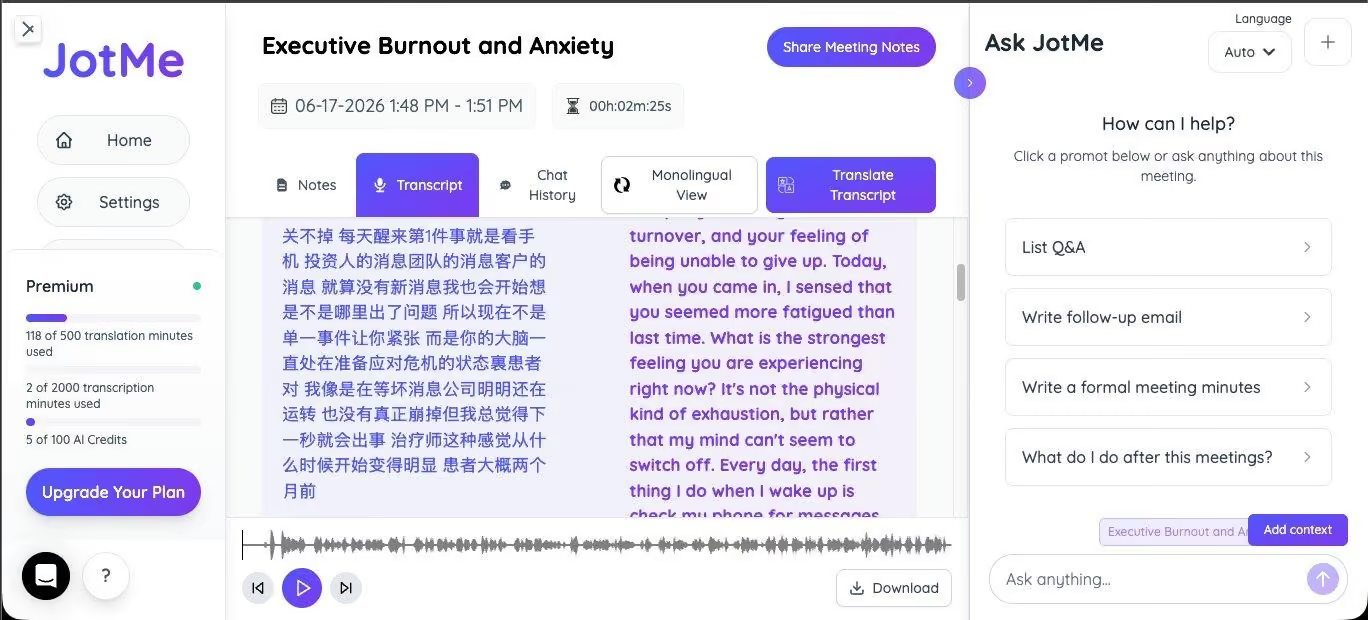
A bilingual transcript does more than aid comprehension during the hour. It gives the clinician a faithful record to revisit, supports supervision when a case crosses cultures, and reduces the risk that a mistranslation hardens into a clinical assumption. For a therapist building an assessment, that fidelity is the difference between guessing at what a client meant and reading it directly.
The founder in the demo makes the stakes concrete. He describes a body still stuck in alert mode after a financial crisis passed, with phrasing that carries shame and exhaustion in the original Chinese. An English-only tool would either drop those turns or hand the therapist a flattened paraphrase, and the assessment would lose the texture that points toward hypervigilance rather than ordinary stress. Reading the client's own words, rendered faithfully, keeps the clinical picture intact and lets the therapist plan the next session around what the client actually carried into the room.
The 7 Best AI Note Taking Apps for Therapists
Each review covers what the best AI note taker tool does, who it fits, where it falls short, and what it costs. JotMe leads because it solves the cross-language problem that the rest of the list leaves open.
JotMe
JotMe is an AI agentic tool for real-time translation, transcription, and meeting notes, with an assistant called Ask JotMe built in. It supports 200+ languages and 39,000+ language pairs, generates AI meeting notes in 21 languages, and already works inside 1,700+ organizations with more than 300,000 users. For a therapist, that adds up to one capability no other tool on this list matches: a session that crosses languages becomes a clean, structured note in the clinician's working language.
Who is JotMe for
JotMe fits therapists and counselors who see clients who do not share their working language, and any clinician running cross-border telehealth across Zoom, Google Meet, Microsoft Teams, Webex, Slack, Discord, or WhatsApp. An English-speaking clinician working with a Mandarin, Korean, or Spanish-speaking client is the clearest case.
What a real session looks like
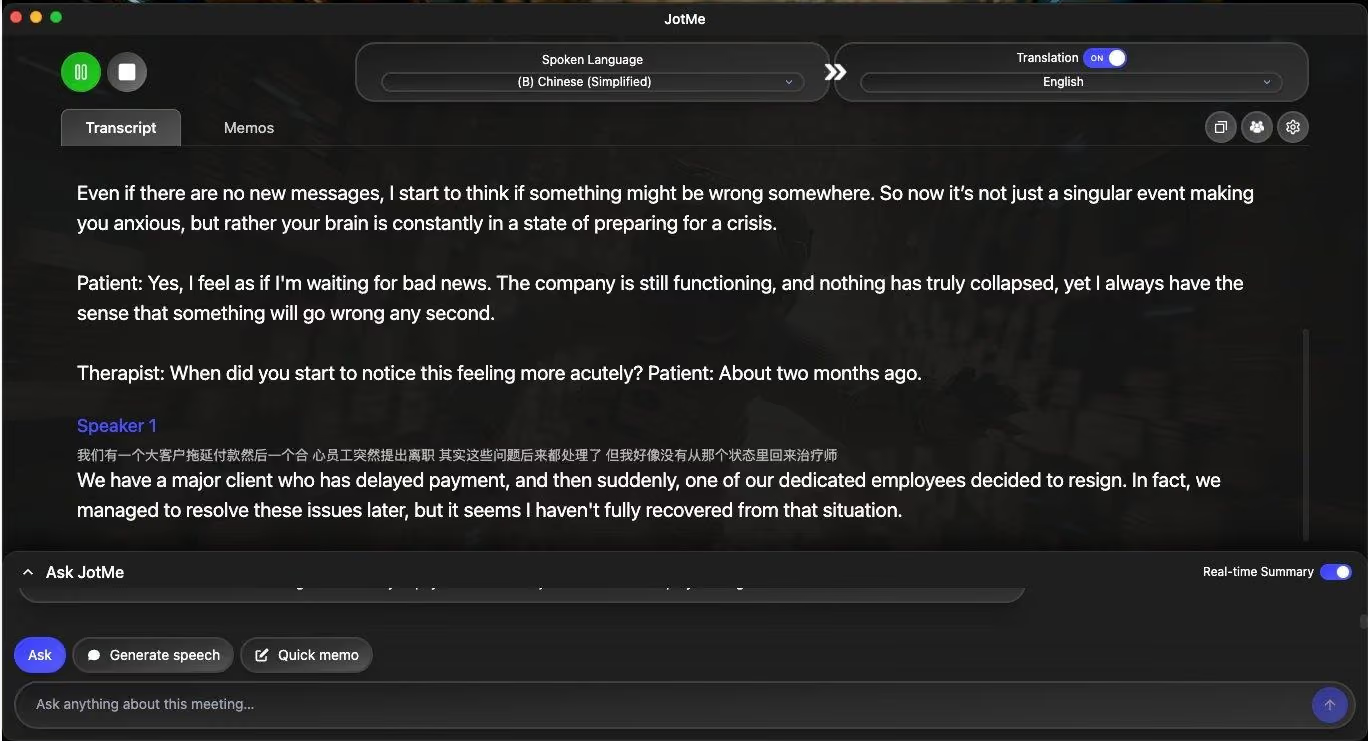
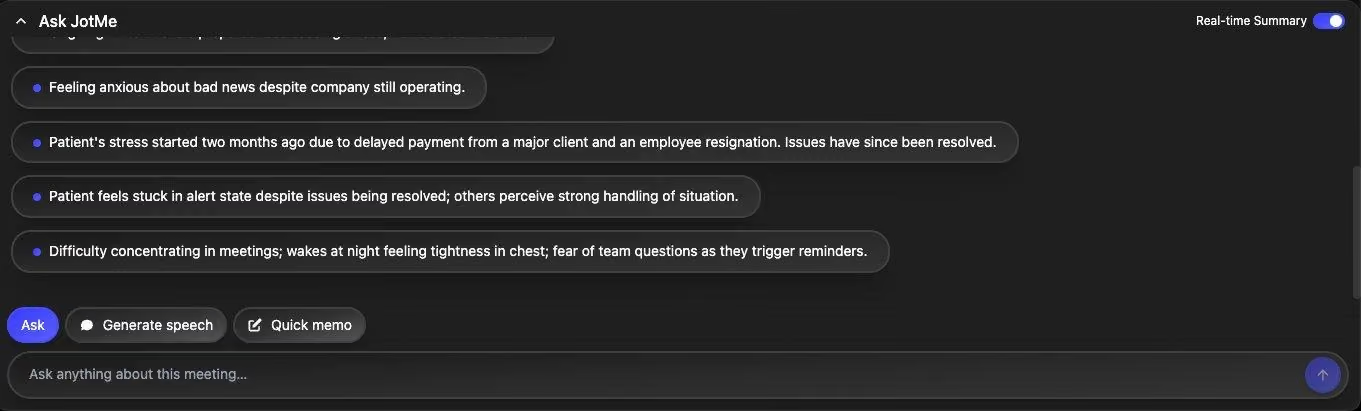
Take the executive-burnout session in the screenshots. A founder describes anticipatory dread, compulsive phone-checking, and chest tightness at night. He speaks Chinese; the clinician reads English. JotMe transcribes each turn, labels the speakers, and prints the translation directly beneath the original speech as the conversation moves.
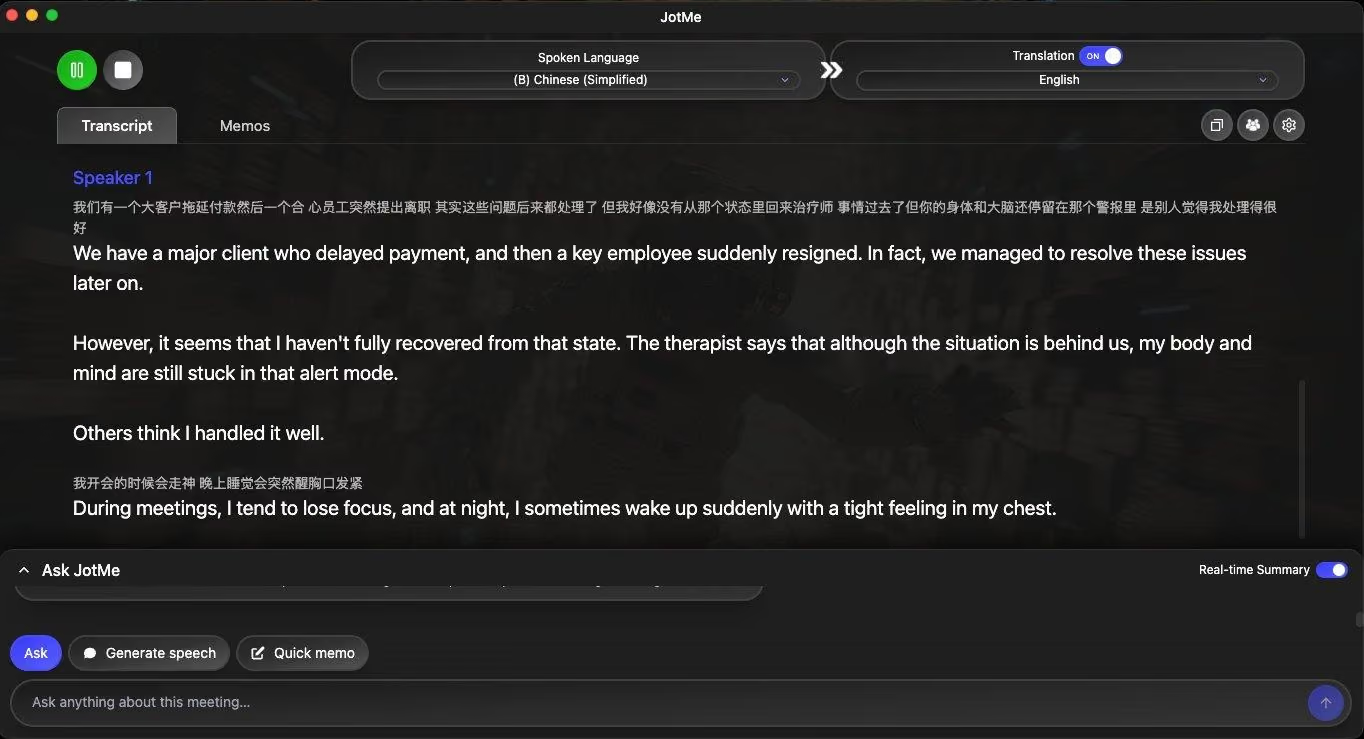
While the two talk, JotMe builds a running summary in the Ask JotMe panel, so the clinician can glance at the thread of the session without breaking eye contact to scribble notes.
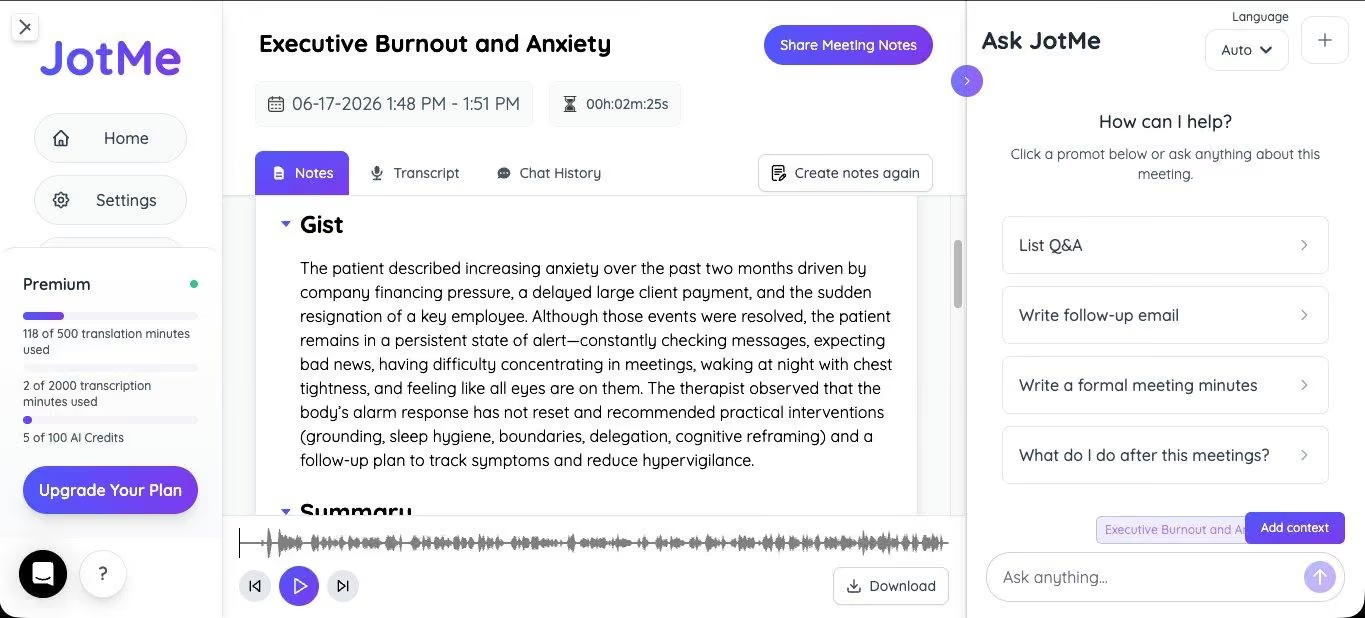
The moment the session ends, JotMe produces structured meeting notes. The Gist gives a paragraph-level overview of the presentation and the clinician's observations.
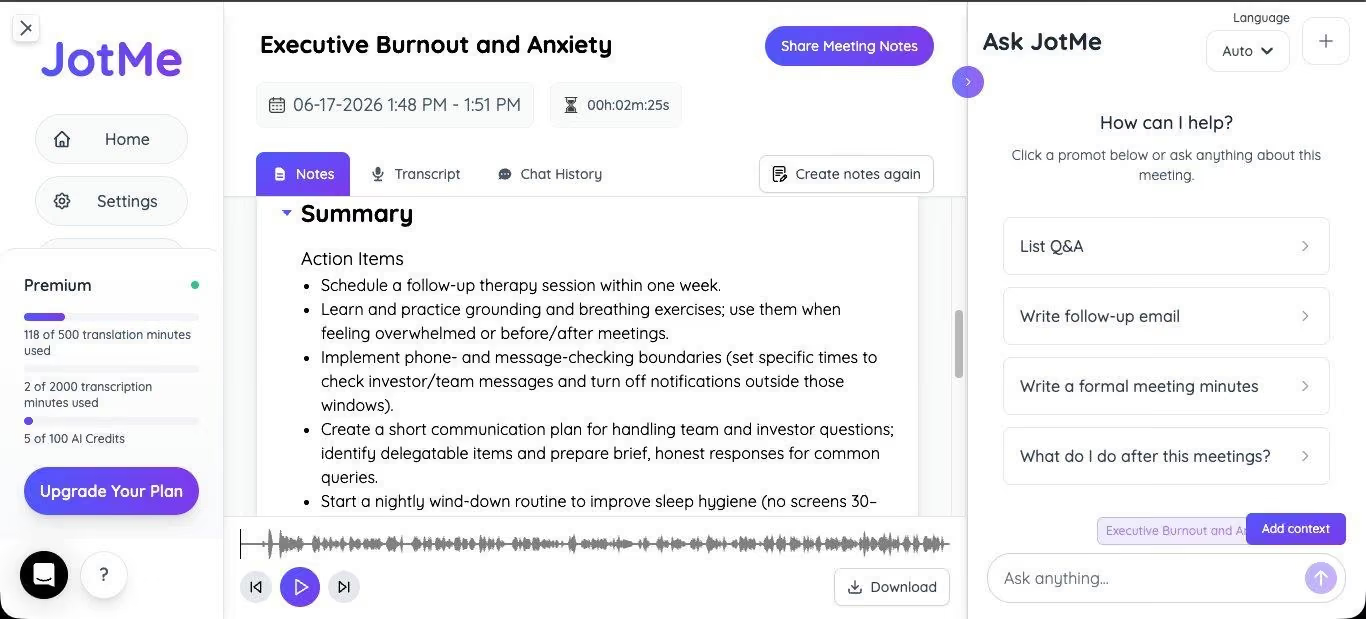
The Summary breaks the session into Action Items the clinician can carry into a treatment plan, from scheduling a follow-up to teaching grounding techniques and setting message-checking boundaries.
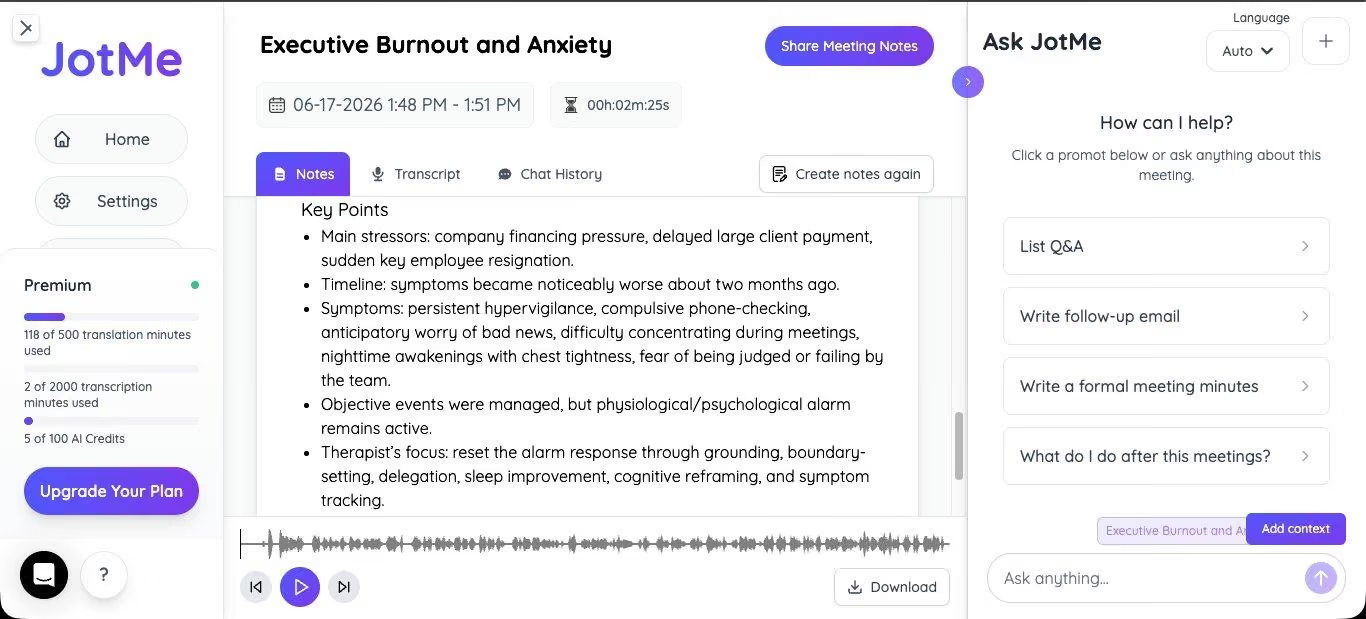
Key Points capture the clinical spine of the hour: main stressors, symptom timeline, hypervigilance, and the therapist's focus for the work ahead.
Then the clinician can question the session directly. Ask JotMe answers in either language, lists likely follow-up questions, and helps map the next assessment, which turns a transcript into a planning aid.
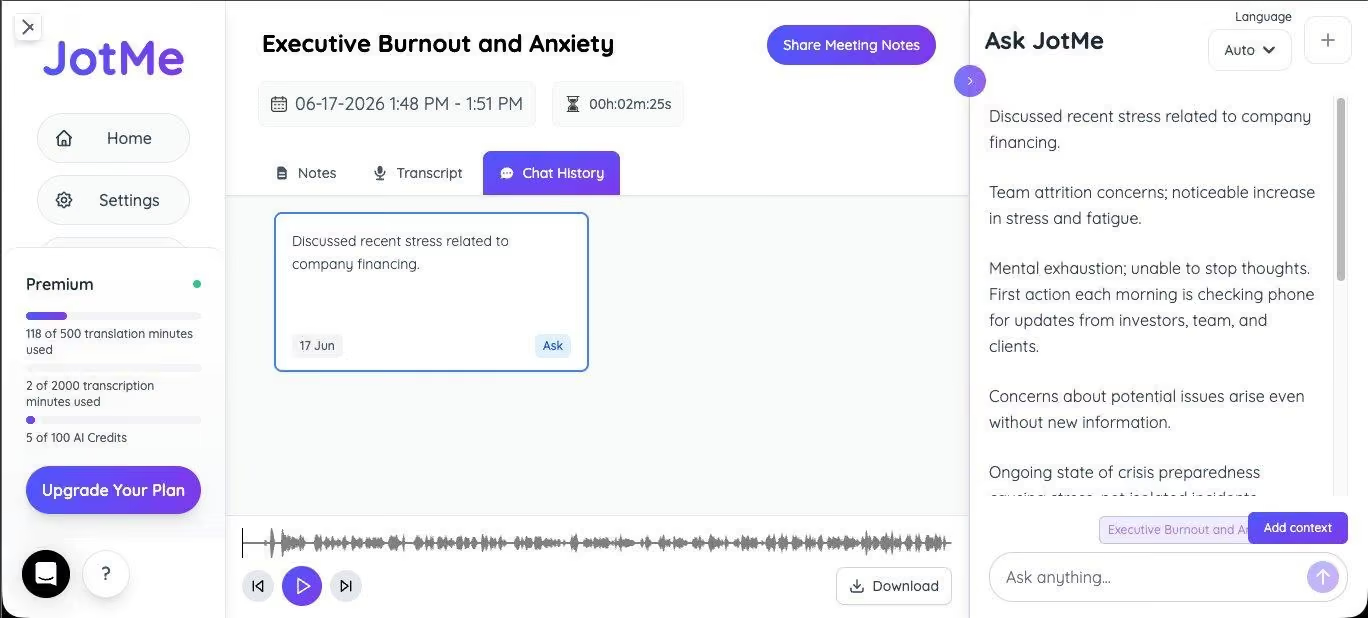
The notes stay available after the session, which is where the clinical value compounds. A therapist can reopen the record between appointments, read the Gist and Key Points, and question Ask JotMe about patterns across the conversation before building a fuller assessment. Because JotMe interprets meaning in context rather than swapping words one for one, the saved record reflects what the client meant, not a literal gloss that strips the nuance out. That replaces the slow loop of post-session email chains and interpreter callbacks that can stretch a 3-minute clarification into hours.
Voice-to-voice translation in the room
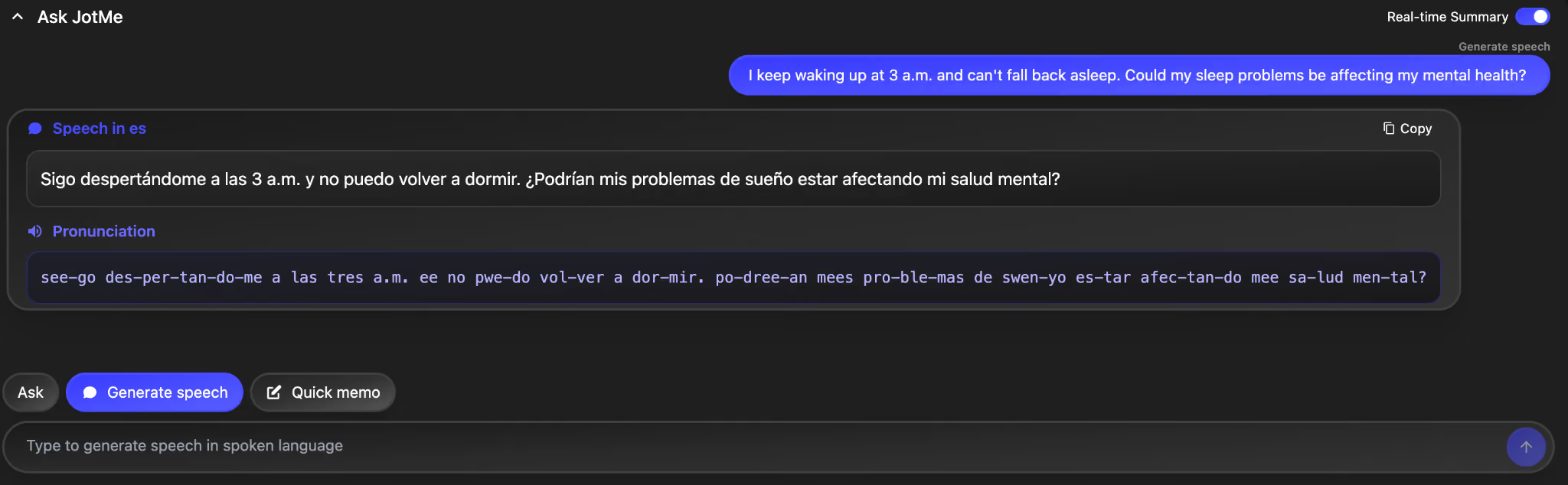
JotMe now adds voice-to-voice translation, which closes the last gap in a cross-language session. The client speaks in their native language and hears the therapist's reply in that same language. The therapist speaks in their own language and hears the client in theirs. Both voices stay natural, so the session feels like a direct conversation rather than a relay through a third party.
In practice, the flow runs like this during a live call:
- The client speaks Spanish. JotMe renders it as English audio translation in the therapist's headset, in the client's own vocal character.
- The therapist responds in English. The client hears it back in Spanish, in the therapist's voice.
- The transcript and translated notes are built in the background, so the record is ready when the session ends.
For a therapist, that means the rapport-building work of the first session stops depending on an interpreter's schedule, and the clinical record captures the exchange as it actually happened.
Key features therapists use most
- Meeting Notes. Gist, Summary, Action Items, and Key Points generated from each session in 21 languages.
- Ask JotMe. An in-app assistant that answers questions about the session and drafts follow-up emails, formal minutes, and next-step plans.
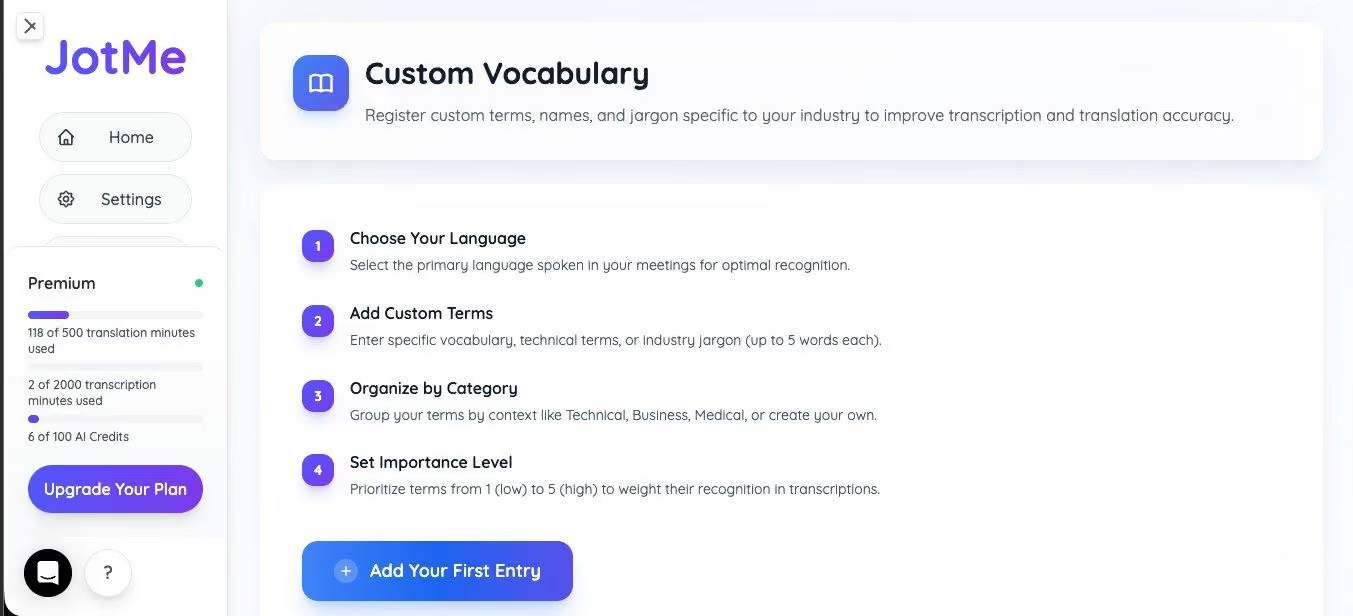
- Custom Vocabulary. Register clinical terms, medication names, and modality jargon so transcription and translation stay accurate.
- On-Screen Subtitles: Live captions during a video session for clients who read more comfortably than they listen across a language barrier.
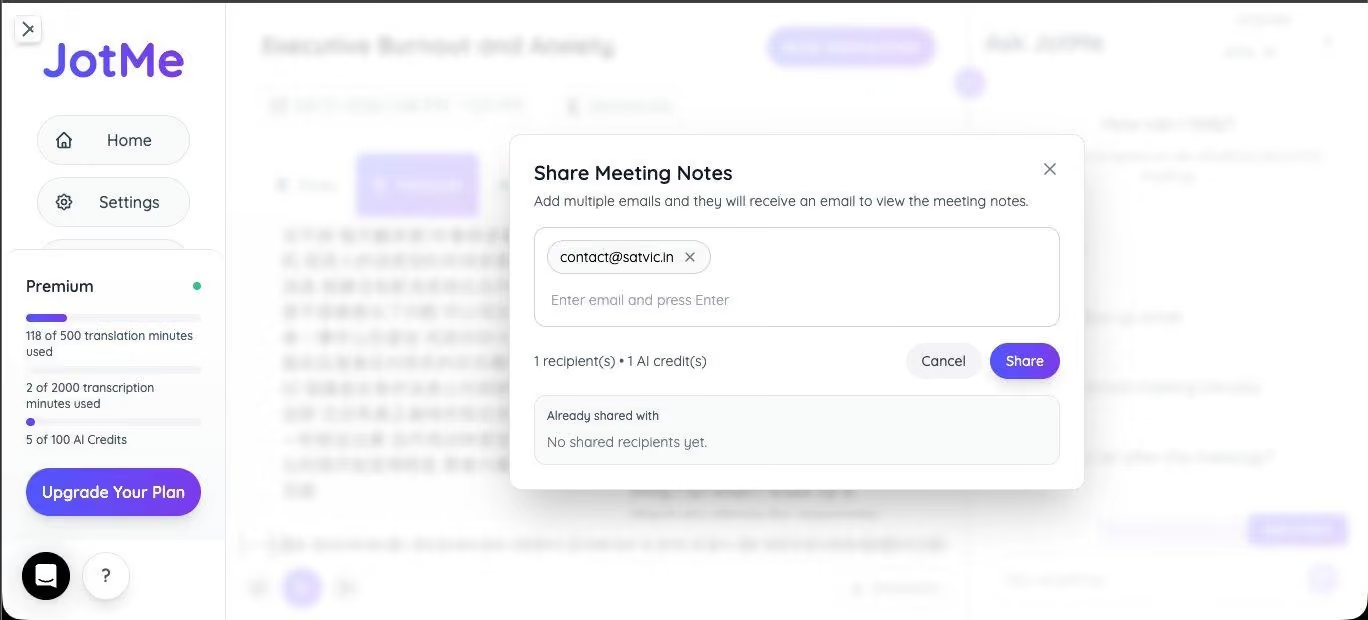
- Share Meeting Notes: Send session notes to a supervisor or co-clinician by email, with control over who receives them.
- Teams Plan: Centralized billing, an admin dashboard, shared translation minutes, and integrations for group practices that need to manage several clinicians at once.
JotMePricing
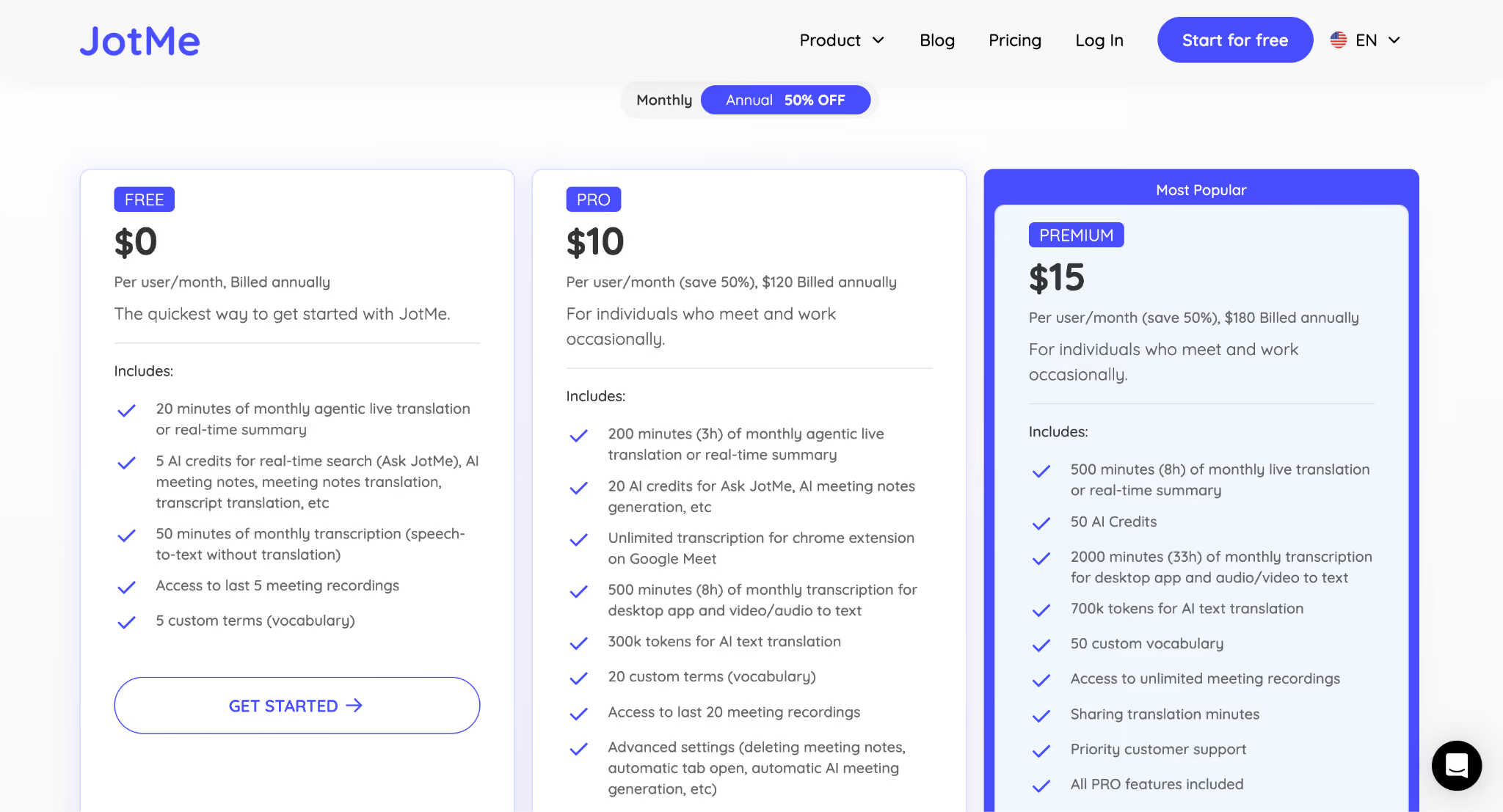
JotMe offers four plans: Free, Pro, Premium, and Teams.
The Free plan includes 20 minutes of monthly live translation or real-time summaries, 50 transcription minutes, and 5 AI credits.
The Pro plan costs $10 per user per month when billed annually and includes 200 minutes of live translation, 500 transcription minutes, 20 AI credits, and access to the last 20 meeting recordings.
The Premium plan costs $15 per user per month when billed annually and includes 500 minutes of live translation, 2,000 transcription minutes, 50 AI credits, unlimited meeting recordings, and priority support.
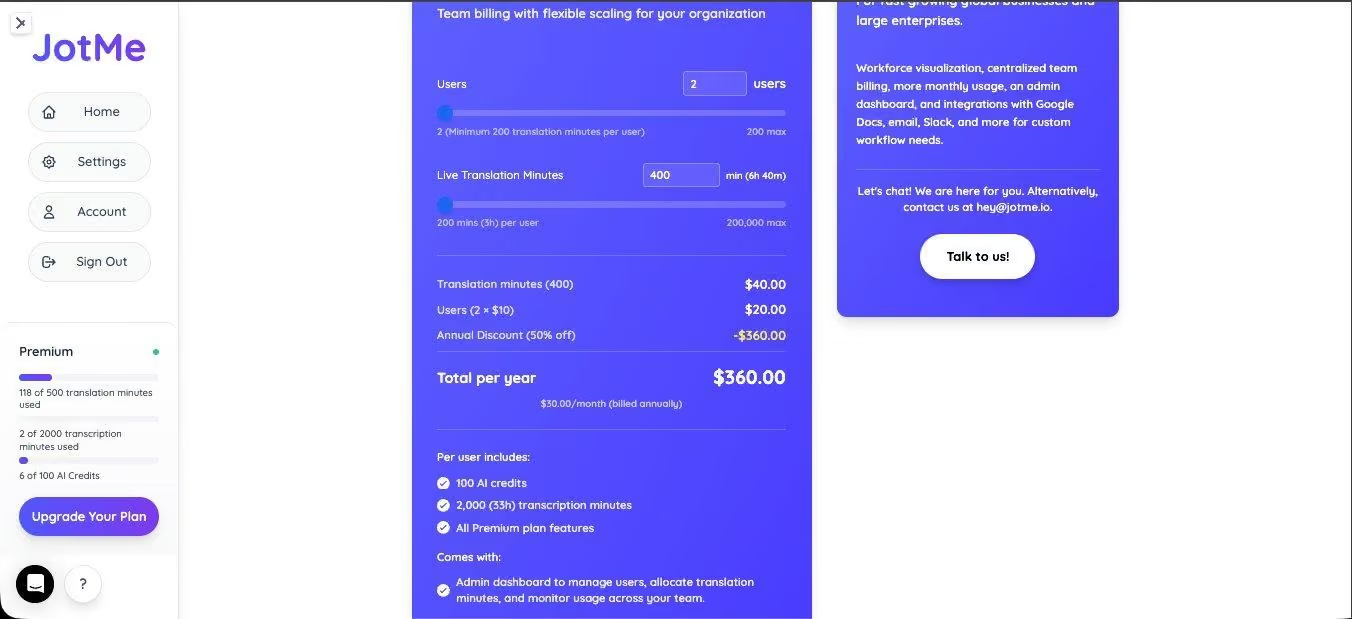
The Teams plan starts at $30 and provides organization-wide features such as centralized billing, an admin dashboard, flexible scaling, and pooled translation minutes across team members. Team-specific usage limits may vary. For the latest details, visit JotMe's pricing page.
The compliance reality, stated honestly
JotMe is GDPR compliant and is working toward SOC 2, and it is not HIPAA compliant today. Treat JotMe as the live communication and comprehension layer: use it to understand the session and to draft working notes, and keep the official clinical record in your HIPAA-compliant EHR or notes tool. Get clear client consent before recording or translating any session. Used this way, JotMe removes the language barrier without putting your practice's compliance at risk.
Best for: Therapists with non-English-speaking clients and cross-border telehealth practices.
Not ideal for: Clinicians who need a single HIPAA-compliant system of record and never work across languages.
Pros
- Real-time translation and transcription across 200+ languages, far beyond any other tool here.
- Structured meeting notes and an Ask JotMe assistant that supports assessment planning.
- Voice-to-voice translation that preserves rapport in live sessions.
- Works across Zoom, Google Meet, Microsoft Teams, Webex, Slack, Discord, and WhatsApp.
Cons
- Not HIPAA compliant, so it pairs with a separate compliant record system.
- SOC 2 certification is still in progress.
Mentalyc
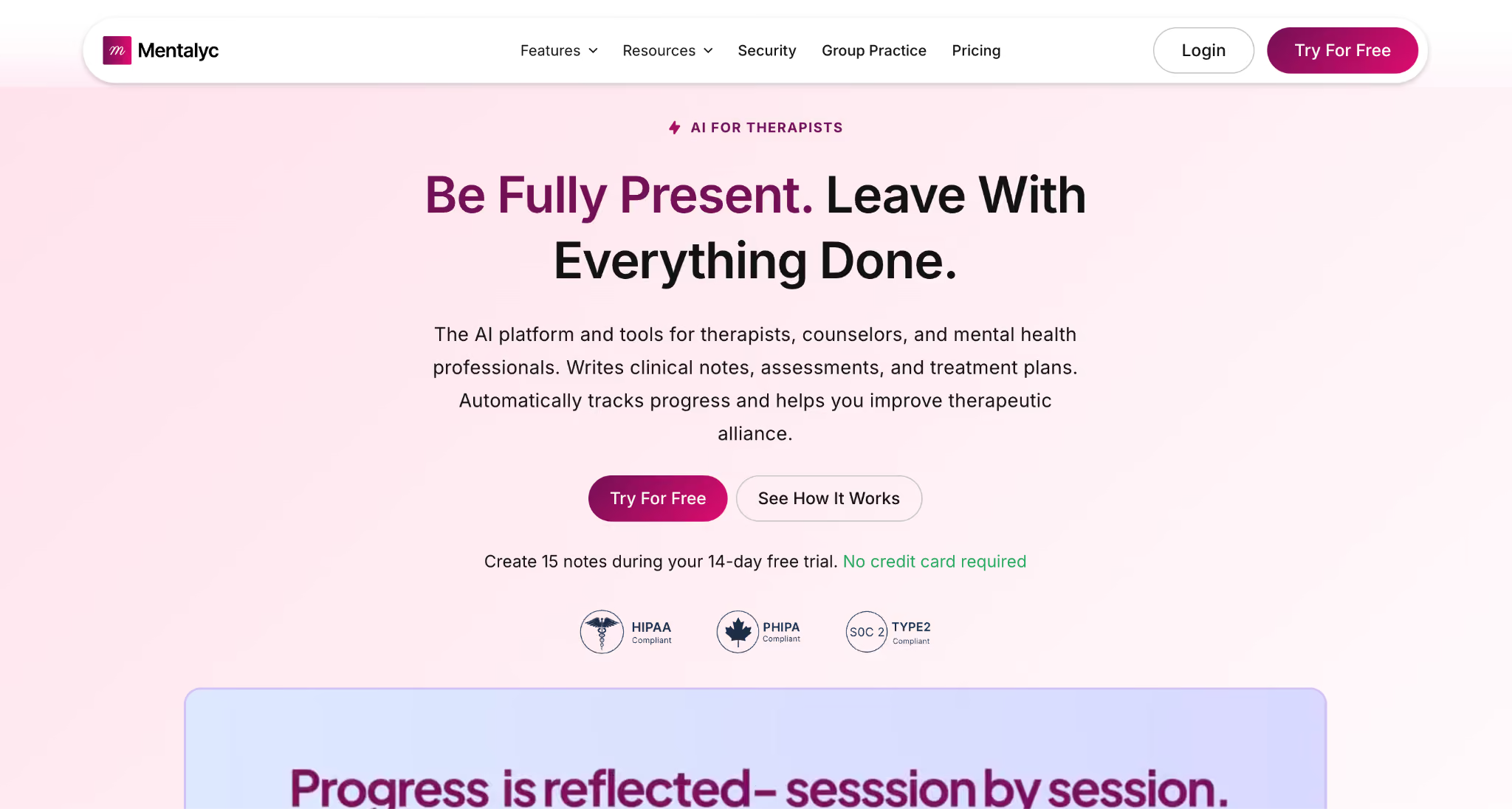
Mentalyc is a therapy-specific AI note taker that leads with privacy. It anonymizes transcripts to limit subpoena exposure, supports SOAP, DAP, BIRP, and other mental-health formats, and adds treatment planning and progress tracking. It is HIPAA compliant, SOC 2 verified, and signs a BAA, which makes it a frequent recommendation in therapist communities.
One clinician on Reddit reported using it for roughly 8 months and crediting it with steady time savings once recording became a habit. Beyond notes, Mentalyc generates treatment plans with measurable goals and tracks therapeutic alliance across sessions, which gives supervisors a fuller picture than a note alone. It fits therapists who treat sensitive populations and want the strongest privacy stance on the list.
Best for: Privacy-sensitive caseloads and group practices that need consistent formats.
Pros
- Anonymized transcripts and clear data-handling policies.
- Built for therapists, with multiple note formats and consent templates.
Cons
- Occasional hallucinations that require careful review.
- A browser-only interface that some clinicians find busy.
Pricing: from $19.99 per month, with team and unlimited tiers.
Upheal
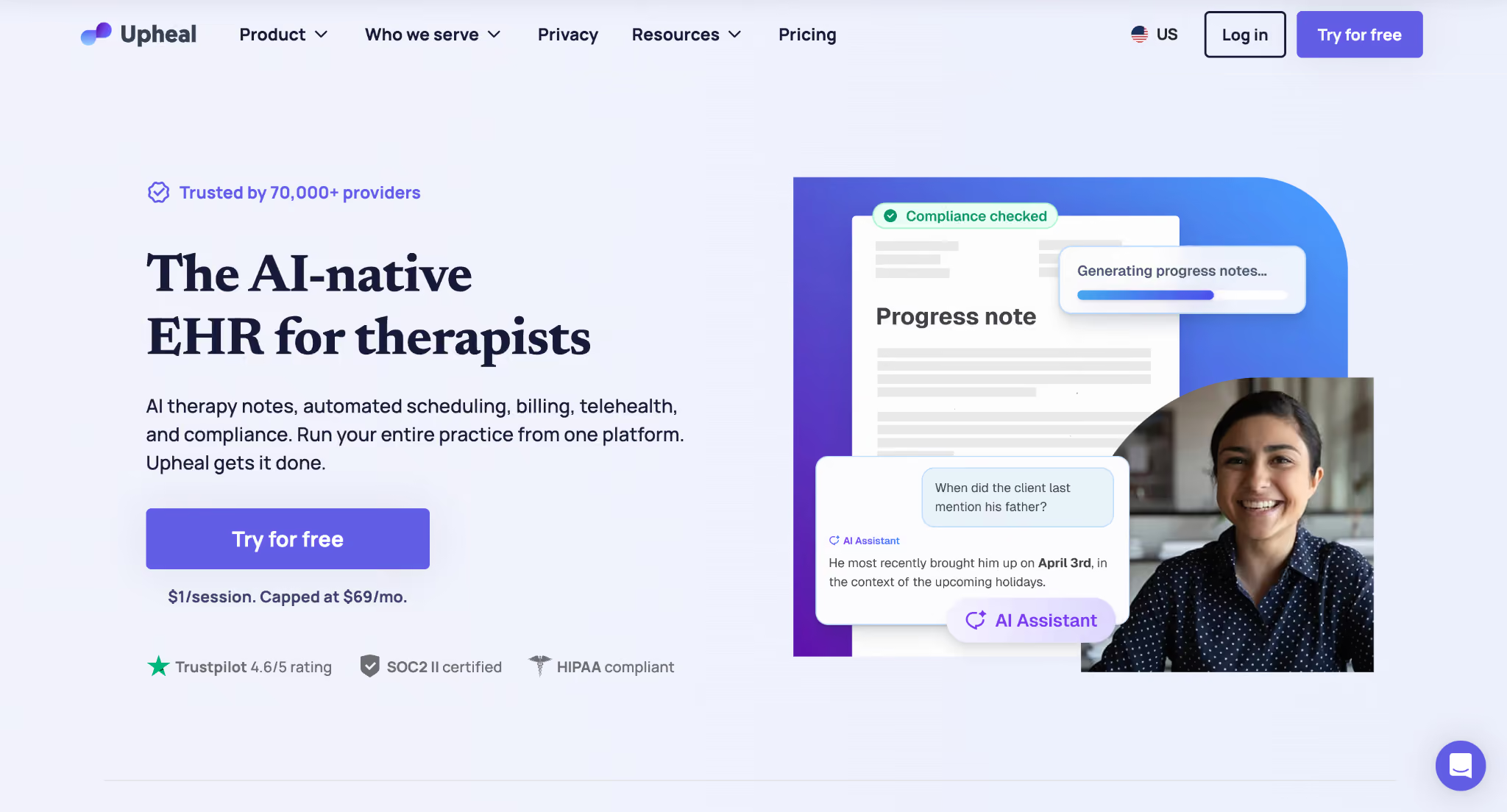
Upheal combines AI note generation with a telehealth platform and session analytics. It records sessions with consent, exports SOAP, DAP, and GIRP notes, and surfaces goals and themes across treatment. It is HIPAA compliant, SOC 2 verified, and signs a BAA, and it produces notes in several languages, including Spanish and Mandarin.
The depth that helps supervisors can feel heavy for a solo clinician who wants a simple record-and-paste flow. Upheal also maps each session into a timeline that shows how much the client spoke versus the therapist and ties Golden Thread treatment plans to the notes, so the documentation links progress to goals over time. It fits telehealth-focused practices that value analytics and a built-in consent process.
Best for: Telehealth practices that want session analytics in one place.
Pros
- Multi-format exports and built-in consent flows.
- Analytics and goal tracking that support supervision.
Cons
- Audio and analytics are stored in the cloud, which some clinicians avoid.
- Interface complexity and higher bandwidth demands.
Pricing: free tier with basic notes; paid plans from $1/session
Blueprint
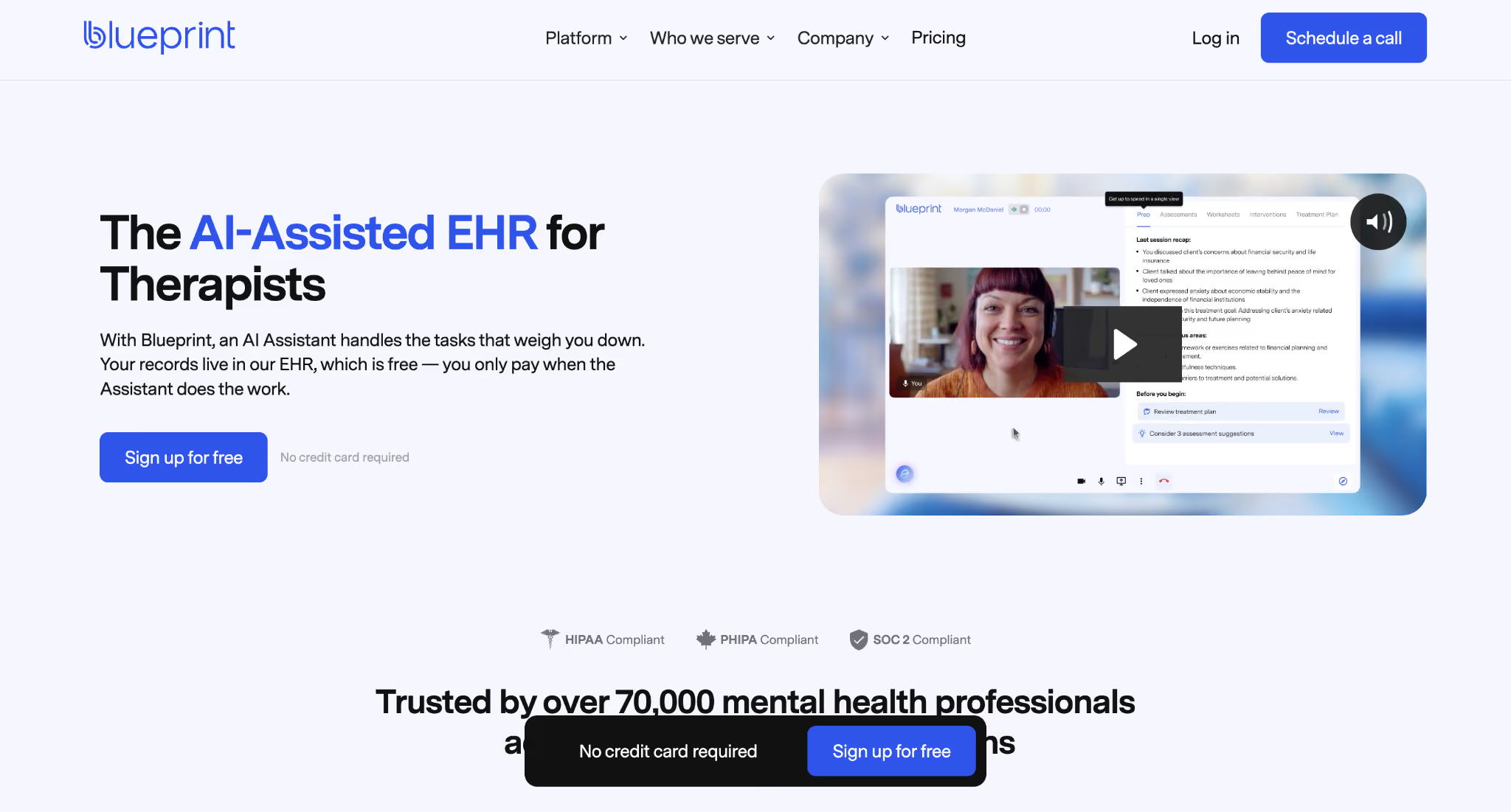
Blueprint builds notes around standardized outcome measures like the PHQ-9 and GAD-7, then tracks change over time. It uses AES-256 encryption, states that it never trains on client data, and signs a BAA. That makes it a strong match for insurance-heavy, measurement-based practices.
The structure that suits outcome tracking can feel constraining for clinicians who prefer free-flowing narrative notes. Blueprint offers a free tier covering 5 sessions per month, which makes it easy to test, and it has signaled an AI-assisted EHR on the way for practices that want notes and records in one place. The progress charts also give insurers the symptom-change evidence they increasingly expect.
Best for: Measurement-based care and insurance-driven documentation.
Pros
- Notes tied to validated scales and progress charts.
- Strong privacy stance and a usable free tier.
Cons
- Scale-driven language can miss narrative nuance.
- Per-session pricing adds up for large caseloads.
Pricing: Free (5 sessions); paid starts from $0.99/session
Freed
Freed is an ambient AI scribe that turns live or telehealth audio into text and learns from your edits over time. It pushes finished notes to any browser-based EHR in one click and is HIPAA compliant with a BAA on paid plans. Built for general medicine, it handles therapy documentation well.
Freed also generates ICD-10 codes, patient instructions, referrals, and post-visit letters from the same session, which extends it past note-taking into the wider admin load. It fits therapists who want ambient capture and flexible output without changing their EHR.
Best for: Therapists who want ambient notes and one-click EHR push.
Pros
- Clean narrative notes that adapt to your style.
- One-click push to browser-based EHRs.
Cons
- The free trial lasts only 7 days, with no permanent free tier.
- Language feels generic without editing, and it serves English first.
Pricing: from $39 per month.
Supanote
Supanote is built by and for mental health professionals, with native EHR autofill through a Super Fill button that populates chart fields without copy-paste. It supports more than 7 note formats, learns your documentation style over time, and runs on HIPAA-compliant infrastructure.
Supanote fits solo practitioners and small group practices on major EHRs who want tight integration without changing their workflow. Because it works independently of any single EHR, a clinician who switches systems keeps the tool and its autofill, which removes a common reason therapists hesitate to adopt note software. It supports formats from SOAP and DAP through GIRP, SIRP, and PIE.
Best for: Solo and small practices that want native EHR autofill.
Pros
- Native EHR autofill that removes copy-paste.
- Personalizes to your clinical language over time.
Cons
- Serves English first, with limited cross-language support.
- Best value depends on your note volume.
Pricing: Paid plans start from $19.99/month
AutoNotes
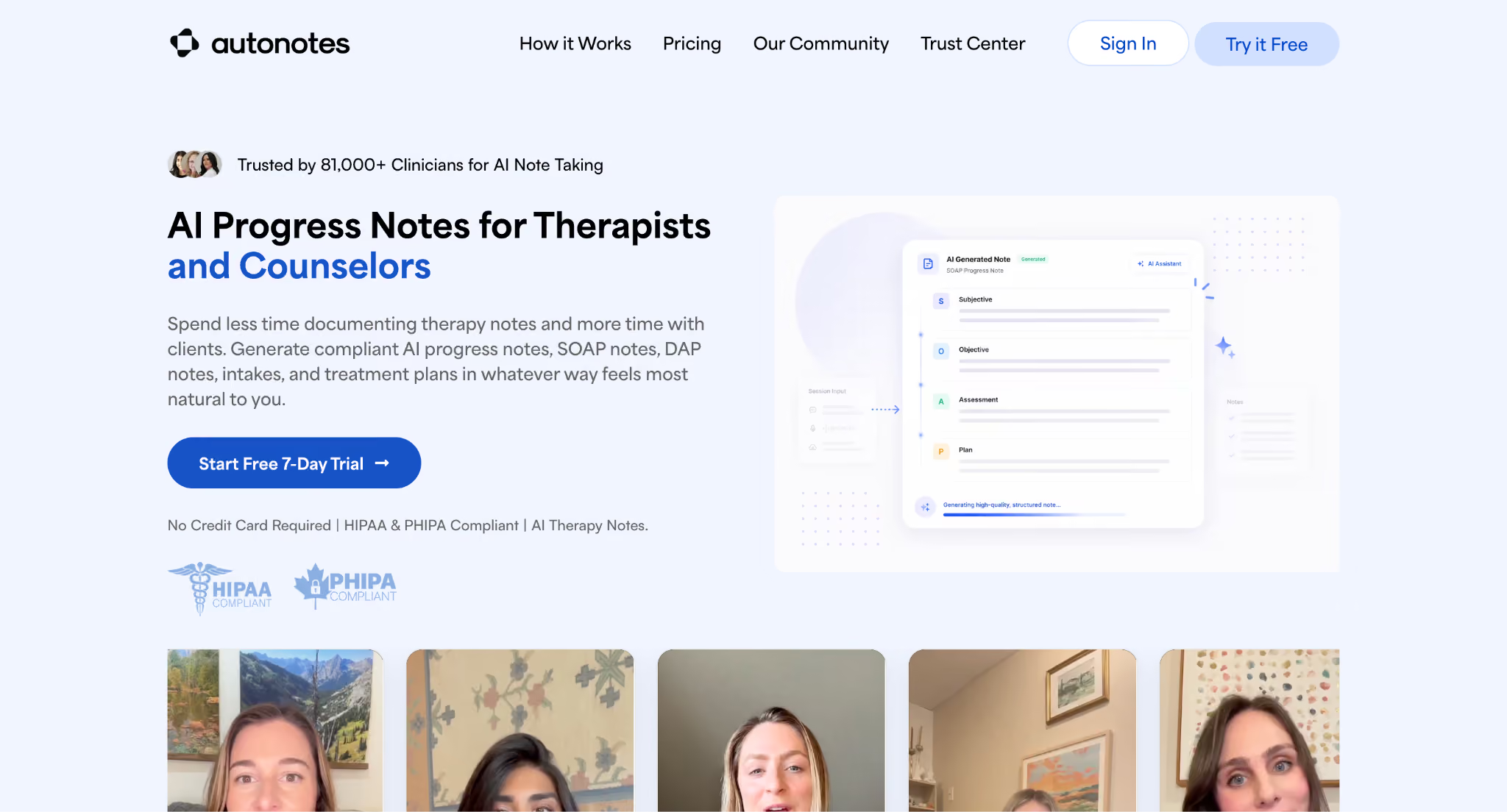
AutoNotes generates structured progress notes and treatment plans from a short prompt, so you skip full-session recording. Give it a few sentences and a diagnosis, and it returns a SOAP, DAP, or SIRP draft. It is HIPAA compliant and priced for low, variable use.
Note quality tracks how specific your prompt is, which rewards organized clinicians and punishes rushed ones. AutoNotes fits therapists who keep tight mental summaries and prefer not to store audio.
Best for: Organized therapists who want fast notes without recording.
Pros
- Fast drafts from short prompts, with no audio to store.
- Budget-friendly pay-per-use pricing.
Cons
- Quality drops with vague prompts.
- No full-session capture, so you carry the detail in memory.
Pricing: Starts from $29/month
How Do You Choose the Right AI Note Taking App for Your Practice?
Start with the question every ranking tool and every therapist forum asks first: does it carry HIPAA coverage and a signed BAA for the official record? Once a tool clears that gate, match it to how you practice.
- Solo or private-pay practice: Supanote and Blueprint give you tight EHR autofill or measurement-based notes without enterprise overhead.
- Group practice: Mentalyc and Upheal standardize formats and support supervision across several clinicians.
- Health-system setting: Ambient scribes with deep EHR integration suit clinicians embedded in larger organizations.
- Multilingual caseload: JotMe is the clear choice to translate audio to text in cross-language sessions, paired with a HIPAA-compliant tool for the signed record.
Budget shapes the shortlist too. If you want a free AI note taking app to test the workflow, Upheal and Blueprint both offer free tiers, and JotMe has a free plan for its translation and notes. For a note-taking app at enterprise scale, look for pooled usage, an admin dashboard, and centralized billing, which is where JotMe's Teams plan and the larger clinical platforms compete.
Whatever your shortlist, run a short trial before you commit. Pick two tools, document one week of real sessions with client consent, and measure two things: how many minutes each note takes to sign, and how often the draft misses something you would have caught yourself. A tool that drafts a clean note in one language but loses your bilingual clients fails the test for a cross-language caseload, however polished it looks in a demo.
Documentation is only one part of a therapist's workload. Managing your schedule and protecting focused work time also play a role in avoiding burnout. Pairing your note-taking software with a productivity tool that helps you plan tasks around your energy levels can make it easier to stay productive while reducing administrative fatigue.
Is AI Note Taking for Therapists Private and Compliant?
It can be when you choose the tool and the workflow with care. HIPAA compliance and a signed Business Associate Agreement form the baseline for any tool that touches protected health information in the United States. A tool that only claims to be compliant without a BAA does not meet that bar.
Consent is the second pillar. Tell clients, in a language they understand, that you use an AI tool to transcribe, translate, or draft notes, and record their agreement. Consent rules vary by state and licensing board, so confirm the wording your board expects.
Beyond compliance and consent, check three privacy mechanics: whether the tool deletes audio after audio to text transcription, whether you can opt out of model training, and how strongly it encrypts data. The FTC's action against BetterHelp over sharing sensitive health data shows why those questions matter.
JotMe fits this picture as the comprehension layer rather than the record. It is GDPR compliant with SOC 2 in progress, so it carries the live session across languages while your HIPAA-compliant EHR or notes tool holds the signed documentation. That split keeps the language barrier solved and the compliance line intact.
In a cross-language session, consent deserves extra care because the client has to understand it in their own language. JotMe helps here too: you can explain the recording and translation in the client's language through the same real-time channel, and the bilingual transcript documents that you did. Pair that with a written consent line in your records, and you meet both the ethical duty to inform and the practical need to prove you informed.
How Do These AI Note Taking Tools Compare on Price and Fit?
Before the verdict, here is the shortlist again through the lens that matters most when you commit: compliance, language reach, the practice each tool fits, and price.
Which AI Note Taking Tool for Therapists Should You Pick?
If your sessions stay in one language and you want the official note inside a compliant system, choose by practice type: Supanote for native EHR autofill, Blueprint for measurement-based care, Mentalyc for the strongest privacy posture, Upheal for telehealth analytics, Freed for ambient capture, and AutoNotes for a budget, prompt-based flow.
If your clients do not all speak your language, JotMe is the tool that changes the session itself. It carries the conversation across 200+ languages in real time, drafts structured notes and an Ask JotMe assistant for assessment planning, and now translates voice to voice, so rapport survives the language gap. Pair it with your HIPAA-compliant record system, and you close the communication barrier without loosening compliance.
Your next step: start a free JotMe session with a multilingual client, run the transcript and notes once, and see how much of the language gap disappears before you write a single line.
FAQs
What is the best AI note taking app for therapists?
The best live translation app depends on your practice. For single-language sessions, Supanote, Mentalyc, and Blueprint lead on EHR fit, privacy, and measurement-based care. For clients who do not speak your language, JotMe is the strongest choice because it transcribes and translates sessions across 200+ languages in real time and drafts structured notes.
Is there a free AI note taking app for therapists?
Yes. Upheal and Blueprint both offer free tiers, and JotMe has a free plan for translation and meeting notes. Free plans often limit sessions or train models on your data, so read the terms before you use one with clients.
Are AI note taking apps for therapists HIPAA compliant?
Many are, including Mentalyc, Upheal, Blueprint, Freed, Supanote, and AutoNotes, each with a signed BAA. JotMe is GDPR compliant with SOC 2 in progress and is not HIPAA compliant, so use it as the live translation and notes layer and keep the official record in a HIPAA-compliant system.
Do I need client consent to use AI note taking in therapy?
Yes. Informed consent for recording and AI-assisted documentation is required under HIPAA and most state licensing rules. Explain the tool in plain language, record the client's agreement, and confirm the exact requirements with your state board.
Can AI note taking work for non-English-speaking clients?
Yes, though most tools serve English first. JotMe is built for this case, with real-time transcription and translation across 200+ languages, bilingual transcripts, and voice-to-voice translation so the client and therapist each hear their own language.
What note formats do these tools support?
Most support SOAP and DAP, and many add BIRP, GIRP, SIRP, PIE, and a mental status exam section. Supanote supports more than 7 formats, and several tools let you build custom templates.
Can AI note taking apps handle telehealth sessions?
Yes. Upheal includes its own telehealth platform, and JotMe works across Zoom, Google Meet, Microsoft Teams, Webex, Slack, Discord, and WhatsApp, which makes it straightforward for remote and cross-border sessions.
How much time does AI note taking for therapists actually save?
Approximately 30 to 60 minutes saved per day, and high-volume practitioners cite 2 or more hours. The savings grow when the tool also drafts treatment plans, follow-up messages, and, in JotMe's case, removes the back-and-forth that a language barrier usually adds to a cross-language caseload.
Last updated on
July 29, 2026
Follow us on social media: