



Guides
9 Best Sales Call Recording Software for Multilingual Sales Calls in 2026 [Honest Reviews]

Viraj Mahajan
May 13, 2026
.avif)
Brief Answer: The best sales call recording software we tested in 2026 is JotMe, Otter AI, Fathom, tl;dv, CubeACR, Gong.io, Rev, Bitrix24, and Allo. JotMe leads the multilingual category because it captures 200+ languages with speaker diarization, contextual translation, and AI meeting notes that integrate cleanly into post-call workflows. Otter, Fathom, and tl;dv perform well on English-only pipelines but break down on cross-language calls. Gong is the enterprise revenue intelligence pick if the budget runs $1,400–$3,000 per seat per year, plus platform fees. Rev handles human-grade transcription at $1.99 per minute.
There are hundreds of sales call recording software vendors in 2026 claiming they solve the operational chaos of multilingual sales meetings. Most of them ship a clean English transcript, a generic AI summary, and a CRM connector, then label themselves “multilingual” because their interface supports German and the engine technically transcribes Spanish.
The minute a Mandarin-speaking buyer joins the same Zoom or Google Meet that a Boston-based AE is running, the wheels come off. The transcript turns into nonsense. Speaker diarization collapses into a single talking head. The post-call summary cites phantom action items the buyer never raised. The forecast notes get logged to the wrong opportunity. By Friday, the deal slips a quarter, and nobody on the revenue team can explain why.
That is the gap this comprehensive guide examines.
We tested nine of the most-cited record sales call platforms in 2026 on the exact failure mode that breaks them: a live Zoom meeting in which one participant spoke only Mandarin Chinese and the other only English. The objective was not to crown a feature winner. The objective was to find which tools held up when the call stopped being a domestic mid-market motion and started looking like the international pipeline most enterprise sales teams now run.
Here is a quick read on the four most-searched options in the category before the full reviews:
- JotMe: For $20 per month when billed annually, JotMe provides 3 hours of monthly agentic live translation in 200+ languages, unlimited transcriptions via a Google Chrome extension on Google Meet, and desktop capture on Zoom, Teams, and Webex.
- Otter AI: Otter AI positions itself as an AI notetaker that powers post-call workflows with automated summaries, AI chat across past meetings, and, recently launched, live BANT and MEDDIC signal extraction for sales teams on Salesforce and HubSpot.
- Fathom AI: Fathom is an AI notetaker starting at $19 per month that summarizes meetings against sales frameworks like BANT and Sandler, with a Business plan that aggregates every conversation tied to a single deal into a shared Deal View.
- tl;dv: tl;dv comes in at $29 per month and helps revenue teams run AI meeting notes across Zoom, Google Meet, and Microsoft Teams, with CRM enrichment to Salesforce and HubSpot on its Business tier.
As you will see in this article, sales call recording stopped being a compliance checkbox three years ago. It is now the foundational data layer of every modern revenue motion. Conversation intelligence platforms feed forecast models. Call libraries cut new-hire ramp time in half. Talk-to-listen ratios surface coaching gaps that a manager would never spot from a synced opportunity field.
What Is Sales Call Recording Software And Why Do Enterprises Need Multilingual Tools?
Sales call recording software captures, transcribes, and analyzes sales conversations across phone systems, video conferencing platforms, and dialers, then feeds the resulting data into CRM, coaching workflows, and forecast models. A modern call recorder app does four things at once:
- It captures audio from the rep’s call.
- It generates a searchable transcript with speaker labels and timestamps.
- It extracts deal signals, objections, pricing mentions, competitor callouts, and next steps.
- It pushes structured data back into the CRM record, so the AE never has to open Salesforce to type a single field after the call ends.
That stack is solved for English. It is largely unsolved for any other language at production quality. Enterprises that sell into APAC, LATAM, MENA, and continental Europe hit the multilingual wall on the first cross-border call. A standard call recording software for business will transcribe the English half of the conversation and treat the other half as background noise, or worse, hallucinate English words on top of it. The opportunity hygiene downstream collapses. And sooner or later, the forecast becomes a guess.
This is why multilingual coverage has moved from a nice-to-have to a primary buying criterion for any team running an international pipeline. The tools that handle multilingual sales calls properly need to do five specific things:
- Detect the spoken language automatically and switch between languages mid-call without manual toggling.
- Maintain speaker diarization across languages so that an English-speaking AE and a Mandarin-speaking buyer appear as distinct speakers in the transcript.
- Translate contextually, accounting for industry vocabulary, regional idioms, and incomplete sentences rather than running a literal word-for-word swap.
- Generate post-call AI notes that capture intent, sentiment, and next steps in the rep’s working language
- Push the translated, structured output into Salesforce, HubSpot, or whichever CRM owns the opportunity record.
Quick Comparison: 9 Best Sales Call Recording Apps At A Glance
Below is a side-by-side read of the nine sales call recording platforms we tested in 2026, scored on the criteria that matter for multilingual revenue teams: language coverage, pricing model, CRM and meeting platform integrations, and the use case each tool was built to win.
How Did We Choose the Best Sales Call Recording Software For 2026?
There are easily 100-plus call recording software vendors competing for the same SDR and AE wallet today. Cutting the list to a defensible nine required two filters: a methodology pass on the criteria that actually move the pipeline, and a live head-to-head test that exposed which tools survive contact with a real multilingual sales call.
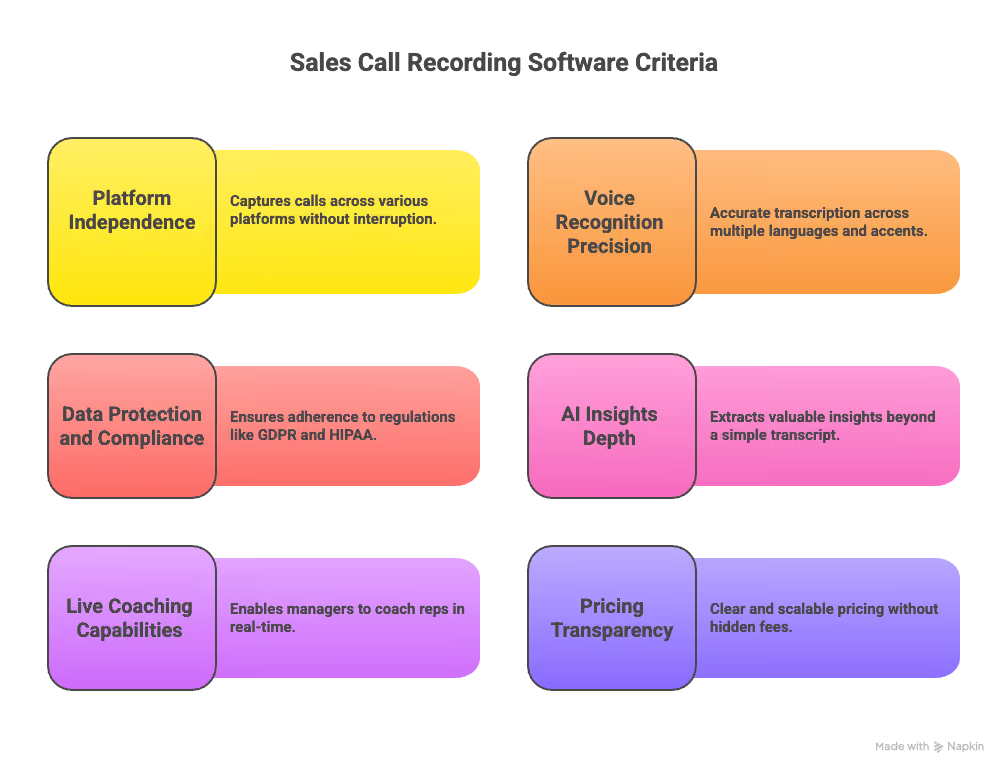
The methodology scored every vendor on six criteria that sales leaders consistently raise in procurement:
- Platform independence: A serious sales call recording app needs to capture across Zoom, Google Meet, Microsoft Teams, Webex, and native dialers without breaking when the rep switches platforms mid-day.
- Voice recognition precision across languages: Transcription accuracy is the foundation of everything that sits on top of it. If the transcript is wrong, the AI summary is wrong, the BANT extraction is wrong, the MEDDPICC qualification is wrong, the follow-up email to sales call is wrong, and the CRM record gets polluted. For multilingual teams, this includes handling accents, code-switching mid-sentence, and industry-specific vocabulary such as SKUs, model numbers, and technical specs.
- Data protection and compliance posture: GDPR, HIPAA, CCPA, and PCI DSS coverage matter the moment a regulated buyer joins a call. Vendors that cannot produce a SOC 2 Type II report or that route audio through unvetted third-party processors do not survive an enterprise security review.
- AI insights depth: Beyond a raw transcript, AI insights need to extract objections, competitor mentions, talk-to-listen ratio, sentiment shift, commitment language, and next-step ownership. The output should map cleanly to the rep’s qualification framework rather than producing a generic three-bullet summary.
- Live coaching and call review capabilities: A call recording software for business that does not enable manager-led coaching is just an archive. We weighted whisper coaching, call libraries, scorecards, and timestamp commenting because these features accelerate ramp.
- Pricing transparency and seat economics: Quote-based pricing with mandatory platform fees and multi-year lock-ins penalizes lean sales teams. We rewarded vendors with published pricing and per-seat economics that scale linearly.
On top of that scoring pass, we ran a controlled live test.
We hosted a Zoom meeting in which one participant spoke only Mandarin Chinese and the other only English. The scenario simulated a real outbound discovery call:
- The prospect, presenting as Daniel from Horizon Motors, was asking about a hybrid vehicle’s fuel consumption, mid-life operating costs, and rear-seat capacity for family passengers.
- The AE was working on a qualification motion against the prospect’s stated budget. We joined every tool on this list to the same meeting simultaneously, compared what each produced in real time, and included the results in the post-call summary.
9 Best Sales Call Recording Software In 2026
Each review below covers what the sales recording app was built to do, where it actually delivers, where it falls down, and what it produced in our live multilingual test. The order reflects performance against the buying criteria above, not vendor preference.
Jotme: Best Sales Call Recording App For Multilingual Sales Calls
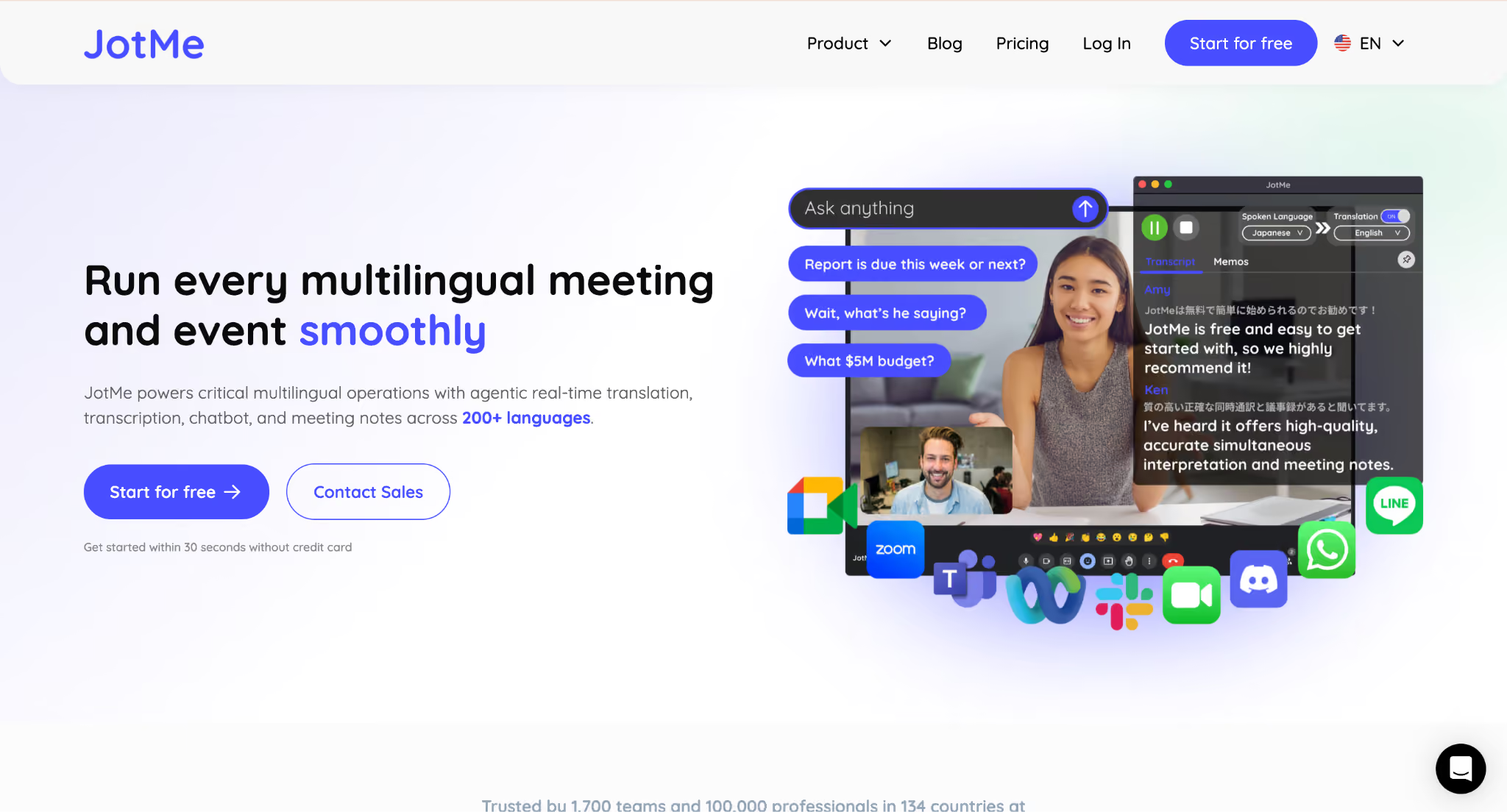
JotMe is the multilingual category winner and the only platform in this review that cleared every test condition. Built by a team focused on the multilingual operations layer that legacy conversation intelligence vendors deprioritized, JotMe is now used by 1,700+ teams and 300,000+ professionals across global pipelines, with coverage for 200+ languages and 39,000+ language pairs.
On the controlled Mandarin-English test call, JotMe correctly separated Speaker 2 and Speaker 4, transcribed the buyer’s Chinese inquiry about the car’s model’s fuel consumption verbatim, translated each line into clean English within roughly one second of utterance, and pulled the real-time summary into structured deal signals.
Every one of those signals maps directly to BANT and MEDDIC qualification fields that an AE would otherwise type into Salesforce manually after the call.
JotMe also offered bidirectional speech generation, letting the English-speaking rep type a response in English and play it back in Mandarin to the buyer in the prospect’s native pronunciation, a capability no other tool on this list offers.
Three reasons JotMe ranks first for multilingual sales call recording:
- Genuine 200+ language coverage: Most competitors either degrade or fail entirely outside English. JotMe held diarization across the Chinese-English language pair code-switching in our test.
- Contextual translation that preserves business meaning: The platform interpreted the vehicle query as a hybrid model rather than transcribing nonsense, and rendered idiomatic Chinese into natural sales English.
- Native AI meeting notes layered on top of translation: Most multilingual tools stop at the transcript. JotMe delivers structured post-call notes, real-time summaries, and a Generate Speech feature for live responses in the buyer’s language.
Otter AI: Ideal For English-Language AI Notetaking And CRM Auto-Sync
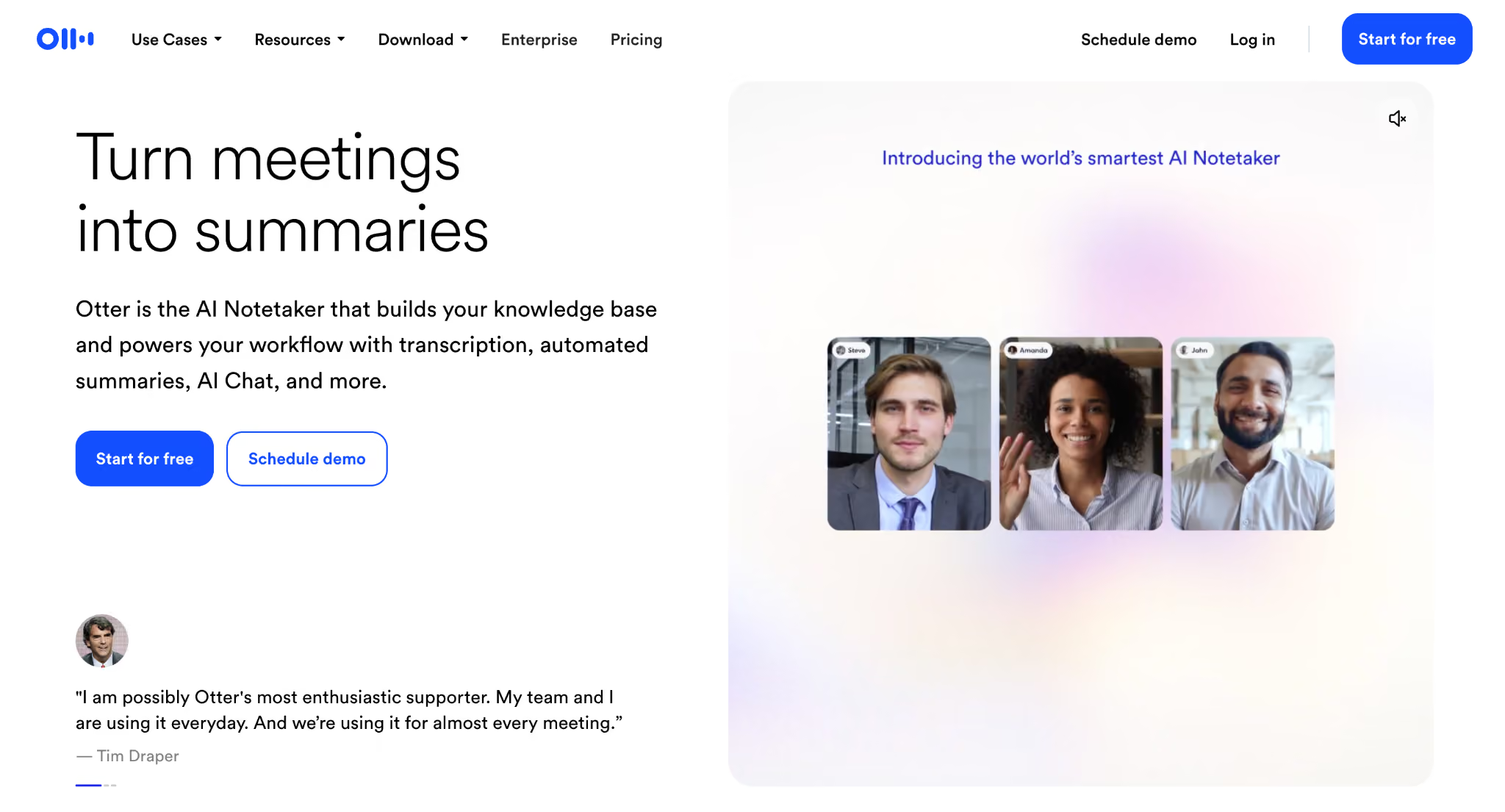
Otter AI built its reputation as the default AI notetaker for English-speaking knowledge workers and has spent the last 24 months retooling itself into a sales conversation intelligence platform. The 2026 product extracts BANT and MEDDIC signals during live calls, auto-pushes call notes and field updates to Salesforce and HubSpot, and drafts a follow-up email to sales call output before the rep moves to the next meeting.
On English-only sales motions, Otter performs well.
The Sales Live Assist product whispers real-time prompts to the rep during the call, surfaces objection-handling cues, and auto-creates a draft follow-up email tied to the opportunity record. CRM sync is genuinely useful and removes the manual disposition step that kills SDR throughput.
However, on our controlled multilingual test, Otter failed both transcription and diarization. The platform attributed every utterance to a single speaker labeled “Viraj Mahajan” rather than separating the Mandarin-speaking buyer from the English-speaking rep.
The transcript output was incoherent: phrases like “suezington psychology might announcing the SUV or based on,” “How Daniel psychology my dancing to SUV slowly sound like,” and “described, I think I already have a few excellent options in mind for you” reflect the platform attempting to force English phonetic guesses onto Mandarin audio.
Three honest takes on Otter for sales recording:
- Excellent on English-only pipeline: For domestic SaaS teams running US, UK, or AU motions, the post-call automation is genuinely strong.
- Calendar permission overhead: The requirement for full calendar access creates procurement friction in security-conscious organizations.
- Multilingual is not a real capability: Despite marketing language suggesting multilingual transcription support, Otter could not produce a usable transcript when one party spoke Mandarin.
Fathom AI: Best For SMB AES Running BANT And Sandler Frameworks
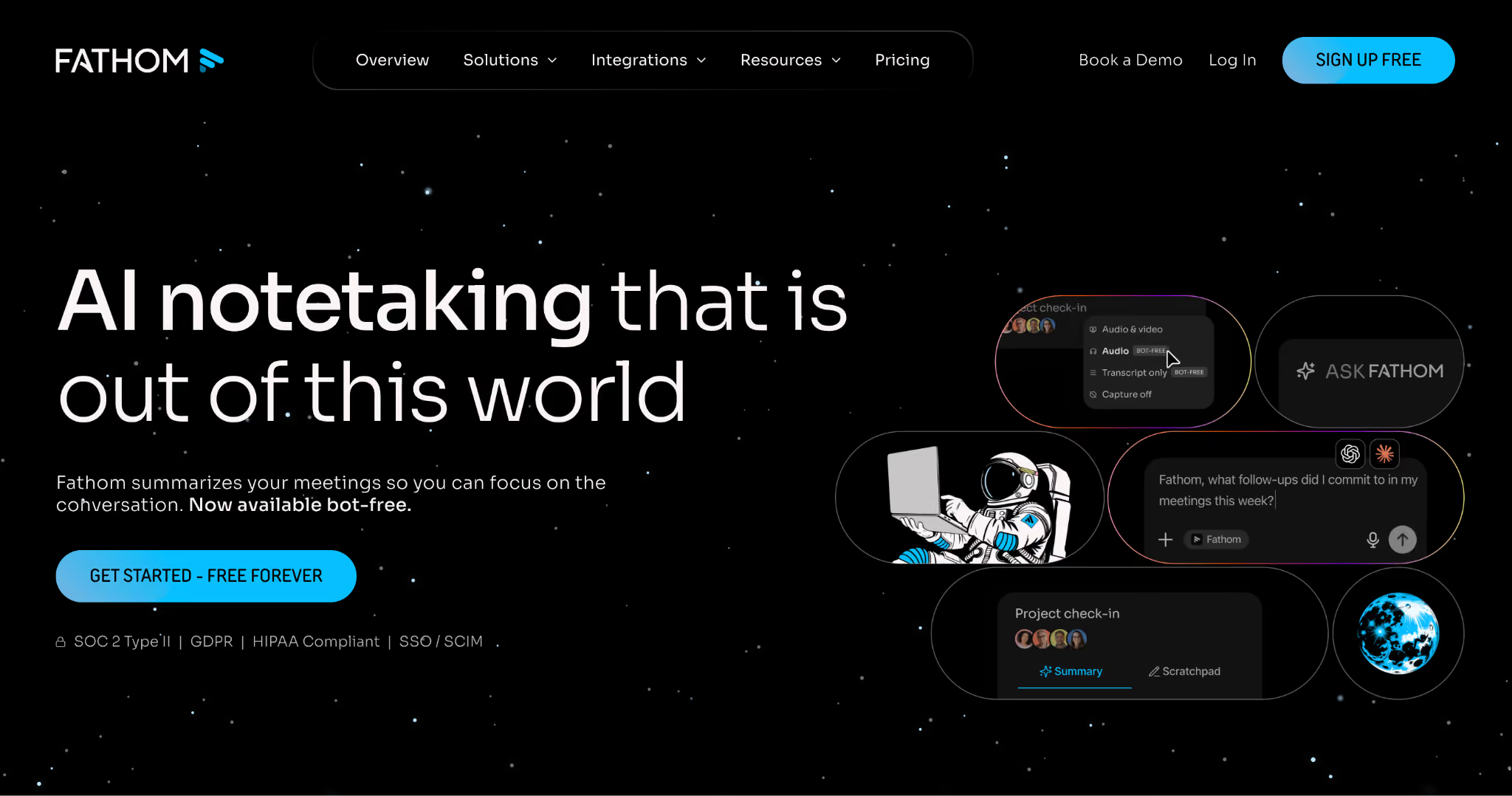
Fathom is the AI meeting recorder that gained traction with individual reps and small revenue teams thanks to a notably generous free tier with unlimited recordings and AI summaries. Paid tiers start at $19 per month, with the Business plan adding Deal View, which aggregates every meeting, summary, and key moment tied to a single opportunity into one shared workspace. Fathom’s strength is speed of output and a clean rep experience.
Where Fathom earns its slot:
- Free tier with unlimited recordings and summaries that no enterprise tool matches
- Pre-built sales framework templates for BANT, MEDDIC, Sandler, and SPIN
- Deal View on the Business plan creates a real account-level intelligence layer for complex deals.
tl;dv: Best For Cross-Team Meeting Libraries And Async Revenue Review
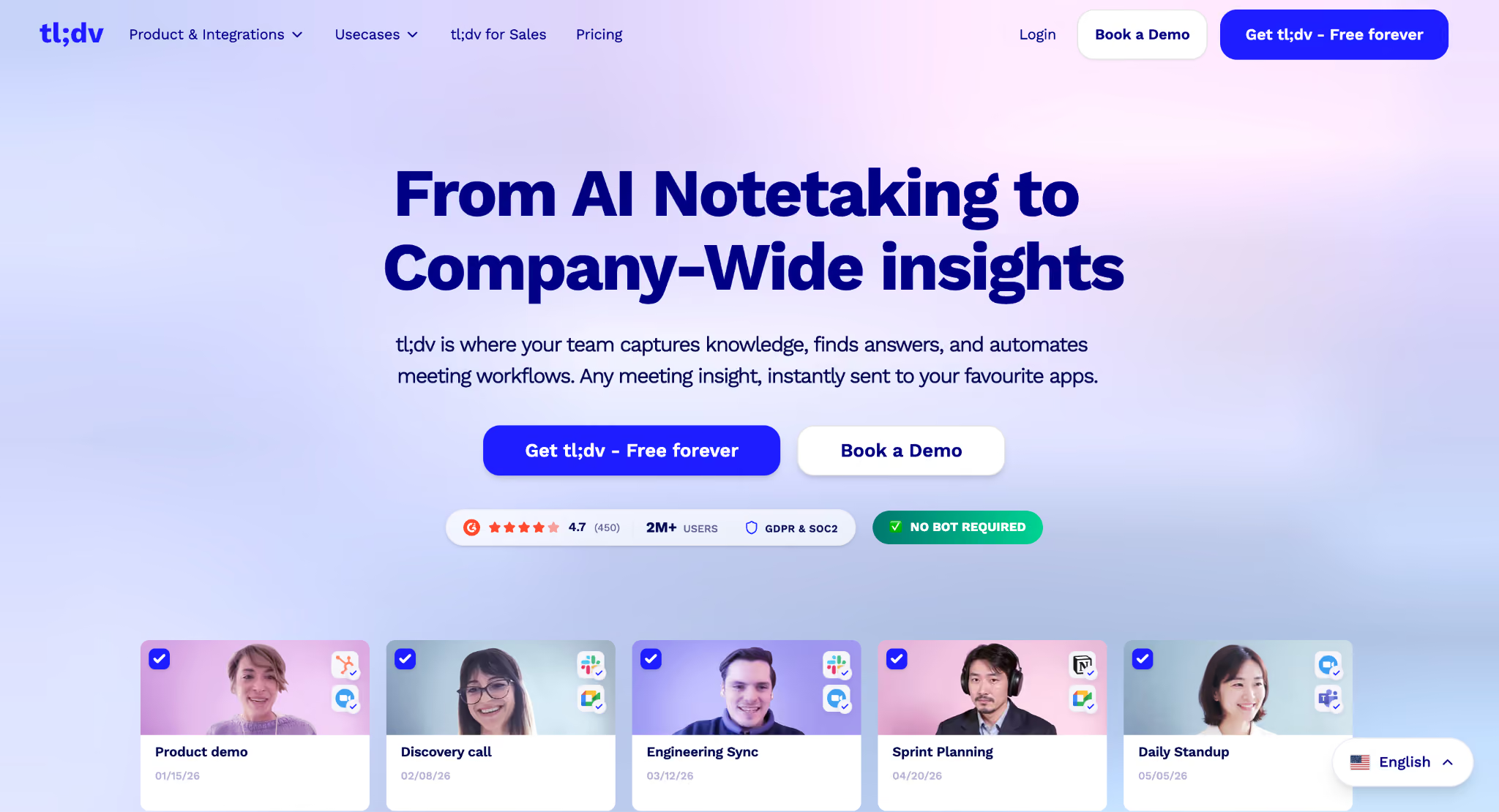
tl;dv positions itself as the meeting recorder for distributed revenue teams that need a searchable, shareable library of every customer call across Zoom, Google Meet, and Microsoft Teams.
For English-speaking teams, tl;dv works well. The Smart Topics feature auto-tags discussion themes. The CRM Deal Stage integration pulls opportunity context onto the call view. Speaker Insights provides talk-to-listen ratios and filler-word counts that map to rep coaching scorecards. However, our multilingual test produced the most candid failure on this list.
tl;dv refused to generate AI notes at all and surfaced an explicit error:
“I’m unable to generate meaningful meeting notes from this transcript. The transcript appears to be corrupted or contains significant transcription errors that make it impossible to extract coherent discussion points or actionable items.”
The platform itself identified phrases like “How Daniel psychology my dancing to SUV slowly sound like” and “So you will be outside, counting, your heart Io Tentina” as transcription failures. Credit to tl;dv for being honest about the breakdown rather than generating fabricated notes.
Where tl;dv slots in:
- Strong meeting library and async clip-sharing for revenue, CS, and product alignment
- CRM Deal Stage integration that contextualizes calls against the live pipeline
- Honest failure handling that does not invent summary content from corrupted transcripts
CubeACR: Best Call Recording Software For Android
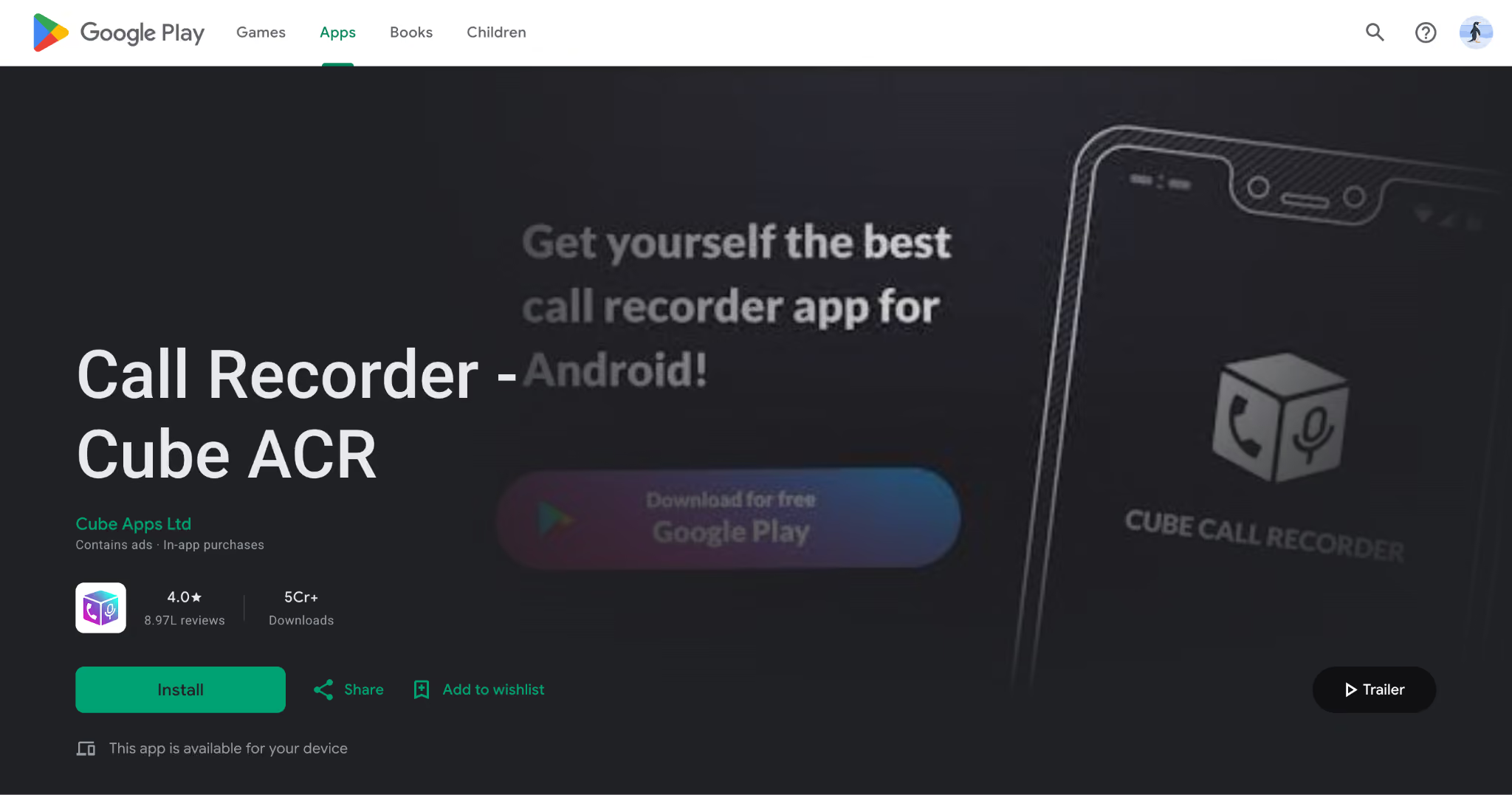
CubeACR is the most-installed call recorder app on Android and the default capture layer for sales reps running their pipeline on mobile devices. The CubeACR call recording app captures both standard SIM-based calls and VoIP conversations across WhatsApp, Telegram, Viber, Line, and Signal, making it the practical choice for reps working in markets where buyers prefer messaging apps over scheduled video calls. Free tier covers basic recording. Paid tiers unlock cloud backup, password protection, and unlimited storage.
CubeACR is a capture tool rather than a conversation intelligence platform. It does not transcribe, translate, summarize, or push to CRM. The output is an audio file.
Where CubeACR fits in the sales stack:
- Native Android SIM call capture without requiring carrier-side configuration
- VoIP call recording across WhatsApp, Telegram, Signal, and other messaging apps used in international sales.
- Cloud backup and exportable audio that feeds into any downstream transcription workflow
For sales teams that want the same multilingual transcription and AI notes capability on mobile that they get on desktop, JotMe has a native Android app that captures meeting audio and produces translated transcripts in 200+ languages. Sales reps who travel and attend one-on-one discovery calls can use the JotMe Android mobile app to run the full conversation intelligence workflow.
Gong: Best Enterprise Revenue Intelligence Platform
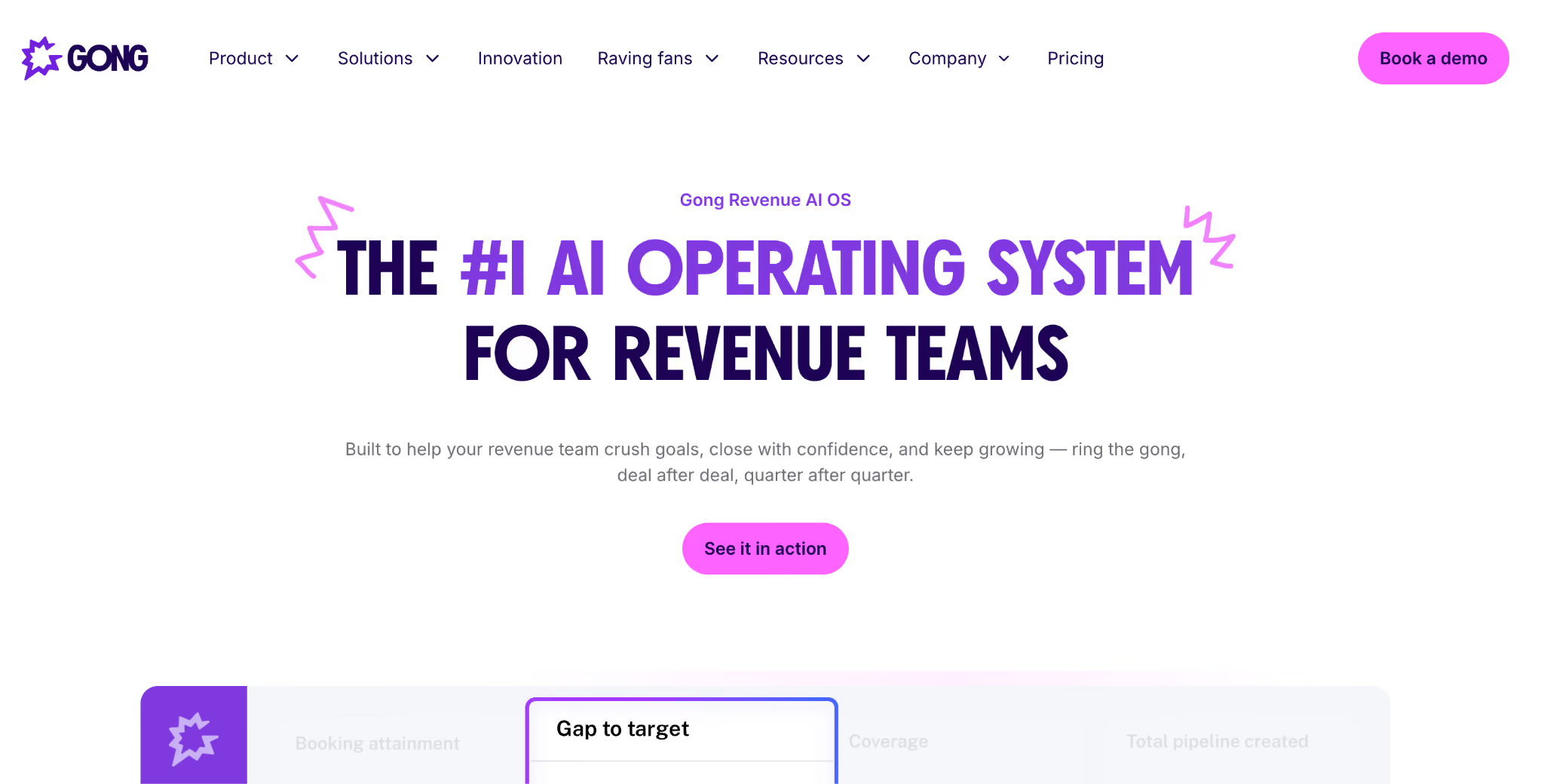
Gong is the category-defining revenue intelligence platform for enterprise sales organizations and remains the conversation intelligence benchmark against which every challenger is measured. The platform captures every customer interaction across calls, emails, and web meetings, maps that data to deals and pipeline through Gong's Revenue Graph, and feeds the resulting signals into Gong Forecast for AI-driven pipeline prediction.
Gong integrates with 250+ enterprise applications and offers deep coaching analytics, call libraries, deal risk surfacing, and methodology adoption tracking for MEDDICC, MEDDPICC, and similar frameworks.
Gong’s pricing is quote-based and enterprise-tier. Industry reporting puts Gong Foundation at $1,400 to $1,600 per user per year, with a mandatory $5,000 to $50,000 annual platform fee that hits smaller teams hardest because it does not scale with seat count. If you move forward with Engage and Forecast, the bundled rate will likely range from $2,400 to $3,000 per user per year. Implementation runs $7,500 and up, contracts are annual or multi-year with auto-renewal uplifts of 5 to 15 percent, and mid-contract seat reductions are typically not permitted. A 50-seat team is looking at a year-one total cost of roughly $85,000 to $115,000 before professional services.
But if you want an enterprise solution that matches the credibility and feature-set of Gong, then you should get in touch with JotMe’s sales team and schedule a demo to understand how JotMe can help you win those sales calls.
Where Gong wins:
- Deepest deal intelligence and pipeline forecasting in the category, with full Revenue Graph mapping
- Methodology adoption tracking for MEDDICC, MEDDPICC, and Force Management frameworks at scale
- Call libraries and coaching analytics that have cut new-rep ramp time by 50 percent in published case studies
Rev: Best For High-Accuracy Human Transcription In Regulated Industries
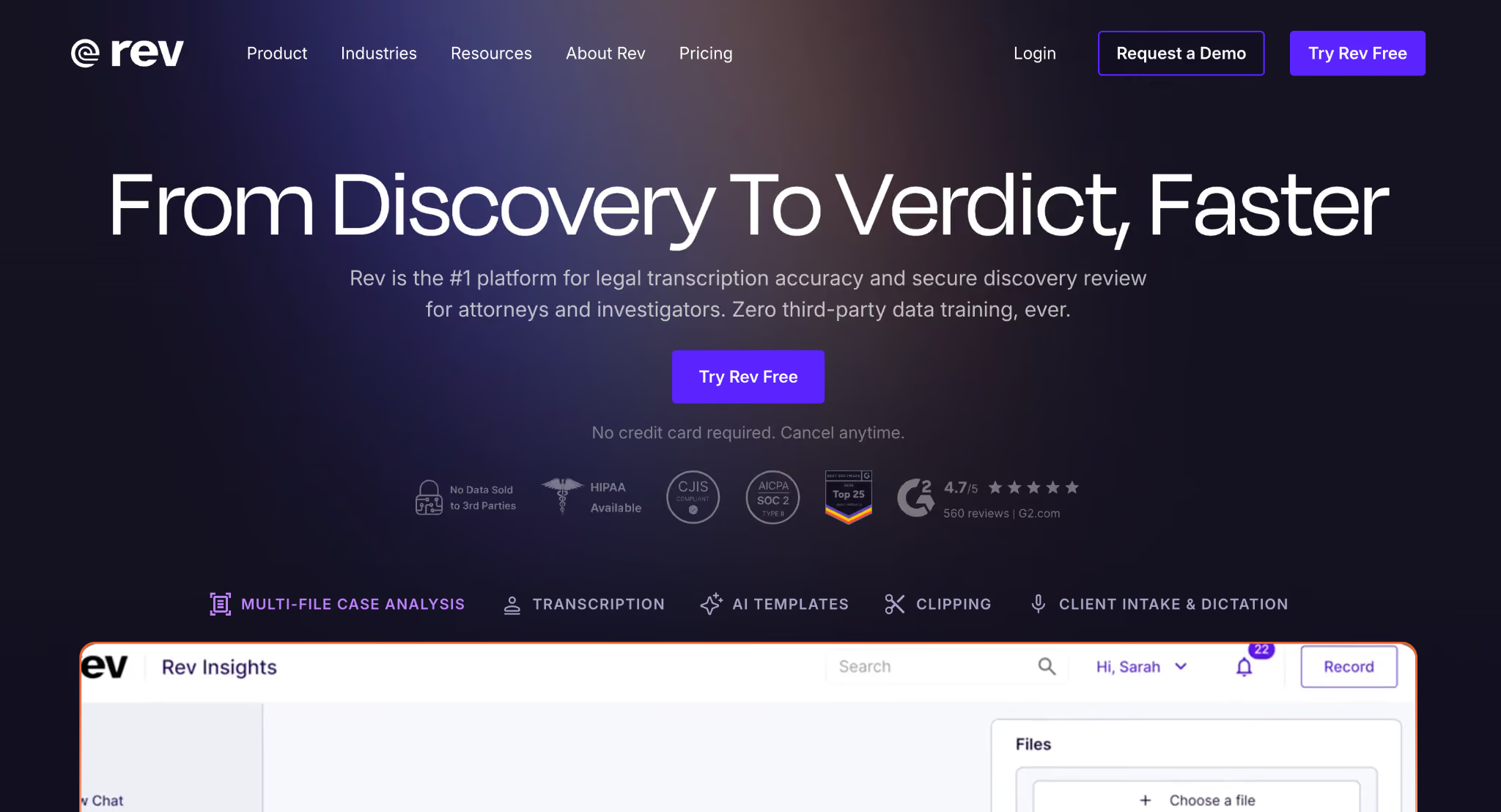
Rev sits in a different lane from the rest of this list of sales call recording software. Where every other vendor is selling an AI-first conversation intelligence layer, Rev is the dominant human-verified transcription service in the US market and the right pick for sales teams that need 99 percent accuracy on regulated, legal, or high-stakes audio.
At Rev, AI transcription costs $0.25 per audio minute. Human transcription, delivered by Rev’s professional transcriber network, is $1.99 per audio minute and includes speaker identification, timestamps, and verbatim handling on request. As of May 2026, Rev supports 37+ languages on its legal-grade tier.
Where Rev earns its slot:
- 99 percent human-verified accuracy on cleaner audio, including heavy accents and technical vocabulary
- Regulatory-grade compliance posture suitable for HIPAA, CJIS, and finance industry audit requirements
- 37 plus language coverage on the legal-tier subscription with the side-by-side translation app in beta
Bitrix24: Best All-In-One CRM With Built-In Call Recording
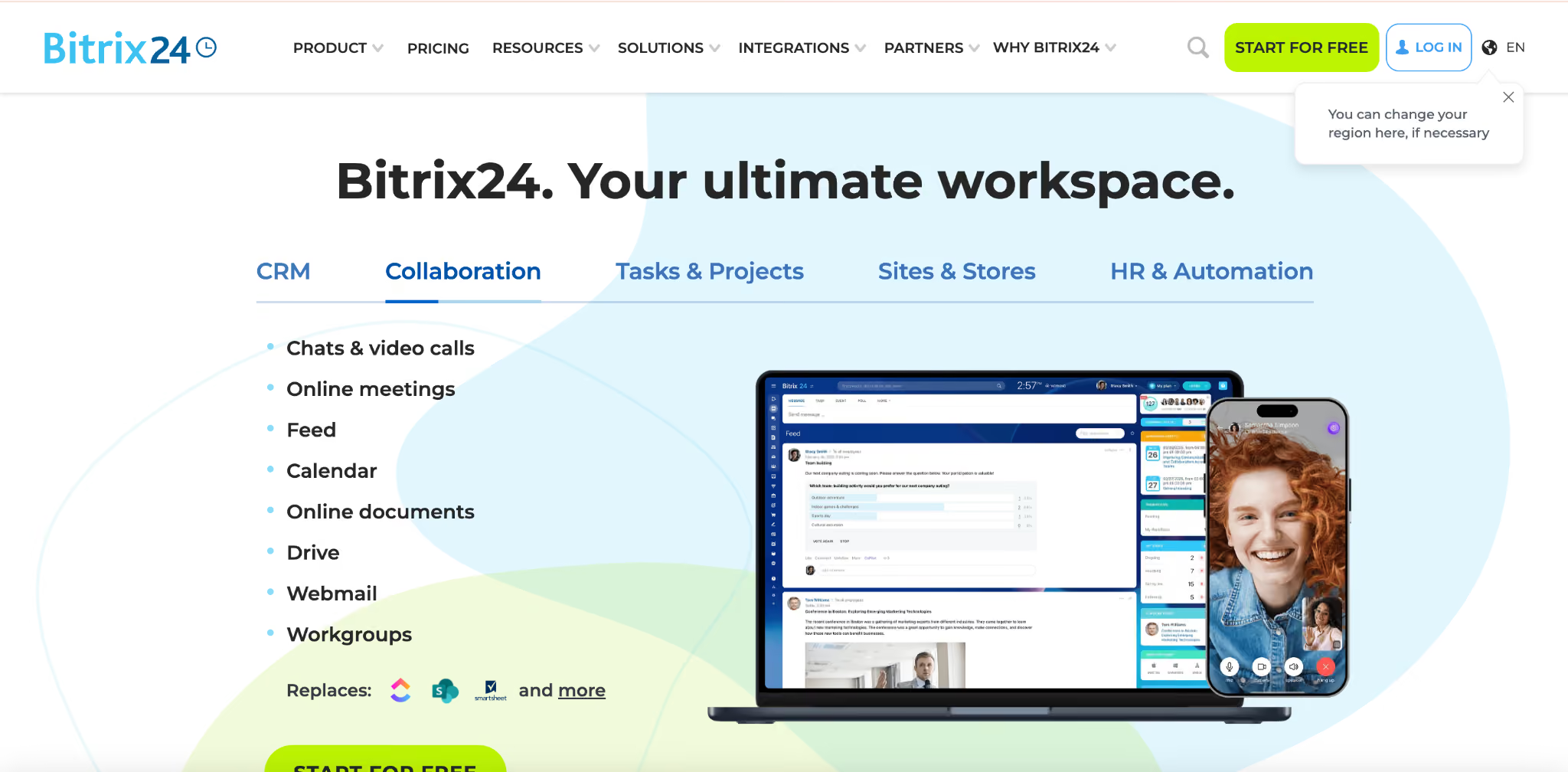
Bitrix24 is a call recording software, not a real-time meeting translation tool. It is built for businesses that small and mid-market teams pick when they want recording bundled into a complete CRM and telephony stack, rather than purchased as a standalone conversation intelligence layer. Bitrix24 combines CRM, telephony, virtual PBX, marketing automation, project management, and call recording into a single product.
Bitrix24’s free tier covers basic CRM and call logging. Whereas paid tiers start at $49 per month for the Basic plan and scale to enterprise pricing for larger deployments, all paid plans include unlimited call recording and storage.
Bitrix24 fits a specific buying profile:
- SMBs and mid-market teams that have not yet committed to a separate Salesforce or HubSpot CRM contract
- Sales operations that want telephony, dialer, and recording in one vendor with one bill
- International teams that need basic multilingual support without enterprise pricing
Allo: Best Call Recording Software For iPhone
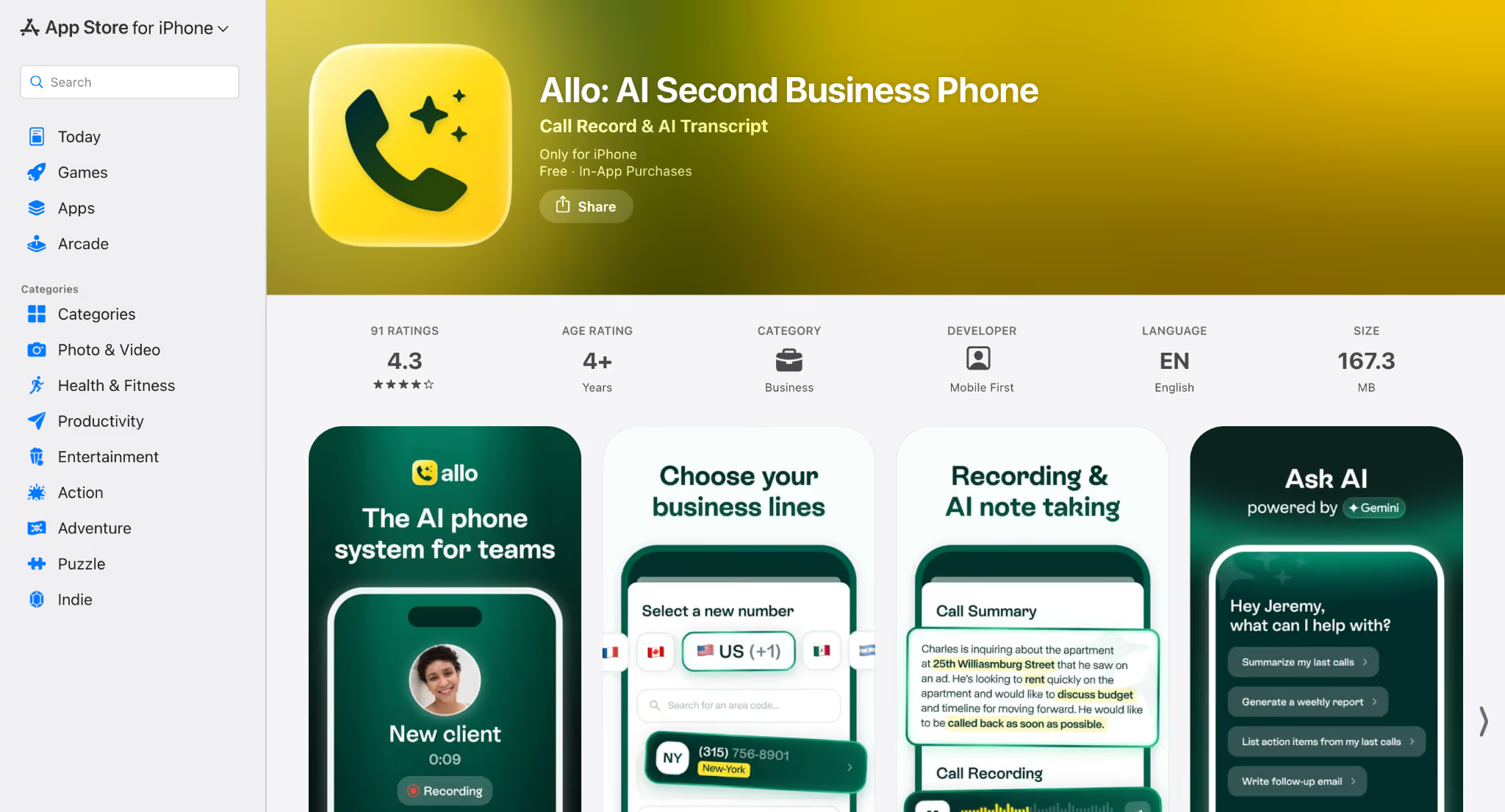
Allo is the iPhone-native business phone system that ships with automatic call recording on every plan, capturing both inbound and outbound calls without requiring an upgrade or workaround. The platform creates shared business numbers for sales teams, auto-generates transcripts and action items after every call, and pushes call logs, recordings, and transcripts directly into CRM systems, including Salesforce, HubSpot, and Pipedrive.
NOTE: Apple’s restrictions on native call recording have historically made iOS the hardest platform for sales reps to reliably capture mobile calls. Allo solves this through its business phone system architecture, routing calls through its own infrastructure rather than depending on the iOS dialer’s recording permissions. For sales teams running Apple-standardized hardware, Allo is the most-cited solution in 2026 buying conversations.
Where Allo lands:
- Automatic iPhone call recording on every plan without dialer workarounds
- Shared business numbers that route calls to whichever rep is available, with auto-recording across the team
- Direct CRM push with full call transcripts and extracted action items
For sales reps who run multilingual discovery calls from their iPhone and need translation in 200+ languages or 39,000+ language pairs, they can check out JotMe’s Apple Translation App, which captures audio directly from the device and translates it into their preferred language.
What Are The Benefits Of Using Sales Call Recording Software?
The case for sales call recording stopped being about compliance archives years ago. The SNS Insider 2025 market data puts the global call recording software for business market at USD 4.69 billion in 2025, with a forecast of USD 8.69 billion by 2033 at an 8.03 percent CAGR, driven primarily by enterprise adoption of conversation intelligence, AI-driven analytics, and cloud-based deployment. The growth is not happening because compliance suddenly matters more. It is happening because revenue leaders figured out that recorded calls are the highest-density training dataset their organization will ever produce.
The benefit case for any team running a cross-border pipeline becomes structurally different once you factor in the alternative cost of running multilingual sales motions without recording infrastructure.
Hiring a multilingual human interpreter to sit on every cross-border call runs $75 to $200 per hour in most major markets, often higher for rare language pairs or specialized industry vocabulary. A mid-market sales team running 40 cross-border discovery calls per month at one hour each would burn $3,000 to $8,000 per month on interpreter fees alone, with no transcript, no CRM sync, no coaching artifact, and no post-call summary.
A multilingual call recording software stack at $20 to $99 per seat per month replaces that interpreter cost entirely while producing the structured data layer that interpreters never deliver. The economics are not close.
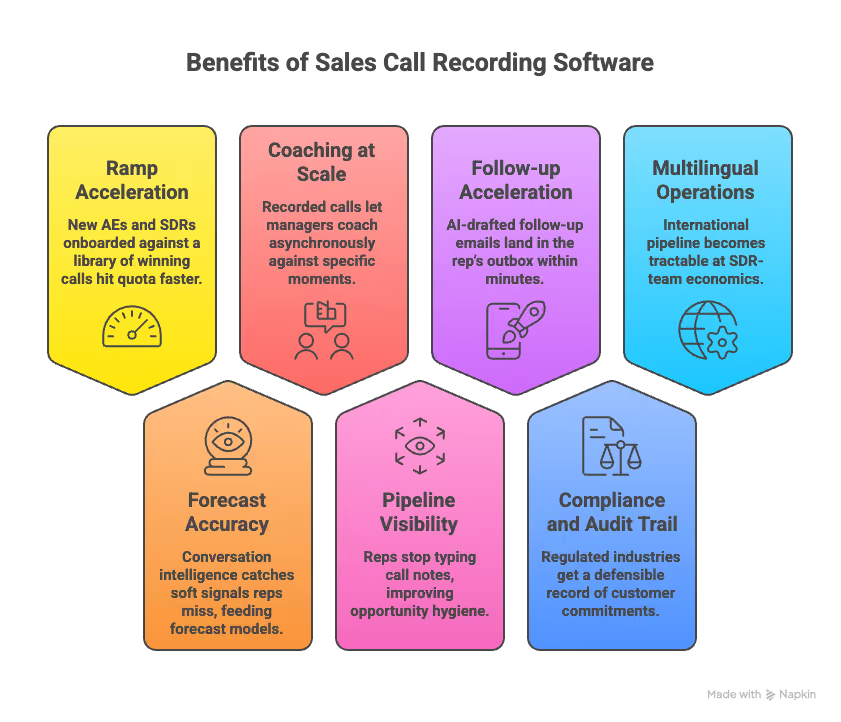
The operational benefits compound across the revenue motion:
- Ramp acceleration through call libraries: New AEs and SDRs onboarded against a library of winning calls hit quota faster. Gong has published 50 percent ramp-time reductions on this lever alone.
- Forecast accuracy through deal signal extraction: Conversation intelligence catches the soft signals reps miss: hesitation around budget, vague timelines, and decision-maker absence. Those signals feed forecast models that close the gap between rep optimism and reality.
- Coaching at scale through call review: Managers cannot sit in on every call. Recorded calls with talk-to-listen ratios, filler-word counts, and topic tags let managers coach asynchronously against specific moments in specific calls.
- Pipeline visibility through CRM auto-sync: Reps stop typing call notes. Call dispositions stop being missed. Opportunity hygiene improves. The CRM finally reflects what is actually happening in the deal.
- Post-call follow-up acceleration: AI-drafted follow-up email to sales call output lands in the rep’s outbox within minutes of the call ending, capturing commitments while they are still fresh.
- Compliance and audit trail: Regulated industries get a defensible record of customer commitments, disclosures, and consent without manual logging.
- Multilingual operations without interpreter overhead: International pipeline becomes tractable at SDR-team economics rather than enterprise-translation-budget economics.
Is Sales Call Recording Legal In The Us?
Yes, sales call recording is legal in the United States, but the rules vary by state, and the specifics matter for any sales team running outbound or inbound motions across state lines.
US federal law under the Electronic Communications Privacy Act operates as a one-party consent standard: the recording is legal as long as one participant in the call consents, and the recording of their own call satisfies that requirement by default.
Most US states follow this federal baseline. A smaller group of states requires all-party consent, meaning every participant on the call must be notified and consent to the recording.
Twelve all-party consent states that require explicit notification before recording a sales call:
- California
- Connecticut
- Delaware
- Florida
- Illinois
- Maryland
- Massachusetts
- Montana
- Nevada
- New Hampshire
- Pennsylvania
- Washington
The compliance pattern most enterprise revenue teams adopt is universal notification regardless of state, because a sales rep in a one-party Texas office calling a prospect in a two-party California is governed by the stricter standard. The standard “This call may be recorded for quality assurance and training purposes” disclosure, followed by the prospect continuing the conversation, satisfies the implied consent requirement in every US jurisdiction.
Practical compliance guidance for sales operations:
- Default to all-party consent across every outbound and inbound call
- Build the disclosure into the dialer or auto-recorder
- Document the consent on every recorded call
- Train SDRs and AEs on the disclosure script
- Apply stricter rules for international calls
This guidance is not legal advice. Any sales organization deploying call recording at scale should engage its general counsel and conduct a formal compliance review across the jurisdictions in which it sells.
Bottom Line: Which Sales Call Recording Software Should You Actually Buy?
The category splits cleanly on one axis: monolingual versus multilingual pipeline. For US domestic English-only sales motions, the conversation intelligence category is mature, with several defensible picks. Gong is the enterprise gold standard if budget and headcount support the per-seat economics and platform fees. Otter, Fathom, and tl;dv compete in the mid-market AI notetaker tier, and any one of them will materially improve a domestic English pipeline. Rev fits regulated industries where human-verified transcription accuracy is a hard requirement. Bitrix24 is the right pick for SMBs consolidating CRM, telephony, and recording into a single vendor. CubeACR and Allo solve the Android and iPhone capture layers, respectively, for mobile-first sales reps.
For multilingual sales calls, JotMe is the platform we recommend, and the live test results in this guide clearly show why. The platform achieved speaker diarization across Mandarin and English, even as every English-first competitor failed. It produced contextual translation that preserved business meaning rather than fabricating phonetic gibberish.
If your team runs a cross-border pipeline at any scale, JotMe is the call recording app that closes the multilingual operations gap left by legacy conversation intelligence platforms. For enterprise solutions, contact our sales team, who will guide you and point you to the right monthly or yearly plan that suits your and your company’s needs.
FAQs about sales call recording software
Which app is free for recording sales calls?
JotMe offers a free tier that captures system audio directly from the desktop, transcribes calls, and translates across 200+ languages within the free monthly allowance. For sales teams that need free recording with multilingual coverage and AI insights, JotMe is the strongest pick.
How do I record a phone call for a sales conversation?
The cleanest workflow is to run JotMe on your desktop while taking the prospect’s call on your phone in speaker mode. JotMe captures the system audio, generates a real-time transcript, translates if the call is multilingual, and produces post-call AI notes that can be shared with your CRM.
Which is the best free voice recording app for sales teams?
JotMe is the best free voice recording app for sales teams that need multilingual coverage, AI transcription, real-time translation, and post-call AI notes in a single platform. The free tier covers recording and transcription with a monthly translation allowance, and paid tiers unlock higher usage volumes and additional integrations.
How do I set up JotMe before my sales call?
Download the JotMe desktop app and sign in to your account. Select the spoken language and the translated language you want to read in real time. Open your meeting platform of choice, whether Zoom, Google Meet, Microsoft Teams, or Webex, and join the sales call. JotMe runs in the background, captures system audio, generates a live translated transcript with speaker diarization, and produces a real-time summary with action items and deal signals. The agentic AI handles translation, transcription, and meeting notes across platforms without requiring the rep to switch tools.
Why does a sales team need a call recording app?
Sales teams need a call recording app because recorded calls are the highest-density training, coaching, and forecasting dataset the revenue organization will ever produce. Call recordings cut new-rep ramp time by allowing onboarding against real, winning calls rather than scripted role-plays. They surface objection patterns and competitor mentions that inform sales enablement priorities.
Last updated on
July 29, 2026
Follow us on social media: