

Resources
How JotMe’s Real-Time Transcription Enabled Cross-Border Collaboration in European Sports Federations

Viraj Mahajan
February 20, 2026

Quick Summary: How the European Sports Federation Strengthened Multilingual Governance
- The European Sports Federation faced confusion in Turkish–English meetings, where quick language switching made it hard to capture decisions and action points clearly.
- The European Sports Federation realized they needed a real-time transcription solution to create accurate written records during live meetings.
- The European Sports Federation adopted JotMe because it worked without a meeting bot and handled Turkish to English transcription reliably.
- After using JotMe, the European Sports Federation got improved meeting documentation, reduced follow-up clarifications, and made bilingual participation more inclusive.
Background: Why Did the Turkish Go Association Seek a Reliable Turkish to English Transcription Solution?
The Turkish Go Association sought a dependable real-time transcription solution after experiencing the limits of manual documentation in bilingual governance meetings. As part of its collaboration within the European Go Federation, the association regularly conducted online meetings in Turkish and English, where accurate records were essential for official coordination and continuity.
Several practical factors shaped the decision:
- Meetings frequently switched between Turkish and English, making it difficult to capture decisions accurately through manual notes.
- The organization handled approximately 500 minutes of meetings per month, requiring a consistent and scalable transcription workflow.
- As a non-profit operating under financial constraints, the European Go Federation needed a cost-effective solution suitable for long-term use.
- Accurate transcripts were important for preparing official documentation and maintaining transparency with members and partners.
After testing available tools in live meetings, the Turkish Go Association found that JotMe delivered strong real-time Turkish to English transcription accuracy and fit naturally into their existing online workflow.
What are the Challenges of Multilingual Governance in European Sports Federations?
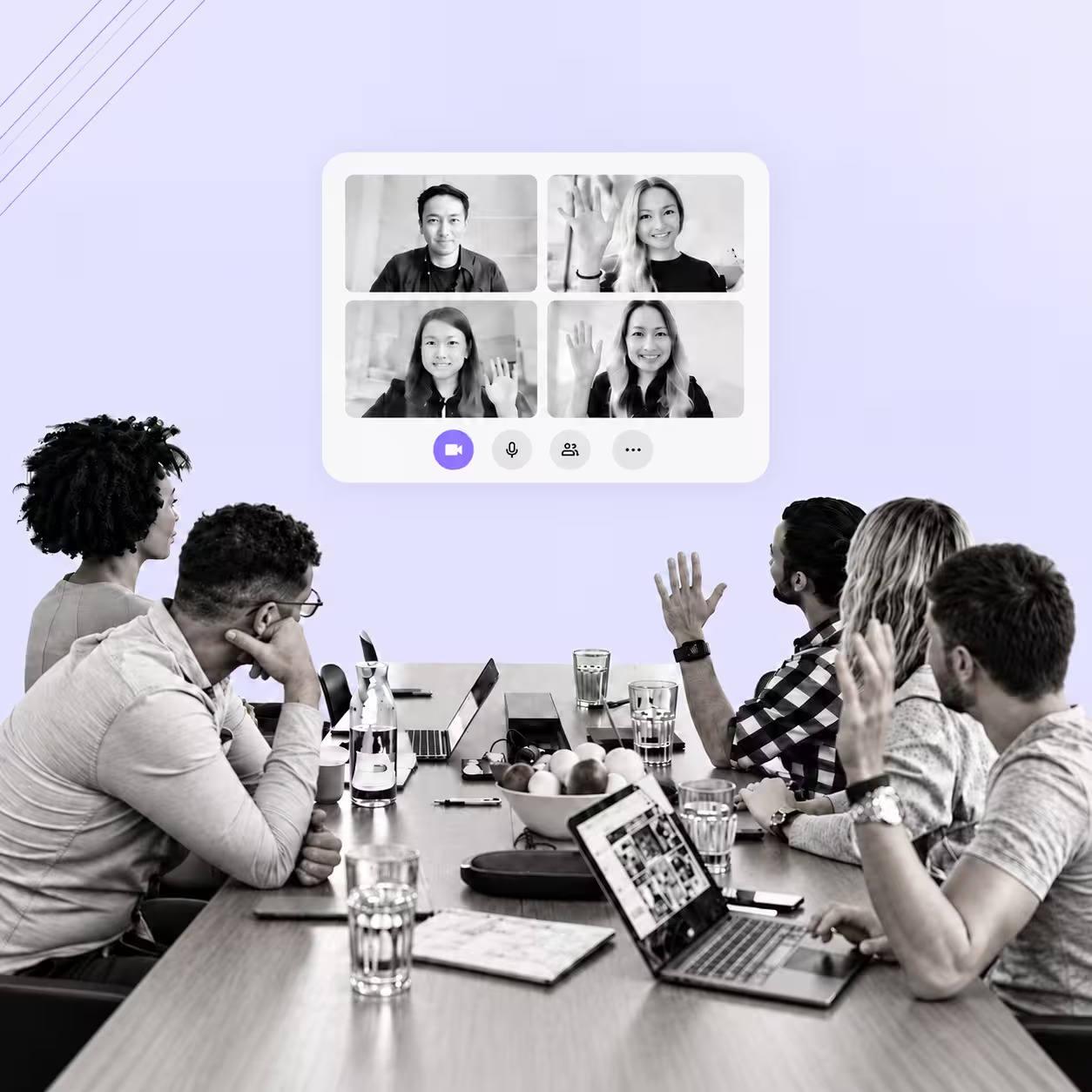
The main challenges of multilingual governance in European Sports Federations arose from coordinating participants across different languages, fluency levels, and cultural contexts. Cross-border meetings covering committee updates, tournament calendars, policy discussions, and membership coordination can quickly become complex.
For organizations operating across Europe, several recurring friction points slowed collaboration:
- Real-Time Clarity: When discussions moved quickly between languages, participants sometimes missed key details or specific commitments.
- Consistent Documentation: Informal notes and manual summaries did not always capture decisions and responsibilities accurately.
- Balanced Participation: Non-native speakers sometimes hesitated to engage fully during fast-paced exchanges.
- Meeting Continuity: When conversations continued across multiple sessions, incomplete records led to repeated discussions and avoidable rework.
In governance settings, consistency directly affected efficiency. When records lacked precision, teams spent additional time clarifying past decisions instead of progressing with new initiatives.
How Did the Turkish Go Association Manage Multilingual Meetings?
The Turkish Go Association managed multilingual meetings by combining structured coordination with modern transcription technology. As a non-profit engaged in international collaboration through the European Go Federation and the wider Turkish Association, their meetings often involve bilingual discussion in Turkish and English, especially when coordinating with international partners and federation members. The Turkish Go Association identified a clear operational need: a dependable way to support bilingual meetings while maintaining accurate records for official documentation.
From the details shared, their typical usage pattern is consistent and measurable:
- Meeting format: Online meetings with bilingual discussion (Turkish and English)
- Monthly volume: Approximately 500 minutes of meetings per month
- Account structure: One main account, with the option to add another later
To meet these needs, the Turkish Go Association tested JotMe, an AI-powered transcription tool for live meetings. Their experience highlighted two key outcomes: highly accurate transcription and strong real-time transcription performance, even when conversations switched between Turkish and English. By integrating JotMe into their regular workflow, the Turkish Go Association was able to ensure that every discussion, decision, and action item was reliably captured, demonstrating how AI-powered transcription can be a practical backbone for multilingual governance.
How Real-Time Transcription was Implemented in Live Meetings?
The Turkish Go Association started the online session, enabled Zoom transcription or connected speech-to-text tool; JotMe, captured discussion through real-time transcription, referenced key points during the call, and finalized documentation using the transcript. This structured process ensures that teams can accurately transcribe audio to text without adding manual administrative work.
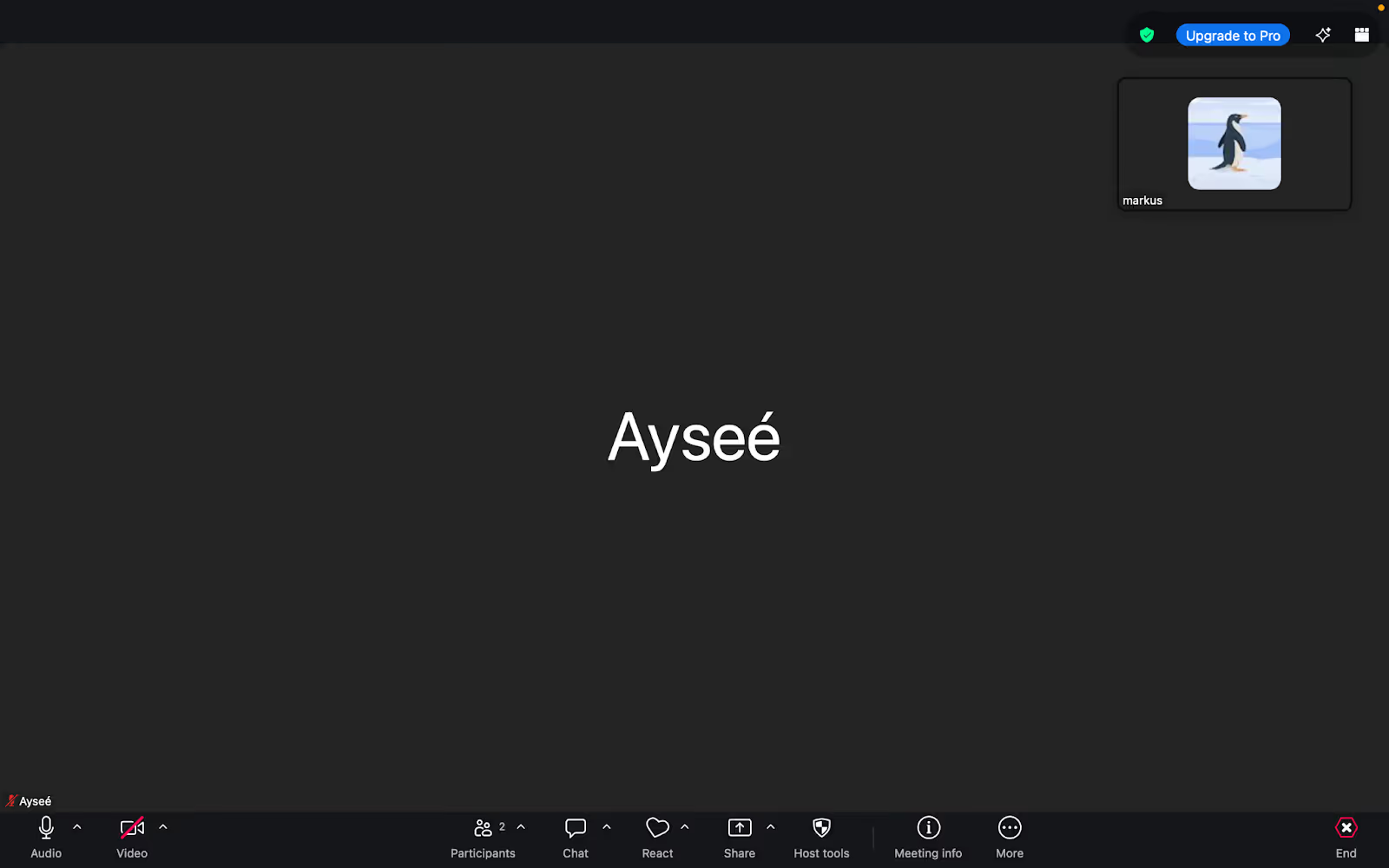
Step 1. Start the Online Meeting
The European Sports Federation schedules and launches its regular Zoom or online meeting with international participants.
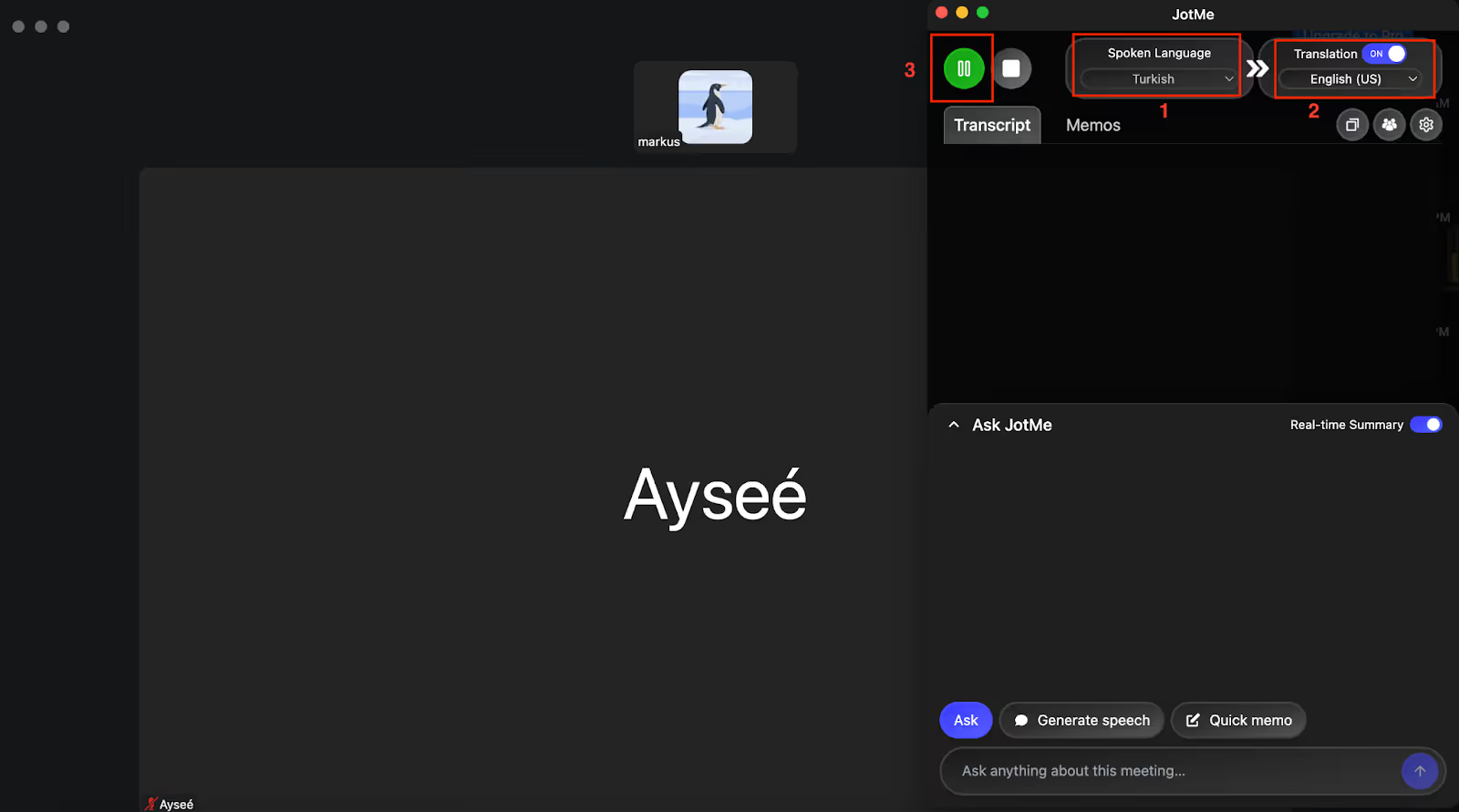
Step 2. Activate the Transcription Service
JotMe is opened on a desktop and connected to the live session, sets the spoken and translation language, and enables real-time transcription as the discussion begins. This allows participants to transcribe from audio to text automatically without manual note-taking.
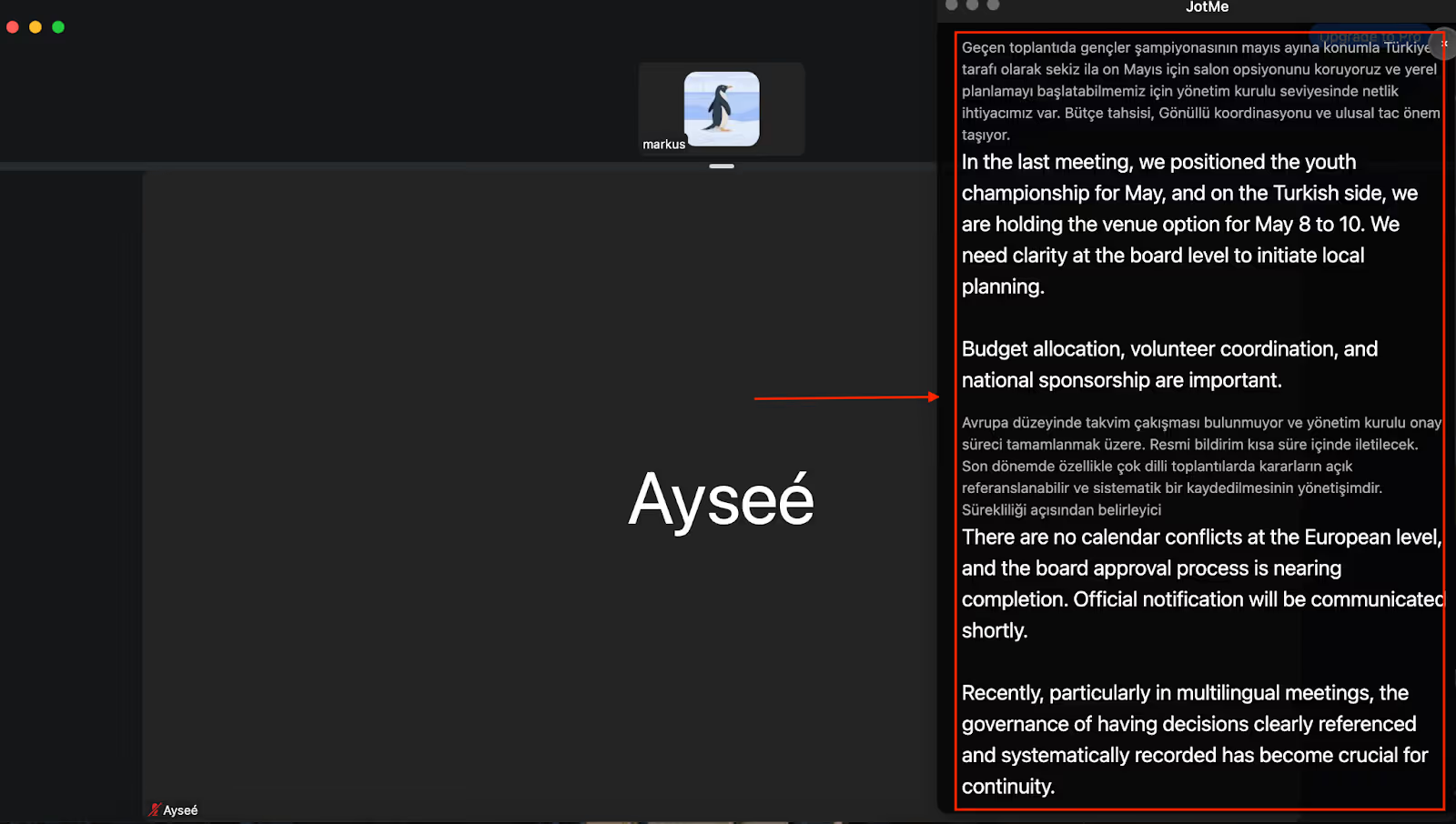
Step 3. Live Audio-to-Text Conversion During Discussion
As speakers switch between Turkish and English, JotMe performs continuous audio-to-text conversion, capturing decisions, dates, responsibilities, and bilingual exchanges in real time.
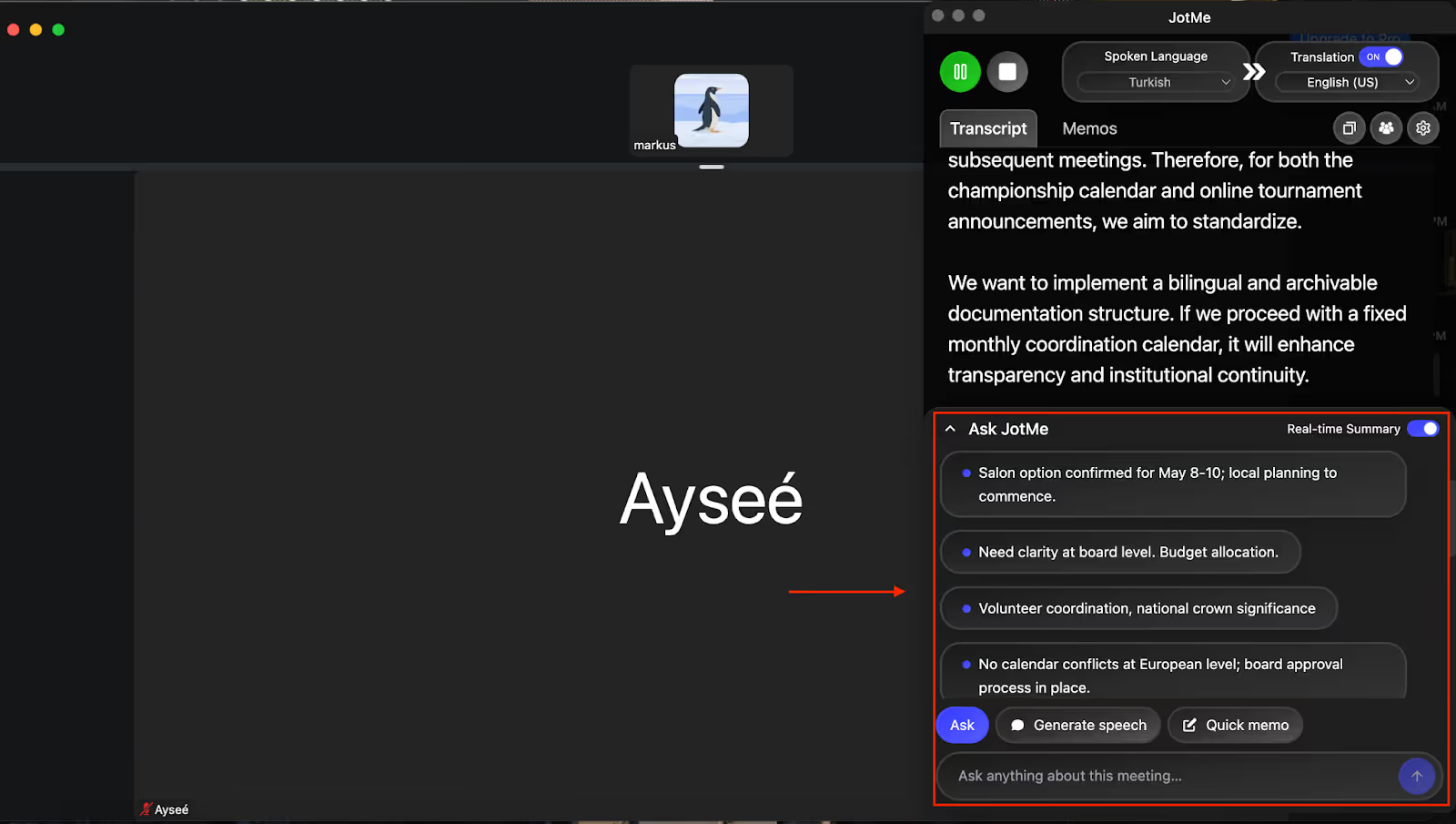
Step 4. Monitor and Reference During the Call
Participants can quickly check terminology, commitments, or previously stated points without interrupting the discussion flow.
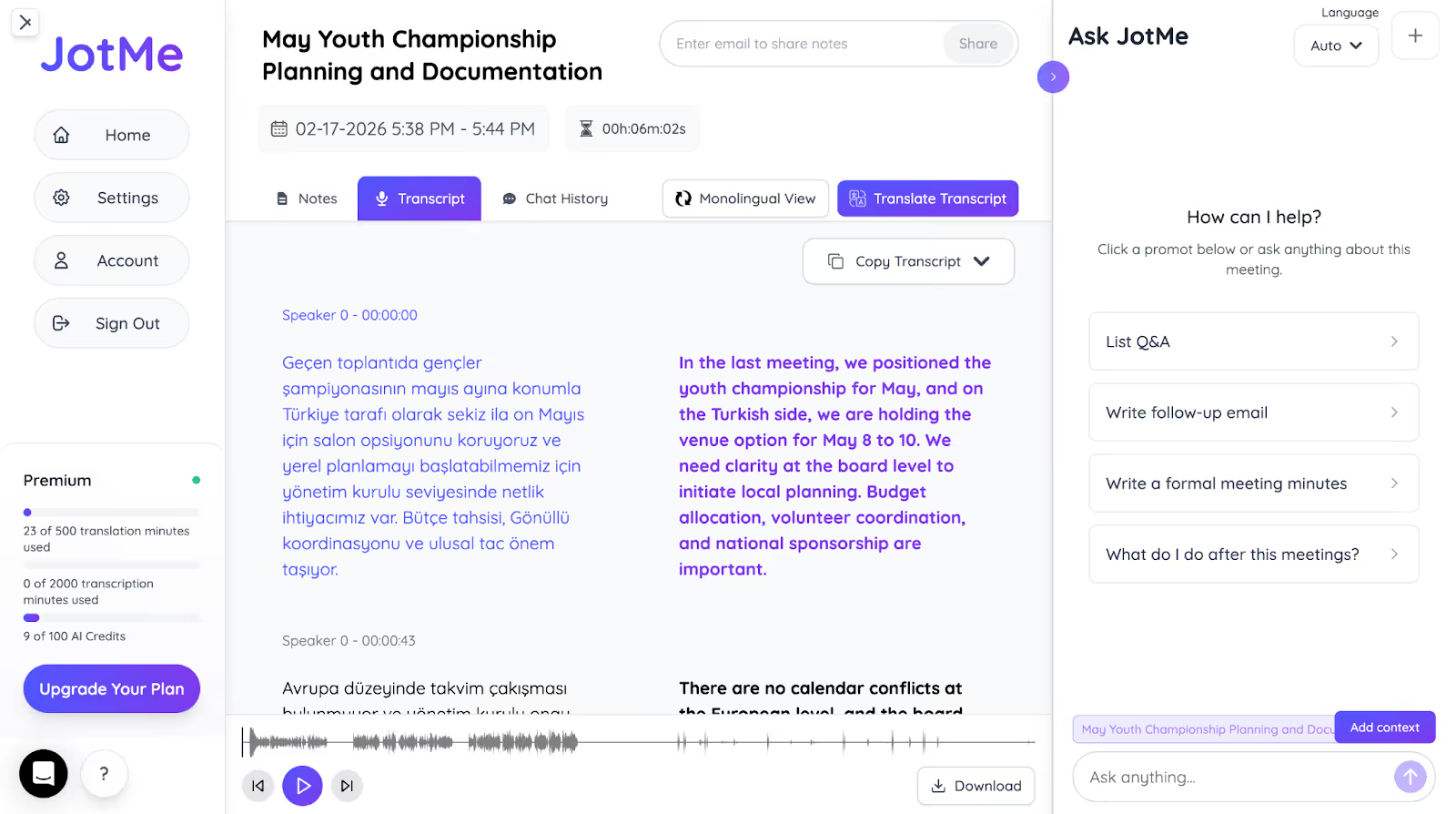
Step 5. Access and use the Transcript Post-Meeting
After the call, the transcript serves as the foundation for official documentation, summaries, and governance records, eliminating the need to convert audio to text manually later.
JotMe’s Android and iOS mobile app also allows you to transcribe live, in-person, or direct conversations from your phone. JotMe's mobile app is useful during travel, side discussions at tournaments, or quick coordination talks between members.
What is the Impact of Real-Time Transcription on Collaboration, Transparency, and Accessibility?
Real-time transcription improves collaboration, strengthens transparency, and enhances accessibility by creating an accurate, shared record of multilingual meetings that participants can rely on. For organizations that need to communicate globally, this shared record becomes essential infrastructure rather than a convenience.
The Turkish Go Association described JotMe’s value in concrete, governance-adjacent terms: transparency, accurate records, inclusivity, privacy, and improved efficiency in documentation and communication. Those outcomes are tightly linked. When the record is reliable, collaboration becomes easier because decisions can be referenced without friction.
Collaboration: Fewer Misunderstandings, Cleaner Follow-Ups
In bilingual meetings, confusion often arrives in small ways: a phrase translated loosely, a responsibility implied rather than clearly assigned, an agreement remembered differently by two people. A real-time transcript reduces that drift by providing a shared reference point.
Practical collaboration benefits in this setup include:
- Faster alignment after the meeting because participants can verify decisions and action items
- Less back-and-forth clarifying “what we meant.”
- Better continuity across recurring monthly meetings
Transparency: Dependable Written Record for Official Documentation
The Turkish Go Association explicitly described a need for transparency and accurate records, particularly in meetings involving federation members, partners, and local clubs. This is a critical point. For non-profits and federations, transparency is structural. It supports trust between stakeholders, and it supports accountability in governance.
A transcript-backed workflow can strengthen transparency through:
- A clear record of discussion threads that led to decisions
- A consistent archive of meeting outcomes
- Easier preparation of official documentation based on what was actually said, not reconstructed later
Accessibility and Inclusivity: Making Bilingual Participation Feel Equal
The Turkish Go Association also framed JotMe as an inclusivity tool, especially for participants who are not native speakers. In multilingual meetings, inclusivity is not a slogan. It shows up in who speaks, how confidently they speak, and whether they feel safe asking for clarification.
Real-time transcription supports accessibility in a few simple ways:
- People can re-check a line they did not fully catch in the moment
- Bilingual participants can confirm terminology, names, or decisions without interrupting the flow
- Non-native speakers have a better chance of staying engaged when the pace is high
Practical Outcomes of the Turkish Go Association Highlighted
Based on the Turkish Go Association’s description of present-day usage and impact:
- Improved meeting documentation and communication efficiency
- Better inclusivity for bilingual participation
- Stronger transparency through accurate records
- A workflow reliable enough to be used regularly for recurring meetings
What Key Lessons Can European Sports Federations Learn from This Case Study?
European Sports Federations can learn that real-time transcription should be treated as governance infrastructure, implemented first in high-impact meetings, and measured for its effect on inclusivity and operational efficiency.
The case demonstrates that when transcription is integrated intentionally into core workflows, rather than used occasionally, it strengthens continuity, reduces misunderstandings, and supports scalable multilingual collaboration across committees and member organizations.
Learning 1: Treat Transcription as Governance Infrastructure
In international collaboration, the meeting record is part of the system. When the record is weak, governance slows down. When the record is strong, governance speeds up. Real-time transcription fits best when positioned as part of the organization’s meeting backbone, not as a tool used “only when needed.”
Learning 2: Start with the Meetings That Matter Most
The Turkish Go Association’s focus was clear: bilingual meetings that affect international collaboration and official documentation. For other federations, the best starting point is usually meetings with the highest cost of misunderstanding, such as committee decisions, formal coordination calls, or recurring governance sessions.
Learning 3: Make Inclusivity Measurable
Measure inclusivity and efficiency through practical indicators, such as reduced documentation time, fewer clarification emails, stronger participation from non-native speakers, and faster closure of action items.
FAQs About Using JotMe for Multilingual Federation Meetings
Does JotMe work with Zoom meetings?
Yes. JotMe runs alongside Zoom meetings and captures live audio directly from the host’s device. JotMe does not require complex integration or external plugins, making it easy to use during regular online sessions.
Does JotMe add a bot to the meeting?
No. JotMe operates without adding a visible bot as a participant to the call. It works in the background, allowing meetings to continue normally without disrupting the session structure.
Can JotMe handle meetings where speakers switch between languages?
Yes. JotMe supports multilingual conversations and continues transcribing even when speakers switch between languages during the same meeting. This makes JotMe suitable for cross-border discussions.
Can transcripts be used for official documentation?
Yes. After the meeting ends, the transcript can be used as the foundation for meeting minutes, summaries, and official records, reducing manual documentation effort and improving accuracy.
Is JotMe suitable for recurring monthly governance meetings?
Yes. JotMe is designed to support ongoing meeting workflows. Organizations can use JotMe consistently across recurring Zoom sessions, ensuring that each meeting is documented in the same structured way, which helps maintain continuity and reliable records over time.
Last updated on
April 14, 2026
Follow us on social media: